
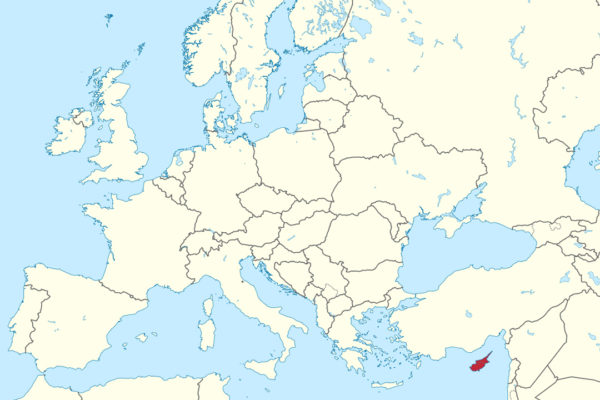
Wikimedia Commons / CC-BY-SA-3.0 / GFDL
Capital: Nicosia
Population: 1.3 million+
Language: Greek/Turkish
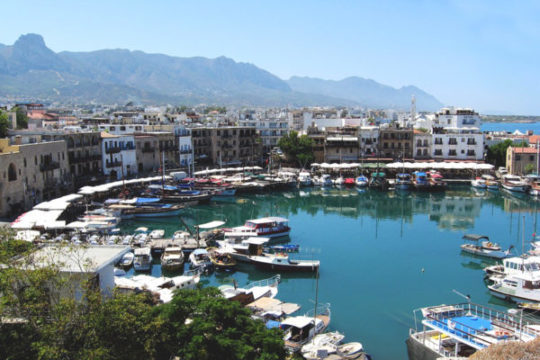
1 – Kyrenia (also above)

Kyrenia (Girne) is a harbour town on the north coast, in the north of the island under Turkish Cypriot administration since 1974, guarded by a castle of Byzantine origin that the Lusignans and Venetians enlarged.
Walk Kyrenia’s horseshoe harbour to the castle and its Shipwreck Museum, then head into the hills to Bellapais Abbey, the 13th-century Gothic ruin in the village where Lawrence Durrell lived while writing Bitter Lemons.
Kyrenia Castle displays the hull of the Kyrenia Ship, a Greek merchant vessel that sank around 300 BC with a cargo of wine jars and almonds, found in 1965 by a local diver and one of the oldest ships ever recovered.
2 – Larnaca
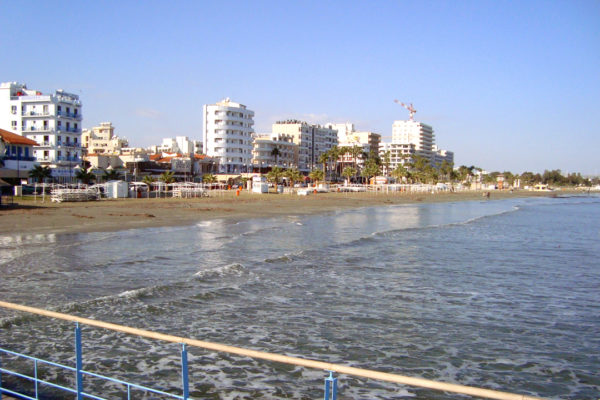
Larnaca, on the south-east coast, grew from ancient Kition, the birthplace around 334 BC of Zeno, who went on to found Stoicism at the Painted Stoa in Athens.
See Larnaca’s Church of St Lazarus, the seafront Finikoudes promenade, and Hala Sultan Tekke, the mosque and shrine to Umm Haram, a relative of the Prophet Muhammad, beside the Salt Lake.
Tradition holds that after Jesus raised him from the dead, Lazarus came to Larnaca and served as bishop of Kition for about 30 more years, and a tomb inscribed “Lazarus, four days dead, friend of Christ” was found here in 890.
3 – Nicosia

Nicosia (Lefkoşa), in the centre of the island, is often called the last divided capital in Europe, split since a British general drew a ceasefire line on a map in green pencil in December 1963, the origin of the name “Green Line”.
Walk Nicosia’s star-shaped Venetian walls, begun in 1567 with 11 bastions and unfinished when the city fell to the Ottomans in 1570, cross at Ledra Street to the Selimiye Mosque, the former Gothic cathedral where Lusignan kings were crowned, and visit the Cyprus Museum.
Irish soldiers kept the peace along Nicosia’s Green Line and across the island with the UN force from 1964, with 17 Irish contingents serving until 1973, and two Irish officers, James Quinn and Michael Minehane, went on to command the whole UN force.
4 – Limassol
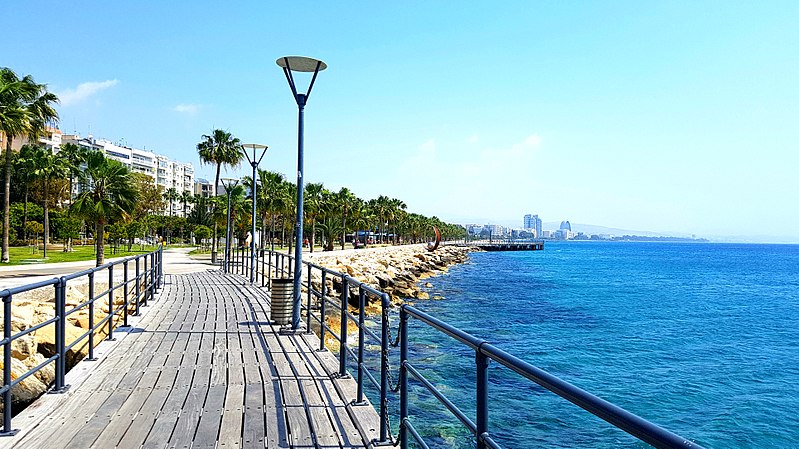
Limassol, on the south coast, is where Richard the Lionheart married Berengaria of Navarre on 12 May 1191, and she was crowned Queen of England the same day, with tradition placing the ceremony at the site of the castle.
See Limassol’s castle, rebuilt by the Ottomans and home to the Cyprus Medieval Museum, stroll the old town and the Molos seafront, and visit Kolossi Castle to the west, the Knights Hospitaller stronghold rebuilt in 1454.
Kolossi’s estate, the Grande Commanderie, gave its name to Commandaria, the sweet wine of the Limassol hills, often called the oldest named wine in continuous production.
5 – Kourion
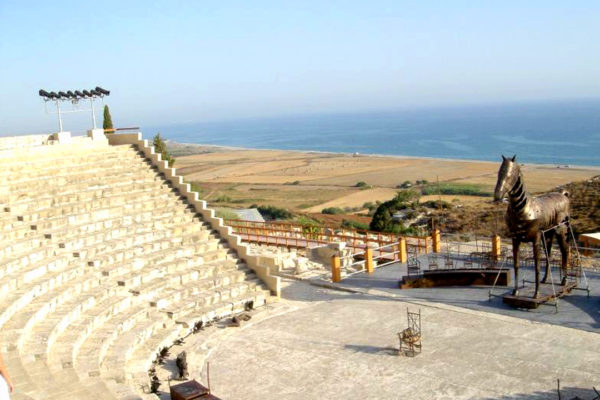
Kourion stands on a clifftop west of Limassol, a Greco-Roman city with a sanctuary to Apollo used from the 8th century BC, until a series of earthquakes beginning in 365 AD brought it down.
See Kourion’s theatre, built in the 2nd century BC and later enlarged by the Romans, overlooking the sea, and the House of Eustolios, whose mosaic shows Ktisis, the personification of creation, holding a measuring rod.
Excavating at Kourion in the 1980s, archaeologists found a family killed by the earthquake of 365, a young man sheltering a woman and baby, and coins found with them helped date the disaster.
6 – Paphos
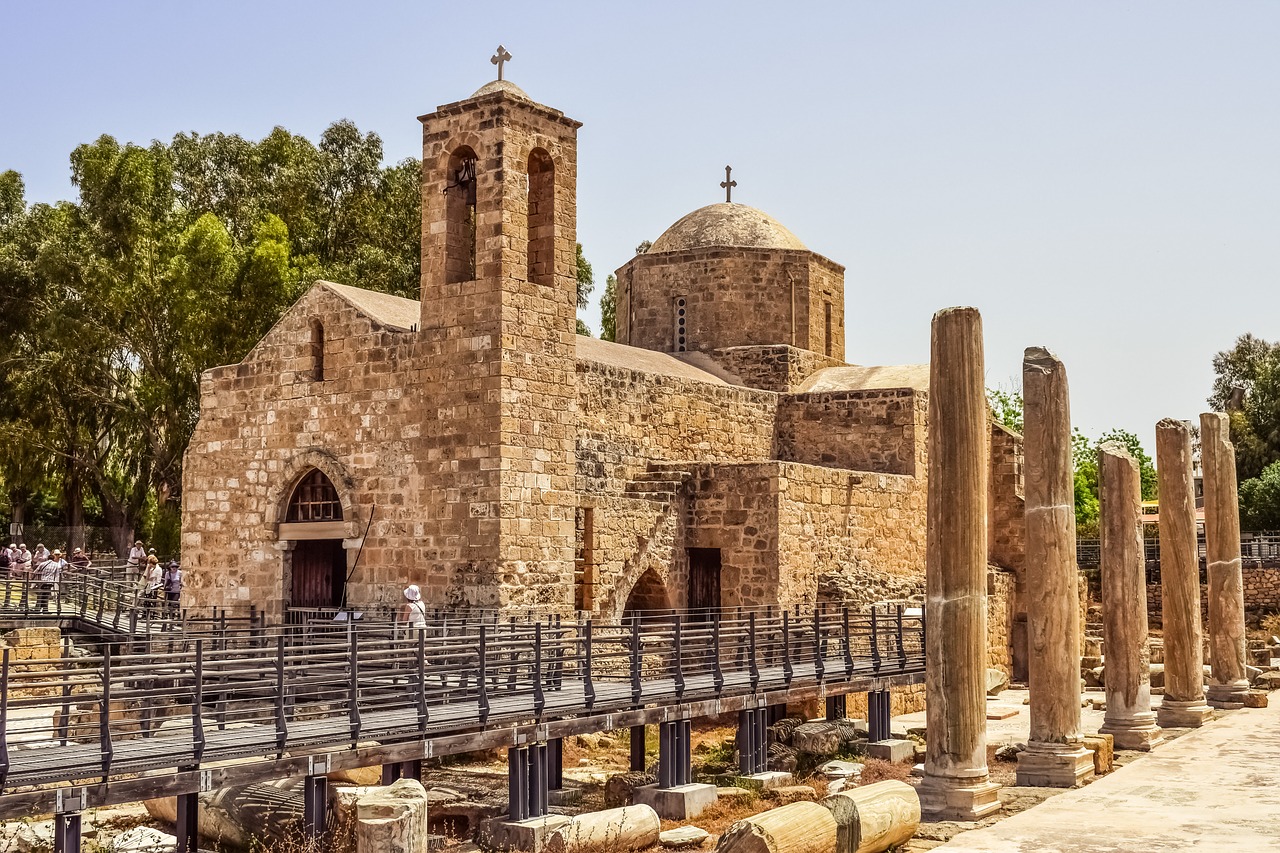
Paphos, on the south-west coast, was capital of Cyprus under the Romans, and the whole town, with its archaeological park and Aphrodite’s sanctuary at Kouklia, was UNESCO-listed in 1980.
Paphos’s mosaic floors, in the houses of Dionysos, Theseus and Aion, are among the finest in the eastern Mediterranean, and you can also see the Tombs of the Kings and Aphrodite’s Rock, her mythical birthplace, along the coast.
No kings were ever buried in Paphos’s Tombs of the Kings, which were carved for wealthy officials and aristocrats, and St Paul’s Pillar, where tradition says he was flogged, has no evidence behind it.
7 – Ayia Napa
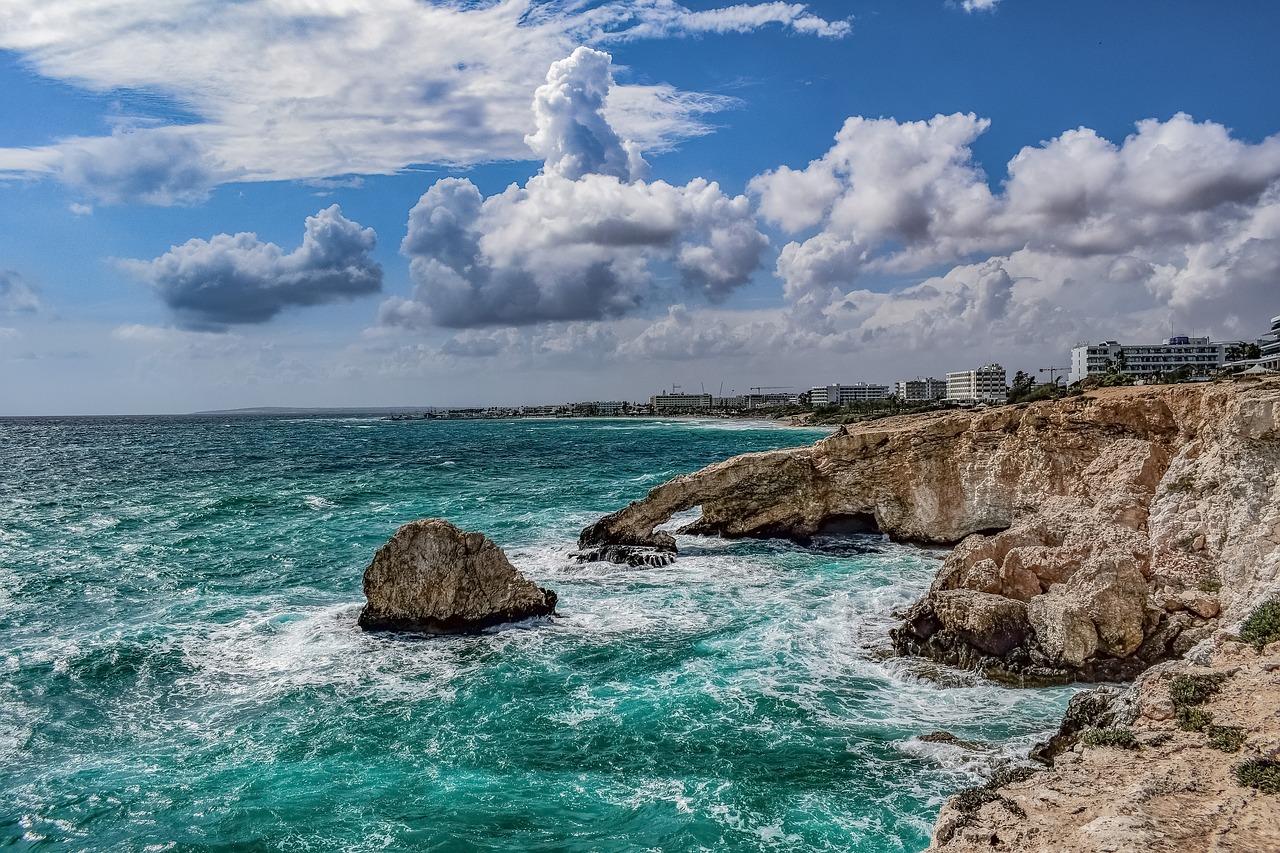
Ayia Napa, at the south-east tip of the island, grew around a Venetian-era monastery of the early 16th century, built over a cave church, and its name means roughly “Holy Mother of the wooded valley”.
Visit Ayia Napa’s monastery with its ancient sycamore tree, then walk the sea caves and cliffs of Cape Greco and swim at Nissi beach.
According to legend, a hunter’s dog led him to a cave in the woods where a glowing icon of the Virgin Mary was hidden, and Ayia Napa’s monastery was built on the spot.
8 – Famagusta
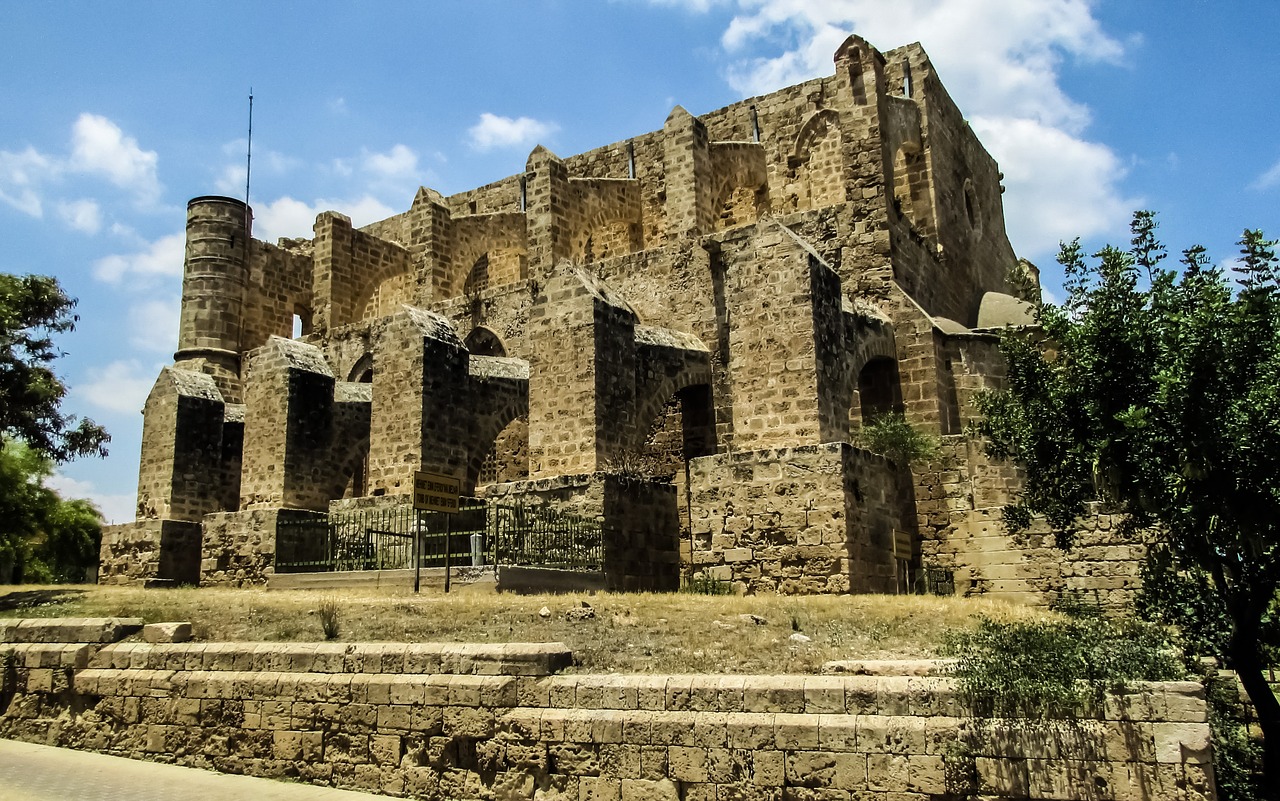
Famagusta (Gazimağusa), on the east coast, in the north of the island under Turkish Cypriot administration since 1974, was a rich medieval port whose 1570–71 siege ended with its Venetian commander, Marco Antonio Bragadin, flayed alive.
Walk Famagusta’s Venetian walls to Othello’s Tower, the Lusignan citadel, and see the Lala Mustafa Pasha Mosque, the former Gothic Cathedral of St Nicholas, where Lusignan kings were crowned kings of Jerusalem, while to the south lies Varosha, the resort district fenced off since 1974.
Famagusta’s “Othello’s Tower” takes its name from Shakespeare’s play, which is set in “a seaport in Cyprus” but never actually names Famagusta.
9 – Lefkara
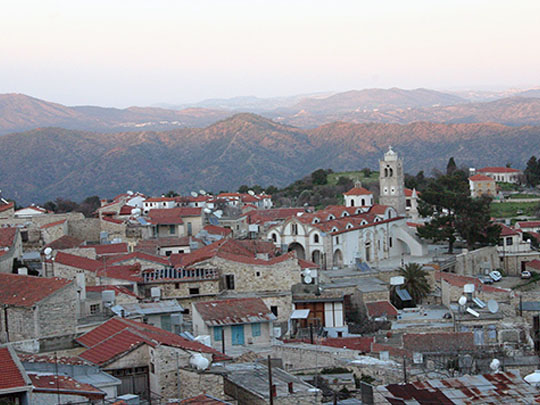
Lefkara, a village in the Troodos foothills, takes its name, “white hills”, from its limestone, and has been known since at least the 14th century for lefkaritika, a lace UNESCO added to its intangible heritage list in 2009.
Wander Lefkara’s lanes of stone houses, watch lace being made in doorways, and browse its silver filigree workshops.
According to local tradition, Leonardo da Vinci visited Lefkara in 1481 and bought a lace altar cloth for Milan Cathedral, though there’s no evidence for it, and a Lefkara lace pattern bears his name.
10 – Kakopetria
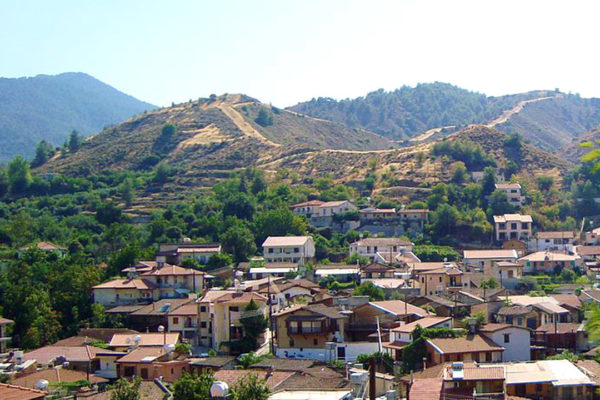
Kakopetria is a mountain village in the Solea Valley on the northern slopes of the Troodos, whose old quarter of stone houses has been declared a protected heritage site.
Wander Kakopetria’s old village and restored watermill, then visit Agios Nikolaos tis Stegis, “St Nicholas of the Roof”, an 11th-century church with frescoes spanning six centuries, one of ten Troodos painted churches on UNESCO’s list.
Kakopetria means “bad rock”, and according to legend it was named after a boulder that rolled down and crushed a newlywed couple, and the rock stands at the entrance to the old village.
11 – Amathus
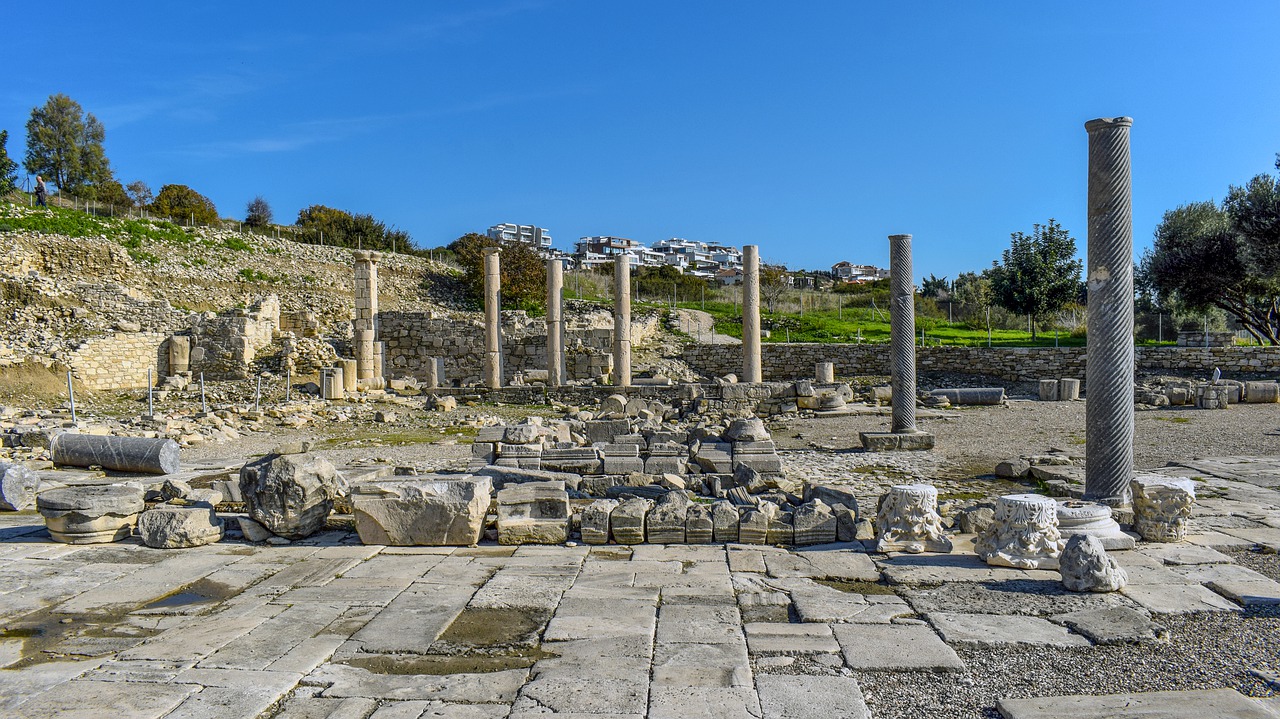
Amathus, east of Limassol, was one of the ancient city-kingdoms of Cyprus, home to one of the island’s most important sanctuaries of Aphrodite, and by Richard the Lionheart’s time in 1191 it was almost deserted.
Walk Amathus’s ruins down to the sea, from the agora and early Christian basilicas to the acropolis where the sanctuary of Aphrodite stood.
Amathus’s giant 6th-century BC stone vase, more than 12 tonnes, was taken to Paris in 1865 and stands in the Louvre, and a writer from Amathus, quoted by Plutarch, claimed Theseus left Ariadne in Cyprus, where she died and was honoured in a grove.
12 – Troodos Painted Churches
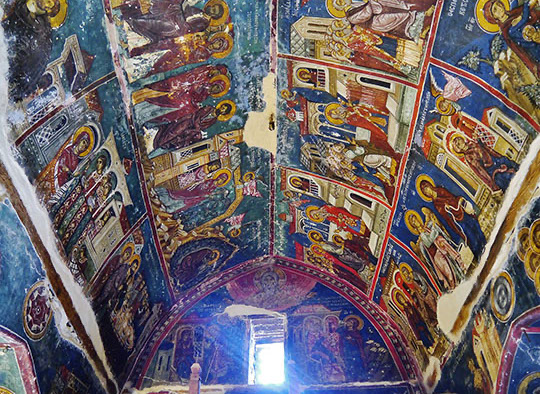
The Troodos Painted Churches are a group of Byzantine churches and monasteries in the Troodos mountains, UNESCO-listed in 1985, their interiors covered in wall paintings from the 11th to the 16th centuries.
See Panagia Phorbiotissa at Asinou, painted in 1105–06, Panagia tou Araka at Lagoudera, painted in 1192, Panagia tou Moutoulla (1280), and the Agios Ioannis Lampadistis monastery at Kalopanagiotis, where several churches shelter under one huge timber roof.
From the outside many of the Troodos Painted Churches look like humble barns, as their domes are hidden beneath steep wooden roofs of flat tiles built to shed rain and snow, and Asinou’s paintings were blackened by candle soot until conservators from Dumbarton Oaks cleaned them in the 1960s.
13 – Salamis
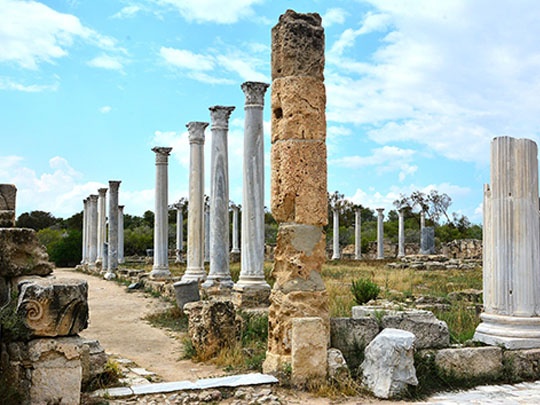
Salamis, on the east coast north of Famagusta, in the north under Turkish Cypriot administration since 1974, was the leading ancient city-kingdom of Cyprus, founded in legend by Teucer after the Trojan War and abandoned after Arab raids in the 7th century.
Walk Salamis’s Roman gymnasium, lined with headless statues, the theatre built for about 15,000, and the Royal Tombs of the 8th–7th centuries BC, where horses were sacrificed at the tomb entrances and one tomb held an ivory-decorated bed and thrones.
Salamis is linked to St Barnabas, traditionally said to be from the city, and when his tomb was reported found in the late 5th century, Emperor Zeno confirmed the Church of Cyprus’s independence and let its archbishop sign in red ink, wear purple and carry a sceptre, privileges the archbishops keep.
14 – Choirokoitia
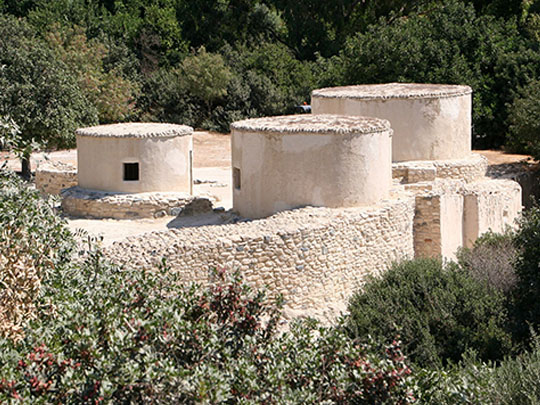
Choirokoitia, in the hills between Larnaca and Limassol, is a Neolithic village founded around 7000 BC, which UNESCO listed in 1998 and calls the most important Neolithic site in Cyprus.
Walk among Choirokoitia’s excavated round stone houses inside a thick defensive wall, then step into the five reconstructed houses beside the site to see how the villagers lived.
Choirokoitia’s people buried their dead under the floors of their own homes, sometimes with a stone placed on top, and the village was suddenly abandoned around 6000 BC and stood empty for well over a thousand years before anyone moved back.
15 – Kykkos Monastery
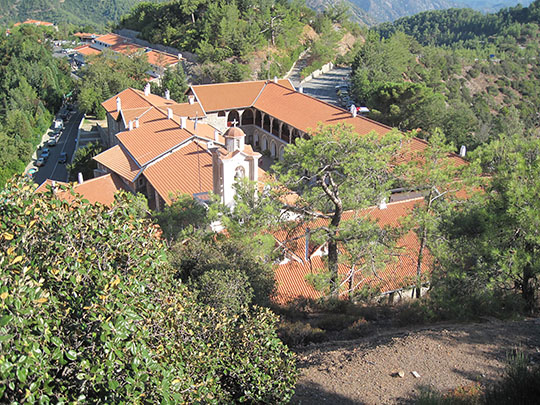
Kykkos Monastery stands high in the Troodos mountains, founded at the end of the 11th century under the Byzantine emperor Alexios I Komnenos, and has been burned and rebuilt several times, with its main church dating from 1745.
Visit Kykkos’s mosaic-covered arcades, its museum of Byzantine treasures and icons, and the hilltop of Throni nearby, where Archbishop Makarios III, who entered Kykkos as a 13-year-old novice, is buried.
Kykkos treasures an icon of the Virgin traditionally attributed to St Luke, kept under a silver-gilt cover for centuries so that her face is never seen, and legend says anyone who looks at it will be struck blind.