
Reinhard Link / Wikimedia Commons / CC-BY-SA-3.0 / GFDL
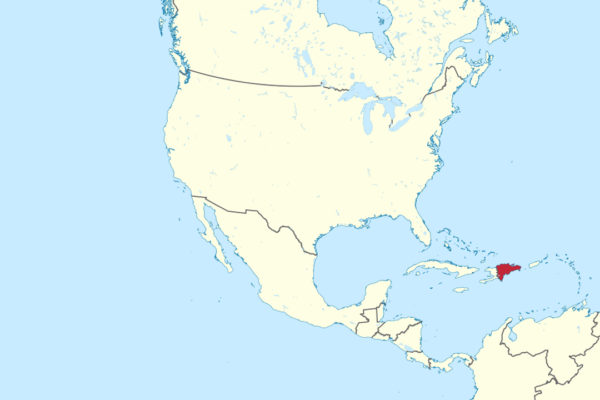
Capital: Santo Domingo
Population: 11.4 million+
Language: Spanish
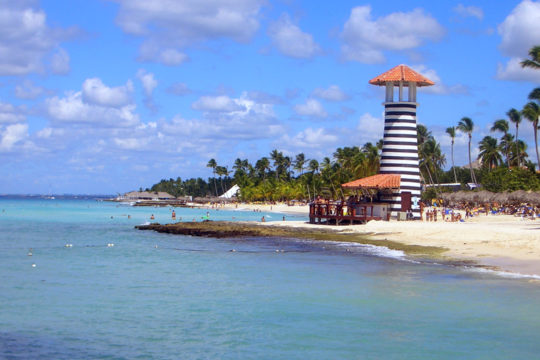
1 – Bayahibe (above)
A small fishing village on the south-east coast that became the jumping-off point for the Cotubanamá National Park — the park is named after a Taíno chief who led resistance to the Spanish and was hunted down and executed around 1504.
Fishing boats still work off the beach alongside the catamarans, and this is where the boats leave for Saona; the park behind the village holds caves with Taíno rock art and some of the best-preserved dry forest in the country.
The Bayahibe rose, a cactus that grows wild around here and almost nowhere else, was made the national flower in 2011 — it had only been identified as a distinct species a few years earlier.
2 – Santo Domingo
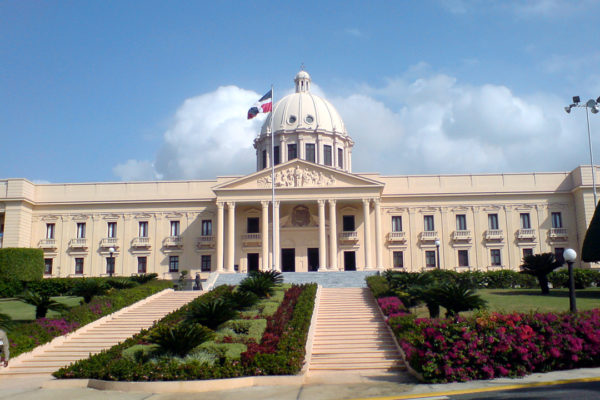
Founded on the east bank of the Ozama River in the 1490s, Santo Domingo is the oldest continuously inhabited European settlement in the Americas and the place from which Spain ran its new empire.
The Colonial City, UNESCO-listed since 1990, packs an extraordinary number of firsts into a few walkable blocks: the first cathedral in the Americas, the first university, the first paved street, and the Alcázar built for Columbus’s son Diego.
The grid the Spanish laid out here became the template for colonial towns across the Americas — and the cathedral held what were said to be Columbus’s remains until 1992, when they were moved to a vast cross-shaped lighthouse across the river.
3 – Saona Island
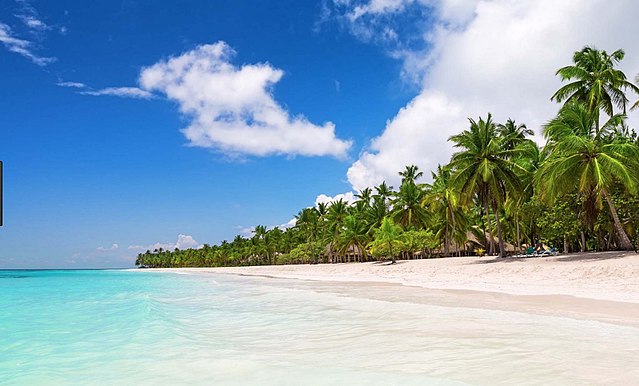
Saona lies just off the south-east tip of the country inside the same national park, and was named by Columbus in 1494 after Savona in Italy, the home town of a shipmate who asked for the favour.
Boats come in to long white beaches and a shallow turquoise sandbar offshore where you can stand waist-deep well out to sea; the one real village, Mano Juan, is a row of painted wooden houses with a turtle hatchery.
It’s the largest island off the Dominican coast and completely protected — no hotels have ever been built here, which is why the day-trip boats come and go and nobody stays.
4 – Samana
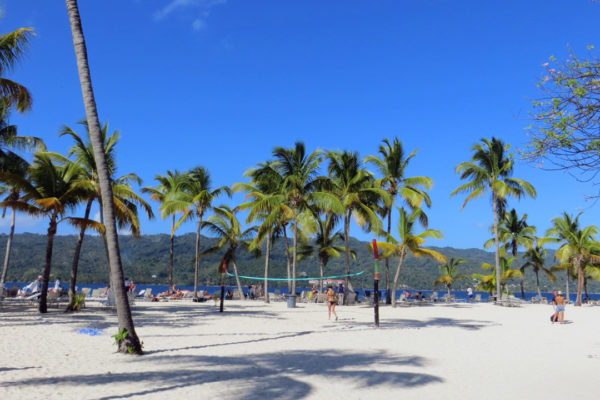
A long, mountainous peninsula pushing into the Atlantic from the north-east coast, cut off by mountains and reachable only by boat or mule track until the modern road was built.
Santa Bárbara de Samaná curls around a harbour of pastel buildings; from here you can ride to the 40-metre El Limón waterfall through cacao plantations, or take the boat out to Cayo Levantado.
Two things set Samaná apart: thousands of humpback whales come into the bay to breed and calve between January and March, and the town has an English-speaking Protestant community descended from freed African Americans who settled here from Philadelphia in the 1820s.
5 – La Romana
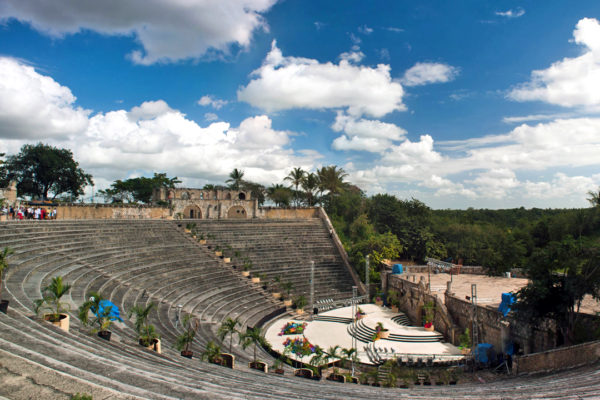
La Romana grew up around one of the largest sugar mills in the Caribbean, and in the 1960s the American conglomerate that owned it began turning the surrounding land into a resort — the origin of Casa de Campo.
The thing to see is Altos de Chavón, a village of coral-block houses, cobbled lanes and a church on a cliff above the Chavón River, with an archaeological museum of Taíno artefacts and a 5,000-seat amphitheatre.
None of it is old: the whole village is a 16th-century Mediterranean pastiche designed by a Paramount set designer in the 1970s, built from stone blasted out of a hillside for a road — and Frank Sinatra opened the amphitheatre in August 1982.
6 – Punta Cana
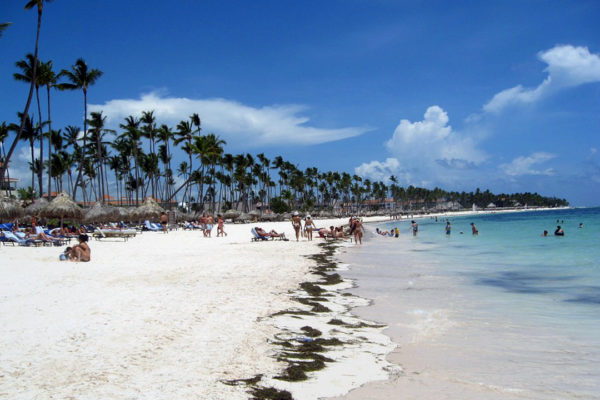
The far eastern corner of the country was thick coastal scrub with no road and no power until American investors bought a large tract in the late 1960s and built a resort from nothing.
What grew from it is now the busiest holiday coast in the Caribbean: some fifty kilometres of palm-backed white sand along Bávaro and Cabeza de Toro, wall-to-wall with all-inclusive resorts.
The international airport that made it possible was privately built and is still privately run, with open-sided terminals under thatched palm roofs — reputedly the first privately owned international airport in the world.
7 – Fortaleza San Felipe

Guarding the harbour mouth at Puerto Plata on the north coast, this squat Spanish fort was commissioned in 1564 and finished in 1577, and is the only 16th-century structure left standing in the city.
Walk the thick walls and the moat, look over the cannon at the Atlantic, and go through the three rooms of military and archaeological material inside; the sunset from the park below is a local ritual.
For most of its life it wasn’t a fort but a prison — including for political prisoners under the Trujillo dictatorship, which ran the country from 1930 until his assassination in 1961.
8 – Los Haitises National Park
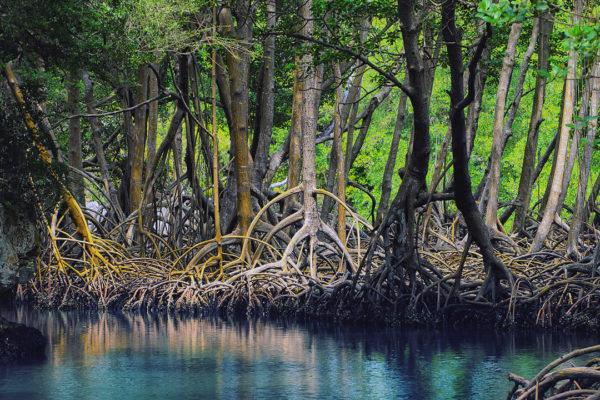
On the remote coast of Samaná Bay, Los Haitises is a drowned limestone landscape of conical hills rising straight out of the water, protected since 1976; the name means “hilly land” in Taíno.
Boats run from Sabana de la Mar through red mangrove channels to caves — Arena, La Línea, San Gabriel — whose walls carry some of the densest concentrations of Taíno rock art in the country.
Visitor numbers are capped to protect it, and the forest here is one of the last real rainforests left in the Dominican Republic — which is why parts of Jurassic Park were shot in it.