

Wikimedia Commons / CC-BY-SA-3.0 / GFDL
Capital: Ciudad de la Paz
Population: 1.8 million+
Language: Spanish/French/Portuguese
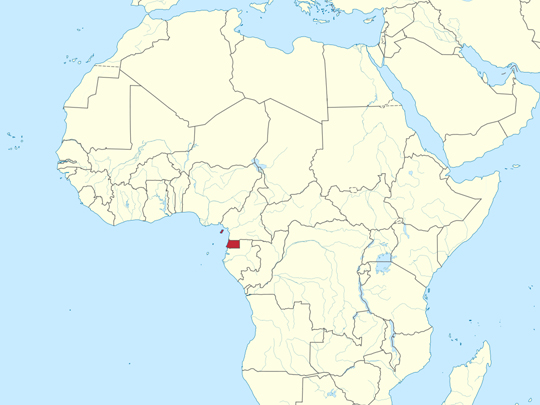
1 – Malabo (above)
The country’s oldest city and, for more than half a century, its capital, Malabo sits on the north coast of volcanic Bioko Island in the Gulf of Guinea — founded by the British in 1827 as a base to hunt down slave ships, and later the Spanish colonial capital of Santa Isabel.
Its old centre is full of faded Spanish colonial charm — the twin-towered Cathedral of Santa Isabel, the Presidential Palace and pastel plazas — while oil wealth has thrown up gleaming new towers along the harbour, all beneath the green slopes of a dormant volcano.
Equatorial Guinea is the only country in Africa where Spanish is an official language — a legacy of nearly two centuries of Spanish rule that makes Malabo a surprising pocket of Spanish culture on the Gulf of Guinea.
2 – Bata
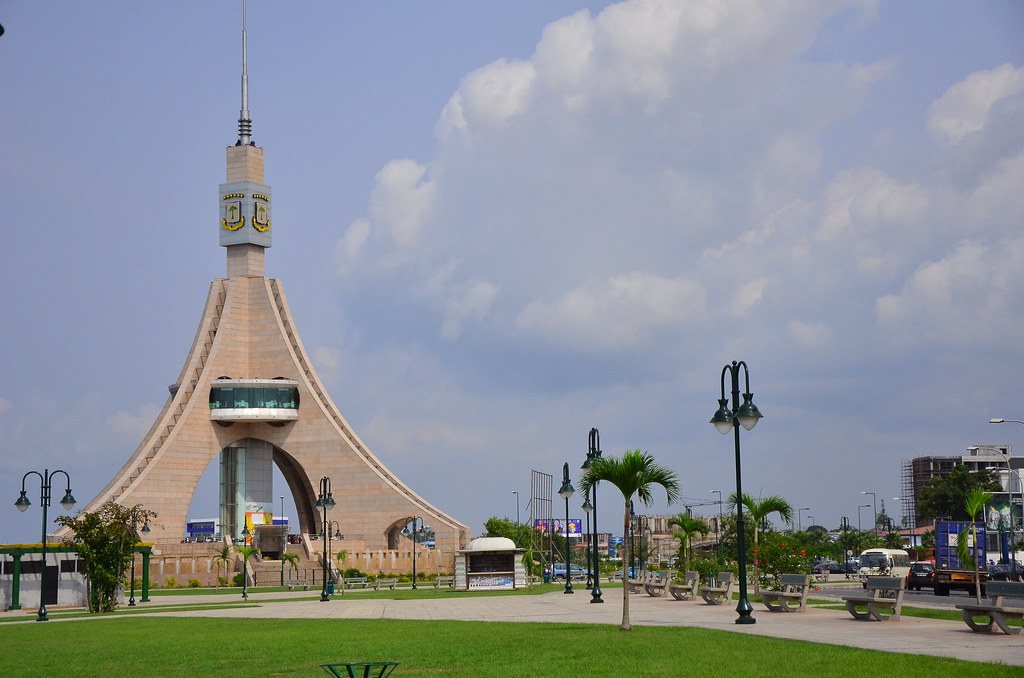
The largest city in Equatorial Guinea, Bata is the bustling Atlantic port and economic heart of the mainland region of Río Muni, wedged between Cameroon and Gabon.
Life centres on the palm-lined seafront promenade and the futuristic Torre de la Libertad, a landmark tower raised for independence day and topped by a revolving restaurant; the city is also the springboard for the rainforests, gorillas and forest elephants of Monte Alén National Park inland.
Deep in the jungle beyond Bata, the government has built an entire new capital from scratch — Ciudad de la Paz, the “City of Peace” — which in 2026 formally took over from Malabo as the country’s seat of power.
3 – Annobón
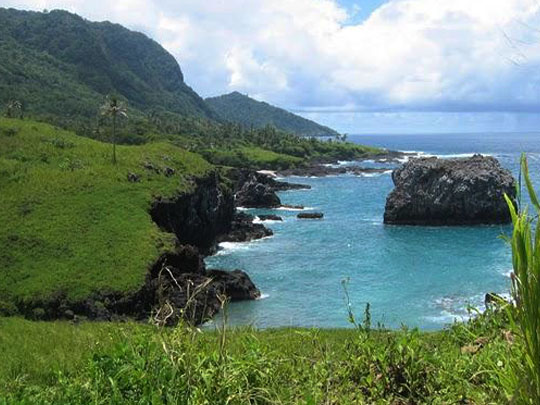
A 17km² cone of extinct volcano adrift in the Atlantic 670km southwest of Malabo — closer to São Tomé than to any part of its own country — Annobón was empty when Portuguese ships found it around 1473 near New Year’s Day, which is how it got its name, Ano Bom, the good year; the Portuguese peopled it with enslaved men and women shipped from São Tomé and Angola, then all but forgot it, and handed it to Spain in 1778 under the treaty that gave Spain an African colony in the first place.
A green crater lake sits in the old volcano beneath Pico Quioveo, baobab and ceiba crowd the slopes, birds found nowhere else on Earth flit through them, humpbacks pass offshore in the southern winter, and the whole population of around 5,000 lives in two settlements, chiefly the little provincial capital of San Antonio de Palé.
Left alone for four centuries, the islanders built a language: Fa d’Ambô, a Portuguese creole that branched from São Tomé’s in the 1500s and then evolved by itself — so on this one speck of a Spanish-speaking country, five thousand people talk in a tongue that has been drifting since before the Armada sailed.
4 – Bioko Island
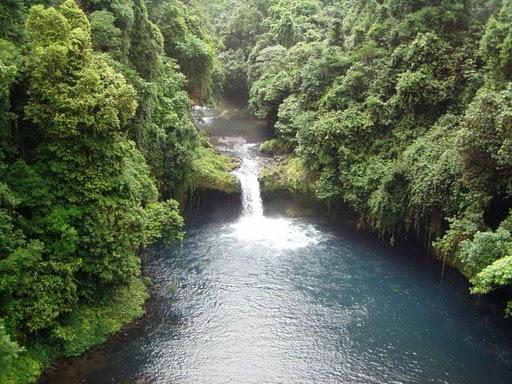
Equatorial Guinea’s largest island, Bioko rises steeply out of the Gulf of Guinea in a mass of rainforested volcanic peaks — crowned by Pico Basile at about 3,011m, the highest point on any island in the gulf — with the capital, Malabo, on its northern shore.
Cloaked in dense rainforest, its misty highlands shelter one of Africa’s richest gatherings of monkeys — seven species, several found nowhere else, from the Bioko drill to the Bioko red colobus — and hikers tackle Pico Basile for views that on a clear day reach Mount Cameroon across the sea.
On the remote black-sand beaches around the village of Ureca, in the island’s wild south, four different species of sea turtle — including the giant leatherback — haul ashore to nest, making it one of the most important turtle rookeries in the Gulf of Guinea.