
Wikimedia Commons / CC-BY-SA-3.0 / GFDL
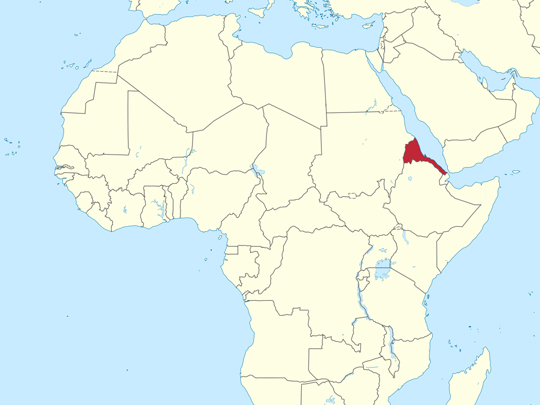
Capital: Asmara
Population: 5.5 million+ (No census has ever been held, estimated from 3.7–6.5 million.)
Language: Tigrinya, Arabic and English – working languages, nine national languages recognised as equal — Tigrinya, Tigre, Saho, Afar, Bilen, Kunama, Nara, Beja and Arabic.
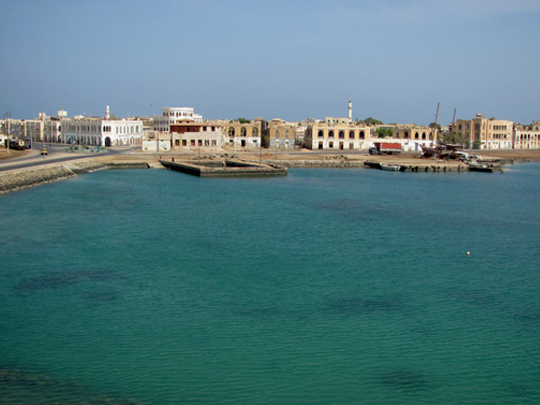
1 – Massawa (above)
A sun-baked port on Eritrea’s Red Sea coast, spread across two coral islands linked to the mainland by causeways, Massawa has been a Red Sea trading hub for over a thousand years — ruled in turn by Ottomans, Egyptians and Italians, who each left their mark before it became Italy’s first colonial capital in Eritrea.
Wander the atmospheric old town, a maze of coral-stone buildings, carved wooden balconies and old mosques raised from blocks quarried out of the Dahlak reefs; the bomb-scarred Imperial Palace, once a residence of Emperor Haile Selassie, still stands as a haunting seafront ruin.
Nicknamed the “Pearl of the Red Sea,” Massawa is also one of the hottest inhabited places on Earth, where summer heat routinely climbs past 40°C — and just offshore lie the Dahlak Islands, a diver’s paradise of untouched coral reefs and old pearl-diving grounds.
2 – Adulis
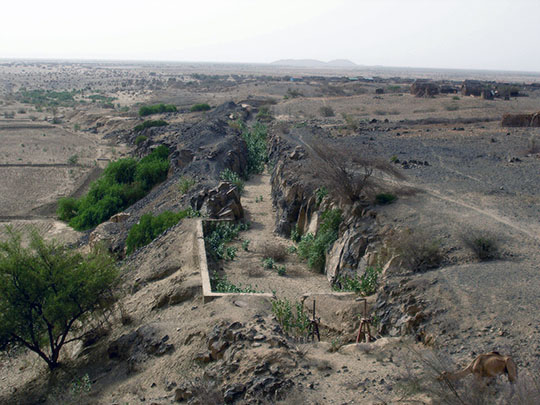

On the Red Sea shore of the Gulf of Zula, a short way south of Massawa, lie the ruins of Adulis — for over a thousand years the great seaport of the Kingdom of Aksum, the gateway through which one of the ancient world’s four superpowers (alongside Rome, Persia and China) traded with the wider world.
Named in the 1st-century Greek mariner’s guide the Periplus of the Erythraean Sea, its wharves shipped out ivory, obsidian, gold and incense in exchange for Roman glass and wine; today the barely-excavated site reveals temple platforms, cisterns and the foundations of early Byzantine churches, with Roman coins still turning up in the sand.
This coast was also a source of African war elephants — the Greek pharaohs of Egypt sent expeditions here to trap them for battle, and a famous (now lost) inscription at Adulis once boasted of the war elephants of Ptolemy III.
3 – Qohaito
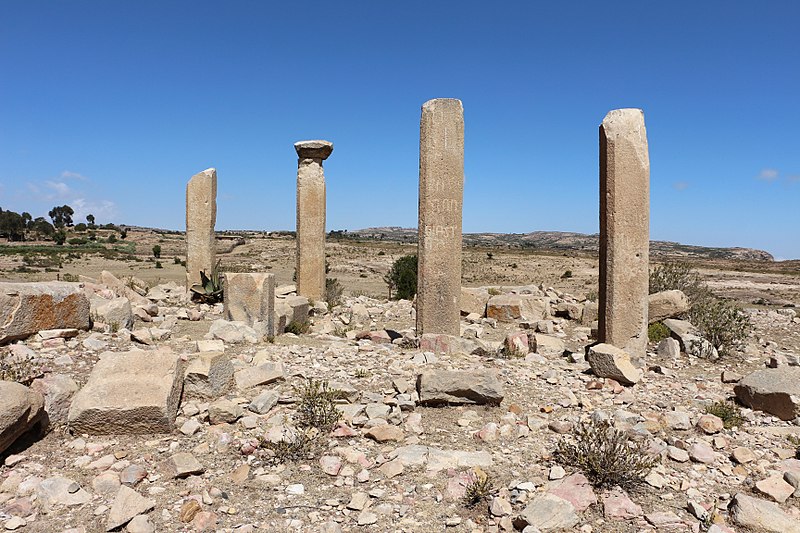
High on a windswept plateau at the edge of the Rift Valley in southern Eritrea, around 2,500m up, lie the vast ruins of Qohaito — a great pre-Aksumite city (often identified with ancient Koloe) that grew rich as a caravan halt on the incense-and-ivory road between the Aksumite capital and the Red Sea.
Scattered across a huge, barely-excavated site stand the tall columns of the Temple of Mariam Wakiro, other ruined temples and rock-cut tombs — and, nearby in the Adi Alauti cave, prehistoric paintings hinting that people have lived here for some 7,000 years.
Among the ruins survives the Safira dam, a great stone barrier reckoned to be around a thousand years old — and remarkably, it still holds back water for the region’s herders to this day.
4 – Debre Bizen Monastery
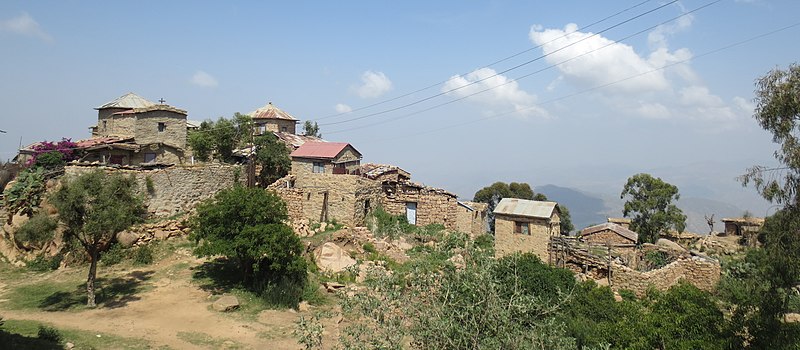
High on a mountaintop above the town of Nefasit, on the dramatic road that plunges from Asmara down to the Red Sea, sits Debre Bizen — one of Eritrea’s oldest and most revered Orthodox monasteries, founded in 1361 and home to a community of monks living an austere, medieval life.
Reaching it means a steep two-to-three-hour climb, rewarded by cloud-wreathed views stretching to the sea and the Dahlak Islands — and by the monastery’s great treasure: a library of around 1,000 ancient Ge’ez manuscripts, among them illuminated Bibles and a rare copy of the biblical Book of Enoch.
One rule here is absolute: no women may enter — and not just women, but females of any species at all, a ban the monks trace to a founder who declared he would “rather look a lion in the face than a woman in the eyes.”
5 – Asmara
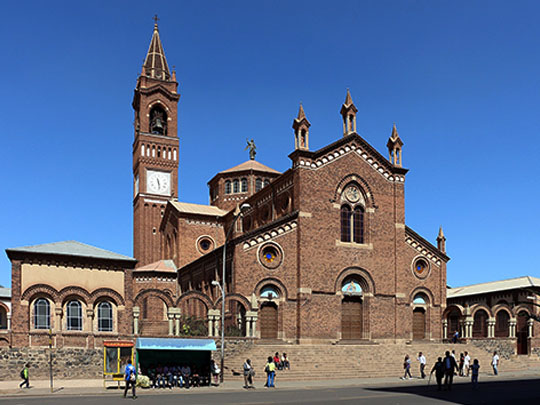
Standing at 2,325m on the highland plateau, Asmara grew from four villages into the capital the Italians moved up from the coast in the 1890s — then was rebuilt almost wholesale in the 1930s as Mussolini’s staging ground for the invasion of Ethiopia, leaving some 400 Futurist, Rationalist and Art Deco buildings that UNESCO listed in 2017 as a modernist African city, the country’s only World Heritage Site.
Because Eritrea spent the next fifty years too poor and too embattled to knock any of it down, the whole cityscape survives: palm-lined Harnet Avenue, the Cinema Impero of 1937 still screening films under its original neon, espresso bars the Italians left behind, bicycles everywhere in a cycling-mad country, and a graveyard of wrecked Soviet tanks on the edge of town.
Best of all is the Fiat Tagliero garage of 1938, built in the shape of an aeroplane with two thirty-metre concrete wings and no supports beneath them — the authorities said it would fall down, and legend has it the architect drew a pistol to make his foreman pull the props away. It is still standing.