

Wikimedia Commons / CC-BY-SA-3.0 / GFDL
Capital: Addis Ababa
Population: 132 million+
Language: Amharic, Afaan Oromo, Somali, Afar and Tigrinya
Note: Ethiopia keeps its own calendar of 13 months, running seven to eight years behind the Gregorian one, which is why the country celebrated its millennium in September 2007.

1 – Simien Mountains and Ras Dashen (also above)

The Simien Mountains of northern Ethiopia, the eroded remains of an ancient volcanic plateau, form a wall of jagged peaks and gorges with sheer cliffs dropping some 1,500 m, and in 1978 they were among the very first places named UNESCO World Heritage Sites.
Trekkers follow the Simien escarpment for days past giant lobelias, the longest routes climbing to Ras Dashen, at about 4,550 m the highest peak in Ethiopia, and in 1966 the Waterford travel writer Dervla Murphy crossed these mountains with a pack-mule on the walk she told in In Ethiopia with a Mule.
The heights are home to the walia ibex, found nowhere else on Earth, along with the Ethiopian wolf and the gelada, both found only in Ethiopia, the gelada nicknamed the “bleeding-heart” monkey for the red patch on its chest and the only primate that lives mainly on grass.
2 – Blue Nile Falls

Blue Nile Falls, about 30 km downstream from Lake Tana near Bahir Dar, is where the Blue Nile plunges about 42 m over a basalt cliff, known locally as Tis Abay, “great smoke”, for the clouds of spray it throws into the air.
In the rainy season the falls can spread more than 400 m wide, though a hydroelectric plant diverts much of the flow for the rest of the year, and the path to the viewpoints crosses a stone bridge built for Emperor Susenyos in 1626, often called the Portuguese Bridge.
Egypt has long been called “the gift of the Nile”, yet most of the water that reaches it comes from the Blue Nile, which rises in the Ethiopian highlands above the falls.
3 – Wonchi Lake

Wonchi Lake fills the caldera of an extinct volcano about 100 km west of Addis Ababa, ringed by forest and farmland high in the green highlands between Ambo, known for its mineral water, and Woliso.
Visitors descend into the Wonchi crater on foot or on horseback to reach the lakeshore, where hot springs bubble up, then hike the forested rim or take a boat out onto the water.
On an island in the lake stands the monastery of Wonchi Cherkos, said to date from the 13th century, and among its treasures is a bell named in honour of Emperor Fasilides, the castle-builder of Gondar.
4 – Lalibela
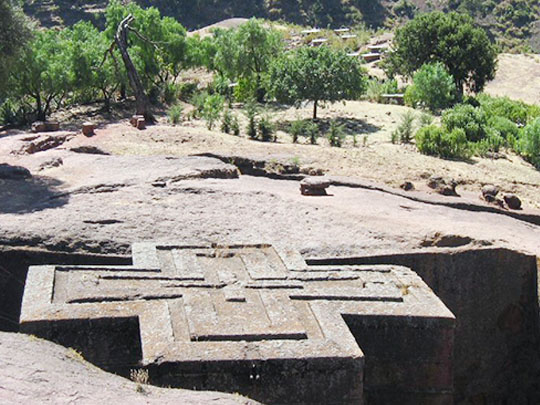
Lalibela, high in Ethiopia’s northern highlands, is famed for eleven churches carved from the rock, which tradition credits to the Zagwe king Gebre Meskel Lalibela (c. 1181–1221), said to have conceived them as a New Jerusalem after the holy city fell to Saladin in 1187.
The Lalibela churches were not built but excavated, carved from the top down out of soft volcanic rock and linked by trenches and passages, with a stream named the Jordan dividing the two main groups, while Bete Giyorgis stands alone in its pit, a cross-shaped church hidden until you reach the rim.
None of Lalibela is a ruin, for priests serve its churches and crowds of white-robed pilgrims gather at Genna, Ethiopian Christmas, while legend holds that angels helped the king carve them, and UNESCO listed the site in 1978.
5 – Lake Tana

Lake Tana, Ethiopia’s largest lake, is where the Blue Nile begins its journey, and around two dozen of its 37 or so islands hold monasteries and churches, making it a spiritual heartland of Ethiopian Orthodoxy.
Boats from Lake Tana’s shore reach the round church of Ura Kidane Mihret on the Zege Peninsula, covered in vivid murals, and the island of Daga Estifanos, which guards the mummified remains of several medieval emperors with crowns and ancient parchments, while fishermen pole papyrus-reed boats called tankwa across the water.
On the island of Tana Qirqos, tradition holds that the Ark of the Covenant was kept for some 600 years before being taken to Aksum.
6 – Fasilides’ Palace

Fasilides’ Palace stands within Fasil Ghebbi, the walled royal compound of Gondar, which Emperor Fasilides made a permanent capital in 1636, ending centuries in which Ethiopia’s rulers had moved between roving royal camps.
Behind 900 m of walls rise turreted castles, Fasilides’ own keep the grandest, blending Ethiopian building traditions with Hindu and Arab influences, later touched by a Baroque style brought by Jesuit missionaries, which earned Gondar the nickname “Camelot of Africa” and a place on UNESCO’s list in 1979.
Just outside the walls lies Fasilides’ Bath, a pool blessed each year at Timkat, Ethiopia’s Epiphany, when crowds leap into the water, and it was at Gondar that the last Italian forces in East Africa surrendered, on 27 November 1941.
7 – Lake Shala

Lake Shala, in the Great Rift Valley south of Addis Ababa, fills the crater of an extinct volcano and, at up to 266 m deep, is the deepest of Ethiopia’s Rift Valley lakes.
Hot, sulphurous springs bubble up along its rocky shores, and its islands have long been one of Africa’s most important breeding grounds for great white pelicans, while neighbouring Lake Abijatta, shallow and often pink with flamingos, shares the Abijatta-Shalla National Park.
Lake Shala’s soda-rich water holds few if any fish, so the pelicans that nest on its islands fly to neighbouring Abijatta to feed.
8 – Harar
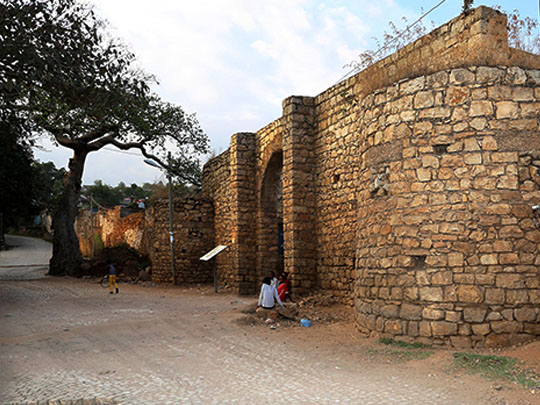
Harar Jugol, the walled old city of Harar where the eastern highlands drop towards the Somali lowlands, has been a centre of Islam and trade for more than a thousand years, capital of the Adal Sultanate and later of the independent Emirate of Harar, and UNESCO listed it in 2006.
UNESCO counts 82 mosques and 102 shrines within walls that took their final form in the 16th century, and Harar is often described as the fourth holiest city of Islam, while a merchant’s house built after his death bears the name of Arthur Rimbaud, who traded coffee and guns here in the 1880s.
After dark, just outside the walls, the hyena men of Harar feed wild hyenas by hand and from sticks held in their mouths, a custom that local tradition traces back centuries to porridge left out for the animals at the festival of Ashura.
9 – Addis Ababa
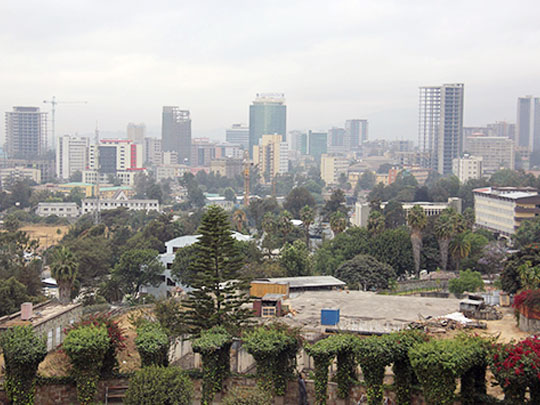
Addis Ababa, “new flower”, was founded in 1886 by Emperor Menelik II and Empress Taytu, sits at about 2,355 m as one of the world’s highest capitals, and a decade later Menelik’s army routed an invading Italian force at Adwa, a victory that kept Ethiopia independent until Italy’s occupation of 1936–41.
The National Museum tells the story of Lucy, the 3.2-million-year-old skeleton found at Hadar in 1974 and named after the Beatles song “Lucy in the Sky with Diamonds”, though Ethiopians call her Dinknesh, “you are marvellous”, while Haile Selassie lies in Holy Trinity Cathedral.
In February 1937, after an attempt on the life of the Italian viceroy, occupying forces killed thousands of Addis Ababa’s people in the Yekatit 12 massacre, and on 5 May 1941, five years to the day after Italian troops entered the city, Haile Selassie returned to his capital.
10 – Aksum
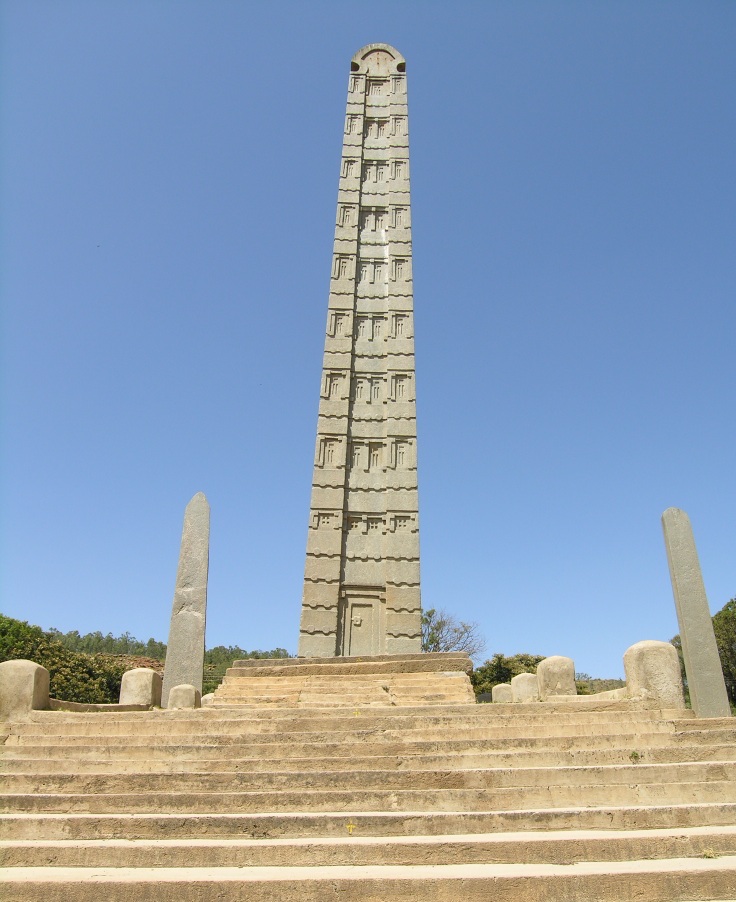

Aksum, in the far north near the Eritrean border, was the capital of a kingdom that the 3rd-century Persian prophet Mani is said to have ranked with Rome, Persia and China among the four great powers of the world, a state that minted its own gold coins and adopted Christianity under King Ezana in the 4th century.
Granite stelae mark Aksum’s royal tombs, among them the fallen Great Stele, about 520 tonnes, probably the largest single stone ancient people ever tried to raise, while the nearby Church of St Mary of Zion is said to guard the Ark of the Covenant, watched by a guardian monk who never leaves its chapel.
In 1937 Italian troops carried off one of Aksum’s great obelisks and raised it in Rome, and only in 2005 was it flown home in three pieces aboard giant Antonov cargo planes, to be re-erected in 2008.
11 – Adwa
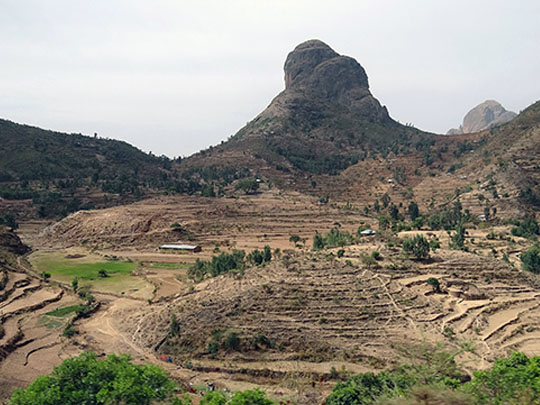
Adwa, a market town among the sawtooth mountains of Tigray in northern Ethiopia, gave its name to the battle of 1 March 1896, when Emperor Menelik II, with Empress Taytu among his commanders, routed an Italian invasion force under General Oreste Baratieri in the hills around the town.
Peaks such as Semaiata and Abba Garima frame the Adwa battlefield, while nearby the monastery of Abba Garima is famed for the Garima Gospels, radiocarbon-dated to the 4th–7th centuries and thought to be among the oldest illustrated Christian manuscripts in the world.
Italy had claimed Ethiopia as a protectorate under a disputed clause of the 1889 Treaty of Wuchale, but at Adwa some 100,000 Ethiopians overwhelmed fewer than 20,000 Italian and askari troops, killing about 6,000, a victory that kept Ethiopia free, inspired Africans worldwide and left a humiliation Mussolini set out to avenge in 1935.