
Wikimedia Commons / CC-BY-SA-3.0 / GFDL
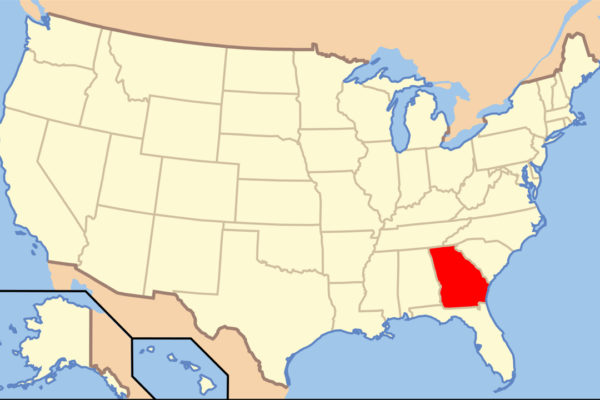
Capital: Atlanta
Population: 11.3 million+
Language: English
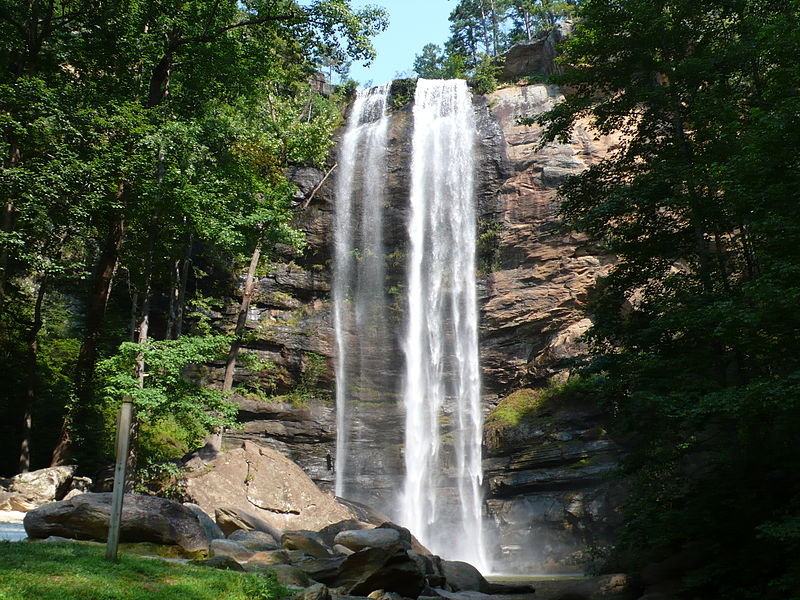
1 – Toccoa Falls (above)
Toccoa Falls drops off the edge of the Blue Ridge foothills in Stephens County, northeast Georgia, and in 1911 the preacher Richard Forrest agreed to buy the Haddock Inn that stood beside it, with 100 acres, for $25,000, moving his little Bible school here, putting down — by the college’s own account — just $10.
At Toccoa Falls a short, flat path leads to the foot of the 186-foot drop, and the Cherokee story recorded by the ethnologist James Mooney in 1900 tells of a man who saw a woman walking under the water, then suddenly sitting on a rock high up the falls — one of the Nûñnëhï, the Cherokee spirit people.
Toccoa Falls is often billed as the tallest free-falling waterfall east of the Mississippi, but Fall Creek Falls in Tennessee drops 256 feet, and the legend of “Princess Toccoa” and her doomed lover comes from a 20th-century county history, not from the Cherokee.
2 – Atlanta
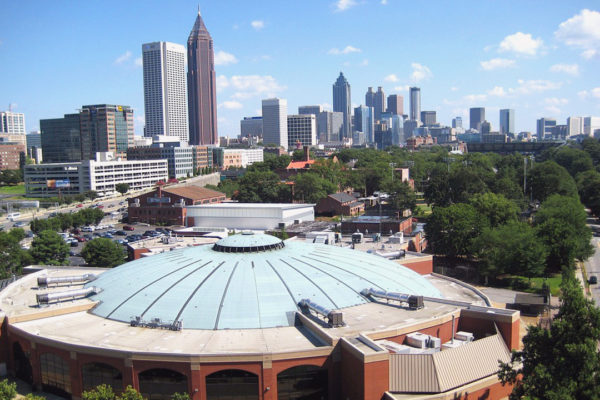
Atlanta, in north Georgia, began in 1837 as Terminus, the end of the Western & Atlantic Railroad, was renamed Marthasville in 1843 and then Atlanta, a name coined by the railway engineer J. Edgar Thomson as the feminine of “Atlantic”, and after Sherman burned about 40% of it in November 1864 it rose again to become the state capital in 1868.
In Atlanta you can visit the Martin Luther King Jr. National Historical Park, with his birth home, Ebenezer Baptist Church and his tomb, the World of Coca-Cola, for a drink first served at Jacobs’ Pharmacy in 1886 and the gold-domed State Capitol — and Hartsfield-Jackson is the world’s busiest airport, with 106 million passengers in 2025.
Gone with the Wind‘s Tara was modelled on Rural Home near Fayetteville, the plantation of Margaret Mitchell’s great-grandfather Philip Fitzgerald, a Tipperary-born Catholic who enslaved 35 people, and in the novel Gerald O’Hara names it after the Hill of Tara, seat of Ireland’s high kings, while the film’s Atlanta fire was shot by burning old sets, including King Kong’s wall.
3 – Augusta
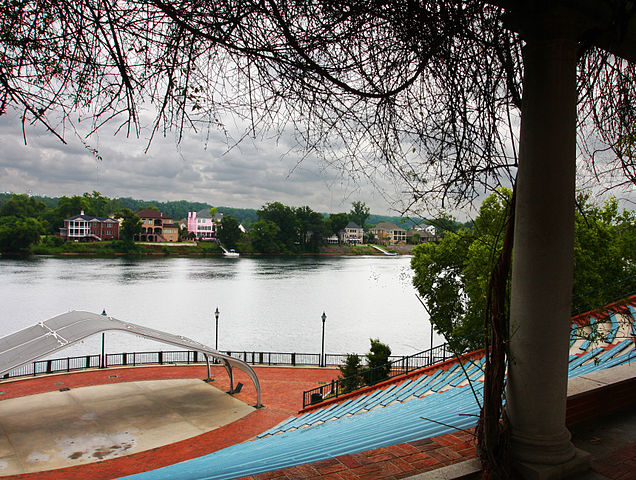
Augusta sits on the Savannah River at the South Carolina border, laid out in 1736 by James Oglethorpe as a fur and deerskin trading post and named after Princess Augusta, George III’s mother, and it was Georgia’s capital from 1785 to 1795, where the state ratified the US Constitution on 2 January 1788.
In Augusta you can walk the Riverwalk on top of the levee, with its Jessye Norman Amphitheater, follow the towpath of the Augusta Canal National Heritage Area, see the 150-foot chimney of the Confederate Powder Works, one of the only permanent structures completed by the Confederate government and find James Brown’s statue on Broad Street, in the city where he grew up.
The Augusta Canal of 1845 was dug by labourers from north Georgia and by enslaved and free Black workers, and its 1870s enlargement brought more than 200 Chinese workers who founded one of the oldest Chinese communities in the eastern US — and in the 1890s the city’s mayor was Patrick Walsh, born in Ballingarry, Co. Limerick and a former US senator.
4 – Fort Benning

Fort Benning stretches along the Chattahoochee River beside Columbus, on the Alabama border, set up in 1918 as Camp Benning, and it’s been the home of the US Army’s infantry ever since, with the armour school moving here from Fort Knox in 2011, as well as the Airborne and Ranger schools — Eisenhower served here in 1926–27.
Just outside the gates, the National Infantry Museum, opened in 2009, tells the story of the American foot soldier, and its most famous figure is the “Follow Me” statue of 1960, modelled on an officer candidate and often wrongly called “Iron Mike”, while the base’s 250-foot parachute jump towers date from 1941–42.
Fort Benning was named after the Confederate general Henry L. Benning, renamed Fort Moore in May 2023 after Lt Gen Hal Moore, played by Mel Gibson in We Were Soldiers, and his wife, Julia, then renamed Fort Benning in March 2025 — this time for Cpl Fred G. Benning, an 18-year-old from Nebraska who won the Distinguished Service Cross in France in 1918, and no relation.
5 – Stone Mountain
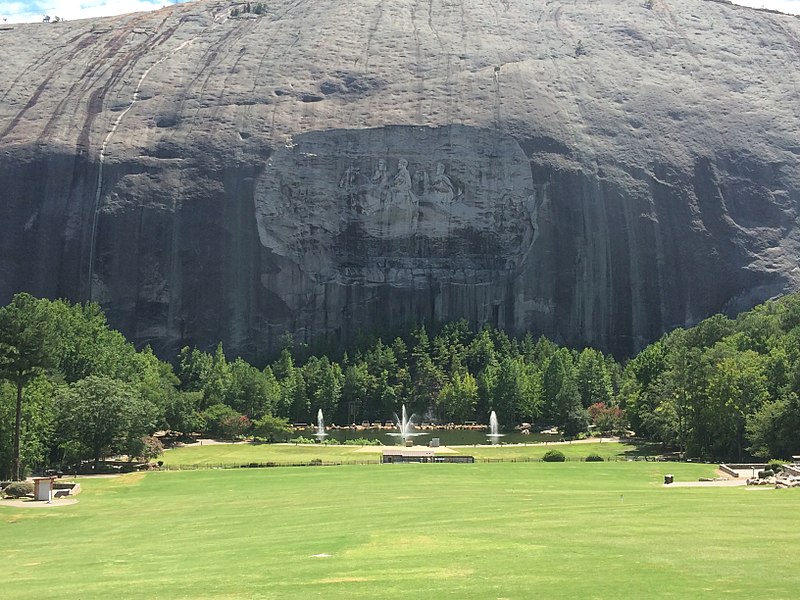
Stone Mountain is a dome of quartz monzonite rising 825 feet above the plain east of Atlanta, and on 25 November 1915 William J. Simmons met on its summit to found the second Ku Klux Klan with the owners’ blessing.
Stone Mountain Park has a 1.3-mile Walk-Up Trail and a Skyride cable car to the bare summit, and on the north face is the Confederate Memorial Carving of Jefferson Davis, Robert E. Lee and Stonewall Jackson, 90 by 190 feet and cut 42 feet deep — the park calls it the largest high-relief sculpture in the world.
The carving was begun in 1923 by Gutzon Borglum, fired in 1925 before he went on to Mount Rushmore, and after decades of stops, Governor Marvin Griffin pledged to finish it 57 days after the Supreme Court’s Brown v. Board school ruling of 1954, the state bought the mountain in 1958 and it was completed in 1972 — and in 1963 Martin Luther King Jr said, “Let freedom ring from Stone Mountain of Georgia.”
6 – Savannah
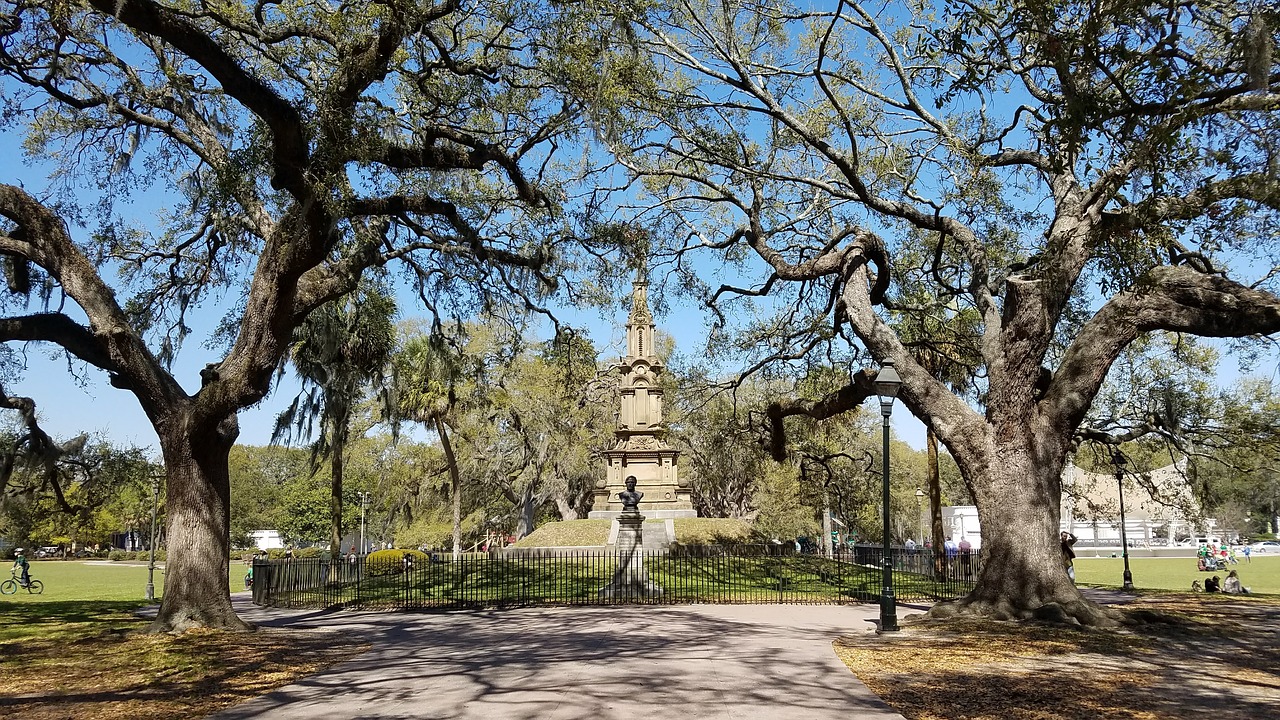
Savannah, on a bluff above the Savannah River near the Atlantic coast, was founded on 12 February 1733 by James Oglethorpe, in a colony that banned slavery until 1751, and was spared in December 1864 when Sherman sent Lincoln a telegram offering him the city as “a Christmas gift”.
Savannah’s Oglethorpe plan of streets around shady squares — four in 1733, 24 by 1851 and 22 today — leads to Forsyth Park, whose fountain of 1858 was ordered from a New York catalogue and has twins as far away as Cusco, Peru, and you can see Mercer House from Midnight in the Garden of Good and Evil and the Forrest Gump bench, a fibreglass prop now in the Savannah History Museum.
Savannah’s St Patrick’s Day parade, first held publicly in 1824 by the Hibernian Society, founded in 1812 to help Irish immigrants, is one of the largest in the US, and since the mid-1980s the city has dyed the Forsyth Park fountain green for it — partly because pranksters kept doing it themselves and damaging the pumps.
7 – Fort Pulaski
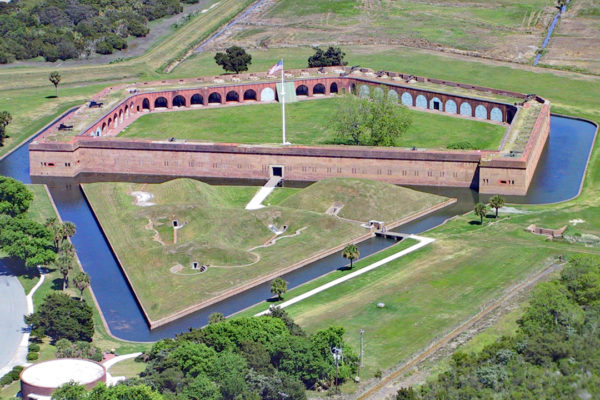
Fort Pulaski stands on Cockspur Island at the mouth of the Savannah River, built from 1829 to 1847 with about 25 million bricks by enslaved labourers rented from rice plantations, and named after Casimir Pulaski, the Polish cavalryman killed in the Siege of Savannah in 1779 — a young Lt Robert E. Lee worked on its site and drainage on his first posting.
Fort Pulaski National Monument has a moat and brick walls up to 7.5 feet thick, still scarred by the shells of 1862, and a cemetery where 13 of the “Immortal 600”, the Confederate officers held here in 1864–65, lie in unmarked graves.
On 10–11 April 1862 Union rifled cannon on Tybee Island, about a mile away, breached the walls in about 30 hours and forced a surrender — the Irish Catholic Montgomery Guards of Savannah among the garrison — showing that masonry forts were obsolete, and two days later General David Hunter declared the enslaved people at the fort free.
8 – Camp Toccoa
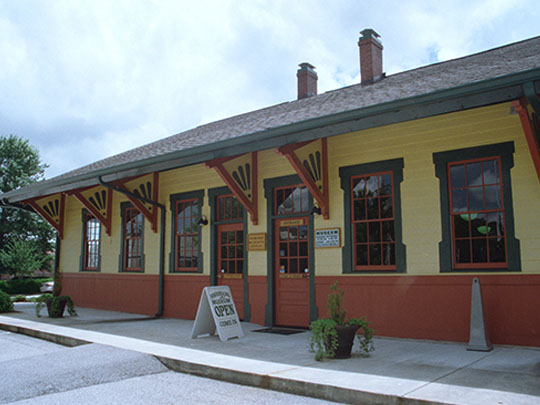

Camp Toccoa lay at the foot of Currahee Mountain outside Toccoa, built before the war as a Georgia National Guard camp and taken over by the Army in 1942, when about 18,000 volunteers from four parachute regiments trained here, among them the 506th, whose Easy Company became the Band of Brothers.
At Camp Toccoa only the PX and a water tower survive from the war, but the non-profit Camp Toccoa at Currahee has restored four barracks on the site, and in Toccoa’s old railway depot the Stephens County Historical Society museum holds the stable from Aldbourne in Wiltshire where Easy Company was billeted before D-Day, flown over in 2005.
Camp Toccoa was first called Camp Toombs, after the Confederate general Robert Toombs, until Col. Robert Sink got it renamed in 1942 because he thought the name would spook would-be paratroopers, and the regiment’s motto, “Currahee”, is usually translated as “stands alone”, though the Cherokee meaning is uncertain — and the TV series filmed its Currahee runs at Bourne Wood in Surrey, England.
9 – Okefenokee Swamp
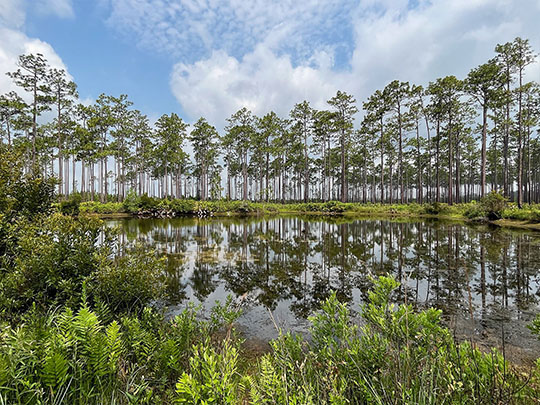

Okefenokee Swamp covers about 438,000 acres of peat bog, cypress and open “prairie” on the Georgia–Florida border, the source of both the Suwannee and St Marys rivers, a wildlife refuge since 1937 and, since July 2026, Georgia’s first UNESCO World Heritage Site — the first US wildlife refuge on the list.
You can paddle or take a boat into the Okefenokee from three entrances — near Folkston in the east, Stephen C. Foster State Park in the west, Georgia’s first International Dark Sky Park, and Okefenokee Swamp Park near Waycross in the north — and see alligators and the site of Billy’s Island, a logging town of about 600 people when the Hebard company cut its cypress from 1909 to 1927.
Okefenokee is usually translated as “land of the trembling earth”, though the Hitchiti original more likely means “bubbling water”, and in the 1890s a company dug 11.5 miles of the Suwannee Canal to drain it before going bankrupt — and the swamp is home to Walt Kelly’s comic-strip hero Pogo, Georgia’s official state possum since 1992.
10 – Andersonville
Andersonville, officially Camp Sumter, in the farmland of southwest Georgia, was the Confederacy’s largest prison camp, opened in February 1864, and of about 45,000 Union soldiers held there in 14 months nearly 13,000 died, while its commandant, Henry Wirz, was hanged in Washington in November 1865.
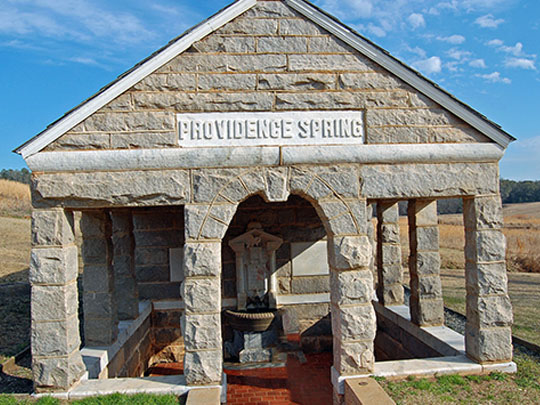
Andersonville National Historic Site covers the 26½-acre stockade site, where 33,000 men were crowded at the peak in August 1864, Providence Spring, which by tradition burst out after a storm that month, the national cemetery and the National Prisoner of War Museum, which since 1998 has told the story of all American prisoners of war.
Andersonville’s dead were named thanks to Dorence Atwater, a prisoner who secretly copied the death register and was court-martialled in 1865 for keeping it, not Clara Barton, as often told, though she raised the flag at the cemetery’s dedication — and the Wexford-born priest Peter Whelan ministered inside the stockade in the summer of 1864 and later borrowed $16,000 in Confederate money to buy flour for the prisoners.
11 – New Echota and Dahlonega
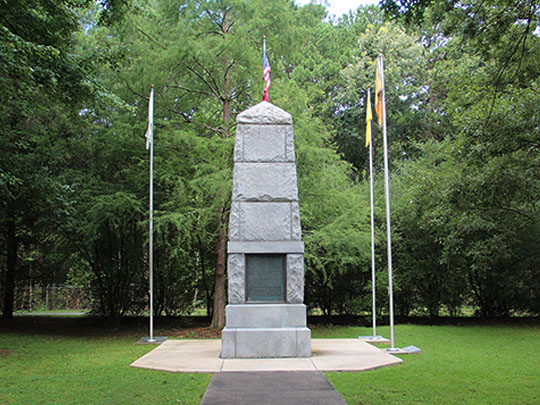
New Echota, near Calhoun in northwest Georgia, became the capital of the Cherokee Nation in 1825, and it was here on 29 December 1835 that a small faction signed the Treaty of New Echota, giving up the Cherokee homeland — ratified by the Senate by a single vote — leading to the Trail of Tears in 1838 — sped up by the gold rush that began around 1829 at Dahlonega, in the mountains to the east.
At New Echota State Historic Site you can see the missionary Samuel Worcester’s original house, the rebuilt council house, supreme court and print shop, and in Dahlonega the Gold Museum in the 1836 courthouse, one of Georgia’s oldest.
The Cherokee Phoenix, first printed at New Echota on 21 February 1828 in English and Sequoyah’s syllabary, was the first newspaper published by a Native American nation, and Dahlonega had its own US mint from 1838 until the Confederates seized it in 1861 — while “Thar’s gold in them thar hills” is a misquote of a local doctor’s “There’s millions in it”, spoken, by tradition, in 1849.
12 – Jekyll Island
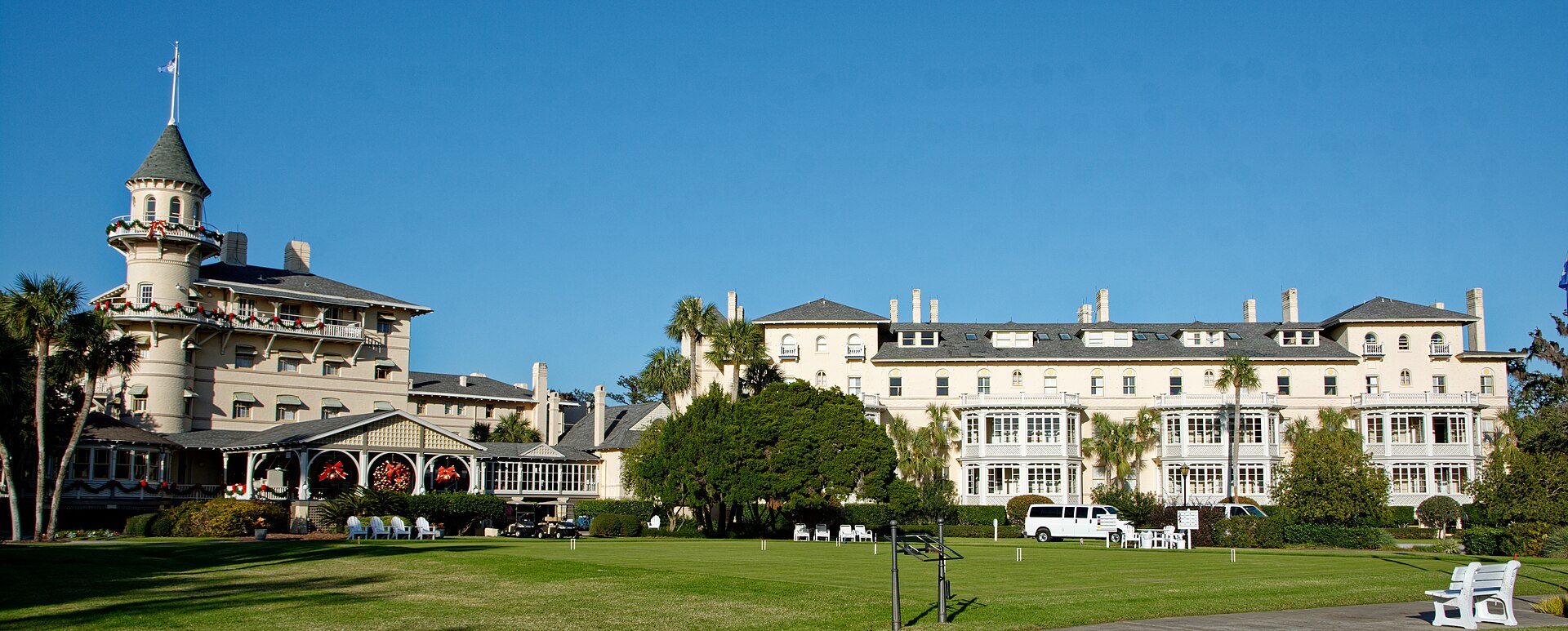
Jekyll Island, one of the Golden Isles on Georgia’s Atlantic coast, was named by James Oglethorpe after Sir Joseph Jekyll, and in 1858 the slave ship Wanderer landed about 409 Africans here, one of the last such landings in the US, while in 1886 a club of millionaires bought the island for $125,000 as their winter retreat.
On Jekyll Island you can stay in the old Jekyll Island Club, now a hotel, walk among the members’ “cottages” in the historic district, see the bleached dead trees of Driftwood Beach and the tabby ruins of the Horton House of the 1740s — and by state law, no more than 35% of the island’s land may be developed.
In November 1910 Senator Nelson Aldrich and five financiers met at the Jekyll Island Club in secret, posing as duck hunters, to draft the plan that led to the Federal Reserve, and in January 1915 AT&T’s president, Theodore Vail, joined the first transcontinental phone call from here, with J. P. Morgan Jr. and William Rockefeller beside him.
13 – Ocmulgee Mounds

Ocmulgee Mounds National Historical Park, on the Ocmulgee River at Macon in central Georgia, has more than 12,000 years of human history, and about a thousand years ago it was a Mississippian town of earthen mounds, in the homeland of the Muscogee (Creek) Nation.
At Ocmulgee Mounds you can climb the Great Temple Mound, about 55 feet high, step inside the Earth Lodge, a council chamber rebuilt over its original clay floor, with 47 seats around the wall and a raised eagle platform, and see the finds in the visitor centre.
Ocmulgee was dug from 1933 to 1936 by more than 800 relief workers, in what the park calls the largest excavation in US history, and a 2026 study with Muscogee citizens redated the Earth Lodge’s timbers to after about 1160, not 1015 as the signs say — while a bill to make it Georgia’s first national park had a hearing in July 2026 but hasn’t passed.