

Wikimedia Commons / CC-BY-SA-3.0 / GFDL
Capital: Bissau
Population: 2.2 million+
Language: Portuguese (official), Kriol

1 – Bijagos Islands (also above)

The Bijagós Islands, scattered off the coast of Guinea-Bissau, are an archipelago of 88 low, green islands, mangroves and sandbanks, only around 20 of them permanently inhabited, and in 2025 they became the country’s first UNESCO World Heritage Site.
Reached by boat from Bissau, the Bijagós are a wilderness of palm-fringed beaches and shallow seas visited by dolphins, manatees, marine turtles and huge flocks of migrating birds, while the islet of Poilão holds Africa’s largest green turtle nesting colony.
Bijagó culture gives women an unusually strong role, for it is the women who propose marriage and build the couple’s new home, while priestesses lead the islanders’ religious life.
2 – Bolama
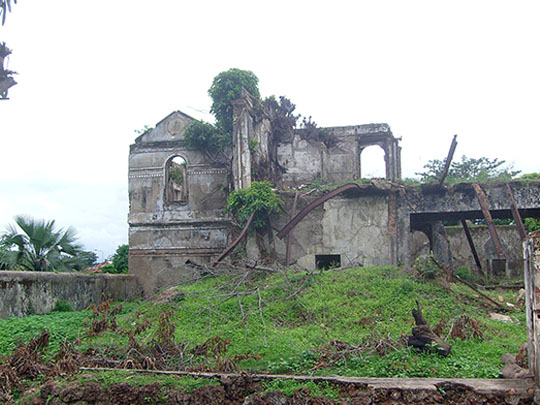

Bolama, an island town on the edge of the Bijagós, was the capital of Portuguese Guinea from 1879 until 1941, after a dispute with Britain over the island was settled in Portugal’s favour in 1870 by the arbitration of US President Ulysses S. Grant.
Bolama’s colonial governor’s palace and town hall stand crumbling among the vines, while thousands of fruit bats roost in its abandoned houses, pouring out at dusk to feed on the mainland.
On 6 January 1931 Italo Balbo’s squadron of seaplanes took off from Bolama to fly the South Atlantic to Brazil, and a monument in the town recalls the Italian airmen killed when two of the aircraft crashed.
3 – Orango Islands

Orango, at about 272 km² the largest of the Bijagós, lies at the heart of the Orango Islands National Park, created in 2000, a world of savanna, palm groves and mangrove-lined lagoons.
Orango was the seat of Okinka Pampa, the Bijagó queen-priestess who negotiated with the Portuguese in the early 1900s and ruled until her death in 1930, and visitors can see her grave on the island.
Orango is famed for its saltwater hippos, which live among the island’s lagoons and swamps and sometimes appear on the beaches, a rare habit for an animal usually found in fresh water.
4 – Cantanhez Forest National Park
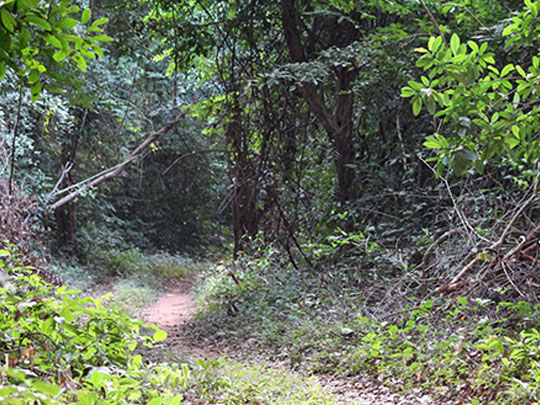
Cantanhez Forests National Park, declared in 2007 in the far south of Guinea-Bissau near the border with Guinea, protects the best remaining example of the country’s semi-humid forest, a mosaic of jungle, palm forest, savanna and mangrove.
Visitors track chimpanzees at Cantanhez on foot with local guides, among villages where farmers and apes share the same land, while monkeys move through the canopy overhead.
The chimpanzees of Cantanhez use sticks to dip for wild honey, a habit first documented by scientists in 2021.
5 – Bissau
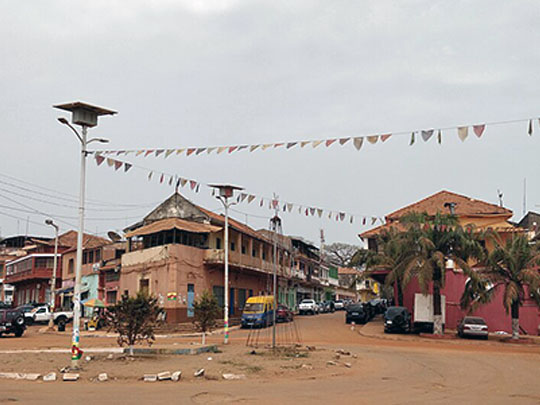
Bissau, on the wide Geba estuary, grew from a Portuguese fortified slave-trading post founded in 1687 and became the capital of Portuguese Guinea in 1941, when the administration moved from Bolama.
Above the water in Bissau stands the Fortaleza de São José da Amura, whose present walls date from 1753 and which holds the mausoleum of Amílcar Cabral, while the Pidjiguiti docks recall the massacre of 3 August 1959, when colonial forces fired on striking dockworkers.
Cabral, an agronomist and admired political thinker, founded the PAIGC in 1956 and led the war for independence, but he was assassinated in Conakry on 20 January 1973, eight months before his movement declared Guinea-Bissau independent.
6 – Cacheu
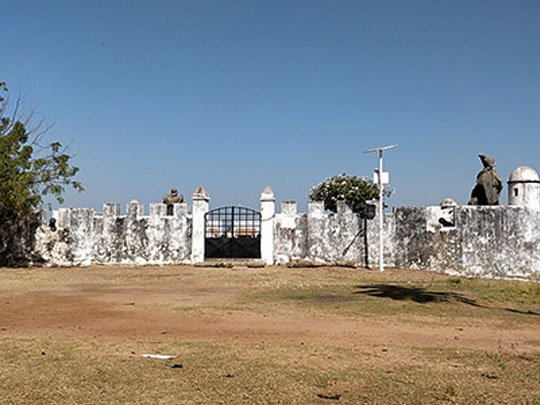
Cacheu, on the river of the same name in the north-west, was founded by the Portuguese in the late 1580s and grew into a hub of the Atlantic slave trade, home from 1676 of the Company of Cacheu.
Cacheu’s 17th-century fort guards the river, and nearby a memorial to the slave trade has opened in a restored slave-trade building, beside the mangrove channels of the Cacheu River Mangroves Natural Park.
Inside the fort stand bronze statues of Portuguese explorers and colonial figures, among them Diogo Gomes, Nuno Tristão and Teixeira Pinto, taken down from public squares after independence and gathered here facing the river.