
Wikimedia Commons / CC-BY-SA-3.0 / GFDL
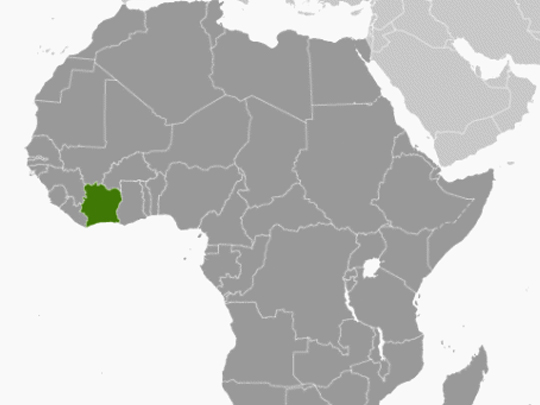
Capital – Yamoussoukro
Population – 32 million+
Language – French (69 languages are spoken, including Baoulé, Bété, Senoufo, Agni, Dioula)
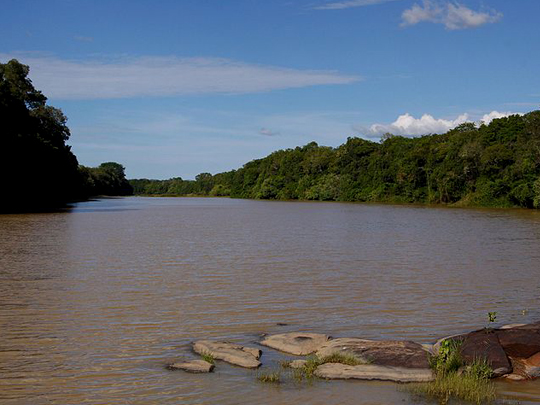
1 – Comoé National Park (also above)
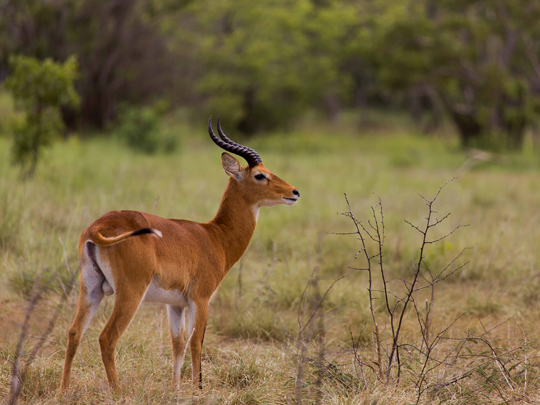
One of the largest wild places in West Africa, Comoé sprawls across the northeast of Ivory Coast around the great river that gives it its name — a UNESCO World Heritage Site prized for the way the Comoé lets lush rainforest push far north into open savanna, creating a rare mosaic of habitats.
That patchwork of gallery forest, wooded savanna and floodplain shelters an extraordinary cast — elephants, hippos, buffalo, roan antelope, leopard, rare savanna-dwelling chimpanzees and more than 500 species of bird — best explored along the river that threads the park.
The Comoé’s waters are one of the very few places on Earth to harbour all three of Africa’s crocodile species at once — the big Nile crocodile, the slender-snouted crocodile, and the small, secretive dwarf crocodile.
2 – Basilica of Our Lady of Peace
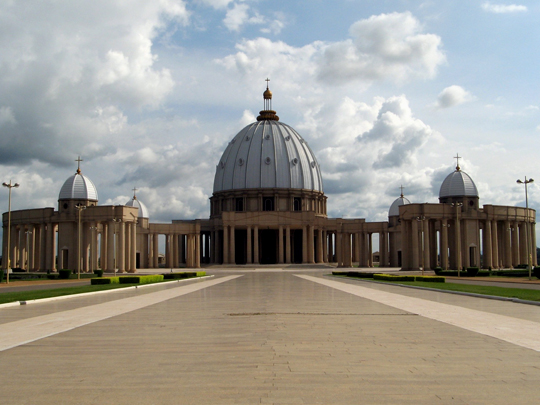
Rising incongruously from the plains of Yamoussoukro is the Basilica of Our Lady of Peace — recognised by Guinness World Records as the largest church on Earth, its vast dome modelled on, and even taller than, St Peter’s in Rome.
Built of imported Italian marble and lit by thousands of square metres of French stained glass, it can hold 18,000 worshippers inside and 300,000 more on the esplanade; it was raised in just a few years in the 1980s from the personal fortune of the country’s founding president, Félix Houphouët-Boigny, in his home town — a scale so extravagant it was nicknamed “the basilica in the bush.”
Look closely at the stained glass and you’ll spot the president himself, kneeling among the faithful before Christ — Houphouët-Boigny had his own likeness worked into a window, quietly casting himself alongside the Magi at the feet of Jesus.
3 – Tai National Park

In the far southwest of Ivory Coast, near the Liberian border, Taï is one of the last great tracts of primary rainforest in West Africa — the largest surviving fragment of the ancient Upper Guinean forest that once stretched unbroken across the region, and a UNESCO World Heritage Site.
Beneath its towering, never-logged canopy live forest elephants, leopards, eleven kinds of monkey and one of the world’s most famous chimpanzee communities — Taï’s apes have been studied for decades and are renowned for cracking open hard nuts with stone hammers and anvils, a striking glimpse of animal “culture.”
The forest’s most elusive resident is the pygmy hippopotamus — a shy, dog-sized cousin of the great river hippo that lives hidden in the swamps and streams, and Taï is one of its very last strongholds on Earth.
4 – Abidjan
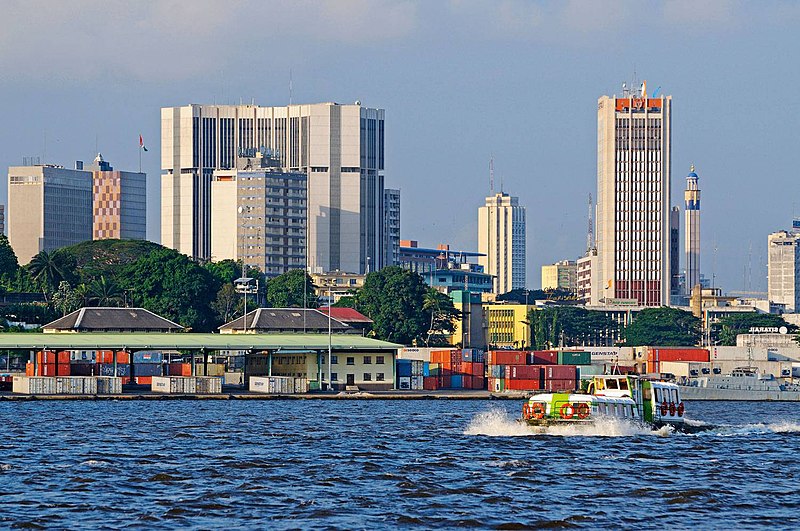
Sprawling around the Ébrié Lagoon, Abidjan is the economic capital and beating heart of Ivory Coast — the largest French-speaking city in Africa and one of its most modern, its skyline of glass towers on the Plateau earning it the nickname the “Manhattan of Africa.”
Ferries and pirogues criss-cross the lagoon between its districts; landmarks include the soaring modernist St Paul’s Cathedral and the high-rises of the Plateau, while a short way out lies Banco National Park, a genuine patch of rainforest tucked right inside the city.
Much of the world’s chocolate begins its journey here — Ivory Coast grows more cocoa than any other country on Earth, and the beans pour out through Abidjan’s vast port, one of the busiest in West Africa.
5 – Treichville
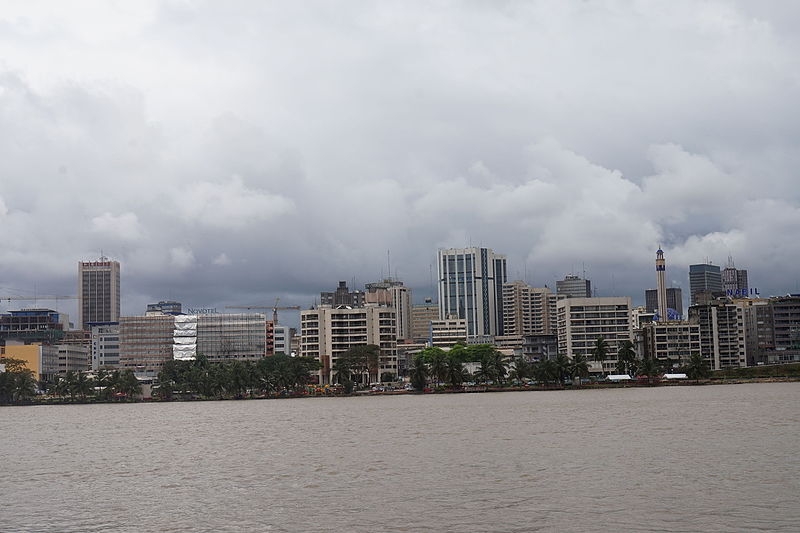
A dense, buzzing district of Abidjan, Treichville began as an Ébrié fishing village and grew into the city’s great African quarter in colonial times — named after Marcel Treich-Laplène, the French explorer counted as a founder of Ivory Coast.
It’s the beating heart of Abidjan’s street life — the sprawling Grand Marché piled with textiles, masks and spices, open-air maquis grilling fish and attiéké late into the night, and a tangle of streets known only by numbers rather than names, alive with people around the clock.
Above all, Treichville is where Abidjan comes to dance — long the cradle of the city’s music and nightlife, and a birthplace of coupé-décalé, the joyful, bass-heavy Ivorian dance craze that has since swept across Africa and beyond.
6 – Grand-Bassam
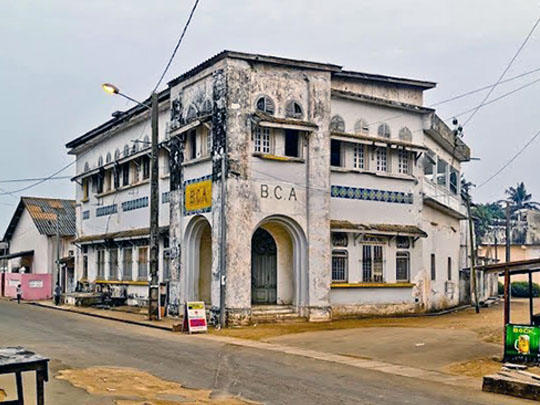
Forty kilometres east of Abidjan, on the sandbar between the Ébrié Lagoon and the open Atlantic, Grand-Bassam was made capital of the French colony in 1893 and laid out to a deliberate plan — a European quarter of verandaed villas facing the ocean, the Nzema village across the water — until yellow fever swept through at the turn of the century, the administration fled inland, and the town was left to fade; UNESCO listed it in 2012.
Ancien Bassam is a half-ruined grid of colonial mansions, some handsomely restored, others with trees growing through their upper floors; the old Governor’s Palace now holds the National Costume Museum, the cathedral and the wharf still stand, and across the bridge lies Moossou, the Nzema town that was here first.
In December 1949, with independence leaders jailed here without trial and on hunger strike, some two thousand women walked the fifty kilometres from Abidjan in small groups to avoid being turned back; French soldiers met them at the prison gates on Christmas Eve and beat them, forty were hurt, and not one prisoner was freed — a monument to them stands in the town today.