
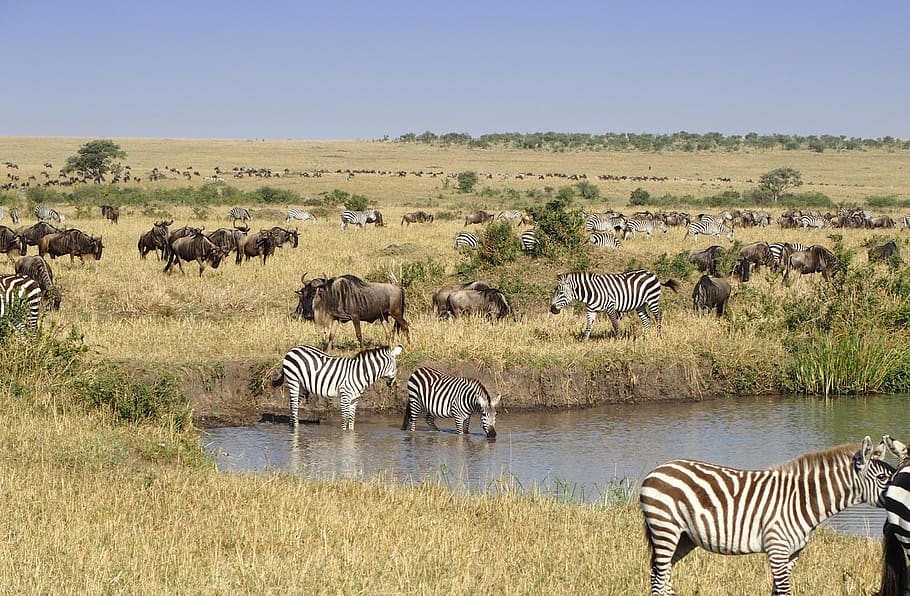
Wikimedia Commons / CC-BY-SA-3.0 / GFDL
Capital: Nairobi
Population: 53 million+
Language: English, Kiswahili, plus over 60 other languages.
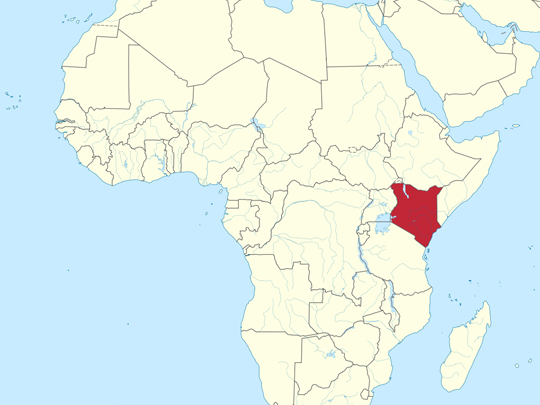
1 – Maasai Mara (also above)
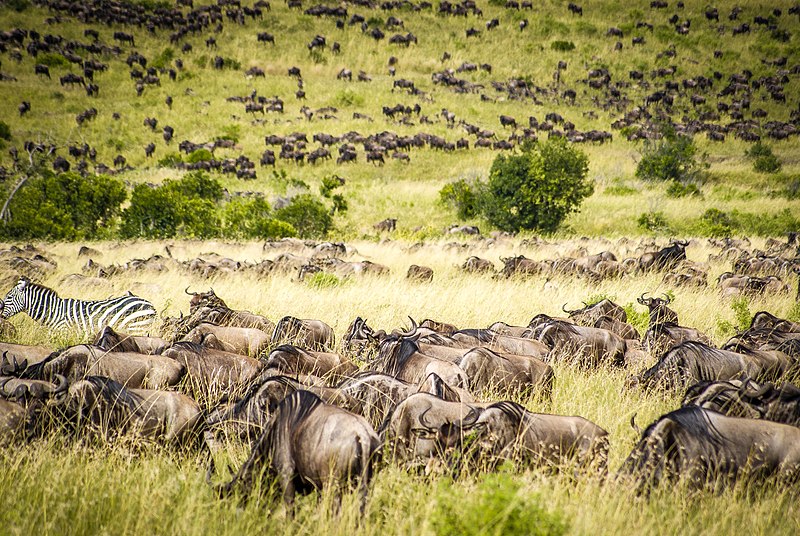
The Maasai Mara, Kenya’s most famous safari destination, is a vast expanse of golden savanna in the south-west, the Kenyan end of the Serengeti–Mara ecosystem, named after the Maasai people who herd cattle across these plains.
Each year more than a million wildebeest, with zebra and gazelle, pour into the Maasai Mara from Tanzania’s Serengeti and plunge across the crocodile-filled Mara River, one of the great wildlife spectacles on Earth.
The Mara has one of the highest lion densities in Africa, and its Marsh Pride became television stars in the BBC’s Big Cat Diary, which ran from 1996 to 2008.
2 – Lake Nakuru
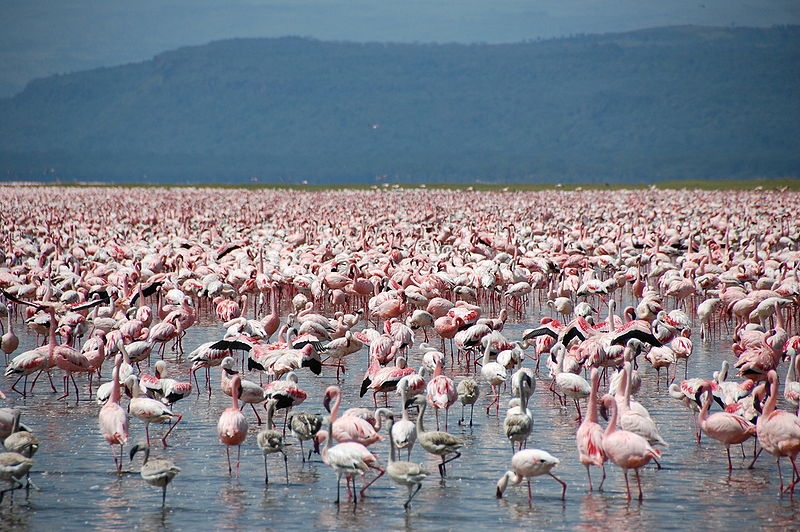
Lake Nakuru, a shallow soda lake on the floor of the Great Rift Valley, is one of Kenya’s best-loved parks, famous for flamingos whose numbers rise and fall with the lake’s level, and part of a UNESCO World Heritage Site listed in 2011.
Lake Nakuru became Kenya’s first government-run rhino sanctuary in 1987, and black and white rhino roam its acacia woodland alongside the endangered Rothschild’s giraffe.
The flamingos owe their pink to carotenoid pigments in their food, chiefly the cyanobacterium Spirulina that thrives in the soda water, and they move between the Rift Valley’s lakes as conditions change.
3 – Samburu National Reserve
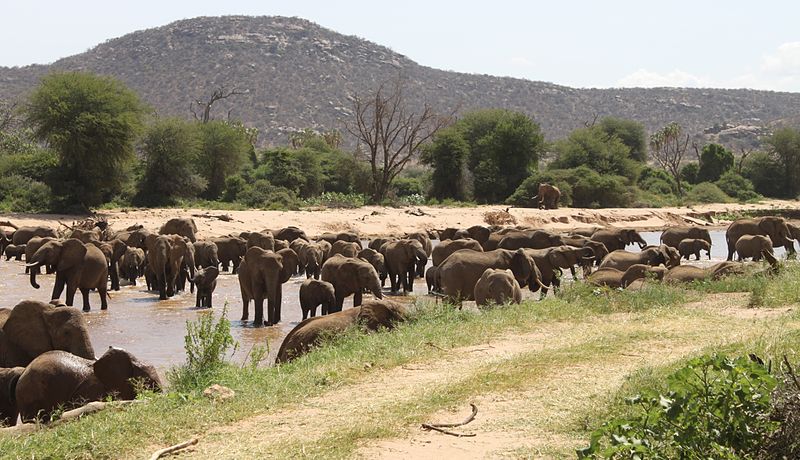
Samburu National Reserve, in Kenya’s rugged semi-desert north, is a wilderness of thorn scrub and rocky hills on the banks of the Ewaso Ng’iro River, a green lifeline in the land of the Samburu people.
Samburu is known for the “Samburu Five”, dry-country animals rarely seen in Kenya’s southern parks: Grevy’s zebra, the reticulated giraffe, the Somali ostrich, the beisa oryx and the gerenuk, with leopard, lion and cheetah also about.
Strangest of the five is the gerenuk, a long-necked antelope that stands on its hind legs to browse and can survive without drinking, taking its moisture from the leaves it eats.
4 – Hell’s Gate National Park
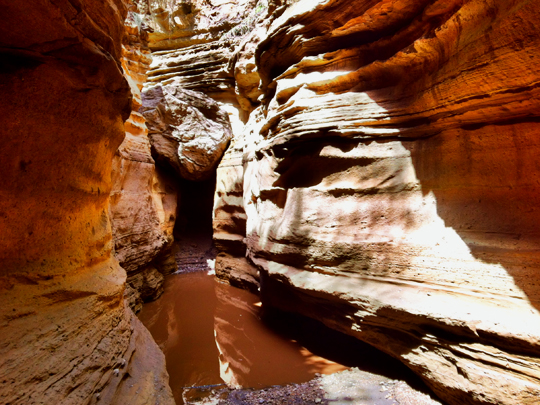
Hell’s Gate National Park, just south of Lake Naivasha in the Rift Valley, is a dramatic landscape of red cliffs, gorges and steaming vents, and one of the few Kenyan parks you can explore on foot or by bike, as large predators are rare.
Cycle past zebra and giraffe, climb Fischer’s Tower, a volcanic plug named after the German explorer Gustav Fischer, or hike into the Ol Njorowa Gorge, while steam from the ground feeds the Olkaria geothermal power plants, whose first unit opened in 1981.
Disney animators visited Hell’s Gate in 1991, and its cliffs are often said to have inspired the landscapes of The Lion King, while scenes from Lara Croft Tomb Raider: The Cradle of Life (2003) were shot here.
5 – Great Rift Valley
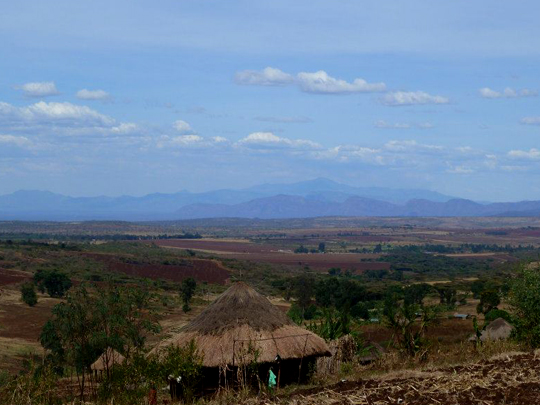
The Great Rift Valley slices north to south through Kenya, its floor strewn with volcanoes and soda lakes, and in its western highlands at Iten the Cork-born Patrician Brother Colm O’Connell coached generations of champion runners, among them the Olympic champion David Rudisha.
The classic view of the Rift Valley comes from the escarpment above Mai Mahiu on the old road from Nairobi, where a tiny chapel was built in 1942 by Italian prisoners of war, and the plain below holds Mount Longonot and Lake Naivasha.
The valley’s ancient lakebeds are among the richest places in the world for early-human fossils, among them Turkana Boy, found at Nariokotome near Lake Turkana in 1984, a Homo erectus youth who lived about 1.5–1.6 million years ago.
6 – Lewa Wildlife Conservancy
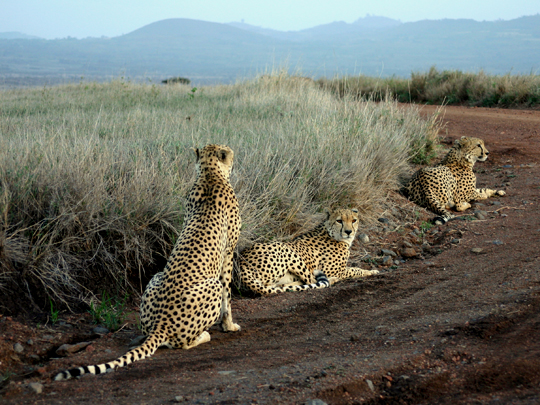
Lewa Wildlife Conservancy, a former cattle ranch on the plains below Mount Kenya, grew from a rhino sanctuary founded in 1983 into a private conservancy that in 2013 became part of the Mount Kenya UNESCO World Heritage Site.
Black and white rhino, elephant and lion share Lewa’s grasslands with one of the most important remaining populations of the endangered Grevy’s zebra, and each year runners take on the Lewa Safari Marathon among the animals.
Lewa has a royal link, for Prince William proposed to Kate Middleton during an October 2010 trip to Kenya that included a stay at the conservancy.
7 – Ruins of Gedi
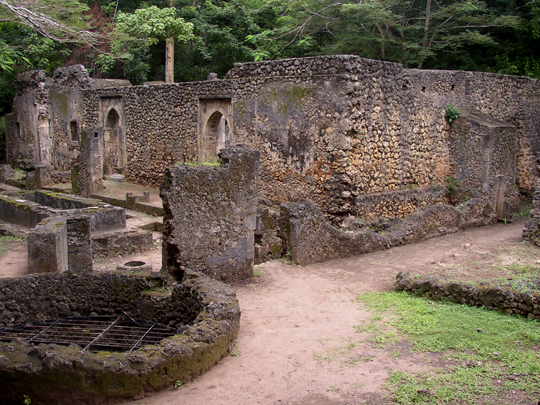
The Ruins of Gedi, hidden in coastal forest near Watamu, are the remains of a Swahili town founded around the 12th century that thrived on Indian Ocean trade until it was abandoned in the early 1600s, and UNESCO added them to the World Heritage List in 2024.
Wander Gedi’s overgrown coral-stone lanes past a palace, a great mosque, grand houses and deep wells, where excavations have turned up Chinese porcelain, Venetian glass and beads from an elaborate trading town.
Gedi’s greatest mystery is its silence, for the town is barely mentioned in written records, so its story comes almost entirely from archaeology and no one is sure why its people left.
8 – Diani Beach
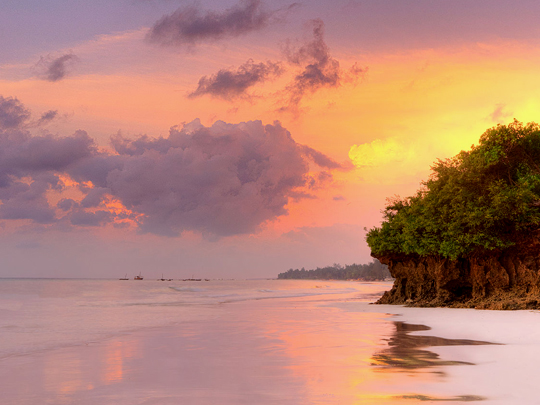
Diani Beach, on Kenya’s palm-fringed south coast below Mombasa, is a long ribbon of white coral sand and turquoise water that has repeatedly been named Africa’s leading beach destination at the World Travel Awards.
A reef offshore keeps Diani’s lagoon calm for swimming and snorkelling, steady winds draw kitesurfers, and in the coastal forest behind the sand live colobus monkeys, which cross the main road on rope bridges built for them.
One of Diani’s most memorable experiences is dinner at Ali Barbour’s, a restaurant set inside a coral cave thought to be more than 120,000 years old, its roof open to the stars.
9 – Lamu
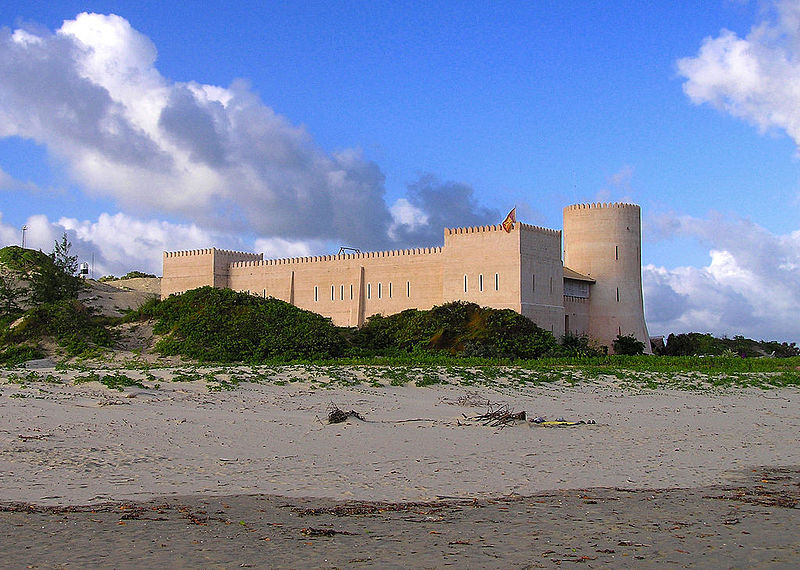
Lamu Old Town, on an island off Kenya’s far north coast, is in UNESCO’s words “the oldest and best-preserved Swahili settlement in East Africa”, continuously inhabited for more than 700 years and a World Heritage Site since 2001.
Lose yourself in Lamu’s narrow coral-stone lanes of tall merchant houses, hidden courtyards and finely carved wooden doors, while each year the Maulidi festival fills the town with processions and with donkey and dhow races.
Cars cannot fit the Old Town’s narrow lanes, so for centuries the way to get around Lamu has been on foot, by dhow, or on one of the town’s donkeys, which number in the thousands.
10 – Nairobi
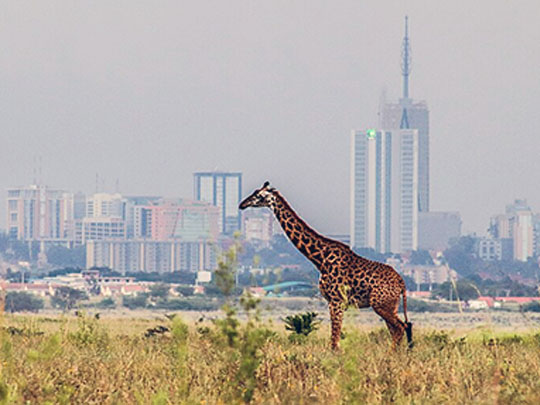

Nairobi began in 1899 as a depot on the Uganda Railway at a Maasai watering place called Enkare Nyirobi, “cool water”, took over from Mombasa as capital of British East Africa from 1905, and in 1963 became the capital of independent Kenya.
The Nairobi National Museum sets out Kenya’s story, the farmhouse where Karen Blixen lived from 1917 to 1931 stands in the suburbs, and the city’s first Catholic archbishop, John Joseph McCarthy of Milltown Malbay, County Clare, led its church from 1953 to 1971.
On the city’s southern edge lies Nairobi National Park, one of the very few national parks inside a capital, where lions, rhino and giraffe roam with office towers on the horizon, and where Kenya burned 105 tonnes of ivory on 30 April 2016, the largest ivory burn held up to then.
11 – Mount Kenya
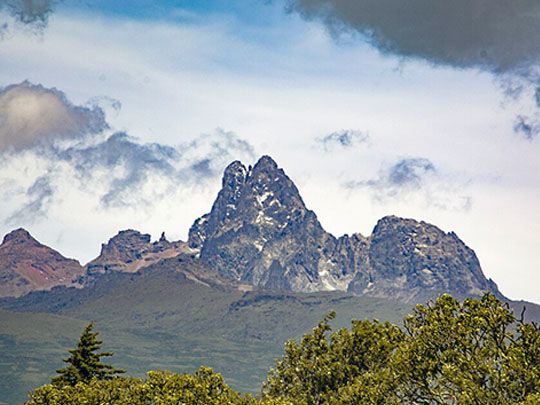

Mount Kenya, an extinct volcano rising alone to 5,199 m, is Africa’s second-highest mountain, held sacred by the Kikuyu as the home of Ngai, and its name, recorded as “Kenia” by the missionary Johann Ludwig Krapf in 1849, passed to the colony and the country.
A UNESCO World Heritage Site since 1997, Mount Kenya climbs through forest and bamboo into an alpine zone of giant lobelias and groundsels below shrinking equatorial glaciers, and of its three summits only Point Lenana can be reached by trekkers.
In 1943 three Italian prisoners of war slipped out of their camp at Nanyuki to climb the mountain, and two of them, Felice Benuzzi and Giovanni Balletto, planted an Italian flag on Point Lenana before all three returned to camp, a feat Benuzzi told in No Picnic on Mount Kenya.
12 – Fort Jesus
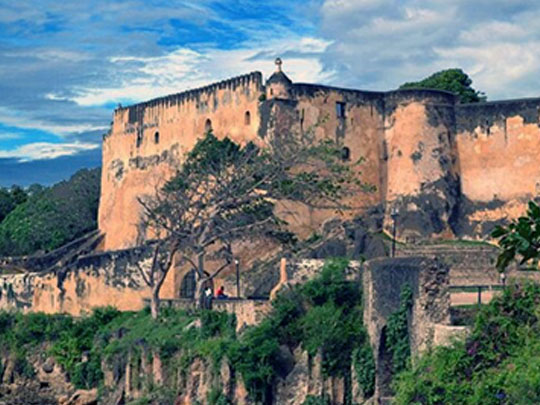

Fort Jesus, on a coral ridge at the mouth of Mombasa’s old harbour, was built by the Portuguese between 1593 and 1596 as their main stronghold on the Swahili coast, and became a UNESCO World Heritage Site in 2011.
The Italian architect Giovanni Battista Cairati laid out Fort Jesus to Renaissance ideals based on the proportions of the human body, and its museum tells the story of the coast and of the Santo Antonio de Tanna, a Portuguese frigate sunk offshore in 1697 during the great siege.
Fort Jesus changed hands at least nine times between 1631 and 1875, most dramatically in the Omani siege of 1696–98, which lasted nearly three years and broke Portuguese power on this stretch of coast.
13 – Tsavo
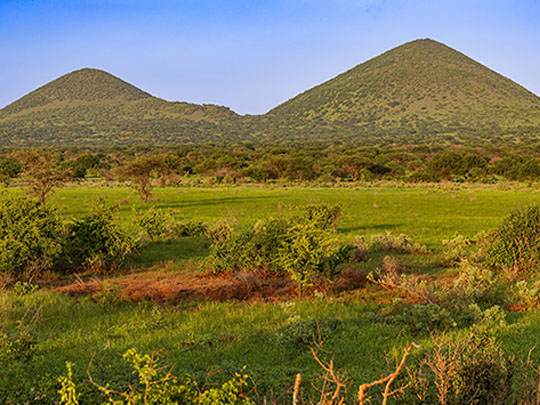
Tsavo, divided into Tsavo East and Tsavo West National Parks on either side of the Nairobi–Mombasa road and railway, was gazetted in 1948, and together the two parks form the largest protected area in Kenya.
Tsavo’s elephants are famous for the red dust that coats them after they bathe in the Galana River, while the Yatta Plateau, an ancient lava flow some 300 km long, runs through the eastern park.
In 1898 two maneless lions preyed on workers building the railway bridge over the Tsavo River until the engineer John Henry Patterson, born at Forgney, County Longford, shot them that December, and he put their toll at 135, though later research suggests about 35.