

Jorge Franganillo / Wikimedia Commons / CC-BY-SA-3.0 / GFDL
Capital: Budapest
Population: 9.4 million+
Language: Hungarian

1 – Budapest (also above)

Budapest was formed in 1873 when Buda, Óbuda and Pest united across the Danube, after Roman Aquincum and nearly 150 years of Ottoman rule from 1541 to 1686, and in the siege of 1944–45 every one of its Danube bridges was blown up.
In Budapest, see the Parliament, Buda Castle and Fisherman’s Bastion, soak in the Ottoman-era Rudas or Király baths or the grand Széchenyi, and pause at the Shoes on the Danube Bank, where Arrow Cross militiamen shot as many as 20,000 Jews into the river in 1944–45.
Hungary gave Ireland an idea, as Arthur Griffith’s 1904 The Resurrection of Hungary held up Hungary’s 1867 compromise with Austria as a model and became the basis of Sinn Féin, and Budapest’s M1 line of 1896 was the first underground railway on the European continent.
2 – Mecsek

Mecsek is a range of wooded hills in southern Hungary rising above the city of Pécs, where Hungary’s first university was founded in 1367 and whose 4th-century Early Christian tombs are a UNESCO World Heritage Site.
In the Mecsek hills, ride up the 197-metre TV tower on Misina peak, Hungary’s tallest building, and visit the bat museum at Abaliget Cave.
Pécs, at the foot of the Mecsek, gave the world Zsolnay ceramics and their shimmering eosin glaze, introduced in 1893, and its Mosque of Pasha Qasim, built by the Ottomans, was turned into a church after they left.
3 – Pannonhalma

Pannonhalma Archabbey stands on a hilltop in north-west Hungary, where Benedictine monks settled in 996, and it’s a UNESCO World Heritage Site.
At Pannonhalma, tour the basilica and the grand abbey library, and taste the wines the monks make.
Tradition holds that St Martin of Tours may have been born at the foot of Pannonhalma’s hill, though most place his birth at Szombathely, and in 1944–45 the abbey sheltered about 3,000 refugees, mostly children, under Red Cross protection.
4 – Eger

Eger is a town in northern Hungary whose castle held out in 1552 against an Ottoman army of some 35,000 to 40,000, defended by István Dobó with about 2,100 men.
In Eger, explore the castle, climb the minaret, one of the most northerly in Europe, soak in the Turkish Bath, and taste wine in the cellars of the Valley of the Beautiful Women.
Legend says Eger’s defenders drank red wine that stained their beards and convinced the Turks they were drinking bull’s blood, though the name Bull’s Blood only appears in the 19th century, and tradition says the town’s women poured hot pitch on the attackers, a story popularised by Géza Gárdonyi’s novel Eclipse of the Crescent Moon.
5 – Diósgyőr

Diósgyőr Castle stands in Miskolc in north-east Hungary, rebuilt by King Louis the Great in the 14th century with four corner towers, and it was given to Hungary’s queens as a wedding gift.
At Diósgyőr Castle, see the reconstructed knights’ hall, chapel and queen’s chambers, rebuilt and reopened in 2014.
Diósgyőr was known as the castle of the queens, home to six of them, and in 1944 Miskolc’s Jews were among the roughly 440,000 people deported from Hungary between May and July, mostly to Auschwitz-Birkenau, according to the USHMM.
6 – Hajógyári Island

Hajógyári Island, also called Óbuda Island, is the largest island in central Budapest, a 108-hectare stretch of the Danube where the Romans built the governor’s palace of Aquincum.
On Hajógyári Island, look for the remains of the Roman governor’s palace, which excavations in 1996 showed was far larger than once thought, and stroll the riverside parkland.
Hajógyári Island takes its name from the shipyard founded there in 1835, which launched its first steamer, the Árpád, in 1836, and since 1993 it has hosted the Sziget Festival, which began as a student festival.
7 – Lake Balaton and Tihany
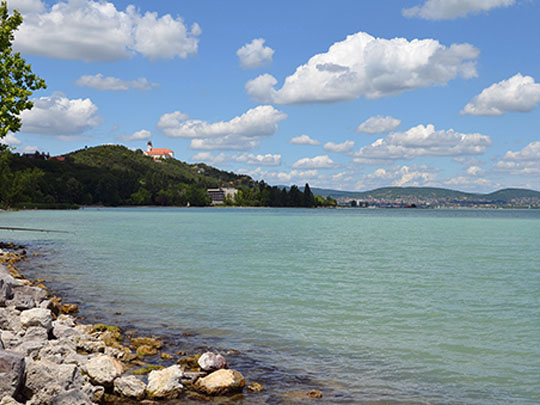
Lake Balaton is the largest lake in central Europe, about 77 km long but only around 3 metres deep on average, and on its Tihany peninsula King Andrew I founded a Benedictine abbey in 1055, where he lies in the only Árpád-era royal tomb to survive in its original place.
At Lake Balaton, swim or sail on the “Hungarian Sea”, then climb to Tihany Abbey and listen for the peninsula’s famous echo, fainter than it once was.
Tihany Abbey’s founding charter of 1055 contains the oldest surviving written Hungarian words, during the Cold War Lake Balaton was where East and West German families split by the Berlin Wall met on holiday, and in March 1945 Germany launched its last major offensive of the war near the lake.
8 – Esztergom
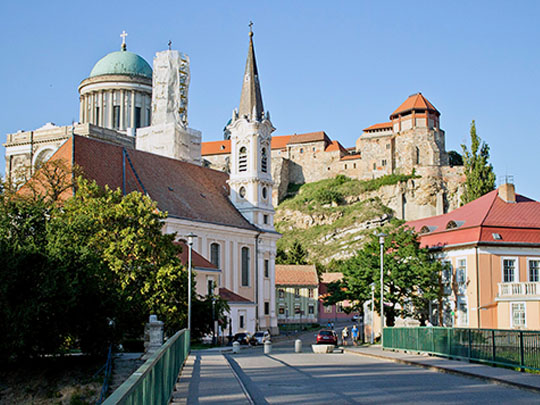
Esztergom, on the Danube at the Slovak border, was Hungary’s first royal seat, where according to tradition St Stephen was born and crowned king around 1000, and it’s the seat of Hungary’s Catholic primate.
In Esztergom, see the Basilica, Hungary’s largest church, with the red-marble Renaissance Bakócz Chapel inside, then explore the royal palace remains on Castle Hill.
Esztergom’s Basilica was consecrated in 1856 with Franz Liszt conducting his Esztergom Mass, and the Mária Valéria Bridge across the Danube to Slovakia, blown up by retreating German troops in December 1944, reopened only in 2001.
9 – Hollókő
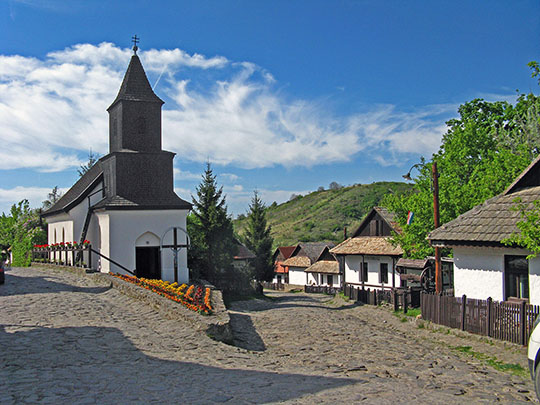

Hollókő is a Palóc village about 90 km north-east of Budapest, its name meaning “raven stone”, and UNESCO listed it in 1987 as a living example of rural life before the agricultural revolution.
In Hollókő, wander the lanes of the old village and climb to the ruined castle, first recorded in 1310 and abandoned in 1683.
Hollókő is often called the first village on the UNESCO World Heritage List, and at Easter it keeps old Palóc customs, including men sprinkling women with well water.
10 – Fertőd Esterházy Palace
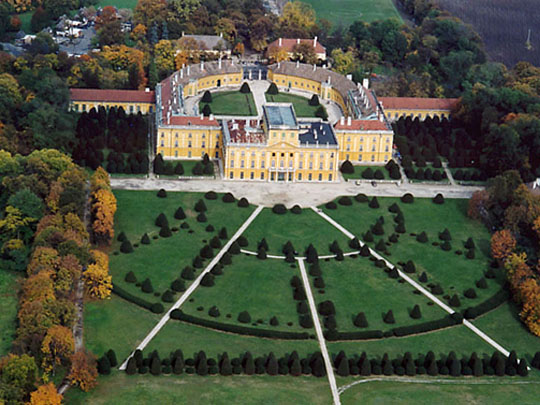
Esterházy Palace at Fertőd, near the Austrian border, was built in the 1760s for Prince Nikolaus Esterházy and is often called the “Hungarian Versailles”, and it’s part of the UNESCO-listed Fertő/Neusiedlersee cultural landscape.
At Esterházy Palace, tour the palace and its formal gardens, laid out for a court that had its own opera house and puppet theatre.
Joseph Haydn lived and worked at Esterházy Palace from 1766 to 1790, and he wrote his Farewell Symphony there in 1772 as a polite protest on behalf of musicians kept too long from their families.
11 – Mohács
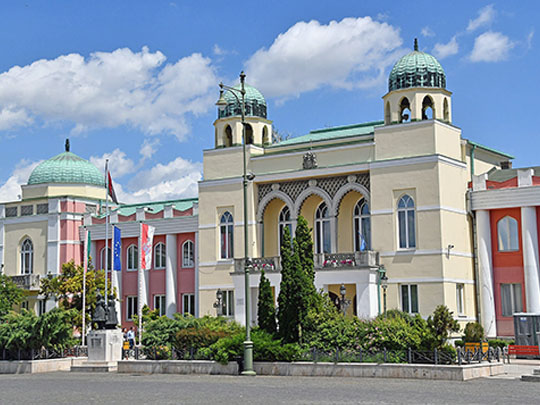
Mohács, on the Danube in southern Hungary, gave its name to the battle of 29 August 1526, when Suleiman the Magnificent’s Ottoman army crushed the Hungarians and King Louis II drowned in the Csele stream as he fled.
At Mohács, visit the National Memorial on the battlefield, opened for the 450th anniversary in 1976, with its carved wooden grave markers among the mass graves.
Mohács opened about a century and a half of Ottoman rule in central Hungary, and the town’s Busójárás carnival, on UNESCO’s intangible heritage list, is said to celebrate scaring off the Turks, though it really sees off the winter.