

Capital: Douglas
Population: 85,000+
Language: English/Manx

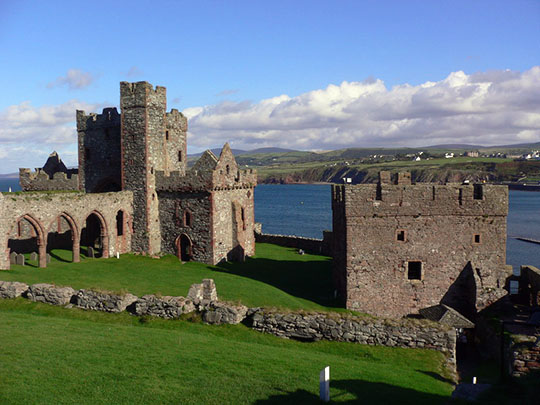
1 – Peel Castle (also above)

Peel Castle stands on St Patrick’s Isle, joined by a causeway to the town of Peel on the Isle of Man’s west coast, where an early Christian monastery was followed by the wooden fort of the Norwegian king Magnus Barefoot in the late 11th century and red sandstone walls in the 14th century.
At Peel Castle, walk the curtain walls, see the Irish-style round tower and the ruins of St German’s Cathedral, then visit the House of Manannan in Peel, home to the Viking ship replica Odin’s Raven.
Tradition says St Patrick landed on the isle in the 5th century, excavations at Peel Castle in 1984 uncovered the grave of the “Pagan Lady”, a Viking-age woman buried around 950 with a necklace of more than 50 beads, and legend says a phantom black dog, the Moddey Dhoo, haunts its guardroom.
2 – Douglas
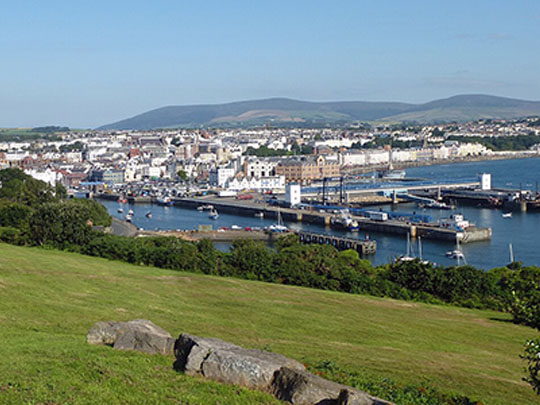

Douglas grew where the Dhoo and Glass rivers meet on Douglas Bay and became the capital of the Isle of Man, a Crown Dependency rather than part of the UK, in 1869, and from 1940 its seafront hotels and boarding houses became internment camps for “enemy aliens”, many of them Jewish refugees.
In Douglas, ride the promenade on one of the last surviving horse tramways in the world, running since 1876, visit the Manx Museum, catch a show at Frank Matcham’s Gaiety Theatre of 1900, and look out to the Tower of Refuge, built on Conister Rock in 1832 for shipwrecked sailors.
Douglas resident Sir William Hillary’s appeal led to the founding of the RNLI in 1824, the artist Kurt Schwitters was interned at the town’s Hutchinson Square camp, the TT motorcycle races, first run in 1907, start and finish on Douglas’s Glencrutchery Road, and all three Bee Gees were born in Douglas.
3 – Laxey Wheel
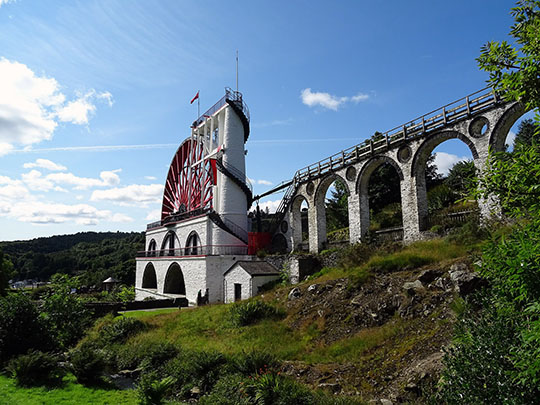
The Laxey Wheel, named Lady Isabella after the wife of the island’s lieutenant governor, was set in motion on 27 September 1854 above the village of Laxey on the Isle of Man’s east coast, to pump water from the Great Laxey Mine, which dug lead and zinc until 1929.
At the Laxey Wheel, climb to the platform at the top, ride the Manx Electric Railway, which reached Laxey in 1894, and take the Snaefell Mountain Railway, opened in August 1895, to the summit of Snaefell, at 621 metres the island’s highest point.
The Laxey Wheel, 72 feet 6 inches across, is the largest surviving working waterwheel, and a Manx saying holds that from Snaefell, Old Norse for “snow mountain”, you can see six kingdoms on a clear day: Mann, England, Scotland, Wales, Ireland and Heaven.
4 – Castletown and Castle Rushen
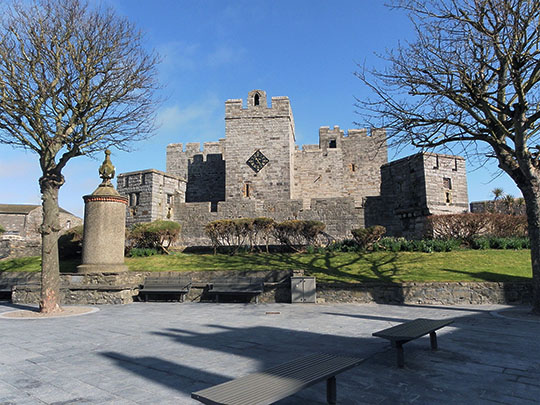
Castletown sits where the Silver Burn meets Castletown Bay in the south of the Isle of Man and was the island’s capital until 1869, guarded by Castle Rushen, begun by the Norse kings of Mann and first recorded in 1265, when King Magnus died there.
In Castletown, explore Castle Rushen, regarded as one of the best-preserved medieval castles in Europe, take a seat and vote in the Old House of Keys, where the Manx parliament sat from 1821 to 1874, and visit the Old Grammar School, the island’s oldest roofed building.
Robert the Bruce took Castle Rushen after a three-week siege in 1313, its clock is traditionally said to be a gift from Elizabeth I in 1597, Illiam Dhone, leader of the 1651 revolt against the Stanleys, was executed at Hango Hill outside Castletown in 1663, and nearby Ronaldsway airfield became the naval air station HMS Urley in 1944.
5 – Cregneash
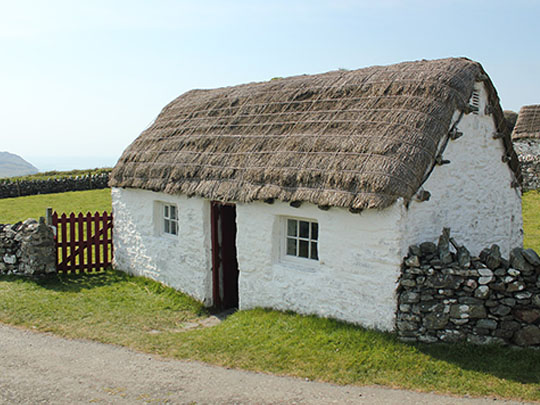
Cregneash is a crofting village on a plateau at the Isle of Man’s south-west tip, above the Sound and the Calf of Man, and was one of the last strongholds of spoken Manx, while a wartime radar station watched the sea from Meayll Hill above it.
In Cregneash, wander among the thatched cottages of the folk museum, opened in 1938 and often billed as the first open-air museum in the British Isles, watch smithing and weaving, meet the four-horned Manx Loaghtan sheep, and walk up to the Neolithic tomb of 12 chambers on Meayll Hill.
In 1947 the Taoiseach Éamon de Valera met Ned Maddrell, widely regarded as the last native Manx speaker, at Harry Kelly’s cottage in Cregneash, which led the Irish Folklore Commission to record the last speakers in 1948, and the village stood in for an Irish village in the film Waking Ned.