
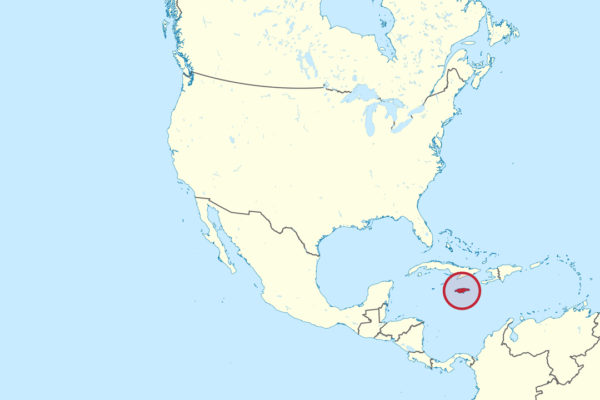
Wikimedia Commons / CC-BY-SA-3.0 / GFDL
Capital: Kingston
Population: 2.8 million+
Language: English/Jamaican Patois
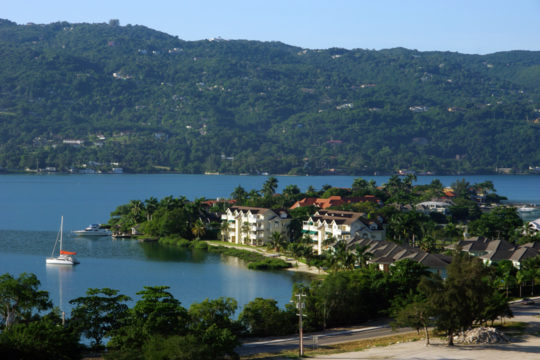
1 – Montego Bay (above)
Jamaica’s second city sits on a wide bay on the north-west coast, a sugar port turned tourist capital — and the place where the largest slave rebellion in Jamaican history came to a head at Christmas 1831.
The centre is Sam Sharpe Square, with the 1806 stone “cage” once used to lock up the unruly, the Georgian St James Parish Church nearby, and Doctor’s Cave Beach along the strip.
Sam Sharpe was a Baptist deacon who planned a peaceful general strike; it became a rising of tens of thousands, and he was hanged in 1832 in the square that now carries his name — over 300 others were executed with him, and the scale of the reprisals helped push Britain towards abolition.
2 – Ocho Rios
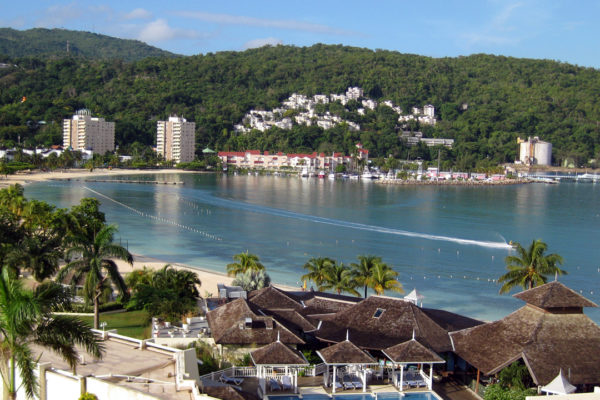
A fishing village on the north coast turned cruise port, Ocho Rios sits in the stretch of St Ann the Spanish called Las Chorreras, “the waterfalls”, for the rivers pouring off the hills into the sea.
It’s a busy little town of markets, craft stalls and bars below green hills, with rafting, zip-lines and beaches close by, and much quieter once the ships have gone.
The name is a mistake: “Ocho Rios” means eight rivers and there are only four — the English mangled Las Chorreras into something that sounded about right, and it stuck.
3 – Negril
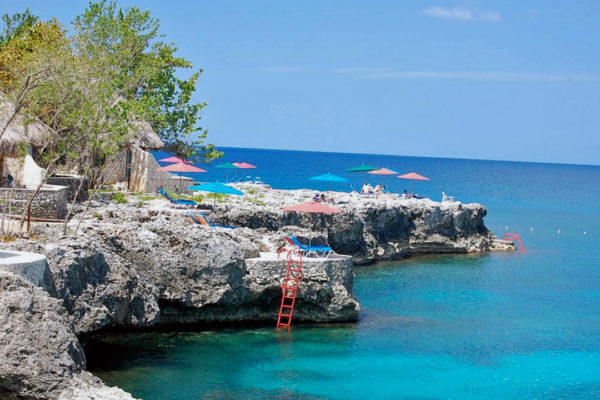
At the western tip of the island, Negril was a remote fishing settlement with no road worth the name and no electricity until the 1960s, when word of its seven-mile beach reached the hippie trail and never quite left.
The long white beach runs north from the town and the limestone West End cliffs run south, with bars built out over the water and the sunset as the evening’s main event.
Negril’s other claim is older and darker: it was in these waters in 1720 that the pirate Jack Rackham was taken with his crew, including Anne Bonny and Mary Read, the two most famous women in piracy, after a night’s drinking ashore.
4 – Kingston
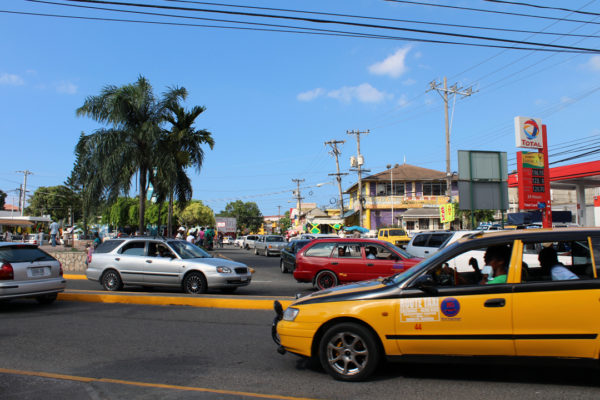
Jamaica’s capital was founded in 1692 by refugees from Port Royal, after an earthquake dropped most of that town into the sea, and it grew around one of the largest natural harbours in the world.
It’s the island’s only real city — the National Gallery, the mansion at Devon House, Bob Marley’s old house on Hope Road, and what’s left of Port Royal out on the spit.
Nearly all Jamaican music was made here: ska, rocksteady, reggae and dub all came out of Kingston’s studios and sound systems between the 1950s and the 1970s, and Jamaican Patois went round the world with them.
5 – Dunns River Falls
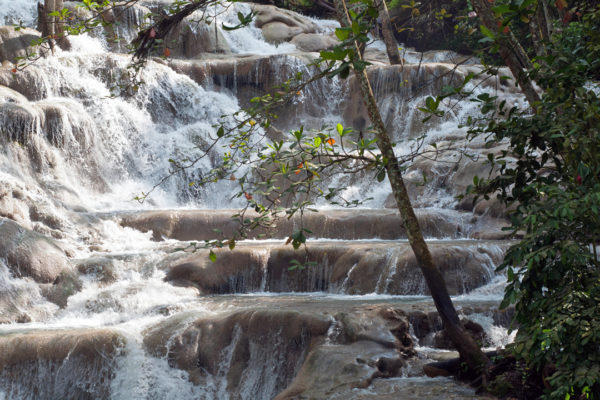
A few miles west of Ocho Rios, Dunn’s River drops around 55 metres over a natural limestone staircase and runs out onto the beach — one of very few waterfalls anywhere that empties straight into the sea.
You climb it rather than look at it, usually in a human chain behind a guide, wading up through terraced pools the whole way.
The falls are still growing: the water carries dissolved limestone that hardens into travertine as it flows, rebuilding the steps as you climb them — and this ground is thought to be where the Spanish made their last serious attempt to retake Jamaica from the English in 1657.
6 – Runaway Bay
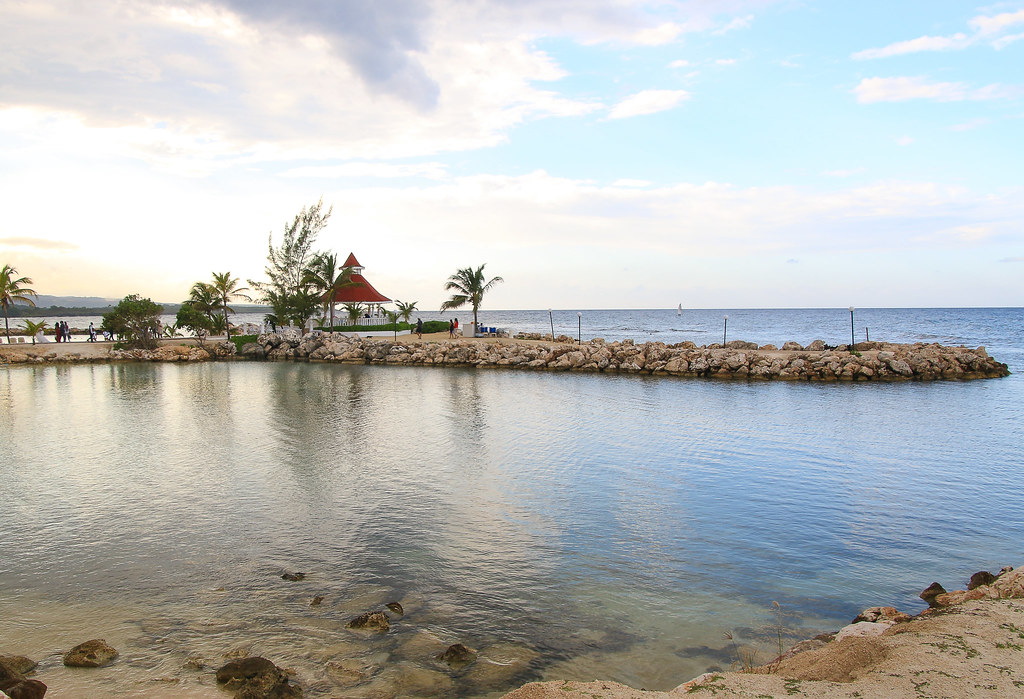
Between Ocho Rios and Discovery Bay on the north coast, this stretch of sand and reef takes its name from flight, though which flight is still argued over.
Behind the hotels are the Green Grotto Caves, a limestone labyrinth of tunnels and light holes running down to an underground lake, open to guided tours.
The name may commemorate the Spanish governor Ysassi slipping away to Cuba as the English closed in, or enslaved people escaping north by canoe — and the caves below were used by all of them in turn, Taíno, Spanish, runaways and later rum smugglers, before the makers of Live and Let Die turned up.
7 – Treasure Beach

On the dry south coast in St Elizabeth, Treasure Beach isn’t one beach but a string of fishing bays, with dark sand, working boats and none of the north coast’s resort machinery.
Stay in a guesthouse, eat what came off the boat that morning, and take a boat out to the Pelican Bar, a driftwood shack on stilts on a sandbar a quarter of a mile offshore.
People here are known across Jamaica for a distinctive look — lighter skin, sometimes red hair and green eyes — usually put down to a Scottish shipwreck, though historians point instead to Scots settlers, Miskito people brought from Central America, and 19th-century German migrants.
8 – Bluefields Beach
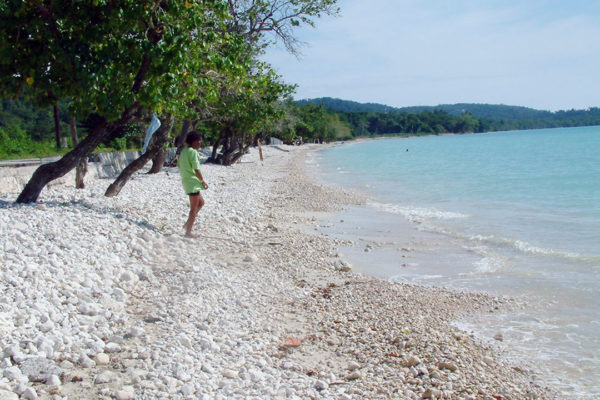
A long, quiet bay in Westmoreland on the south-west coast, Bluefields was an early Spanish settlement and later a British anchorage, and Henry Morgan is said to have gathered his fleet here before sacking Panama in 1670.
It’s a public beach under sea-grape trees where Jamaicans come at weekends for fried fish and festival, with snorkelling straight off the shore.
In a garden beside the police station stands a breadfruit tree said to have been planted by Captain Bligh in 1793 — breadfruit being the cargo he was carrying when the Bounty crew mutinied, brought here on a second attempt to feed enslaved workers cheaply — and Bluefields is also where Peter Tosh grew up, remembered at a memorial garden in Belmont next door.
9 – Port Royal
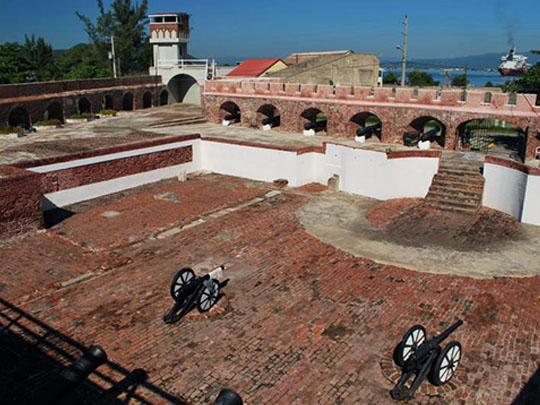
On a sand spit at the mouth of Kingston Harbour, Port Royal was the base from which English privateers — Henry Morgan chief among them — raided the Spanish Caribbean, growing so rich and so disreputable that it was widely called the wickedest city on earth.
What’s left is a fishing village with Fort Charles, the oldest fort on the island, where a young Horatio Nelson once stood watch, and the Giddy House, an artillery store knocked to a 45-degree tilt by a later earthquake and deeply strange to walk into.
On the morning of 7 June 1692 an earthquake liquefied the sand the town was built on, and around thirty acres of it slid into the harbour in minutes, killing thousands — the survivors moved across the bay and founded Kingston, and the sunken streets are still down there, one of the most important underwater archaeological sites in the world.