

Wikimedia Commons / CC-BY-SA-3.0 / GFDL
Capital: Vilnius
Population: 2.9 million+
Language: Lithuanian

1 – Vilnius (above)
Vilnius was the capital of the Grand Duchy of Lithuania from at least 1323, when Grand Duke Gediminas’s letters first name it, and it became such a centre of Jewish learning, home of the 18th-century scholar the Vilna Gaon, that it was known as the Jerusalem of the North.
Vilnius’s UNESCO-listed old town, one of Europe’s largest, runs from the Gate of Dawn, the last of its ten city gates, with its revered Madonna icon, past Gothic St Anne’s and the university founded in 1579 to Užupis, a district that declared itself a republic on 1 April 1997 and posts its constitution on a wall, while the Museum of Occupations and Freedom Fights fills a former KGB prison.
Legend says Napoleon wanted to carry Vilnius’s St Anne’s Church back to Paris in the palm of his hand, but the story first appears in an 1859 guidebook, and in 1812 his troops actually used the church as a warehouse and burned its woodwork.
2 – Druskininkai
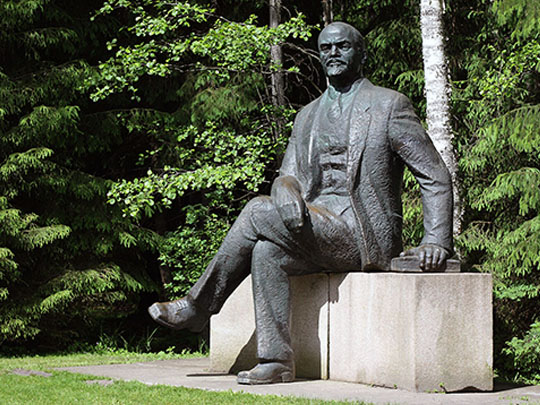

Druskininkai is a spa town on the Nemunas river in southern Lithuania near the Belarusian and Polish borders, declared a therapeutic area in 1794 and developed as a resort from 1837 around its mineral springs and mud baths.
Druskininkai has the memorial museum of the painter and composer Mikalojus Konstantinas Čiurlionis in his family’s old home, mineral-water spas, and Snow Arena, the first indoor ski slope in the Baltic states.
Outside Druskininkai, Grūtas Park gathers dozens of Soviet statues pulled down after independence, nicknamed “Stalin World”, and its founder Viliumas Malinauskas won an Ig Nobel Peace Prize for it in 2001.
3 – Palūšė

Palūšė is a lakeside village on Lake Lūšiai in north-eastern Lithuania’s lake district, and its wooden church of St Joseph, built in 1750 by the priest Juozapas Baziliauskas on land he inherited, is one of the oldest surviving wooden churches in the country.
Palūšė’s church stands beside an octagonal bell tower added around 1800 and styled on the lookouts of old Lithuanian wooden castles, and the village is a base for boats out onto the lake.
The builders of Palūšė’s church are said to have used only an axe, and the church and its bell tower filled almost half the back of Lithuania’s 1 litas banknote.
4 – Aukštaitija National Park

Aukštaitija National Park, founded in 1974 as Lithuania’s first national park, covers about 410 square kilometres of pine forest and more than 100 lakes in the north-east, among them Lake Tauragnas, the deepest lake in Lithuania.
Aukštaitija National Park’s best view is from Ladakalnis hill, looking over six lakes at once, and nearby Ginučiai has a protected 19th-century watermill below an old hillfort.
Lithuanians had their own gods of bees, Babilas and the goddess Austėja, and in Aukštaitija National Park the Stripeikiai beekeeping museum, founded in 1984, carves them in wood among old tree-trunk hives.
5 – Hill of Crosses – Šiauliai

The Hill of Crosses rises about 12 kilometres north of Šiauliai, a city first recorded at the Battle of Saule in 1236, where the Livonian Brothers of the Sword were defeated, and the crosses are believed to have begun after the uprising of 1831, placed by families who could not bury fallen rebels.
The Hill of Crosses is covered in tens of thousands of crosses, crucifixes and rosaries left by pilgrims, with a Franciscan hermitage beside it opened in 2000 at the encouragement of Pope John Paul II.
Soviet authorities cleared the Hill of Crosses several times from 1961, burning the wooden crosses and scrapping the metal ones, but the crosses came back each time, and Pope John Paul II prayed there on 7 September 1993.
6 – Curonian Spit

The Curonian Spit is a 98-kilometre ribbon of sand between the Curonian Lagoon and the Baltic, with the northern 52 kilometres in Lithuania and the rest in Russia’s Kaliningrad region, and it was part of Germany until 1923 and again from 1939 to 1945.
The Curonian Spit’s highlights are the Parnidis dune, about 52 metres high and among Europe’s highest drifting dunes, the fishing village of Nida, where Thomas Mann spent the summers of 1930 to 1932, and the Hill of Witches at Juodkrantė, a forest trail of wooden folklore carvings.
On the Curonian Spit, logging in the 17th and 18th centuries set the dunes moving until they buried whole villages, and replanting from the 19th century tamed the sand, which is why UNESCO listed it in 2000 as a landscape shaped by people and nature together.
7 – Trakai Island Castle
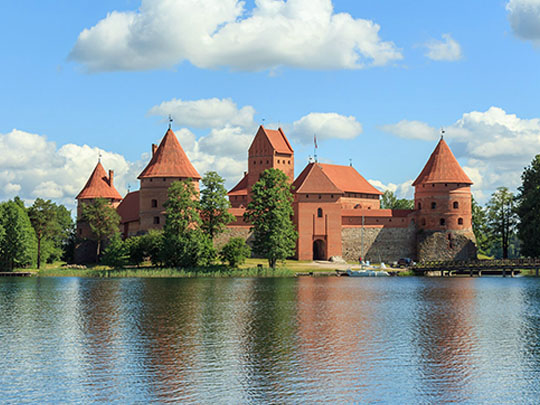
Trakai Island Castle stands on an island in Lake Galvė less than 30 kilometres west of Vilnius, begun under Grand Duke Kęstutis in the 14th century and completed by his son Vytautas the Great, who died there in 1430.
Trakai Island Castle is a red-brick fortress reached by wooden footbridges, and the town on the shore keeps the wooden houses of the Karaim, a Turkic people whose families Vytautas brought from Crimea in 1397–98.
Trakai Island Castle looks medieval but is largely a rebuild, as it lay in ruins from the 17th-century wars with Muscovy until restoration from the 1950s to the 1980s, and how authentic that rebuild is has long been debated.
8 – Kaunas
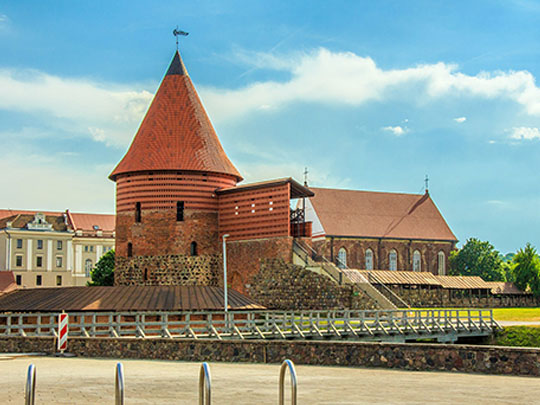
Kaunas stands where the Nemunas meets the Neris and served as Lithuania’s provisional capital between the wars, while Vilnius was held by Poland, and the modernist buildings it put up in that time became a UNESCO World Heritage Site in 2023.
Kaunas has a 14th-century castle, a Town Hall nicknamed the White Swan, begun in 1542, the Italian Baroque Pažaislis monastery, the vast modernist Christ’s Resurrection Church, begun in 1934, and a Devil’s Museum built on the artist Antanas Žmuidzinavičius’s collection of devils.
In the summer of 1940 the Japanese vice-consul in Kaunas, Chiune Sugihara, issued transit visas to 2,140 people, with about 300 more covered on them, according to the USHMM, before German forces sealed the Kovno ghetto in 1941 and shot more than 9,200 of its people at the Ninth Fort in a single October action.
9 – Paneriai Memorial
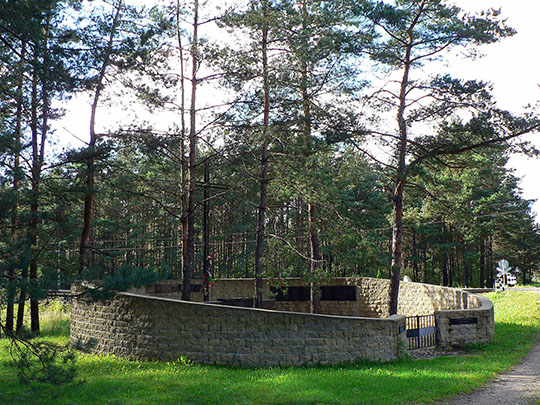
The Paneriai Memorial stands in woods about 10 kilometres south-west of central Vilnius, where fuel pits dug by the Soviets in 1940 became killing grounds from July 1941 to July 1944, and German SS and police units with Lithuanian collaborators killed up to 75,000 people there, the vast majority Jews from Vilnius and its ghetto, according to the USHMM.
The Paneriai Memorial includes a museum first opened in 1960, a memorial stone to the Jewish victims raised in 1991, a Polish memorial and the pits themselves among the pines, and the Soviet obelisk of 1952 replaced the first memorial that Vilnius’s surviving Jews had put up after the war.
At Paneriai, prisoners forced to dig up and burn the bodies tunnelled out with spoons and their bare hands, and on 15 April 1944 about a dozen escaped, of whom 11 survived to tell what had happened there.
10 – Klaipėda
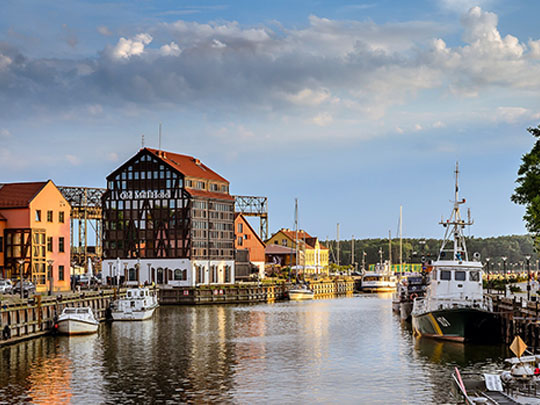

Klaipėda, Lithuania’s only major seaport at the mouth of the Curonian Lagoon, began in 1252 as the castle of Memelburg, and as German Memel it was briefly Prussia’s capital in 1807–08 when the royal family fled Napoleon.
Klaipėda’s old town has half-timbered warehouses, the bronze Black Ghost sculpture rising from the harbour and Theatre Square with its fountain of Ännchen von Tharau, honouring the Memel-born poet Simon Dach, while the Lithuanian Sea Museum fills a 19th-century fort.
Lithuania took the Memel Territory in 1923 in a revolt secretly organised by its own government, then handed it to Germany under an ultimatum in March 1939, and Hitler spoke from the balcony of Klaipėda’s theatre on 23 March 1939.
11 – Plokštinė
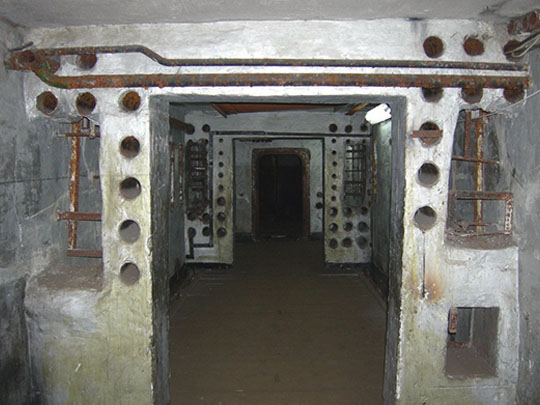
Plokštinė, in the forests of Žemaitija National Park near Lake Plateliai in north-west Lithuania, hides a Soviet nuclear missile base built from 1960 by around 10,000 soldiers and armed from the end of 1962 until 1978.
Plokštinė’s Cold War Museum, opened inside the base in 2012, takes you through its tunnels to look down into an empty silo about 30 metres deep, one of four that held R-12 missiles with warheads of around two megatons.
No missile was ever fired from Plokštinė, whose targets reportedly lay across Western Europe and Turkey, though the real list may never be known, and its personnel are said to have helped deploy the same R-12 missiles to Cuba in 1962.