

Flavio Ensiki / Wikimedia Commons / CC-BY-SA-3.0 / GFDL
Capital: Luxembourg City
Population: 690,000+
Language: Luxembourgish, French and German

1 – Luxembourg City (also above)

Luxembourg City grew from a castle on the Bock rock, acquired by Count Siegfried in 963, into a fortress so strong it was called the Gibraltar of the North, until the 1867 Treaty of London made the country neutral and the walls came down, and what survives of its old quarters and fortifications became a UNESCO site in 1994.
Luxembourg City’s highlights are the Flemish Renaissance Grand Ducal Palace, Notre-Dame Cathedral with the tomb of John the Blind of Bohemia, the Chemin de la Corniche that writer Batty Weber called the most beautiful balcony in Europe, the Adolphe Bridge of 1903, and the EU courts and banks of the Kirchberg plateau.
Luxembourg City’s Gëlle Fra, the gilded woman atop the Monument of Remembrance of 1923, was torn down on Nazi orders in October 1940 and turned up again in the early 1980s under the stands of the national stadium, and she went back on her column in 1985 with her head tilted from the fall.
2 – The Grund and the Bock Casemates
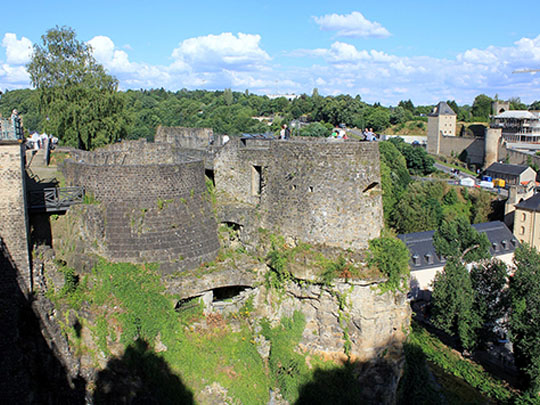
The Grund lies in the Alzette valley far below Luxembourg City’s walls, and the Bock Casemates above it were tunnels begun by the Spanish in 1644 and extended under Vauban and the Austrians to some 23 kilometres, cut back to 17 kilometres after 1867.
The Grund’s landmark is Neumünster Abbey, rebuilt from 1688, which served as a prison from 1869 to 1985 and has been a cultural centre since 2004, while the Bock Casemates’ galleries burrow up to 40 metres into the rock and are part of the city’s UNESCO site.
During WWII air raids the casemates beneath the Grund and the Upper Town could shelter up to 35,000 people.
3 – Vianden
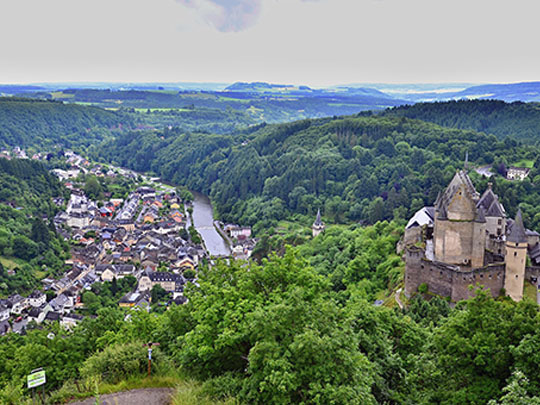
Vianden sits on the Our river on the German border below a castle built mainly in the 11th to 13th centuries for the counts of Vianden, which passed to the House of Nassau in 1417, and on 19 November 1944 a few dozen local resistance fighters held Vianden against a much larger Waffen-SS force in the Battle of Vianden.
Vianden Castle’s restored halls include a rare ten-sided chapel from around 1170, and down in the town the house where Victor Hugo stayed is a literary museum.
In 1820 King William I of the Netherlands sold Vianden Castle to a local alderman, who stripped and sold its roof, doors and windows, leaving the ruin Victor Hugo sketched in 1871, and it was only fully restored after passing to the state in 1977.
4 – Echternach
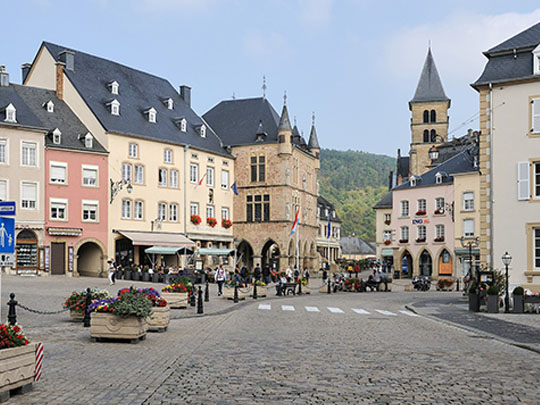
Echternach, on the Sûre river at the German border, grew up around the abbey founded in 698 by St Willibrord, a Northumbrian missionary who had spent 12 years training at Rath Melsigi in County Carlow, usually identified with Clonmelsh, before setting off to convert the Frisians, and he died and was buried at Echternach in 739.
Echternach’s Basilica of St Willibrord keeps the saint’s tomb in its crypt, and the basilica itself was blown up by retreating German troops during the Battle of the Bulge and rebuilt in the 1950s, with the abbey and the Mullerthal’s sandstone gorges close by.
Every Whit Tuesday pilgrims hop through Echternach’s streets in the Hopping Procession, on UNESCO’s intangible heritage list since 2010, and the famous “three steps forward, two back” was a historical variant, with pilgrims hopping from side to side instead.
5 – The Luxembourg American Cemetery
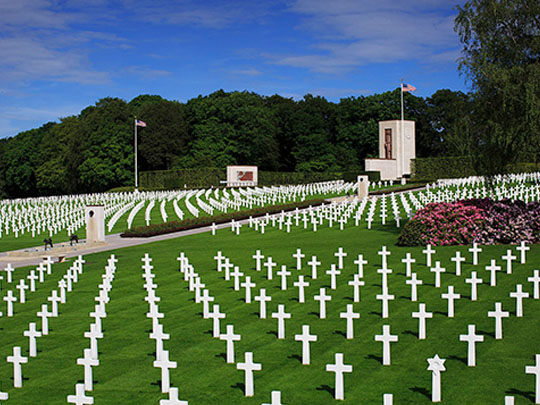
The Luxembourg American Cemetery, in Hamm on the edge of Luxembourg City, was set up by the US Third Army on 29 December 1944 during the Battle of the Bulge and holds more than 5,000 American war dead, many killed in the Bulge or the push to the Rhine.
The Luxembourg American Cemetery’s chapel has bronze doors, a mosaic ceiling and stained glass with army insignia, and among the graves are two Medal of Honor recipients and 22 pairs of brothers buried side by side.
General George Patton, who died after a car crash in December 1945, is buried at the Luxembourg American Cemetery among his men, though his grave was moved to the front when crowds wore down the grass, and 1.5 kilometres away the Sandweiler German war cemetery holds 10,913 German dead.
6 – Clervaux
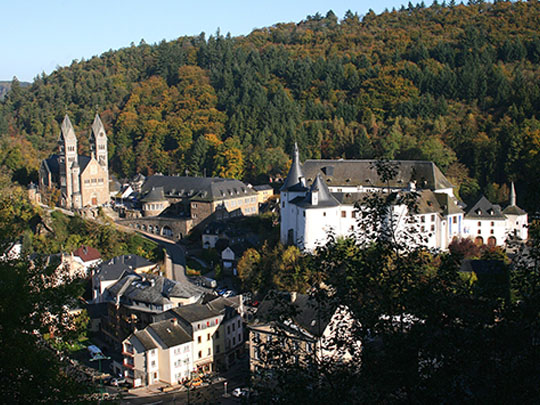
Clervaux sits in a deep loop of the Clerve in Luxembourg’s Ardennes below a castle begun in the 12th century, and in December 1944 about 100 American soldiers held that castle for two days after the town fell, until they surrendered with it in flames.
Clervaux Castle, rebuilt by the state after the war, houses a Battle of the Bulge museum with a Sherman tank at its gate, while the Benedictine abbey on the hill above, built in 1909–10, is known for Gregorian chant.
Clervaux Castle is home to The Family of Man, the photo exhibition by the Luxembourg-born photographer Edward Steichen that opened at New York’s Museum of Modern Art in 1955 with 503 pictures from 68 countries, toured the world and came home to Clervaux as Steichen wished, joining UNESCO’s Memory of the World register in 2003.
7 – Schengen
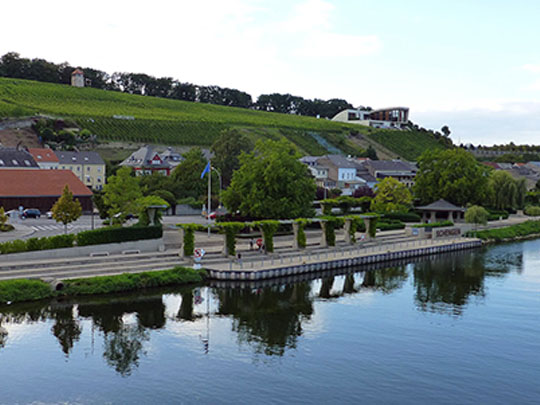
Schengen is a small Moselle wine village where Luxembourg, France and Germany meet, and on 14 June 1985 Belgium, France, Luxembourg, the Netherlands and West Germany signed the Schengen Agreement aboard the riverboat Princesse Marie-Astrid, moored at its quay, with the Convention signed in the village in 1990 and passport-free travel beginning in 1995.
Schengen’s riverside has the European Museum Schengen, opened in 2010, three steel memorials to the signings and a section of the Berlin Wall given by the city of Berlin.
Ireland stayed out of passport-free Schengen to keep its Common Travel Area with the UK, formally opting out under the Treaty of Amsterdam.
8 – Diekirch
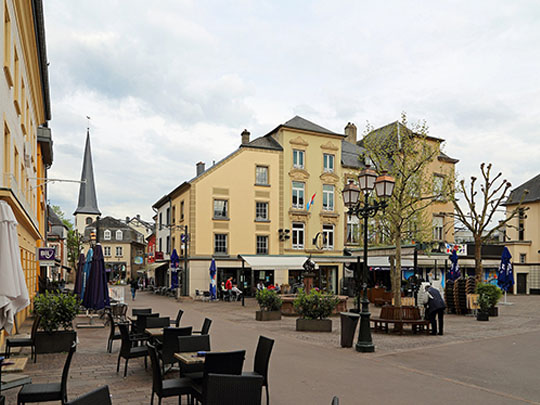
Diekirch sits on the Sûre river, where the old church of St Laurence was built inside a Roman hall and was serving as a church by the 7th century, and on the night of 18 January 1945 the US 5th Infantry Division crossed the river here to drive the Germans back.
Diekirch’s National Museum of Military History fills an old brewery with life-size dioramas of the Battle of the Bulge, including that night crossing of the Sûre, and the town history museum shows a Roman-era villa mosaic.
Diekirch’s mascot is a donkey, with a donkey fountain, a donkey weathervane in place of the usual church cockerel and a donkey festival, possibly because donkeys once worked the steep hillside vineyards.
9 – Wiltz
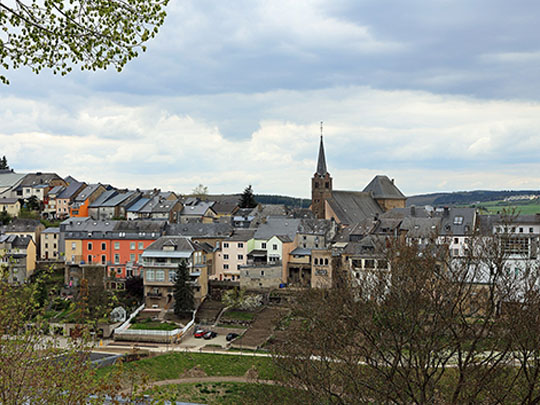
Wiltz is a northern Ardennes town on the river Wiltz, where on 31 August 1942 workers and officials walked out against the Nazi order conscripting young Luxembourgers into the German army, starting a general strike across the country for which 21 people were executed, most at the SS camp at Hinzert.
Wiltz’s Renaissance castle, begun in 1631, holds a brewing museum and a Battle of the Bulge museum, and the National Strike Monument, a slate tower shaped like a lighthouse, shows David facing Goliath.
In December 1944 Wiltz was the headquarters of the US 28th Infantry Division, which threw engineers, clerks and bandsmen into a makeshift battalion to slow the German drive on Bastogne before the town fell days later.
10 – Beaufort Castles
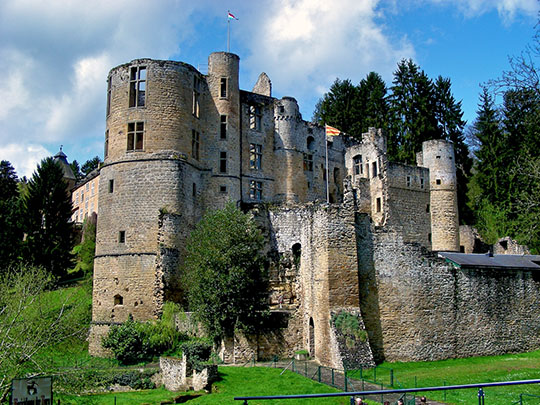
Beaufort, in the Mullerthal region of eastern Luxembourg, has two castles side by side: a medieval fortress begun in the 11th century, with its first lord recorded in 1192, and a Renaissance château begun in 1643 by Jean de Beck, governor of Luxembourg, and finished by his son in 1649 after Beck died of wounds from the Battle of Lens.
Beaufort’s medieval castle was used as a stone quarry in the early 19th century before its ruins were cleared and opened to visitors in the early 1930s, and since 1981 both castles have belonged to the state, with tours of the château ending in a taste of Cassero, a blackcurrant liqueur made on site.
On the first morning of the Battle of the Bulge, 16 December 1944, the opening German barrage fell mainly on Beaufort, where an American armoured infantry battalion had its headquarters, and the village fell the next day.