
Wikimedia Commons / CC-BY-SA-3.0 / GFDL
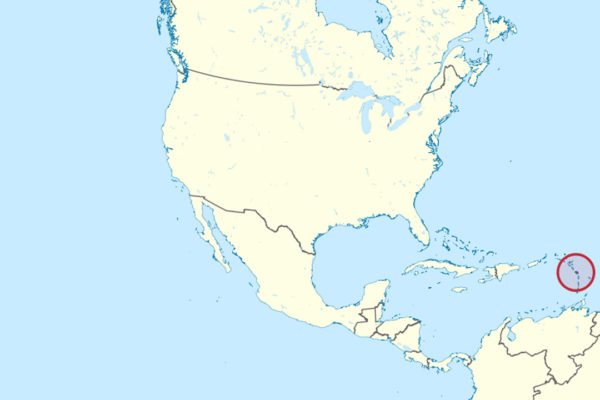
Capital: Fort-de-France
Population: 350,000+
Language: French/Martinican Creole
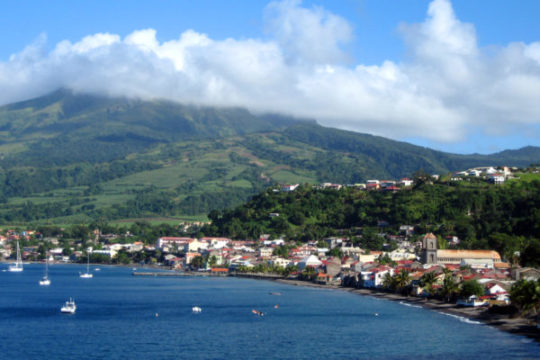
1 – Saint-Pierre (also above)

On the north-west coast below Mont Pelée, Saint-Pierre was the richest and most sophisticated city in the French Caribbean, with theatres, tramways and a botanical garden — they called it the Paris of the West Indies.
It’s a modest seaside town now, built among the ruins: roofless walls, the shell of the old theatre and its staircase, a volcano museum, and the wrecks of ships still on the seabed in the bay.
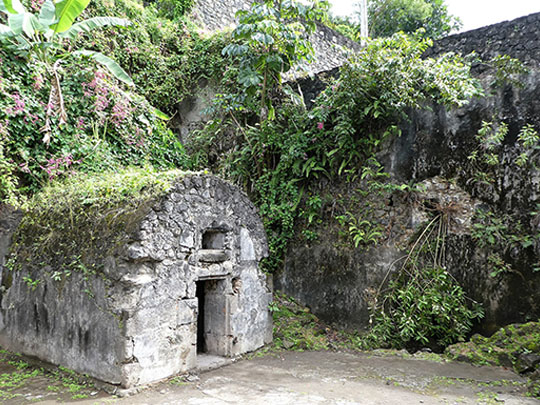
On the morning of 8 May 1902 Mont Pelée sent a pyroclastic flow down onto the city and killed around 30,000 people in a few minutes — the worst volcanic disaster of the 20th century — and one of the only survivors in its path was a prisoner, saved by the thick stone walls of the solitary cell he’d been locked in the night before.
2 – Fort-de-France
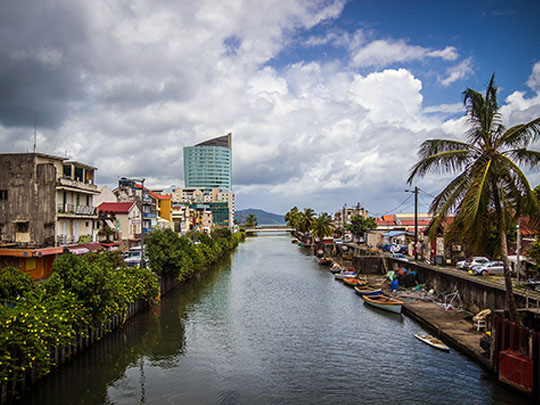

Martinique’s capital sits on a deep bay on the west coast, guarded by Fort Saint-Louis, and became the island’s main city after 1902, when the eruption removed its rival up the coast.
The centre is La Savane, a big palm-shaded park, with the market, the iron-framed cathedral and the astonishing Bibliothèque Schoelcher along its edges.
The library was built in Paris for the 1889 World Exposition, then taken apart, shipped over and reassembled here — and at the far end of the park stands a marble statue of Joséphine, born on this island and widely blamed for persuading Napoleon to restore slavery, beheaded by unknown hands in 1991 and left that way ever since.
3 – Diamond Rock
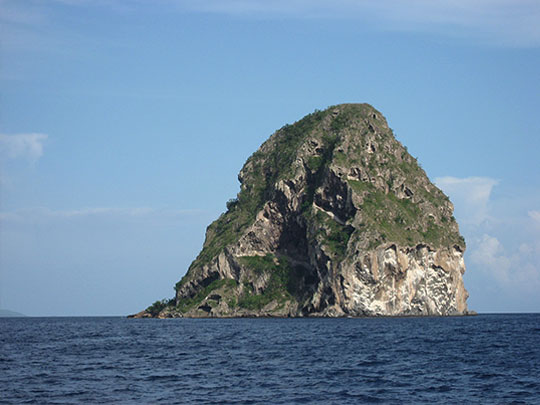

A bare volcanic plug rising 175 metres straight out of the sea off the south coast, Diamond Rock commands the channel between Martinique and Saint Lucia — which is why, in 1804, the Royal Navy simply took it.
You can’t land on it, since it’s now a protected nature reserve full of nesting seabirds and an endemic snake, but it’s the island’s most famous view from the beach at Le Diamant, and one of the best dive sites in the Caribbean.
The British hauled cannon to the summit and commissioned the rock as a warship, HMS Diamond Rock, with a garrison of over a hundred men; it held out for seventeen months, and passing Royal Navy ships were expected to salute it as they would any other vessel in the fleet.
4 – Trois-Îlets
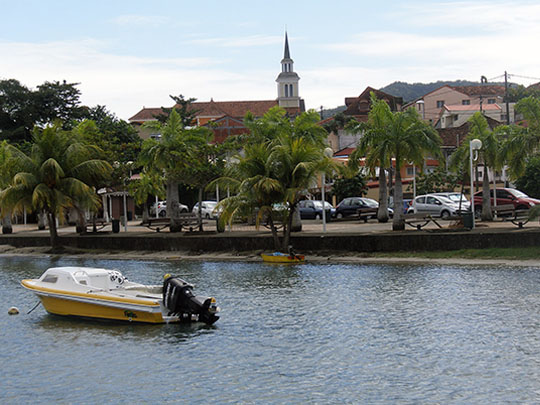
Across the bay from the capital, a twenty-minute ferry ride away, Trois-Îlets was a parish of sugar estates run by the Jesuits from the 1680s, and one of those estates produced the most famous Martinican who ever lived.
The Domaine de la Pagerie is where Joséphine was born in 1763: the great house is long gone, but the stone kitchen survives as a small museum, with her childhood bed and Napoleon’s letters, and you can walk the ruins of the sugar mill opposite for nothing.
The museum is honest about what paid for it all — there’s an inventory of the people enslaved on the estate — and a few minutes away the Savane des Esclaves is a reconstructed village of the kind they lived in, built by hand by a local man using period techniques.