
Wikimedia Commons / CC-BY-SA-3.0 / GFDL
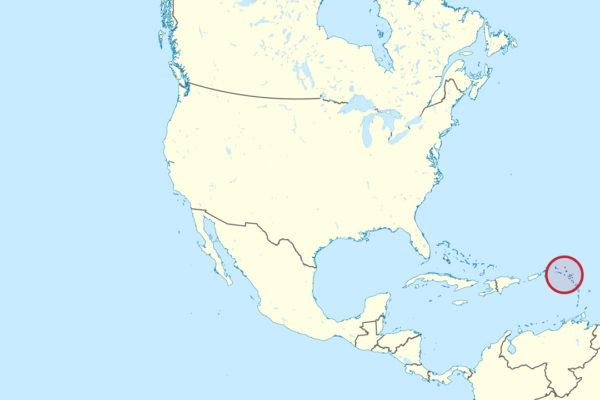
Capital: Plymouth (abandoned 1997); government seat at Brades
Population: 4,400+
Language: English
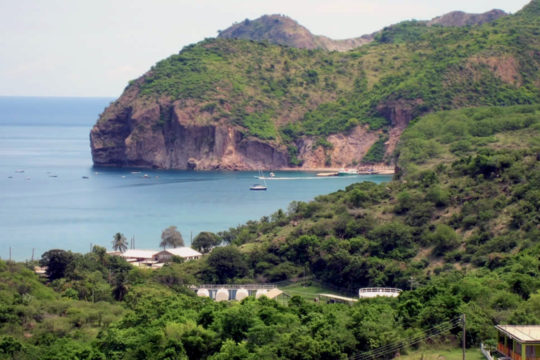
1 – Little Bay (above)
On the north-west coast, Little Bay is where Montserrat is building itself a new capital, because the old one is under twelve metres of ash and mud at the other end of the island.
For now it’s a small working harbour with a beach, a few bars and the ferry and cargo berths, backed by the green hills of the north; the government sits at Brades, a few minutes up the road.
Montserrat is the only place outside Ireland where St Patrick’s Day is a public holiday — and the ten days of festivities leading up to 17 March are held here in the north, because the villages they used to be held in are inside the exclusion zone.
2 – Carr’s Bay
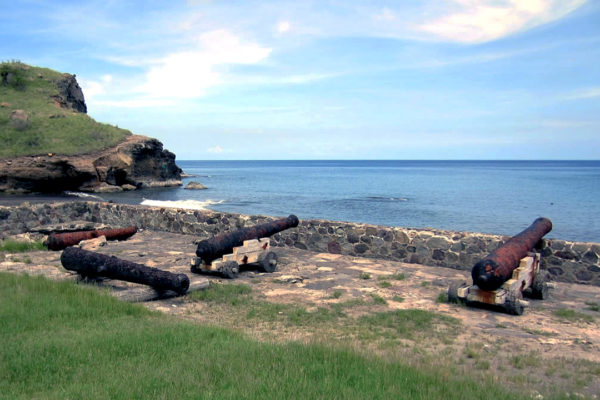
A small bay just north of Little Bay, Carr’s Bay looks across to Redonda and Nevis and carries one of the island’s surviving pieces of colonial hardware: an old cannon on the shore, pointed out to sea.
There’s a monument here to the 1768 rebellion, a war memorial, and a quiet stretch of dark sand — this corner of the island is where almost everyone now lives.
On 17 March 1768 the enslaved population planned to rise on St Patrick’s Day, knowing the mostly Irish planters would be drunk; the plot was betrayed, nine men were executed, and it’s that rebellion, not the saint, that the island’s national holiday commemorates.
3 – Woodlands Beach
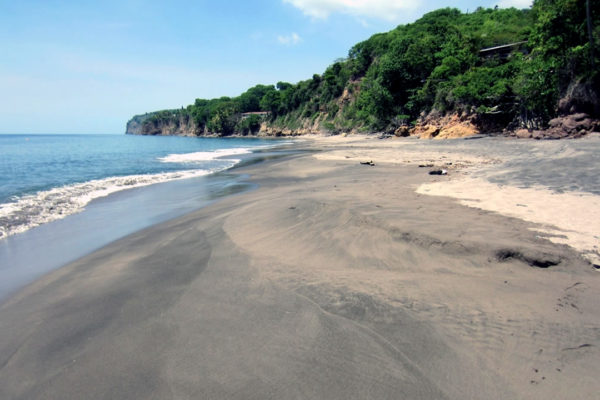
A grey-sand bay on the west coast with cliffs at either end, Woodlands sits in the safe northern third of the island, a few miles from where the exclusion zone begins.
There’s a shaded picnic shelter above the beach, a good swim when the sea is calm, and green turtles nesting on the sand at the right time of year.
Just south of here, in the zone nobody is allowed into, stand the ruins of AIR Studios, where between 1979 and 1989 George Martin’s Caribbean studio recorded Dire Straits, the Police, Elton John, Paul McCartney and the Rolling Stones, before Hurricane Hugo wrecked it and the volcano put it out of reach for good.
4 – Soufrière Hills
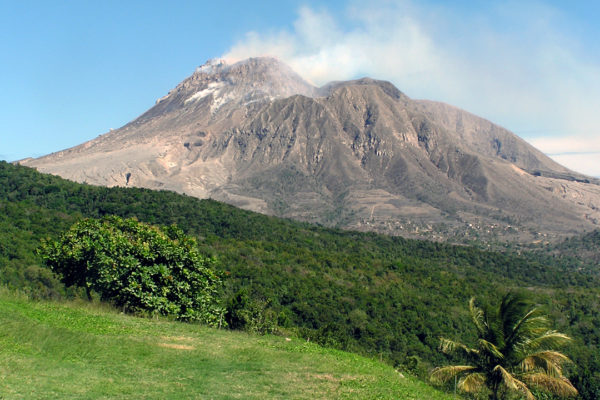
The volcano in the south of the island had been quiet for centuries when it woke on 18 July 1995, and over the next few years it destroyed the capital, the airport and the docks, and drove two-thirds of Montserrat’s people abroad.
You can’t go in — the southern two-thirds of the island is an exclusion zone — but you can look: at the Volcano Observatory, from Garibaldi Hill, or by boat along the coast past the buried roofs of Plymouth.
Nineteen people were killed in June 1997 by a pyroclastic flow, and the island’s population fell from over 10,000 to under 1,200 at its lowest — it’s back to around 4,400 now, all of it living in the northern third.
5 – Plymouth
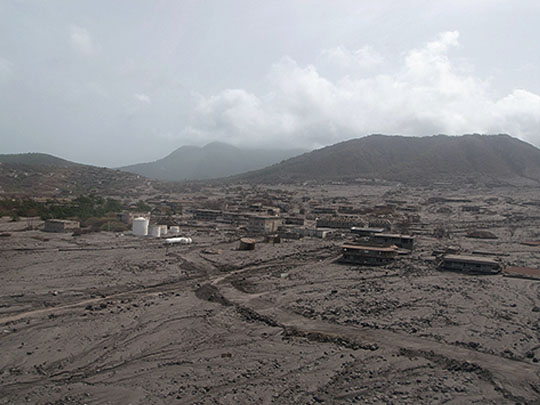
Montserrat’s Georgian capital sat on the west coast at the foot of the volcano, and it was the island’s only port, its government seat and home to about four thousand people until the eruptions of 1995 and 1997 buried it.
Nobody lives there and you can’t wander in alone, but licensed guides run trips into the zone, and what you see is a town up to its upper storeys in grey ash — the courthouse clock tower nearly swallowed, roofs at street level, no birds, no noise.
Plymouth is still, legally, the capital of Montserrat, which makes it the only ghost town in the world that is the capital of a territory — the government works out of Brades and a replacement is slowly going up at Little Bay, but nobody has ever got round to changing the paperwork.