
Wikimedia Commons / CC-BY-SA-3.0 / GFDL
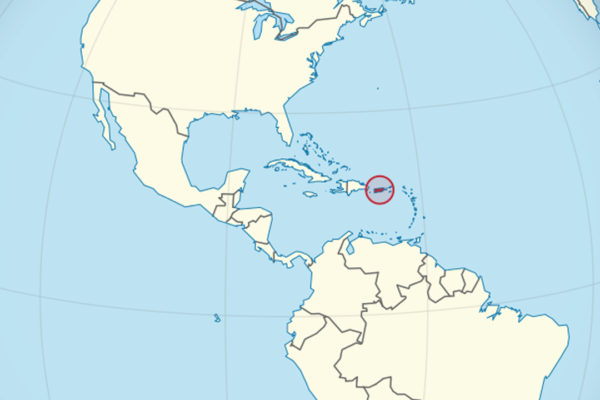
Capital: San Juan
Population: 3.2 million+
Language: Spanish/English
1 – Old San Juan (also above)
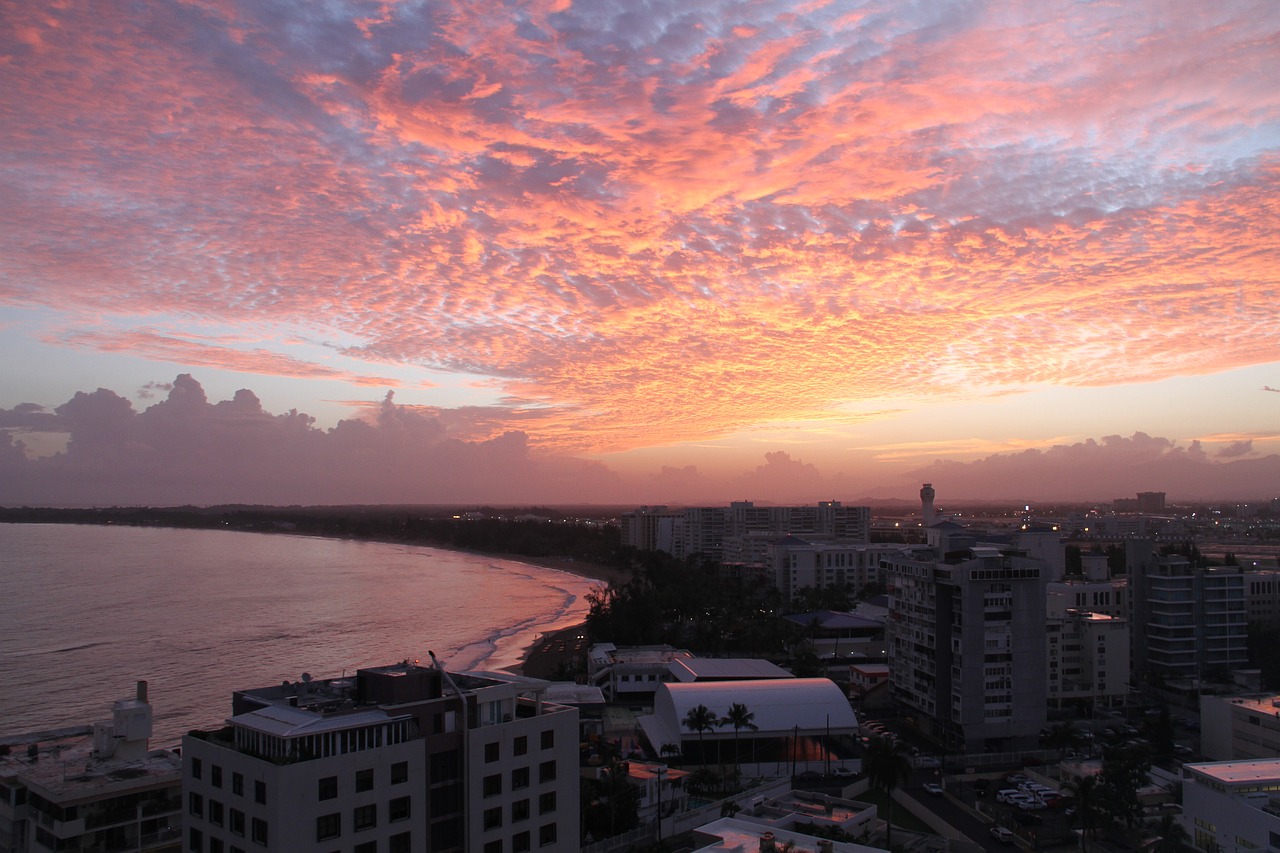
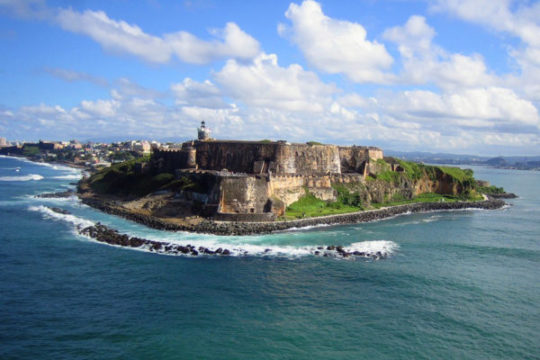
The seven blocks of the old city sit on an islet at the mouth of San Juan Bay, founded in 1521 and fortified into Spain’s strongest position in the Caribbean — the forts and the city wall have been a UNESCO World Heritage Site since 1983.
Walk the ramparts of El Morro, six levels of stonework above the Atlantic, then across town to San Cristóbal, with its tunnels and outworks, and wander the pastel streets and plazas in between.
San Juan is the second-oldest European-founded city in the Americas, after Santo Domingo — and the blue cobbles underfoot, the adoquines, are 19th-century iron-smelting slag, cast into blocks and carried over as ballast in the holds of Spanish ships.
2 – El Yunque


Half an hour east of San Juan, El Yunque covers the slopes of the Sierra de Luquillo and is the only tropical rainforest in the United States National Forest System — the Taíno held these mountains sacred, and the name comes from their word for the spirit who lived there.
Trails run up through four distinct forest zones to waterfalls and lookout towers, with the road climbing into cloud; some sections close after storms, so check before you go.
Parts of the forest get over 200 inches of rain a year, and it supplies a fifth of the island’s fresh water — and after dark the whole place rings with coquí, the thumbnail-sized tree frog that is Puerto Rico’s unofficial national symbol and sings its own name.
3 – Vieques
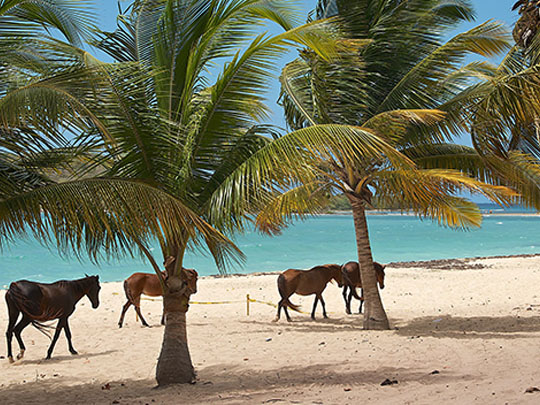
A twenty-mile island seven miles off the east coast, Vieques spent six decades as a US Navy bombing range: the military took most of the island in the 1940s and squeezed the civilian population into the middle of it.
What’s left is the best undeveloped coastline in Puerto Rico — empty beaches, a wildlife refuge, wild horses on the roads — and Mosquito Bay, where you paddle out at night through water that lights up around the blade.
That bay holds a Guinness record as the brightest bioluminescent bay in the world; the Navy finally left in 2003 after years of protest that followed the death of a civilian guard hit by a stray bomb, and parts of the old range are still closed while unexploded ordnance is cleared.
4 – Arecibo Observatory
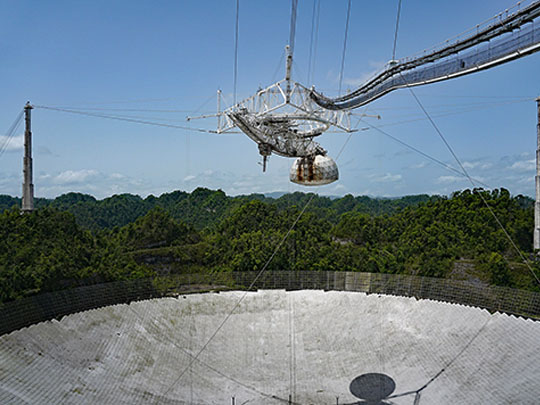
Set in a natural limestone sinkhole in the karst hills of the north coast, the Arecibo dish was completed in 1963 and was the largest single-aperture radio telescope in the world for 53 years.
The telescope itself is gone — the suspended platform fell into the dish in December 2020 — but the visitor centre and observation deck reopened, and other instruments are still working on site.
In 1974 Arecibo beamed the first deliberate radio message from Earth to another star system, aimed at a cluster 25,000 light years away — and its suspended platform is the thing James Bond drops a villain onto in the closing scene of GoldenEye.
5 – Ponce
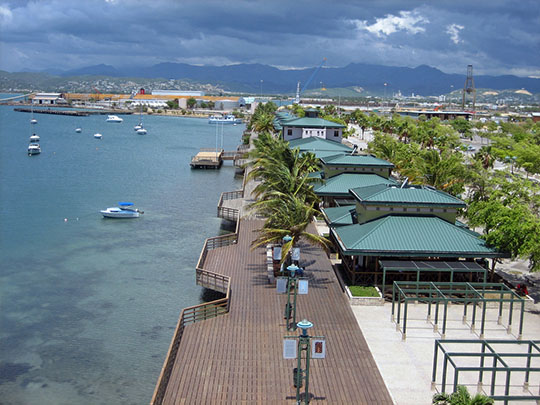
Puerto Rico’s second city sits on the dry southern coast, founded in 1692 and named for the great-grandson of the conquistador Juan Ponce de León; it was Spain’s capital for the south of the island, and it grew rich on sugar, coffee and shipping.
The heart of it is Plaza Las Delicias, with its lion fountain, cathedral and the Parque de Bombas — a wooden fire station of 1882, striped in red and black, that is the most photographed building in Puerto Rico outside San Juan.
Half a billion dollars has gone into preserving the colonial core, and the art museum on the edge of town holds one of the largest collections of Victorian painting outside Britain — including Leighton’s Flaming June, which Ponce bought in the 1960s when nobody else wanted it.
6 – Culebra and Flamenco Beach
A small island seventeen miles east of the mainland, Culebra was handed to the US Navy in 1901 and used for gunnery and bombing practice for decades — on one count, missiles hit it on 228 days in 1969 alone.
Flamenco is the reason people come: a mile-long arc of white sand on a sheltered bay, regularly named among the best beaches in the world, with camping behind it and a wildlife refuge along the shore.
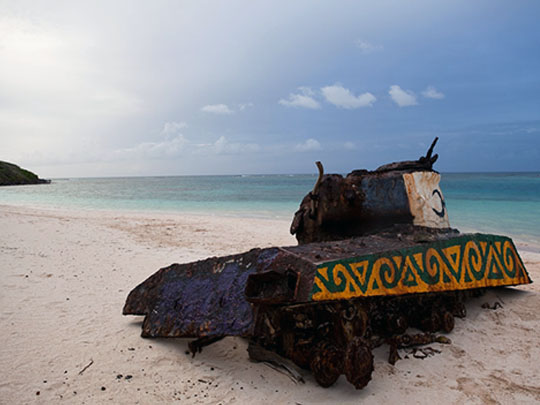
Two rusting Sherman tanks still sit at the western end of the sand, left because they were too heavy to move and now repainted by locals and visitors in layers of graffiti — Culebrenses forced the Navy out with seven months of marches, sit-ins and blockades in 1970, five years before it finally left, and thirty before Vieques managed the same.