

Wikimedia Commons / CC-BY-SA-3.0 / GFDL
Capital: Gustavia
Population: 11,000+
Language: French

1 – Gustavia (also above)

St Barth’s capital sits around a narrow harbour on the south-west coast, and it is the only town in the Caribbean built by Sweden: France handed the island over in 1784 in exchange for trading rights in Gothenburg, and the Swedes held it for nearly a century.
Three forts still look down on the water — Gustav, Karl and Oscar — and the quay below is lined with duty-free boutiques, restaurants and some of the largest yachts afloat.
The Swedes renamed the town after their king, declared it a free port, and grew rich on neutral trade during the Napoleonic wars; Sweden sold it back to France in 1878 after a local referendum went 350 votes to one — and the streets still carry Swedish names, with three crowns on the island’s coat of arms.
2 – St Jean
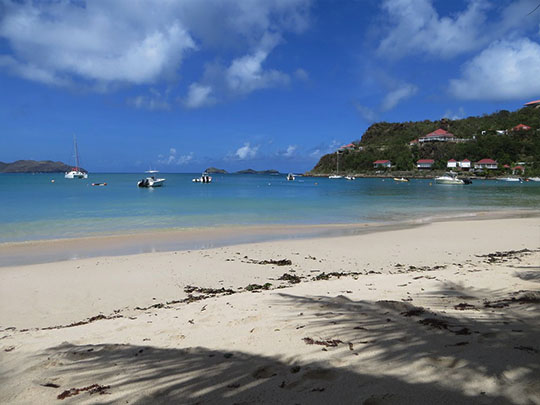
A shallow, reef-protected bay on the north coast, split by a rocky point, St Jean is the island’s second centre and the place its modern life really began — the first aircraft landed on a grass strip here in 1950, when pilots sometimes had to wait for the sheep to move.
The beach runs in two halves, with hotels, beach clubs and shops behind it, calm water for swimming and a steady stream of light aircraft coming in overhead.
The runway is about 650 metres, one of the shortest in the world taking scheduled traffic: planes drop steeply over the hill at the Col de la Tourmente, clear a road, and stop just short of the sand — pilots need a specific certification to land here, and signs politely ask sunbathers not to lie directly at the end of the strip.
3 – Anse de Colombier
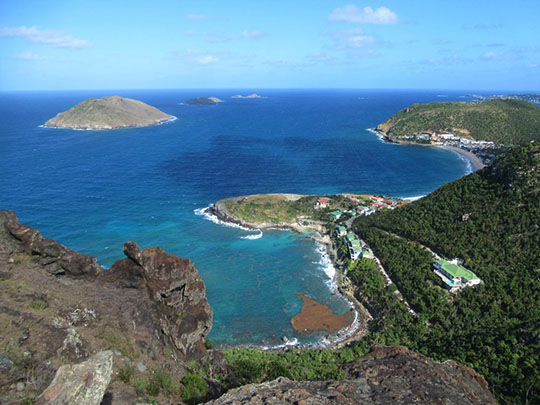
A horseshoe cove at the island’s north-western tip, Colombier has no road to it and never will: when David Rockefeller bought the headland above it in 1957, the sale came with a condition that no road would ever serve the land.
You get there on foot, about half an hour along the cliffs from Flamands, or by boat, and what you find is white sand, moored yachts, and turtles grazing the seagrass in the middle of the bay.
Rockefeller’s arrival is generally taken as the moment St Barth turned from a poor fishing island into the place the very rich go quietly; his villa still stands above the cove, and the bay is now part of a marine reserve where boats must use fixed moorings rather than drop anchor.