

Wikimedia Commons / CC-BY-SA-3.0 / GFDL
Capital: Lansing
Population: 10.1 million+
Language: English (no official language).

1 – Grand Rapids (above)
Grand Rapids, on the Grand River in western Michigan, grew from a trading post set up by Louis Campau in 1826 into “Furniture City”, whose makers won national fame at the 1876 Centennial Exhibition in Philadelphia, and in 1945 it became the first city to add fluoride to its drinking water.
Grand Rapids has the Gerald R. Ford Presidential Museum, where the president who grew up in the city is buried, Alexander Calder’s red La Grande Vitesse of 1969, the first work part-funded by the National Endowment for the Arts’ public-art programme, and the 7.3 m American Horse at Frederik Meijer Gardens.
Grand Rapids lost most of its rapids to dams and quarrying from 1849, and Calder’s title, “the great swiftness”, is a French pun on the city’s name, while The American Horse is a modern take on Leonardo da Vinci’s notes for a giant horse whose clay model French troops destroyed in 1499.
2 – Detroit

Detroit, on the Detroit River facing Canada, was founded on 24 July 1701 by Antoine de la Mothe Cadillac, a Frenchman who invented his own noble title, as Fort Pontchartrain du Détroit, “of the strait”, and before the Civil War it was the last stop on the Underground Railroad before Canada, code-named “Midnight”.
Detroit has Diego Rivera’s Detroit Industry murals of 1932–33 at the Detroit Institute of Arts, the Fox Theatre of 1928, billed as the largest continually operating theatre in the US, Eastern Market and the view south, not north, across the river to Windsor, Ontario.
Detroit’s oldest surviving neighbourhood is Corktown, named after the home county of its Irish settlers, and Henry Ford’s father, William, came from Ballinascarthy, County Cork, in the Famine year of 1847, while Ford’s moving assembly line, started in 1913 at Highland Park, made Detroit the Motor City, and Berry Gordy launched Motown here in 1959 with an $800 family loan.
3 – Mackinac Island

Mackinac Island, in the Straits of Mackinac between Michigan’s two peninsulas, was a hub of the Great Lakes fur trade, and Fort Mackinac, begun by the British in 1780–81, was surrendered without a fight on 17 July 1812, because its American commander hadn’t heard that war had been declared.
Mackinac Island has Fort Mackinac, whose Officers’ Stone Quarters of 1780 is billed as Michigan’s oldest public building, the Grand Hotel’s 201 m front porch, billed as the world’s largest, and travel by horse, carriage or bike, as cars were banned from the village in 1898.
Mackinac is pronounced “Mackinaw”, Somewhere in Time (1980) was filmed at the Grand Hotel, and in 1822 the army surgeon William Beaumont began his famous experiments on digestion after Alexis St Martin was shot in the stomach at the island’s fur-company store, while Charles O’Malley, from Newport, County Mayo, opened the Island House hotel in 1852.
4 – Arch Rock, Mackinac Island

Arch Rock, on the east shore of Mackinac Island, is a natural limestone arch some 15 m wide and about 45 m above Lake Huron, carved by waves about 4,000 years ago when the lake stood far higher, and it was the showpiece of Mackinac National Park, created in 1875 as the second national park in the US, after Yellowstone.
Arch Rock can be seen from the overlook above or from the shore road below, where a stairway of about 200 steps climbs up to it, and nearby are Sugar Loaf, a 23 m limestone stack, and Skull Cave, where the fur trader Alexander Henry hid in 1763 and woke on a floor of human bones.
Native peoples saw Arch Rock as a place of spiritual power, and Alexis de Tocqueville is said to have admired the “Giant’s Arch” in 1831, while the national park it crowned was handed to Michigan in 1895 as the state’s first state park, which is why Mackinac is called America’s forgotten second national park.
5 – Sleeping Bear Dunes

Sleeping Bear Dunes National Lakeshore, created in 1970 on the Lake Michigan shore of northwestern Michigan, takes its name from an Anishinaabe legend of a mother bear who swam across the lake to escape a forest fire and waited on the shore for her two cubs, who drowned and became North and South Manitou islands.
Sleeping Bear Dunes has the Dune Climb, the 11.9 km Pierce Stocking Scenic Drive to the Lake Michigan Overlook, perched on bluffs 137 m above the water, and the old Sleeping Bear Point life-saving station, hauled by horses to its present site near Glen Haven in 1931 to escape the drifting sand.
The “sleeping bear” itself, a tree-covered dune that gave the park its name, has been worn down by wind and erosion until it hardly looks like a bear, and in 2011 Good Morning America viewers voted Sleeping Bear Dunes the “Most Beautiful Place in America”.
6 – Porcupine Mountains Wilderness State Park

Porcupine Mountains Wilderness State Park, on the Lake Superior shore of Michigan’s western Upper Peninsula, is the largest state park in Michigan, at about 24,000 ha, created in 1945 to save its old-growth forest from logging, and the range is said to have been named by the Ojibwe for a skyline like a crouching porcupine.
The Porcupine Mountains, the “Porkies”, have the Lake of the Clouds below its escarpment, the waterfalls of the Presque Isle River, a tower on Summit Peak, at 597 m, and one of the largest old-growth northern hardwood forests west of the Adirondacks.
The Nonesuch Mine, in the Porcupine Mountains, opened and closed five times from 1867 to 1912 because its copper was too fine to separate from the rock, and in 1870 the Irish, many from the copper mines of Knockmahon and Beara, were the largest foreign-born group in Michigan’s Copper Country.
7 – Lake Huron

Lake Huron, the second-largest of the Great Lakes by surface area at about 59,600 km², washes Michigan’s eastern shore, and it was probably the first Great Lake seen by Europeans, as the French explorers Étienne Brûlé and Samuel de Champlain reached it by 1615, while it’s named after the Huron, or Wendat, people.
Lake Huron has the Fort Gratiot Light at Port Huron, built in 1829 and the oldest surviving lighthouse in Michigan, near where a young Thomas Edison grew up, and the wrecks of Thunder Bay National Marine Sanctuary, off Alpena, known as “Shipwreck Alley”.
Lakes Huron and Michigan are technically one lake, at the same level and joined by the Straits of Mackinac, and in the Great Storm of November 1913 eight freighters went down on Lake Huron with all hands, while archaeologists have found caribou-hunting structures about 9,000 years old more than 30 m beneath the lake.
8 – Pictured Rocks National Lakeshore

Pictured Rocks National Lakeshore, on Lake Superior between Munising and Grand Marais in the Upper Peninsula, became the first national lakeshore in the US in 1966, protecting sandstone cliffs up to 61 m high that run for more than 24 km.
Pictured Rocks has cliffs streaked red by iron, blue-green by copper and black by manganese, best seen from a boat or kayak, along with Miners Castle, which lost one of its two turrets in 2006, Chapel Rock, where a lone pine’s roots reach across to the mainland, and the Au Sable Light Station of 1874.
Longfellow set The Song of Hiawatha (1855) on the shore by the Pictured Rocks without ever visiting, relying on the books of Henry Schoolcraft, whose Ojibwe stories came largely through his wife, Jane Johnston Schoolcraft, daughter of an Ulster-born fur trader and an Ojibwe mother.
9 – The Henry Ford and Greenfield Village, Dearborn
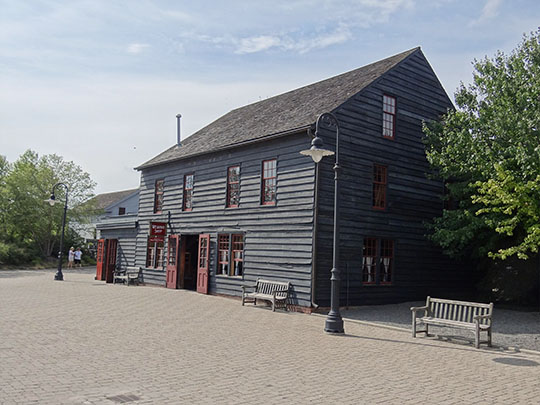
The Henry Ford and Greenfield Village, in Henry Ford’s home town of Dearborn, were dedicated as the Edison Institute on 21 October 1929 at “Light’s Golden Jubilee”, 50 years after Edison’s electric light, with Edison, Ford and President Hoover there as Edison re-enacted lighting his lamp in his rebuilt Menlo Park laboratory.
The Henry Ford has the bus on which Rosa Parks refused to give up her seat, Lincoln’s chair from Ford’s Theatre, the limousine in which Kennedy was shot and a test tube said to hold Edison’s last breath, while Greenfield Village holds buildings Ford moved from across the US, among them the Wright brothers’ cycle shop and a courthouse where Lincoln argued cases.
Henry Ford told a newspaper in 1916 that “history is more or less bunk”, and after a 1919 libel trial exposed how little history he knew, he set out to build a museum that wouldn’t be bunk, while Fair Lane, his Dearborn mansion, is named after a street in Cork city, birthplace of Patrick Ahern, who helped raise Ford’s mother.
10 – Sault Ste Marie and the Soo Locks
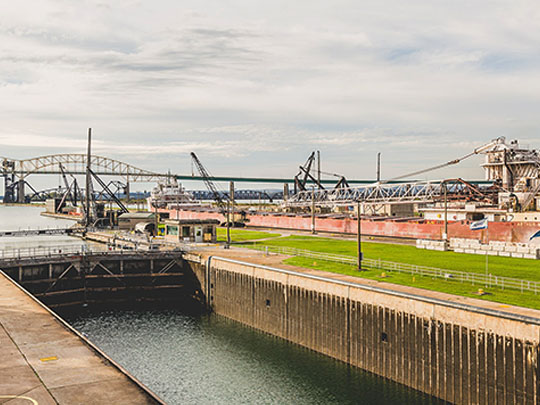
Sault Ste Marie and the Soo Locks lie on the rapids of the St Marys River between Lake Superior and Lake Huron, and the city, Michigan’s oldest, was founded as a Jesuit mission by Jacques Marquette in 1668, while the first lock, built from 1853 through a cholera epidemic, opened in 1855 to lift ships past the rapids’ drop of about 6.4 m.
Sault Ste Marie has a viewing platform where lake freighters rise and fall in the Soo Locks, the Museum Ship Valley Camp, a 1917 freighter holding two of the Edmund Fitzgerald’s lifeboats, and the Holy Name of Mary church of 1881, designed by the Limerick-born architect Joseph Connolly.
The Soo Locks have been toll-free since 1881, run by the US Army Corps of Engineers, and were once said to carry more freight than the Panama and Suez canals combined, while the Edmund Fitzgerald, lost with all 29 off Whitefish Point in 1975 and remembered in Gordon Lightfoot’s song, was named after the head of its owners, whose great-grandparents had emigrated from Ireland.
11 – Keweenaw National Historical Park
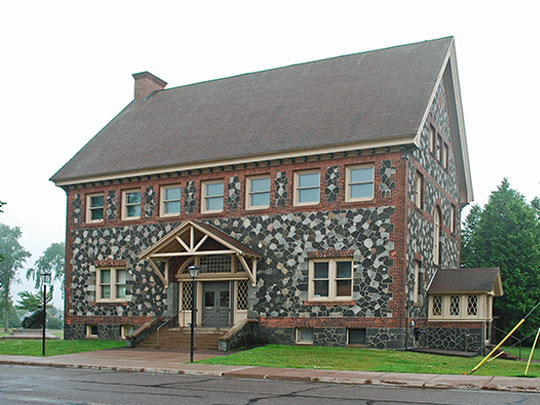
Michigan’s Copper Country, on the Keweenaw Peninsula jutting into Lake Superior, was mined by Native peoples thousands of years ago, and Douglass Houghton’s report of 1841 set off America’s first great copper rush, years before California’s gold rush, making Michigan the nation’s leading copper producer until 1887.
Keweenaw National Historical Park, created in 1992 around Calumet and the Quincy Mine, has the Quincy Mine’s hoist, the largest steam-powered mine hoist ever built, the Calumet Theatre of 1900, where Sarah Bernhardt and John Philip Sousa performed, and Fort Wilkins at Copper Harbor, built in 1844 to keep order during the rush.
On Christmas Eve 1913, during a bitter miners’ strike, a false cry of “fire!” at a party in Calumet’s Italian Hall caused a crush on the stairs that killed 73 people, most of them children, and the man who shouted was never identified, while Woody Guthrie wrote “1913 Massacre” about the tragedy, and Bob Dylan borrowed its tune.
12 – Beaver Island
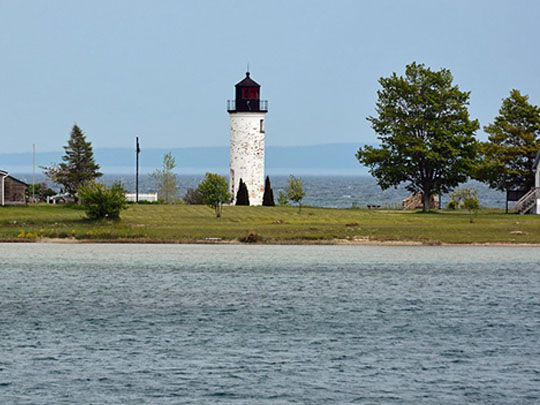
Beaver Island, about 51 km out into Lake Michigan from Charlevoix, is the largest island in the lake, and in 1850 James Jesse Strang, leader of a breakaway Mormon church, was crowned king there in a red robe, before he was shot in 1856 and his followers were driven off the island.
Beaver Island has the Old Mormon Print Shop Museum, built by Strang’s followers in 1850, the Marine Museum in an old net shed, the Beaver Head Lighthouse, and the cabin and tomb of Feodor Protar, a Baltic German former actor who became the island’s unlicensed healer.
After the Mormons left, Irish families, many from Arranmore Island and the Rosses in County Donegal, settled Beaver Island, which became known as “America’s Emerald Isle”, with the largest group arriving in 1884, and in 2000 the island was twinned with Arranmore.