

Wikimedia Commons / CC-BY-SA-3.0 / GFDL
Capital: Saint Paul
Population: 5.8 million+
Language: English (no official language).

1 – Gooseberry Falls (above)
Gooseberry Falls tumbles over lava rock about 1.1 billion years old where the Gooseberry River meets Lake Superior near Two Harbors, on land set aside as a game refuge in 1933 and made a state park in 1937.
Gooseberry Falls splits into Upper, Middle and Lower Falls, all a short walk from the visitor centre, and the park is dotted with rustic stone buildings and a granite viewing wall more than 90 m long, built by Civilian Conservation Corps crews in the 1930s.
Nobody’s sure who named Gooseberry Falls, as the Ojibwe called the river “Place of the Gooseberries”, while French maps from the late 1600s marked it Rivière des Groseilliers, possibly after the explorer Médard des Groseilliers, but either way it comes back to gooseberries, as groseille is French for the fruit.
2 – Minneapolis

Minneapolis grew up around St Anthony Falls, the only major waterfall on the Mississippi, and its name, usually credited to the schoolteacher Charles Hoag in 1852 after officials first picked “Albion”, blends the Dakota mni (water) with the Greek polis (city).
Minneapolis has the Stone Arch Bridge, James J. Hill’s railway viaduct of 1883, the only bridge of its kind over the Mississippi, First Avenue, a Purple Rain filming location, and Claes Oldenburg and Coosje van Bruggen’s giant Spoonbridge and Cherry in the Minneapolis Sculpture Garden.
Minneapolis’s Basilica of St Mary, championed by the Kilkenny-born Archbishop John Ireland, became the first basilica in the US in 1926, and Ireland’s Catholic Colonization Bureau settled Irish families on the prairie from 1876, among them 309 emigrants from Connemara and Mayo at Graceville in 1880, moved to Saint Paul after a brutal winter.
3 – Duluth

Duluth climbs the hills at the western tip of Lake Superior, which the French explorer Daniel Greysolon, Sieur du Lhut, reached in 1679, giving the city its name, and it’s where Bob Dylan was born in 1941.
Duluth has the Aerial Lift Bridge, which raises its deck to 41 m above the water for passing ships, the retired lake freighter SS William A Irvin on the Canal Park waterfront, and the Clayton Jackson McGhie Memorial, which honours three Black circus workers lynched by a mob of thousands in 1920.
Local legend says Duluth’s townsfolk dug their ship canal overnight to beat a court order from rival Superior, but a steam dredge began the job in 1870, the canal opened in 1871, before the court case was heard, and the overnight race first appeared in print in 1925, though residents did dig by hand when the dredge stalled.
4 – Minnehaha Falls

Minnehaha Falls drops 16 m on Minnehaha Creek in south Minneapolis, just before the creek joins the Mississippi, and the land around it became a public park in 1889.
Minnehaha Park has the Princess Depot railway station of the 1870s and the Longfellow House, a two-thirds-scale copy of the poet’s home in Cambridge, Massachusetts, built in the early 1900s by Robert “Fish” Jones.
Longfellow put Minnehaha Falls into The Song of Hiawatha (1855) without ever visiting, reportedly working from a picture, and he got plenty wrong, as Minnehaha means “waterfall” in Dakota, not “laughing water”, and the real Hiawatha was a Haudenosaunee (Iroquois) leader whose name Longfellow gave to a figure from Ojibwe stories.
5 – Mill City Museum

Mill City Museum sits inside the ruins of the Washburn A Mill beside St Anthony Falls, on the riverfront that made Minneapolis the flour-milling capital of the world for about 50 years from 1880.
Mill City Museum has the Flour Tower, an elevator show that rises through recreated mill floors, a ninth-floor observation deck over the falls, and the view across to the giant Gold Medal Flour sign of 1910 on the neighbouring grain elevator.
The Washburn A Mill blew up in 1878 when flour dust ignited, killing 18 people, was rebuilt as one of the largest mills in the world and burned in 1991, while its operator, Washburn-Crosby, dreamed up Betty Crocker in 1921 to answer baking questions, before merging into General Mills in 1928, and she was never a real person.
6 – Glensheen

Glensheen is a 39-room Jacobean Revival mansion on the Lake Superior shore in Duluth, built between 1905 and 1908 for Chester Congdon, who made his fortune in Iron Range mining, and in 1977 his daughter Elisabeth and her nurse Velma Pietila were murdered inside.
Glensheen has interiors by William French and grounds by Charles W. Leavitt running down the Tischer Creek ravines to the lake, and it was given to the University of Minnesota and opened to the public in 1979.
Five years before the murders, Hollywood used Glensheen as the set for the 1972 thriller You’ll Like My Mother, starring Patty Duke, shot while Elisabeth Congdon lived in the house, with the family promised $7,500 for the trouble.
7 – Saint Paul

Saint Paul sits on the Mississippi bluffs across the river from Minneapolis, grew from a frontier settlement nicknamed Pig’s Eye after a whiskey seller blind in one eye, Pierre Parrant, took its name from Father Lucien Galtier’s log chapel of 1841, and has been Minnesota’s capital since 1849.
Saint Paul has Cass Gilbert’s State Capitol, whose dome is said to be the second-largest self-supporting marble dome after St Peter’s in Rome, Emmanuel Masqueray’s Cathedral of Saint Paul, Summit Avenue, where F. Scott Fitzgerald rewrote This Side of Paradise at number 599, and the Peanuts statues in Landmark Plaza and Rice Park honouring Charles Schulz, who grew up in the city.
From 1900 to the mid-1930s, Saint Paul ran the “O’Connor system”, named after the police chief John O’Connor, son of an Irish-born father, which let gangsters like John Dillinger and the Barker-Karpis gang lie low in the city as long as they checked in, paid up and committed no major crimes inside city limits.
8 – Historic Fort Snelling
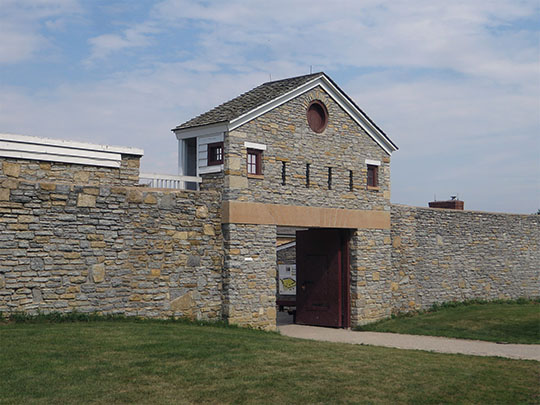

Historic Fort Snelling stands on the bluff where the Minnesota River meets the Mississippi, a place the Dakota call Bdote, and the fort was begun in 1820 under Colonel Josiah Snelling to stake a US claim on the upper Mississippi.
Historic Fort Snelling’s rebuilt stone fort centres on the Round Tower of 1820, widely regarded as Minnesota’s oldest surviving building, while on the river flats below more than 1,600 Dakota, mostly women and children, were held in an internment camp, often called a concentration camp, through the winter of 1862–63, with estimates of the dead ranging from about 100 to 300.
Dred and Harriet Scott were held in slavery at Fort Snelling in the 1830s, married there, and later used their years on free soil to sue for their freedom, a fight that ended in the Supreme Court’s notorious Dred Scott v Sandford ruling of 1857.
9 – Itasca State Park
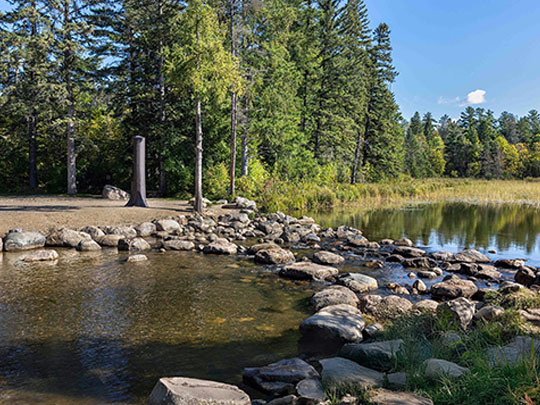
Itasca State Park in northern Minnesota protects the source of the Mississippi and is Minnesota’s oldest state park, created in 1891 after a campaign led by Jacob Brower to save its pines from logging.
Itasca State Park has the outlet of Lake Itasca, where the infant Mississippi can be waded across on a line of stepping stones, the rustic Douglas Lodge of 1905 and stands of old-growth red and white pine in the Wilderness Sanctuary.
Neither the name nor the stepping stones at Itasca State Park are as ancient as they look, as the explorer Henry Schoolcraft, guided to the lake in 1832 by the Ojibwe guide Ozaawindib, coined “Itasca” from the Latin veritas caput (“true head”) for a lake the Ojibwe called Omashkoozo-zaaga’igan, or Elk Lake, and Civilian Conservation Corps crews built the rock crossing in the 1930s.
10 – Split Rock Lighthouse
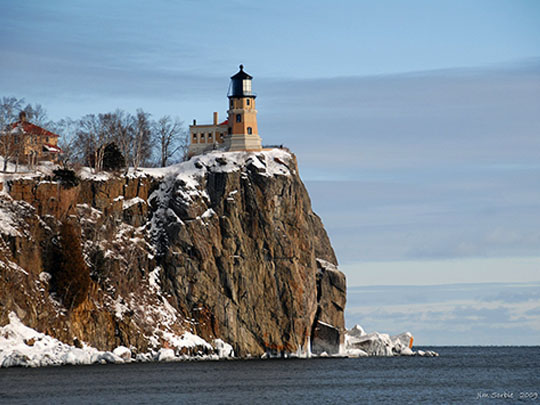
Split Rock Lighthouse perches on a sheer cliff on Lake Superior’s North Shore between Two Harbors and Silver Bay, built in 1909–10 after a November 1905 storm wrecked or damaged 29 ships, with every brick and bolt hauled up from the lake by derrick because there was no road.
Split Rock Lighthouse keeps its tower, fog signal building, oil house and three keepers’ houses, and up top sits the original third-order bivalve Fresnel lens, made in Paris.
Split Rock Lighthouse was retired in 1969, but every 10 November the names of the 29 crew of the Edmund Fitzgerald are read out and the beacon is lit, even though the light had been dark for six years when the freighter sank in 1975, far off at the eastern end of Lake Superior.
11 – Hibbing
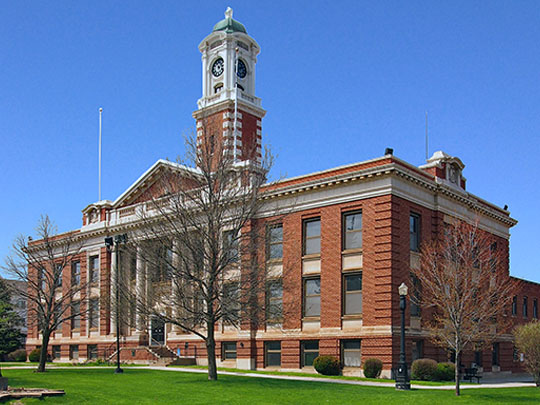
Hibbing sits on the Mesabi Iron Range in northeastern Minnesota, was founded in 1893 by the German-born prospector Frank Hibbing, and moved nearly 200 buildings about 3 km south, mainly between 1919 and 1921, so the mining company could dig out the ore underneath.
Hibbing has the overlook on the vast Hull-Rust-Mahoning open-pit iron mine, a National Historic Landmark, the lavish Hibbing High School of 1920–25, paid for with mining taxes, and the Greyhound Bus Museum, marking the 1914 run that started Greyhound, when a Hupmobile ferried miners from Hibbing to nearby Alice.
Hibbing raised Bob Dylan, who graduated from Hibbing High in 1959, as well as the Boston Celtics great Kevin McHale, and it’s where Roger Maris, who hit 61 home runs for the Yankees in 1961, was born before his family moved to North Dakota.