
Wikimedia Commons / CC-BY-SA-3.0 / GFDL
Capital: Jefferson City
Population: 6.2 million+
Language: English

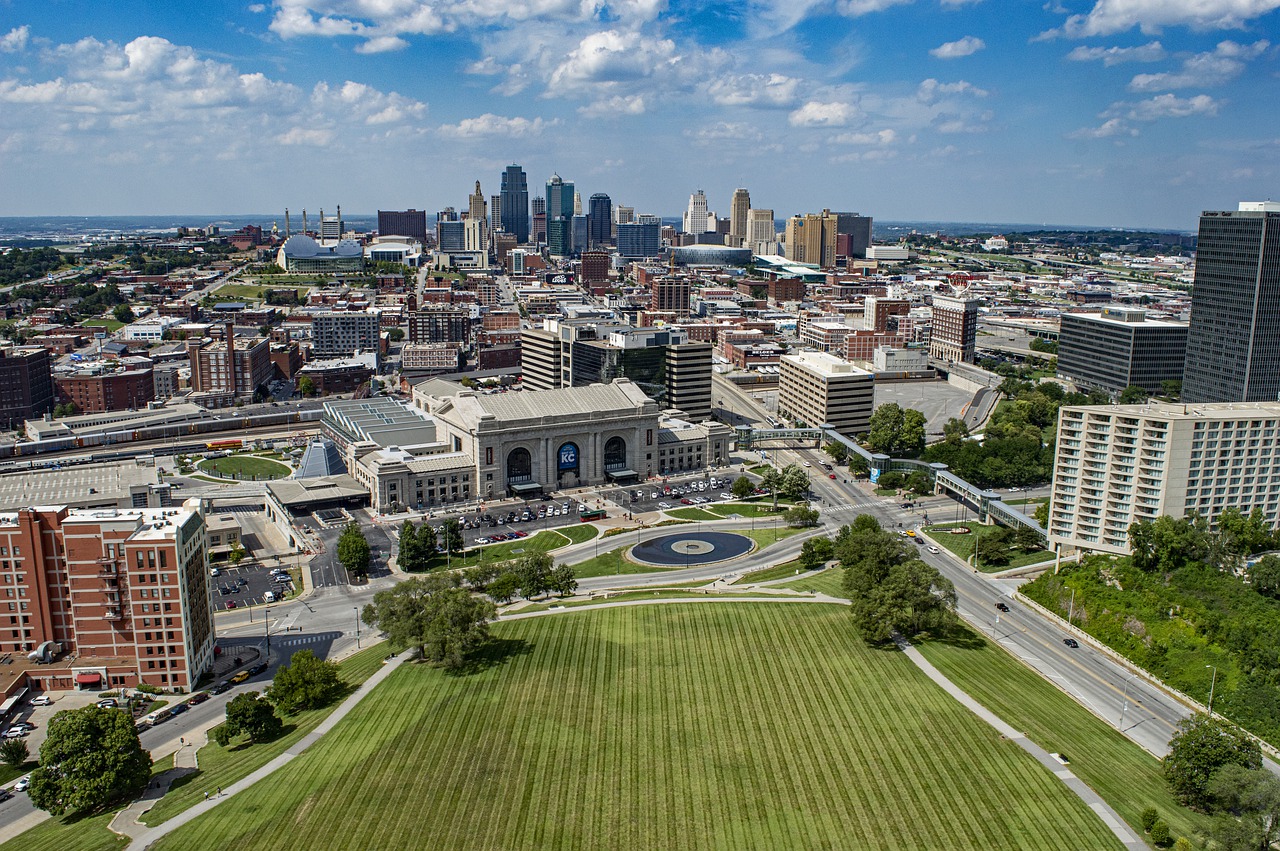
1 – Kansas City (above)
Kansas City, Missouri sits where the Kansas River meets the Missouri, right on the state line from its namesake in Kansas, and in the early 20th century it was dominated by the political machine of Tom Pendergast, born into an Irish Catholic family, whose backing launched Harry Truman’s career.
Kansas City’s must-sees include the 18th & Vine Jazz District, home to the American Jazz Museum and the Negro Leagues Baseball Museum near the YMCA where the Negro National League was founded in 1920, plus the National WWI Museum and Memorial and Country Club Plaza, which opened in 1923 as one of the first shopping districts built around the car.
Kansas City calls itself the “City of Fountains” and likes to say only Rome has more, but nobody has ever actually counted, while the sculptures on its showpiece Mill Creek Park Fountain were made in 1910 for a Long Island mansion and only arrived in Kansas City decades later.
2 – St Louis
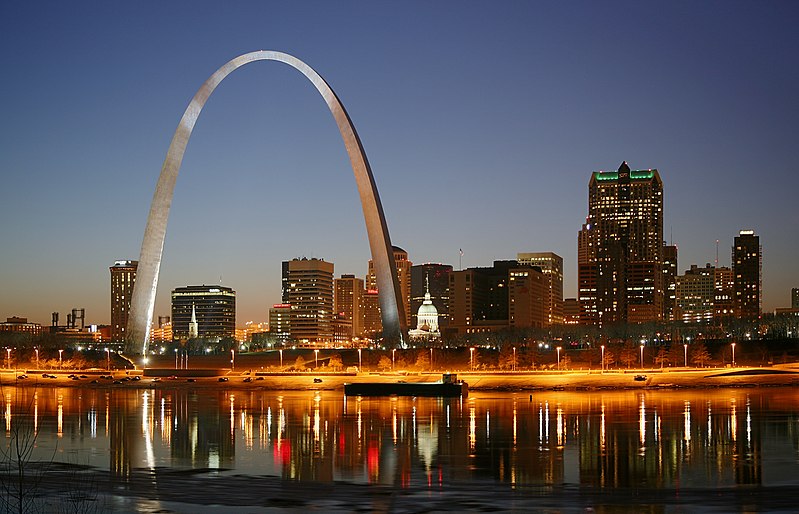
St Louis was founded on the Mississippi in 1764 by French trader Pierre Laclède and a teenage Auguste Chouteau as a fur-trading post named for King Louis IX, and while Meriwether Lewis spent the winter here gathering supplies, the Lewis and Clark expedition actually set off from Camp Dubois, across the river in Illinois, in May 1804.
St Louis is dominated by Eero Saarinen’s 630-foot Gateway Arch, finished in 1965 and billed as the tallest arch in the world, with the Old Courthouse, where Dred and Harriet Scott’s freedom suits were tried in 1847 and 1850, just below it, and a bronze statue of hometown hero Chuck Berry out in the Delmar Loop.
St Louis’s Irish roots run through the Kerry Patch, a north-side neighbourhood settled from 1842 by famine-era immigrants, many from County Kerry, who crowned their own informal “kings” until 1873, and the city’s first foreign-born mayor, George Maguire, came from Ireland.
3 – Table Rock Dam
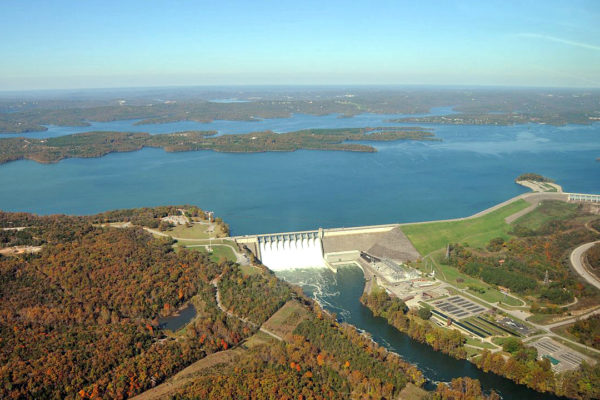
Table Rock Dam holds back the White River in the Missouri Ozarks near Branson, built by the US Army Corps of Engineers between 1954 and 1958 for flood control and hydroelectric power, and named for a table-shaped rock overhang a short way downstream.
Table Rock Dam is the gateway to the coves and boat ramps of Table Rock Lake, with the Dewey Short Visitor Center at the dam and the Shepherd of the Hills Fish Hatchery just below it, the largest trout-rearing facility run by the Missouri Department of Conservation.
The icy water released from deep in Table Rock Lake killed off Lake Taneycomo’s warm-water fishery below the dam and turned it into a trout lake, while the hatchery’s name nods to Harold Bell Wright’s 1907 novel The Shepherd of the Hills, the book that first brought tourists to Branson half a century before the dam.
4 – Silver Dollar City – Branson

Silver Dollar City is an 1880s Ozark village theme park near Branson, opened in 1960 above Marvel Cave by Mary Herschend and her sons Jack and Pete, a decade after her husband Hugo had leased the cave, and named for the silver dollars visitors got in their change.
Silver Dollar City sits on the remains of the old mining town of Marmaros, with tours down into Marvel Cave’s Cathedral Room, one of the largest cave entrance rooms in North America, and resident craftspeople working at blacksmithing, glassblowing and other traditional trades.
Marvel Cave was first called Marble Cave, but miners in the 1880s found no marble at all and dug out bat guano for fertiliser and gunpowder instead, and in 1969 Silver Dollar City played host to The Beverly Hillbillies, which filmed five episodes in the park.
5 – Forest Park – St Louis
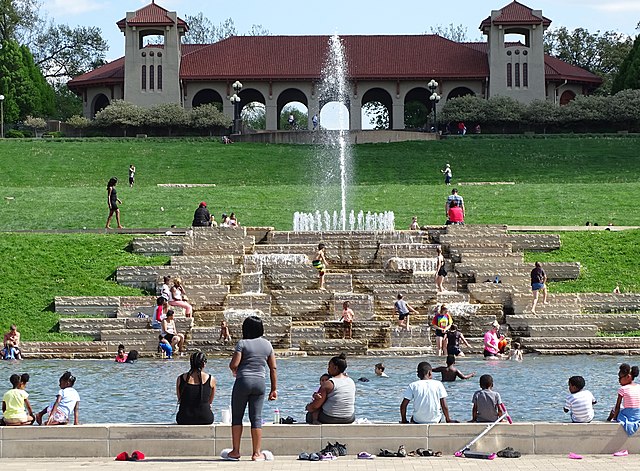
Forest Park opened in 1876 on the west side of St Louis, covers about 1,300 acres, roughly half as big again as New York’s Central Park, and hosted the 1904 Louisiana Purchase Exposition, better known as the St Louis World’s Fair.
Forest Park packs in the Saint Louis Art Museum, the Missouri History Museum, the Jewel Box greenhouse, the Muny, billed as America’s oldest and largest outdoor musical theatre, and the Saint Louis Zoo, whose walk-through 1904 Flight Cage was built for the fair.
The 1904 World’s Fair didn’t invent the ice cream cone, which had been patented a year earlier, or cotton candy, which was sold there as “Fairy Floss” from a machine patented in 1899, and the Olympics held alongside it featured a marathon in which Fred Lorz rode part of the way in a car and winner Thomas Hicks was dosed with strychnine.
6 – Titanic Museum – Branson
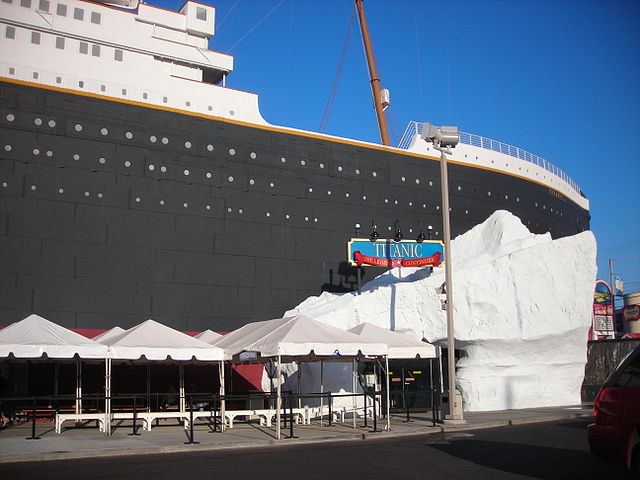
The Titanic Museum in Branson opened in 2006, created by John Joslyn, who dove to the wreck in 1987 and produced a TV special about it, and Mary Kellogg-Joslyn, in a building shaped like the front half of the ship that you enter through a mock iceberg.
The Titanic Museum hands every visitor a boarding pass in the name of a real passenger or crew member, whose fate you find out at the end, after you’ve seen around 400 artefacts and climbed a replica of the first-class Grand Staircase.
The Titanic was built by Harland & Wolff in Belfast and made her last call at Queenstown (Cobh) in County Cork, where 123 passengers boarded, and her makers never called her flat-out unsinkable, since White Star’s own publicity said only that she was designed to be unsinkable “as far as it is possible to do so”.
7 – Ulysses S. Grant Cabin
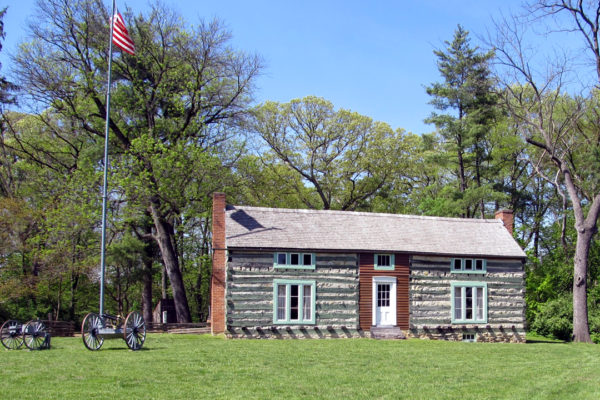
Ulysses S. Grant Cabin, known as Hardscrabble, is the log house the future general and president built largely by his own hand in 1855–56 on land in south St Louis County given by his wife Julia’s family, though they lived in it for only about three months, and in 1859 Grant freed William Jones, the one man he is known to have enslaved.
The Ulysses S. Grant Cabin stands at Grant’s Farm, the Busch family estate and home to a herd of Budweiser Clydesdales, right next door to the Ulysses S. Grant National Historic Site at White Haven, the Dent family home cared for by the National Park Service.
Grant’s Cabin got its name from Julia, who thought it so crude and homely that the couple jokingly called it “Hardscrabble”, and the cabin has been taken apart and moved three times, including a stint at the 1904 World’s Fair as a coffee merchant’s attraction before August Busch Sr bought it in 1907.
8 – Jefferson City
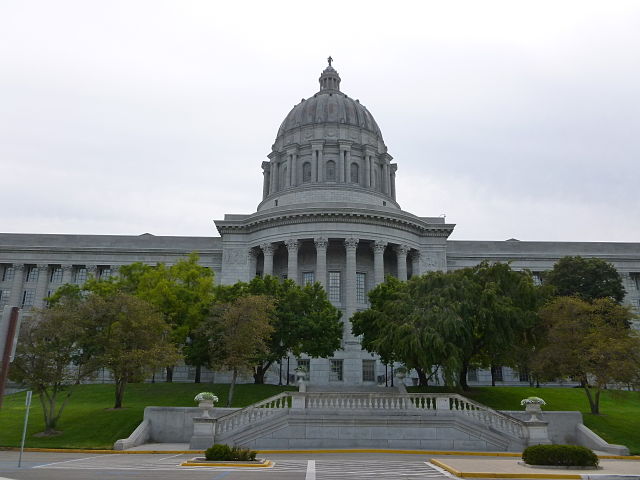
Jefferson City sits on the Missouri River in the middle of the state, was named for Thomas Jefferson, and became Missouri’s capital in 1826, with its domed Capitol completed in 1917 after lightning set the previous one on fire in 1911.
Jefferson City’s Capitol holds Thomas Hart Benton’s 1936 mural A Social History of the State of Missouri, which shows Jesse James, slavery and Huck Finn and was so controversial that legislators considered painting over it, while the old Missouri State Penitentiary held prisoners from 1836 to 2004.
The Missouri State Penitentiary is often said to have been called “the bloodiest 47 acres in America” by Time magazine, Sonny Liston learned to box there, and James Earl Ray escaped from it in 1967 hidden in a truck carrying bread from the prison bakery.
9 – Hannibal

Hannibal sits on the Mississippi in northeast Missouri, and it’s where Samuel Clemens grew up, from 1839, when he was four, until he left in 1853, before turning it into St. Petersburg in Tom Sawyer and Huckleberry Finn.
Hannibal’s Twain trail runs from the Mark Twain Boyhood Home, opened to the public in 1912, to the Becky Thatcher House, home of Laura Hawkins, his childhood sweetheart and the model for Becky, the 1926 Tom and Huck statue, one of the earliest statues of fictional characters, and Mark Twain Cave, where a St Louis doctor once kept his 14-year-old daughter’s body in an alcohol-filled copper cylinder.
Hannibal was also the birthplace in 1867 of Margaret Tobin, daughter of Irish Catholic immigrants and later the Titanic survivor known as “the Unsinkable Molly Brown”, though nobody called her Molly while she was alive: she was Maggie, and the “Molly” came from Gene Fowler’s 1933 book Timber Line.
10 – Independence
Independence was founded in 1827 just east of Kansas City, named after the Declaration of Independence, and became the “Queen City of the Trails”, the jumping-off point for the Santa Fe, Oregon and California trails, while in 1831 Joseph Smith dedicated a Temple Lot here as the centre of Zion, two years before Mormon settlers were driven out of the county.
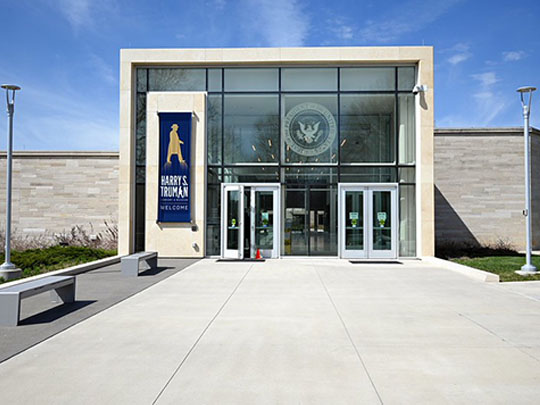
Independence’s sights include the Truman Home, Bess Truman’s family house, where Harry lived from their 1919 wedding until he died there in 1972, the Harry S. Truman Library and Museum, the National Frontier Trails Museum, the spiral-spired Community of Christ Temple, and the 1859 Jail, which held Frank James in 1882.
The “S” in Harry S. Truman, Independence’s most famous resident, doesn’t stand for anything, being a compromise between his grandfathers Anderson Shipp Truman and Solomon Young, and in 1953, months after leaving the White House, Harry drove Bess to the East Coast in their own Chrysler with no aides and no Secret Service.
11 – St Joseph
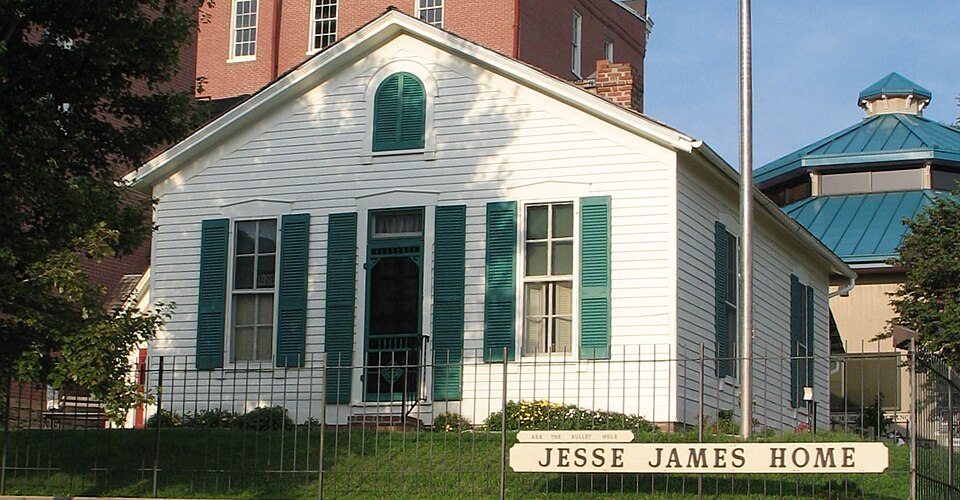
St Joseph sits on the Missouri River in northwest Missouri, grew from French-Canadian fur trader Joseph Robidoux’s 1826 trading post, and on 3 April 1860 became the eastern starting point of the Pony Express, which lasted only about 18 months before the transcontinental telegraph put it out of business.
St Joseph’s sights include the Pony Express National Museum in the stables where riders saddled up, the Patee House, the Pony Express headquarters where riders collected the mail, and the Jesse James Home, and the city is the birthplace of newsman Walter Cronkite, jazz saxophonist Coleman Hawkins and Eminem.
Jesse James was shot dead in St Joseph by Robert Ford on 3 April 1882, 22 years to the day after the Pony Express set off, but the famous bullet hole in the wall probably isn’t from the fatal shot, and a 1995 DNA test on his exhumed remains put an end to claims that he’d faked his death.
12 – Fulton
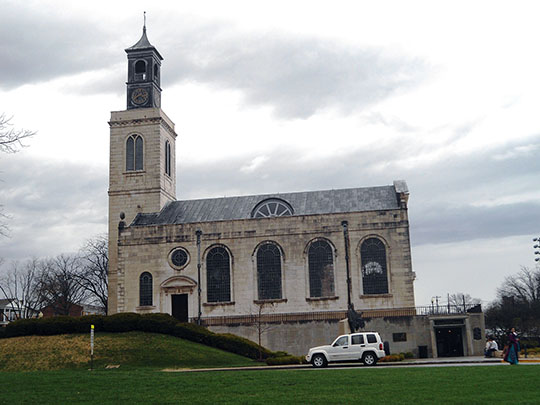
Fulton, a small college town in central Missouri, is where Winston Churchill gave his “Sinews of Peace” speech at Westminster College on 5 March 1946, introduced by President Truman, who had scribbled a note on the college’s invitation encouraging him to come.
Fulton’s National Churchill Museum sits beneath the Church of St Mary the Virgin, Aldermanbury, a Christopher Wren church rebuilt in the 1670s after the Great Fire of London, gutted in the Blitz in 1940, and shipped to Fulton about 7,000 stones at a time, rededicated in 1969, beside Breakthrough, a sculpture made from eight sections of the Berlin Wall by Churchill’s granddaughter Edwina Sandys and dedicated by Ronald Reagan in 1990.
Churchill made “iron curtain” famous in Fulton, but he didn’t coin it: Ethel Snowden used it about Bolshevik Russia in 1920, Joseph Goebbels used it in 1945, and Churchill himself had already put it in a telegram to Truman ten months before the speech.
13 – Lake of the Ozarks
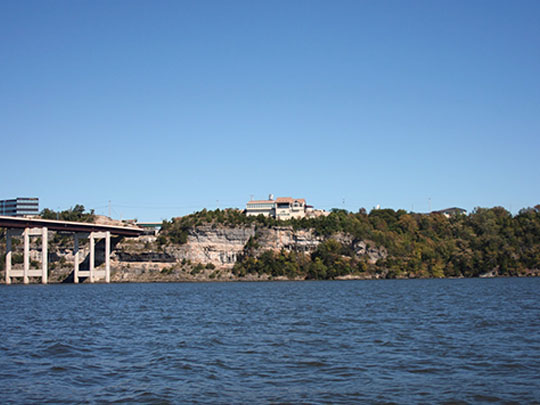

Lake of the Ozarks was created in central Missouri when Union Electric dammed the Osage River with Bagnell Dam in 1929–31, making one of the largest artificial lakes in the US at the time and drowning Old Linn Creek and other towns, whose homes were burned and cemeteries moved, though some graves were never found.
Lake of the Ozarks’ sights include Ha Ha Tonka State Park, with the ruins of a castle begun in 1905 by Kansas City businessman Robert Snyder, who died the next year in one of Missouri’s first car crashes, and which burned in 1942, plus Lake of the Ozarks State Park, Missouri’s largest, and Bridal Cave, named for an “Osage legend” first published in a 1933 book with no proof it ever happened.
Lake of the Ozarks is the setting for Netflix’s Ozark, but the show was filmed mostly in Georgia, at Lake Lanier and Lake Allatoona, and the real lake’s 92 twisting miles earn it the nickname “the Magic Dragon”.