

Wikimedia Commons / CC-BY-SA-3.0 / GFDL
Capital: Chișinău
Population: 2.3 million+ (excluding Transnistria).
Language: Romanian

1 – Noul Neamts (also above)

Noul Neamț Monastery stands in the village of Chițcani near Bender, in Transnistria, a breakaway region of Moldova whose self-declared independence no UN member state recognises, and it was founded in 1861 by monks who walked out of Neamț Monastery in Romania in protest when the state seized monastery estates.
Noul Neamț is dominated by a bell tower of about 70 metres, which the Moldovan Church describes as the tallest in the country, rising above the monastery churches that reopened for worship in 1989.
The Soviet authorities closed Noul Neamț in 1962 and turned it into a hospital, and nearly 30 years passed before the monks came back.
2 – Soroca

Soroca sits on the Dniester in northern Moldova, facing Ukraine across the river, and its fortress first appears in records in 1499 under Stephen the Great, rebuilt in stone under Petru Rareș in the 1540s and captured by Polish troops during Jan Sobieski’s campaign of 1691.
Soroca’s fortress is an almost perfect stone ring with round towers and a square gate tower, while on the cliff above town the Candle of Gratitude, a candle-shaped chapel opened in 2004, honours the unnamed people who kept the nation’s language and culture alive.
Soroca is often called, informally, the Roma capital of Moldova, and the grand houses of its Roma Hill are modelled on landmarks such as the Bolshoi Theatre and the US Capitol.
3 – Chișinău

Chișinău, first mentioned in 1436, grew into the centre of Bessarabia after Russia took the region in 1812, and in July 1941 the Romanian authorities set up a ghetto here and deported its Jews to Transnistria that autumn, before the city became the capital of an independent Moldova on 27 August 1991.
Chișinău’s leafy centre runs from the Nativity Cathedral of 1830–36 and the Triumphal Arch of 1840–41 to the Stephen the Great monument of 1928, while the house where Pushkin lodged during his exile in 1820 is a museum.
Chișinău’s 1903 pogrom, in which around 50 Jews were killed, shocked the world, and the Irish Land League founder Michael Davitt travelled there to report on it and wrote it up in his book Within the Pale.
4 – Bender Fortress

Bender Fortress guards a crossing of the Dniester at Bender, the Moldavian Tighina, which Suleiman the Magnificent captured and rebuilt in stone from 1538, and the town lies in the breakaway Transnistria region, where the heaviest fighting of the 1992 war took place that June.
Bender Fortress’s Ottoman walls and towers saw Russian sieges in 1738, 1770 and 1789 before the town was taken without a fight in 1806, and a statue of Baron Munchausen stands by the walls because the town claims the real baron fought in the 1738 campaign.
After his defeat at Poltava, Charles XII of Sweden camped near Bender Fortress until 1713, when he held out with a few dozen men against thousands of Ottoman troops in the clash known as the kalabalik.
5 – Saharna

Saharna lies in a gorge above the Dniester in north-east Moldova, about 100 km north of Chișinău, where the Holy Trinity Monastery was founded in 1776 beside an older monastery carved into the rock.
Saharna’s gorge trail climbs past a string of waterfalls and cascades to the cliff-top spot where pilgrims come to see a footprint in the rock, with the monastery churches below.
Legend says a monk saw a shining figure of the Virgin Mary on Saharna’s cliff and the footprint was found in the stone afterwards, while the monastery itself was closed by the Soviet authorities, used as a psychiatric hospital and reopened in 1991.
6 – Tiraspol

Tiraspol was founded on the left bank of the Dniester in 1792 as a fortress credited to the Russian general Alexander Suvorov, and it is the capital of the self-declared Pridnestrovian Moldavian Republic, a breakaway region that Moldova and the international community treat as part of Moldova.
Tiraspol’s main avenue, 25 October Street, runs past a Lenin statue in front of the Supreme Council to the 1979 Suvorov monument, while the KVINT distillery, founded in 1897, has made brandy since 1938.
Tiraspol’s football club, FC Sheriff, beat Real Madrid 2–1 at the Bernabéu in the Champions League in September 2021.
7 – Orheiul Vechi

Orheiul Vechi is a cliff-lined bend of the Răut river about 60 km north of Chișinău, near the villages of Trebujeni and Butuceni, where a Geto-Dacian fortress, a 14th-century Golden Horde city and the medieval Moldavian town of Orhei followed one another.
Orheiul Vechi’s cave monastery is reached through a rock tunnel beneath a belfry, with a cliff-top church from the early 1900s above it and the ruins of a Golden Horde mosque and bathhouse on the plateau.
Orheiul Vechi’s Golden Horde name, Shehr al-Jedid, means “New City”, a reminder that the empire of the Mongol khans once reached the banks of the Răut.
8 – Cricova
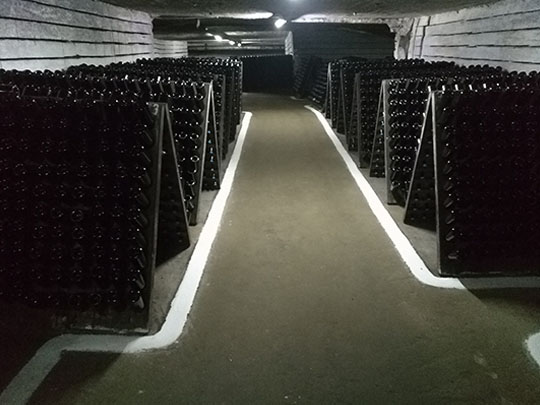
Cricova is a small town near Chișinău where, from 1952, wine barrels were moved into former limestone quarries, creating about 120 km of galleries up to 80 metres deep that Moldova’s parliament declared part of the national cultural heritage in 2003.
Cricova’s tunnels are laid out as underground streets named after wines such as Cabernet, Sauvignon, Fetească and Aligoté, with tasting halls, an underground cinema and Moldova’s first sparkling wine made by the traditional method of fermenting in the bottle.
Cricova’s cellars hold part of Hermann Göring’s looted wine collection, seized by the Red Army at the end of WWII, and legend says Yuri Gagarin went down for a tasting and did not resurface until a day or two later.
9 – Varnița
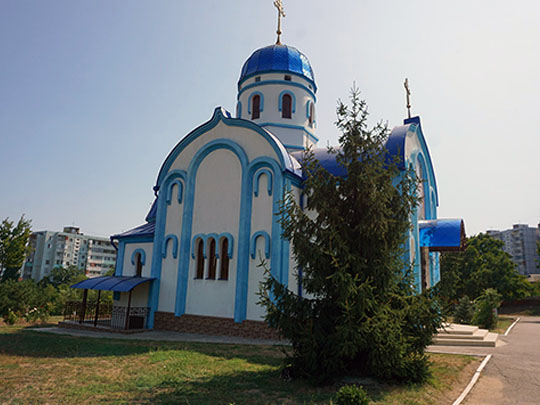
Varnița is a village on the Dniester just north of Bender, where Charles XII of Sweden set up camp after his defeat at Poltava in 1709, and where his ally, the Cossack hetman Ivan Mazepa, died that autumn.
Varnița marks the camp with an obelisk to Charles XII and a stele to Mazepa, and in 2016 archaeologists uncovered a stone foundation about 25 by 10 metres that may have belonged to the king’s chancellery.
In 1713 Charles XII held out at Varnița with a few dozen men against thousands of Ottoman troops until fire arrows set his house alight, a clash known as the kalabalik, from the Turkish word for “crowd” that entered Swedish as a word for chaos.
10 – Căpriana Monastery
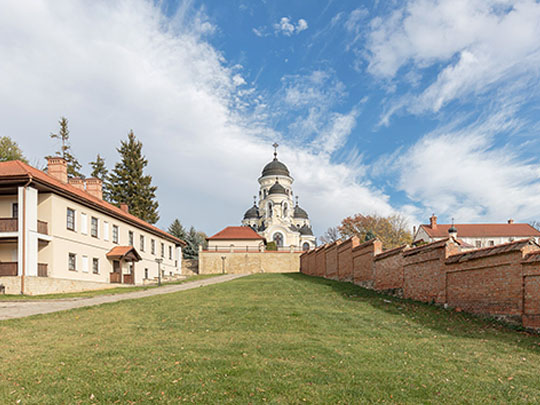
Căpriana Monastery lies in the Codri forest about 40 km north-west of Chișinău, one of the oldest monasteries in Moldova, first documented in 1429 under Alexander the Good, with its main church rebuilt by Petru Rareș in the 1540s.
Căpriana Monastery’s grounds hold the Dormition church, the churches of St George and St Nicholas and the grave of Metropolitan Gavriil Bănulescu-Bodoni, and its library was one of the richest in Moldova until the Soviet authorities closed the monastery in 1962, before it reopened in 1989.
Legend says a deer knelt before Stephen the Great here and gave Căpriana its name, from the Romanian word for deer, though the old documents point instead to an abbot called Chiprian.
11 – Țipova
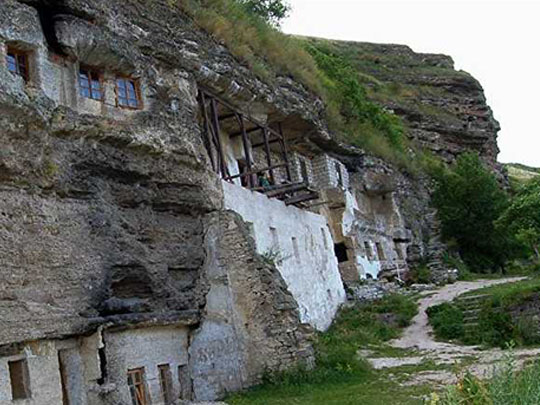
Țipova is one of the largest cave monasteries in Eastern Europe, carved into cliffs about 100 metres above the Dniester in Rezina district, its oldest part the Holy Cross cave church of the 11th or 12th century, and it served as a refuge from Tatar raids.
Țipova’s three church complexes, Holy Cross, St Nicholas and the 15th-century Dormition, are linked by steps cut into the rock past monks’ cells in the cliff face, with the Țipova waterfalls nearby, and the monastery was closed in 1949 and reopened in 1994.
Legend says Stephen the Great was married at Țipova, and another local tale claims Orpheus spent his last days here and lies buried beside a waterfall.