

Wikimedia Commons / CC-BY-SA-3.0 / GFDL
Capital: Monaco (city-state)
Population: 38,000+
Language: French

1 – Port Hercule (also above)

Port Hercule is the deep natural harbour below the Rock, used since ancient times and named after the Romans’ Portus Herculis Monoeci, with the district of La Condamine wrapped around its quays.
Port Hercule’s quays are lined with superyachts, the Rainier III Nautical Stadium and La Condamine’s market on the Place d’Armes, held since 1880, while the church of Sainte-Dévote at the head of the harbour marks where legend says a dove guided the martyr’s body ashore.
The first Monaco Grand Prix, which races round Port Hercule, was won in 1929 by a driver entered as “Williams”, William Grover-Williams, who later became a British SOE agent in occupied France and was executed at Sachsenhausen in 1945.
2 – Monaco-Ville
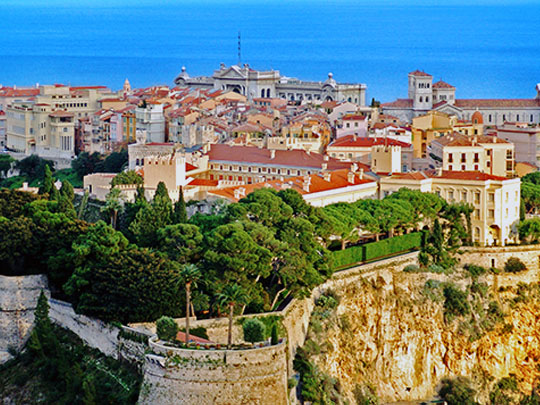
Monaco-Ville crowns the Rock, a headland the Greeks of Massalia called Monoikos, and according to tradition François Grimaldi took its Genoese fortress on 8 January 1297 by knocking at the gate dressed as a Franciscan monk, which is why two sword-carrying monks hold up Monaco’s coat of arms.
Monaco-Ville packs the Prince’s Palace, which grew from that Genoese fortress, the Cathedral of Our Lady Immaculate, where most of the princes lie, and the Oceanographic Museum, opened by Albert I in 1910 on a cliff about 85 metres above the sea and run by Jacques Cousteau from 1957 to 1988.
Grace Kelly married Prince Rainier III in Monaco-Ville’s cathedral on 19 April 1956 and is buried there beside him, and her grandfather John Kelly had emigrated to America from a farm near Newport in County Mayo.
3 – Monte Carlo
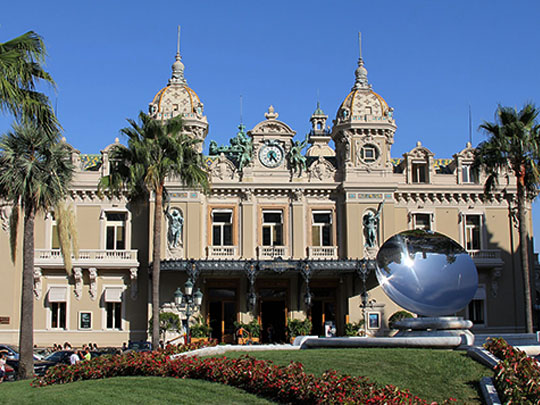

Monte Carlo grew on a bare plateau called Les Spélugues, renamed in 1866 for Prince Charles III after his Société des Bains de Mer opened a casino there, and the profits let Monaco abolish income tax in 1869.
Monte Carlo’s centrepiece is the Casino, rebuilt with an opera hall by Charles Garnier and reopened in 1879, beside the Hôtel de Paris of 1864, and Diaghilev’s Ballets Russes made the town their base from 1911.
Monaco’s own citizens aren’t allowed to gamble in Monte Carlo’s casinos, and Charles Wells, the man who “broke the bank at Monte Carlo” in 1891, turned out to be a fraudster who ended up in prison.
4 – Fontvieille
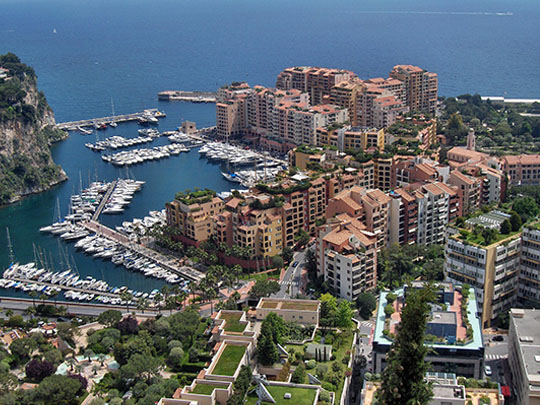
Fontvieille is Monaco’s southernmost district, built almost entirely on land reclaimed from the sea on the south-west side of the Rock, with work beginning in 1966 under Prince Rainier III to a design by the Italian engineer Gianfranco Gilardini.
Fontvieille holds the Stade Louis II, home of AS Monaco, a sheltered marina at the foot of the Palace cliffs, the Museum of Stamps and Coins and the Princess Grace Rose Garden, opened by Rainier in 1984 as a tribute to his late wife.
Every January, Fontvieille’s purpose-built big top hosts the International Circus Festival of Monte-Carlo, which Rainier founded in 1974 and whose top prize is the Golden Clown.