

Wikimedia Commons / CC-BY-SA-3.0 / GFDL
Capital: Podgorica
Population: 620,000+
Language: Montenegrin

1 – Kotor (also above)

Kotor sits at the head of the Bay of Kotor beneath the cliffs of Mount Lovćen, a walled trading port that put itself under Venetian protection in 1420 and stayed Venetian until 1797, and the whole bay was listed by UNESCO in 1979, the same year an earthquake badly damaged the town.
Kotor’s old town is a maze of little squares around the Romanesque Cathedral of St Tryphon, consecrated in 1166, while the walls climb about 4.5 km up the mountainside, around 1,350 steps to St John’s Fortress some 260 metres above the bay.
The Bay of Kotor is often called Europe’s southernmost fjord, but it is in fact a ria, a river canyon flooded by the sea rather than a valley carved out by glaciers.
2 – Our Lady of the Rocks, Perast

Our Lady of the Rocks is a man-made islet off Perast, built up from rocks and old ships sunk full of stones after, legend says, seamen found an icon of the Madonna and Child on a reef there on 22 July 1452.
Our Lady of the Rocks’ church, built in 1632 and enlarged in 1722, is lined with 68 paintings by the Perast Baroque painter Tripo Kokolja and silver votive plaques left by grateful sailors, while the natural islet of St George next door holds a 12th-century Benedictine monastery.
Every 22 July at sunset local boats head out to Our Lady of the Rocks and throw stones into the sea to keep the island growing, a ritual called the Fašinada, and the church museum holds an embroidery that Jacinta Kunić-Mijović stitched with her own hair over 25 years.
3 – Perast
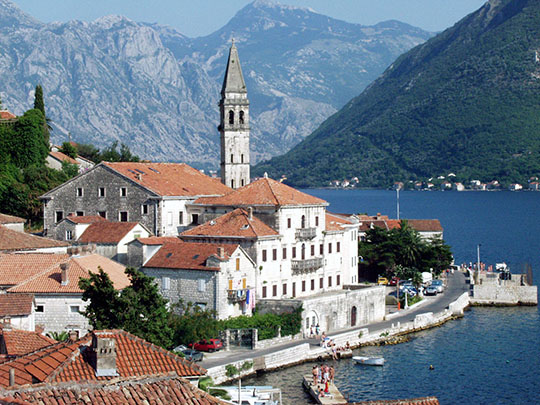
Perast is a small Baroque town on the Bay of Kotor that grew rich under Venetian rule, and after it beat off an Ottoman attack in 1654 it won the honour of guarding Venice’s banner of St Mark, which its people buried beneath the altar of the parish church when the Republic fell in 1797.
Perast squeezes some 16 Baroque palaces and 17 Catholic churches into its narrow waterfront, from the 55-metre bell tower of St Nicholas to the late-17th-century Bujović Palace, home of the town museum.
In 1698 Peter the Great sent young Russian nobles to Perast to learn navigation at the school of the local sea captain Marko Martinović.
4 – Budva

Budva is one of the oldest towns on the Adriatic, first recorded in the 5th century BC, and its walled old town was shattered by the earthquake of 15 April 1979, when only 8 of its roughly 400 buildings escaped damage, before being restored stone by stone over the following years.
Budva’s old town packs the Citadela at its southern tip, the Venetian walls and a tangle of lanes and old churches onto a small peninsula, with Mogren beach a short walk along the cliffs.
Legend says Budva was founded by Cadmus, the exiled hero of Thebes, and his wife Harmonia.
5 – Dobrota

Dobrota stretches for about 7 km along the bay north of Kotor, first recorded in 1260, and it grew rich between the 17th and 19th centuries as a home of sea captains and shipowning families.
Dobrota’s waterfront is lined with the stone palaces of captains’ families such as the Tripković, Dabinović and Ivanović, along with the Baroque Church of St Eustace, which keeps examples of the local lace.
Dobrota lace is a needle lace that grew out of the Venetian punto in aria, and it has been protected as part of Montenegro’s cultural heritage since 2013.
6 – Ostrog
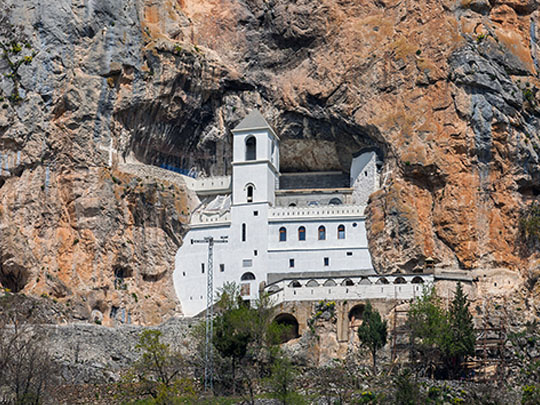
Ostrog Monastery is built into a sheer cliff about 900 metres up above the Bjelopavlići plain, founded in the 17th century by St Basil of Ostrog, who died there in 1671, and in April 1941 German troops seized gold that had been hidden at the monastery.
Ostrog has an upper monastery, with two cave churches set into the rock behind its white facade, and a lower monastery around the Church of the Holy Trinity, built in the 1820s.
Ostrog draws Orthodox, Catholic and Muslim pilgrims alike, all coming to pray at the relics of St Basil in the upper monastery’s cave church.
7 – Cetinje
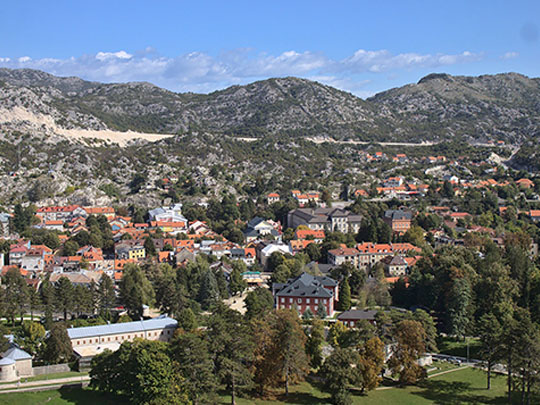
Cetinje grew up at the foot of Mount Lovćen around the court that Ivan Crnojević built in 1482, served as Montenegro’s royal capital, and is named in the constitution as the country’s Old Royal Capital.
Cetinje’s sights include the Cetinje Monastery, which keeps a relic venerated as the right hand of John the Baptist, King Nikola’s palace, the Biljarda, Njegoš’s residence named after Montenegro’s first billiard table, and the grand foreign legations built in the years before WWI.
In 1494 the Crnojević press at Cetinje finished printing the Oktoih, one of the first books produced on a printing press in South-East Europe.
8 – Lovćen
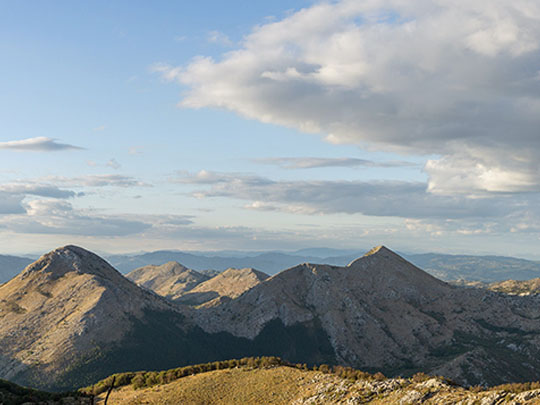
Lovćen is the mountain that rises between Kotor and Cetinje, a national park since 1952, and its dark forests probably gave Montenegro, Crna Gora or the Black Mountain, its name, while in January 1916 Austro-Hungarian forces stormed it during WWI.
Lovćen’s peak of Jezerski vrh is crowned by the Njegoš Mausoleum, designed by Ivan Meštrović and opened in 1974, reached by 461 steps through a tunnel, and the old road up from Kotor twists through about 25 hairpin bends.
The prince-bishop and poet Petar II Petrović-Njegoš built a chapel on Lovćen in 1845 and was buried there, and its demolition in the early 1970s to make way for the mausoleum has been controversial ever since.
9 – Sveti Stefan
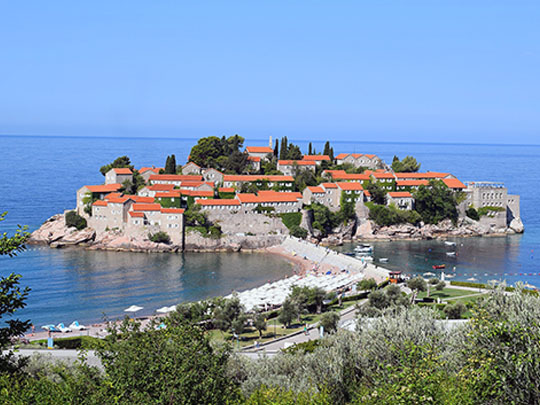
Sveti Stefan is a tiny islet joined to the shore by a narrow sandbar, a fortified village first recorded in 1442 that served as the capital of the Paštrovići community, and in 1960 Yugoslavia opened it as a luxury hotel.
Sveti Stefan’s stone houses became hotel suites for guests such as Sophia Loren, Kirk Douglas, Princess Margaret, and Elizabeth Taylor and Richard Burton, with sandy beaches on either side of the causeway.
In 1992 Bobby Fischer came out of 20 years in the wilderness to play Boris Spassky in a rematch that opened at Sveti Stefan, breaking UN sanctions on Yugoslavia and leading to a US warrant for his arrest.
10 – Durmitor and the Tara Bridge
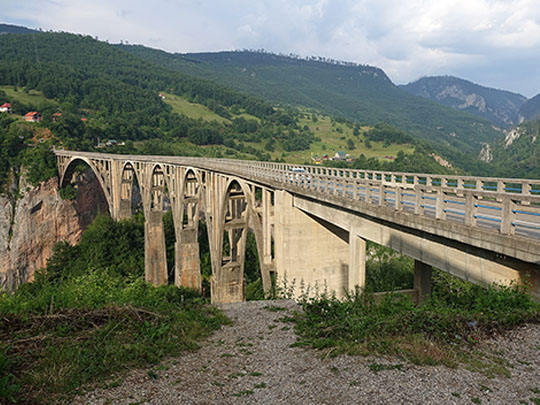
Durmitor is a mountain range in northern Montenegro, a UNESCO World Heritage Site since 1980, where the Tara river has cut one of Europe’s deepest canyons, about 1,300 metres deep, and in 1942 one arch of the Đurđevića Tara Bridge was blown up to stop the Italian advance by the engineer Lazar Jauković, who had helped build it and was executed on the bridge by the Italians.
Durmitor’s peaks rise to 2,523 metres at Bobotov Kuk above the glacial Black Lake near Žabljak, while the Đurđevića Tara Bridge, finished in 1940 and rebuilt in 1946, strides across the canyon on five concrete arches about 170 metres above the rafters on the river below.
The Tara Bridge is the target in the 1978 war film Force 10 from Navarone, though the span you see collapse on screen is a scale model.
11 – Stari Bar
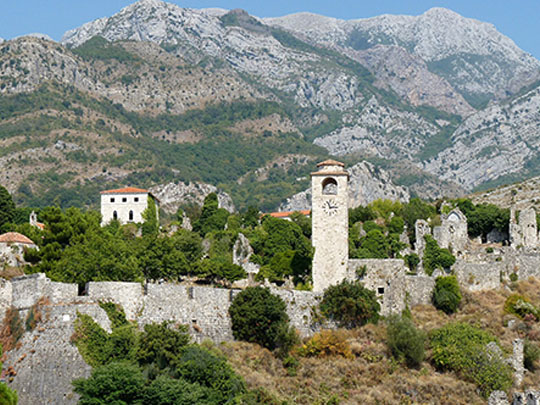
Stari Bar is the hilltop old town above the port of Bar, Venetian from 1443 and Ottoman from 1571 until Montenegrin forces took it after a siege in 1878, and gunpowder explosions in 1881 and 1912 followed by the 1979 earthquake left the old town in ruins.
Stari Bar’s ruins take in the 12th-century cathedral of St George, turned into a mosque under the Ottomans, a clock tower of 1752, an Ottoman bathhouse and the arched aqueduct that carried water about 3 km from a spring.
Near Stari Bar at Mirovica grows an olive tree estimated to be more than 2,000 years old, and legend says feuding families met in its shade to make peace.
12 – Mamula
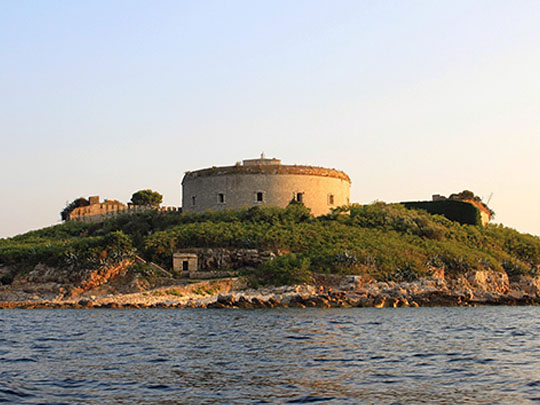
Mamula is a small islet at the mouth of the Bay of Kotor between the Luštica and Prevlaka peninsulas, crowned by a round fort built in 1853 by the Austrian general Lazar Mamula, and in 1942 Fascist Italy turned it into a concentration camp where about 2,000 people were held and accounts record more than 100 deaths.
Mamula’s circular fort once guarded the entrance to the bay for the Austrian navy, and it has since been converted into a luxury hotel, to the dismay of relatives of former prisoners.
Mamula played itself in the 2014 horror film Mamula, starring Franco Nero and released abroad as Killer Mermaid.
13 – Podgorica
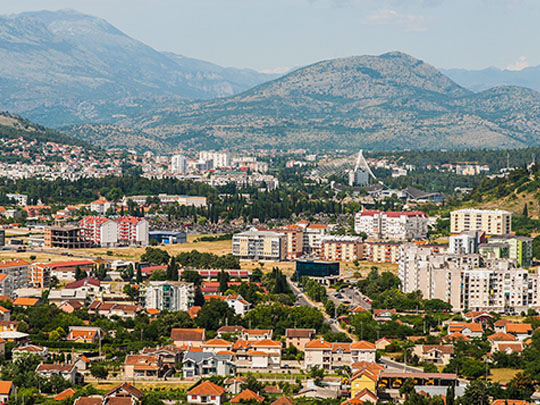
Podgorica, Montenegro’s capital, grew where the Ribnica meets the Morača, first recorded under that name in 1326, and it was Ottoman from 1474 to 1878, bombed more than 70 times in WWII at a cost of about 4,100 lives, and rebuilt as Titograd from 1946 until it took back its old name in 1992.
Podgorica’s sights include the Ottoman-era clock tower in the old quarter of Stara Varoš, the Millennium Bridge opened on Statehood Day in 2005, the Cathedral of Christ’s Resurrection, consecrated in 2013, and the ruins of the Roman city of Doclea just outside town.
Podgorica’s cathedral has a fresco that appears to show Tito, Marx and Engels burning in hell, and the Šipčanik wine cellar nearby was dug as a military aircraft shelter beside the airfield.