

Wikimedia Commons / CC-BY-SA-3.0 / GFDL
Capital: Amsterdam
Population: 18 million+
Language: Dutch

1 – Amsterdam (above)
Amsterdam grew around a dam on the Amstel in the late 13th century and became the hub of the Dutch Golden Age after the VOC, the first modern company to offer shares to the public, was founded there in 1602, and during WWII around 102,000 Dutch Jews, roughly three in four, were murdered, despite the February Strike of 1941, when tens of thousands walked out in protest.
Amsterdam’s 17th-century canal ring is UNESCO-listed, the Rijksmuseum holds Rembrandt’s Night Watch, and the Westerkerk, where Rembrandt lies in an unmarked grave, rings the bells that Anne Frank wrote about from her hiding place in the Anne Frank House nearby.
Amsterdam’s Night Watch isn’t a night scene at all, since the name came from darkened varnish, and in 1715 the painting was cut down on all four sides to fit a wall in the Town Hall.
2 – Utrecht

Utrecht grew from the Roman fort of Traiectum, built in the mid-1st century AD, and its first bishop, Willibrord, had spent about 12 years at the monastery of Rath Melsigi in County Carlow before he was consecrated in Rome in 695, while the Union of Utrecht of 1579 laid the foundations of the Dutch Republic.
Utrecht’s Dom Tower, about 112 metres high and the tallest church tower in the Netherlands, rises over a centre where the Oudegracht canal is lined with medieval wharf cellars at water level, and the Rietveld Schröder House of 1924 is UNESCO-listed.
Utrecht’s Dom Tower stands apart from its cathedral because a violent storm in 1674 brought down the unfinished nave between them, leaving an open square where it once stood.
3 – The Hague

The Hague grew around a hunting lodge bought by the counts of Holland in 1229–30, and though it is the seat of the Dutch government and parliament it only received city status in 1806, while William III, the king of the Battle of the Boyne, was born at its Binnenhof in 1650.
The Hague’s sights include the Binnenhof and its 13th-century Ridderzaal, the Mauritshuis with Vermeer’s Girl with a Pearl Earring, the Peace Palace, opened in 1913 with money from Andrew Carnegie and home of the International Court of Justice, and the seaside resort of Scheveningen.
On 3 March 1945 RAF bombers aiming for V-2 launch sites in The Hague’s Haagse Bos woods hit the Bezuidenhout district by mistake, killing more than 500 people.
4 – Delft

Delft is where William the Silent, father of the Dutch nation, was shot on the stairs of the Prinsenhof on 10 July 1584, leaving bullet holes in the wall, and he was buried in the Nieuwe Kerk, which became the royal burial place of the House of Orange.
Delft’s market square is framed by the Nieuwe Kerk and the town hall, the leaning tower of the Oude Kerk, where Vermeer is buried, rises nearby, and Royal Delft, founded in 1653, is the last of the city’s old potteries making Delft Blue.
Delft’s Thunderclap of 1654, when a gunpowder store blew up, killed around 100 or more people, among them the painter Carel Fabritius, whose little masterpiece The Goldfinch survived.
5 – Eindhoven

Eindhoven was a small Brabant town with city rights from 1232 until Gerard Philips and his father Frederik began making light bulbs there in 1891, turning it into the City of Light, and on 18 September 1944 the US 101st Airborne liberated it during Operation Market Garden, a day before a Luftwaffe raid killed 227 civilians.
Eindhoven’s sights include the flying-saucer Evoluon of 1966, the former Philips works at Strijp-S, once fenced off as the Forbidden City, the Van Abbemuseum, opened in 1936, and the Philips Stadion of PSV, founded in 1913 as the company’s sports club.
The CD was developed at Philips’ laboratories in Eindhoven, with Sony joining in 1979, though the compact cassette, often credited to Eindhoven, was in fact developed at the Philips plant in Hasselt, Belgium.
6 – Leiden

Leiden held out through a Spanish siege until the dykes were cut and the land flooded, letting the rebel fleet sail in with herring and white bread on 3 October 1574, and the university founded the following year, traditionally as a reward from William of Orange, is the oldest in the Netherlands.
Leiden’s canals lead past the Pieterskerk and the Hortus botanicus, where Carolus Clusius planted tulips whose flowering in 1594 is regarded as the first official one in the Netherlands, and Rembrandt was born in the city in 1606.
The Pilgrim Fathers lived in Leiden for about 12 years before leaving in 1620 on the voyage that ended with the Mayflower, and on 26 November 1940 law professor Rudolph Cleveringa protested the dismissal of a Jewish colleague in a speech that got him arrested and the university closed.
7 – Gouda

Gouda received city rights from Count Floris V in 1272, and the young Erasmus went to school here and later entered the Augustinian house at Steyn just outside town.
Gouda’s Gothic town hall of 1448–50, one of the oldest in the Netherlands, stands in the middle of the market square near the 1667 weigh house, while the Sint-Janskerk, at 123 metres the longest church in the country, glows with 72 stained-glass windows.
Gouda cheese takes its name from the town where it was traded rather than where it was made, and Dutch folklore credits a Gouda baker with inventing the stroopwafel.
8 – Maastricht

Maastricht grew around a 1st-century Roman crossing of the Maas, making it one of the oldest cities in the Netherlands, and it was the first Dutch city liberated in WWII, on 13–14 September 1944, while the Maastricht Treaty, signed there on 7 February 1992, created the European Union.
Maastricht’s sights include the Basilica of St Servatius, built over the grave of the bishop who died here in 384, the Vrijthof square, the Helpoort, the oldest surviving city gate in the Netherlands, and Boekhandel Dominicanen, a bookshop inside a 13th-century Gothic church.
During WWII Rembrandt’s Night Watch was hidden in a bunker deep in Maastricht’s Sint Pietersberg caves, and the real d’Artagnan, the musketeer, was killed at the siege of the city in 1673.
9 – Rotterdam

Rotterdam grew around a dam on the Rotte and had its city rights confirmed in 1340, and on 14 May 1940 German bombers destroyed its centre, leaving about 80,000 homeless, with an official list published in 2022 naming 711 people killed that day, before the threat to bomb Utrecht next forced the Netherlands to surrender.
Rotterdam rebuilt itself as a showcase of modern architecture, from Piet Blom’s tilted Cube Houses to the Erasmus Bridge, nicknamed the Swan, the arched Markthal and the 185-metre Euromast, and its port is the largest in Europe.
Rotterdam’s statue The Destroyed City, by Ossip Zadkine, shows a figure with a hole where its heart should be, standing for the city centre torn out in 1940.
10 – Groningen

Groningen is the main city of the north, a member of the Hanseatic League from 1284 with a university founded in 1614, and every 28 August the city celebrates the lifting of its 1672 siege by the Bishop of Münster, nicknamed Bommen Berend, or Berend the Bomber.
Groningen’s skyline is ruled by the Martinitoren, about 97 metres tall and nicknamed the Old Grey One, while the Groninger Museum of 1994 is a colourful postmodern building by Alessandro Mendini and guest architects including Philippe Starck.
In April 1945 Canadian troops fought street by street for Groningen over four days, losing 43 men and taking more than 5,200 prisoners.
11 – Haarlem

Haarlem, the capital of North Holland, held out against a Spanish siege for seven months in 1572–73 before surrendering, and during WWII the ten Boom family hid people in a secret room above their watch shop until they were arrested on 28 February 1944.
Haarlem’s Grote Kerk of St Bavo holds the great Müller organ of 1738, while the city has the Frans Hals Museum, Teylers Museum, opened in 1784 and the oldest museum in the Netherlands, and the Corrie ten Boom House, where the hiding place was never found by the Germans.
A 10-year-old Mozart played Haarlem’s Müller organ in 1766, and Harlem in New York takes its name from the city.
12 – Arnhem
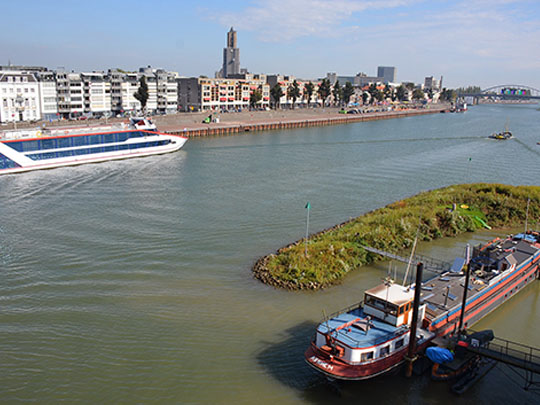
Arnhem is the capital of Gelderland on the Lower Rhine, with city rights from 1233, and in September 1944 a force of about 740 British paratroopers under Lieutenant Colonel John Frost held the north end of its Rhine bridge for about four days during Operation Market Garden, before the Germans forced the city’s people out and looted the empty streets.
Arnhem’s sights include the John Frost Bridge, renamed for him in 1977, the Eusebiuskerk, burned out in 1944 and rebuilt with a 93-metre tower and a panorama lift, the Netherlands Open Air Museum, founded in 1912, and Burgers’ Zoo.
The Arnhem bridge scenes in the 1977 film A Bridge Too Far were shot at Deventer, and General Browning’s famous remark that the plan went “a bridge too far” comes from Cornelius Ryan’s book and is doubted by historians.
13 – Oosterbeek
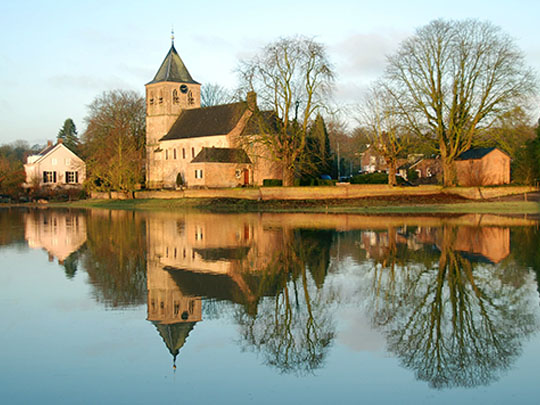
Oosterbeek is a village about 5 km west of Arnhem with one of the oldest churches in the Netherlands, where the British 1st Airborne Division held out in a shrinking pocket the Germans called the Hexenkessel, the witches’ cauldron, until about 2,400 of some 10,000 men were ferried back across the Rhine on the night of 25–26 September 1944.
Oosterbeek’s Hotel Hartenstein, the division’s headquarters, is the Airborne Museum, and the Arnhem Oosterbeek War Cemetery holds about 1,770 graves, while Kate ter Horst nursed some 250 wounded men in her house beside the Old Church.
Flight Lieutenant David Lord, born in Cork, won a posthumous Victoria Cross for flying his burning Dakota round for a second supply drop near Oosterbeek, and he lies in the war cemetery, where local schoolchildren lay flowers on the graves every year.
14 – Kinderdijk
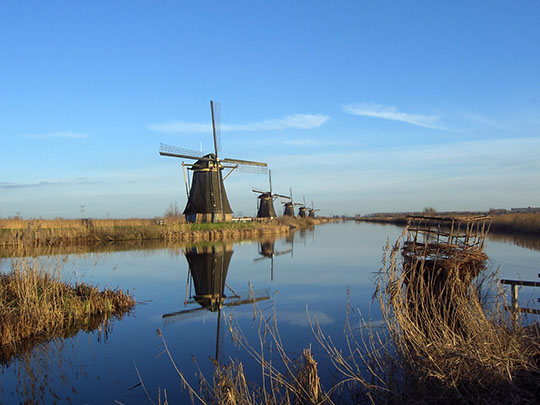
Kinderdijk stands in the Alblasserwaard polder where the Lek and Noord rivers meet, about 15 km east of Rotterdam, and its 19 windmills, most of them built in 1738–40 to pump water off the low-lying land, were listed by UNESCO in 1997.
Kinderdijk’s two long rows of mills, the brick Nederwaard mills and the thatched Overwaard mills, line the canals beside the Wisboom steam pumping station of 1868, and two museum mills show how millers’ families lived inside them.
Legend says Kinderdijk, the children’s dike, got its name after the St Elizabeth’s flood of 1421, when a cradle washed up with a baby asleep inside, kept steady by a cat leaping from side to side.
15 – Westerbork
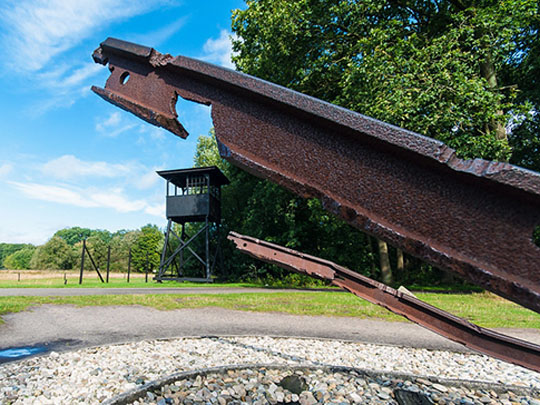
Westerbork in Drenthe was built by the Dutch government in 1939 as a camp for Jewish refugees, paid for by Dutch Jewish communities, and from July 1942 the Germans ran it as a transit camp, sending about 100,000 people on 93 trains to Auschwitz, Sobibor, Theresienstadt and Bergen-Belsen.
Westerbork’s site holds the National Monument of bent rails by the survivor Ralph Prins, the 102,000 stones laid out as a map of the Netherlands on the old roll-call square, the commandant’s house, the only camp building left, and a memorial centre opened in 1983.
Anne Frank and her family left Westerbork on 3 September 1944 on the last train to Auschwitz, and the diarist Etty Hillesum threw a postcard from her own train the year before that began “We have left the camp singing”.
16 – Het Loo Palace
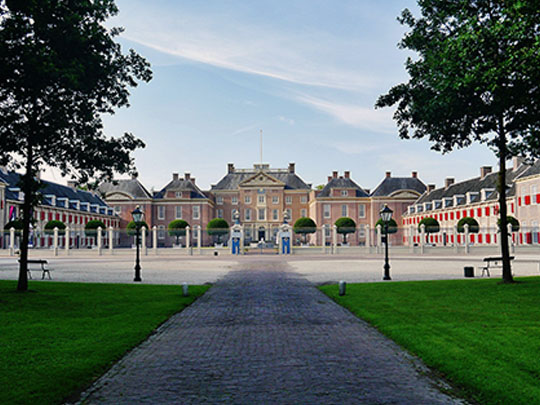
Het Loo Palace at Apeldoorn was built in 1684–86 as a hunting palace for Stadtholder William III and his wife Mary, who became joint monarchs of England, Scotland and Ireland in 1689, the year before William’s victory at the Boyne.
Het Loo’s formal Baroque gardens, designed by the Huguenot Daniel Marot, were restored to their 17th-century plan for the palace’s 300th anniversary in 1984, when it opened as a museum, and Queen Wilhelmina lived there until her death in 1962.
William of Orange did not die at Het Loo, a claim that mixes him up with the 19th-century Dutch king William III, and the fall that led to his death in 1702 came at Hampton Court when his horse stumbled on a molehill, prompting Jacobites to toast “the little gentleman in black velvet”.
17 – Nijmegen
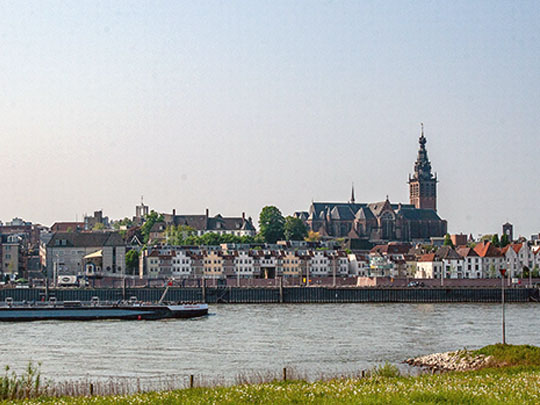
Nijmegen on the Waal claims to be the oldest city in the Netherlands, as the Roman town of Ulpia Noviomagus Batavorum received city rights around AD 100 under Trajan, and on 22 February 1944 an American bombing raid killed nearly 800 of its people.
Nijmegen’s Valkhof park holds the 11th-century St Nicholas chapel and the ruins of the palace that Frederick Barbarossa rebuilt in 1155, looking out over the Waal and its great arched road bridge of 1936.
On 20 September 1944 men of the US 82nd Airborne paddled across the Waal at Nijmegen in canvas boats under heavy fire, with only about half the boats reaching the far bank, before British Grenadier Guards tanks rolled over the road bridge that evening.