

Wikimedia Commons / CC-BY-SA-3.0 / GFDL
Capital: Skopje
Population: 1.8 million+
Language: Macedonian

1 – Ohrid (also above)

Ohrid sits on Lake Ohrid, which North Macedonia shares with Albania and which is more than a million years old, among the oldest lakes in Europe, and the town became a cradle of Slavic literacy after St Clement founded the Ohrid Literary School in 886, later serving as Tsar Samuel’s capital.
Ohrid’s UNESCO-listed old town climbs from the clifftop church of St John at Kaneo past the 11th-century church of St Sophia, with its frescoes, to Samuel’s Fortress and Plaošnik, where St Clement’s church was rebuilt on its old foundations in 2000–02.
Ohrid’s famous pearls aren’t real pearls at all, as they’re coated with a paste made from the scales of the plasica, a small fish found only in the lake, to a recipe two local families guard closely.
2 – Skopje

Skopje, the capital on the Vardar, was largely destroyed by an earthquake at 5:17 in the morning on 26 July 1963 that killed more than 1,070 people, and it was partly rebuilt to a plan by the Japanese architect Kenzo Tange.
Skopje’s 15th-century Stone Bridge leads to the Old Bazaar, one of the oldest and largest in the Balkans, below the Kale fortress and the statues and new facades of the Skopje 2014 project, while the Holocaust Memorial Center remembers the roughly 7,000 Jews of Skopje, Bitola and Štip whom Bulgarian occupation authorities deported to Treblinka in March 1943, according to the USHMM.
Mother Teresa was born in Skopje on 26 August 1910, where a Memorial House stands on the site of the church she was baptised in, and at 18 she left home in 1928 for Loreto Abbey in Rathfarnham, Dublin, before sailing for India.
3 – Bitola

Bitola, about 14 kilometres from the Greek border, grew beside Heraclea Lyncestis, founded by Philip II of Macedon on the Roman Via Egnatia, and as Ottoman Monastir it was the city of consuls, with about a dozen consulates, until its 3,276 Jews were deported in March 1943, according to Yad Vashem.
Bitola’s ruins of Heraclea have a Roman theatre from Hadrian’s time and 6th-century mosaics, and the Bitola Museum fills the old military school where Mustafa Kemal Atatürk graduated in 1899, with a memorial room to him.
In 1905 the Manaki brothers of Bitola filmed their 114-year-old grandmother at her loom in The Weavers, often called the first film shot in the Balkans, and the city’s film festival is named after them.
4 – Veles

Veles stands on the Vardar in central North Macedonia, an Ottoman town known as Köprülü that was renamed Titov Veles after WWII and kept the name until 1996.
Veles climbs the hillsides above the river in old houses around the church of St Panteleimon, built in 1840, and it is the birthplace of the poet Kočo Racin, whose White Dawns of 1939 is regarded as a founding work of modern Macedonian literature.
In 2016 Veles became known worldwide for over 100 pro-Trump fake news websites run by young people for advertising money, though investigators traced the first of them to a local lawyer working with American partners.
5 – Kruševo

Kruševo, at about 1,350 metres the highest town in North Macedonia and a centre of Aromanian (Vlach) heritage, is where Ilinden Uprising rebels proclaimed the Kruševo Republic in early August 1903, crushed by Ottoman forces about ten days later, a legacy claimed by both North Macedonia and Bulgaria.
Kruševo’s Makedonium of 1974 is a concrete dome bristling with tube-like spikes and stained glass that honours both the 1903 rebels and the WWII Partisans and holds the tomb of the republic’s president Nikola Karev, and the town’s old quarter keeps tall 19th-century houses with carved wooden fronts.
Kruševo was the home of pop star Toše Proeski, who sang for his country at Eurovision in 2004 and was a UNICEF goodwill ambassador before dying in a car crash in 2007 aged 26, and he is buried in the town, where his memorial house is built in the shape of a cross.
6 – Bigorski Monastery

Bigorski Monastery, dedicated to St John the Baptist, stands in the Radika valley in western North Macedonia, where tradition says the monk John of Debar, later Archbishop of Ohrid, founded it in 1020 after an icon of the saint appeared above a spring, and after Ottoman destruction it was revived in 1743.
Bigorski Monastery’s treasure is its walnut iconostasis, carved between about 1830 and 1835 by woodcarvers led by Petre Filipovski Garkata and Makarije Frčkovski, crowded with biblical scenes, people and animals and including the carvers’ own self-portraits.
In 2009 a fire swept through Bigorski Monastery and destroyed its old living quarters, library and kitchens, but the church and its iconostasis came through unharmed.
7 – Mavrovo National Park

Mavrovo National Park, founded in 1949, is North Macedonia’s largest national park and rises to Mount Korab, the country’s highest peak at 2,764 metres on the Albanian border.
Mavrovo National Park centres on Lake Mavrovo, a reservoir filled from 1952 that half-swallowed the 1850s church of St Nicholas, and it takes in the Zare Lazarevski ski area and the mountain village of Galičnik, whose traditional July wedding is staged as a festival.
Mavrovo National Park is the only confirmed breeding area of the Balkan lynx, rated critically endangered by the IUCN.
8 – Stobi
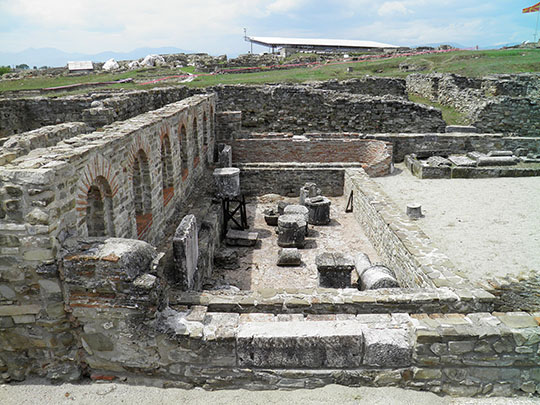
Stobi stands where the Crna river meets the Vardar near Gradsko, and it grew from a Paeonian settlement into a Roman municipium and later the capital of a late Roman province, where the emperor Theodosius I stayed in 388 and issued edicts.
Stobi’s ruins include a theatre that was later turned over to gladiator fights and animal hunts, and an Episcopal Basilica and several other churches floored with mosaics.
At Stobi a 2nd- or 3rd-century inscription honours a man named Polycharmos as “father of the synagogue” for giving the building to the town’s Jewish community, making it one of the oldest synagogues known in Europe, though a Christian basilica was later built over it.
9 – Prilep
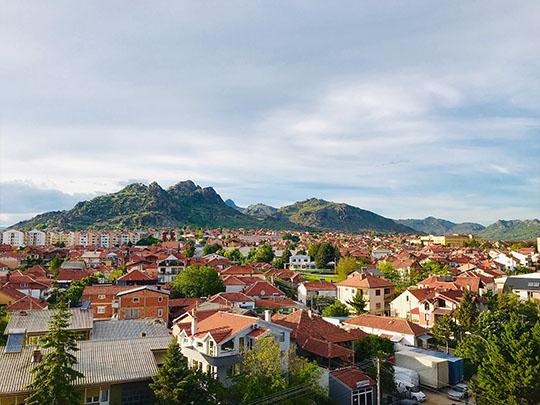
Prilep spreads along the northern edge of the Pelagonia plain below Markovi Kuli, the hilltop fortress of King Vukašin and his son Marko, and on 11 October 1941 a Partisan attack on its Bulgarian-run police station began the uprising in the region, a date marked as a national holiday.
Prilep is the country’s tobacco capital, with a Tobacco Museum, a tobacco institute founded in 1924 and an oriental tobacco variety named after the town, while Treskavec Monastery keeps late-medieval frescoes on the mountain above, and the nearby Sivec quarries supplied white marble for Abu Dhabi’s Sheikh Zayed Grand Mosque.
Prilep’s Prince Marko became a hero of the epic poetry of several Balkan nations, riding his piebald horse Šarac through ballads sung in Serbian, Bulgarian and Macedonian.
10 – St Naum Monastery
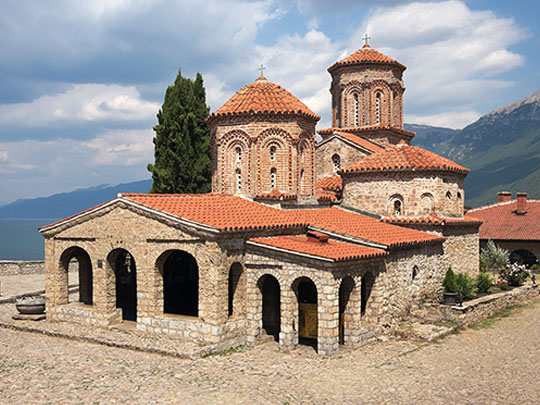
St Naum Monastery stands on the southern shore of Lake Ohrid near the Albanian border, founded in 905 by St Naum, a disciple of Cyril and Methodius, who was buried there in 910, and the land around it was Albanian until it was handed over in a 1925 border deal.
St Naum Monastery’s multi-domed church dates from the 16th and 17th centuries, with an iconostasis from 1711 and peacocks strutting through the grounds, while just below it springs fed by water from Lake Prespa well up into Lake Ohrid.
Legend says that if you put your ear to St Naum’s tomb you can hear his heart beating.
11 – Kratovo
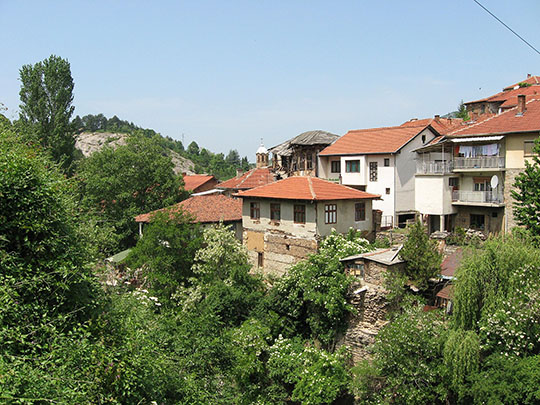
Kratovo is a small town on the slopes of Mount Osogovo in north-eastern North Macedonia, set in a bowl of ancient volcanic hills often described as an extinct crater, and it grew rich as a mining town for gold, silver and lead.
Kratovo keeps six of its twelve old stone towers, among them the Saat clock tower, and several old stone bridges arching over the river that runs through the town, including Radin Most.
Near Kratovo the stone pillars of Kuklica, eroded out of soft volcanic rock, are said in local legend to be a wedding party turned to stone.