New Caledonia in 4 Pics

0

Wikimedia CommonsCC-BY-SA-3.0 / GFDL

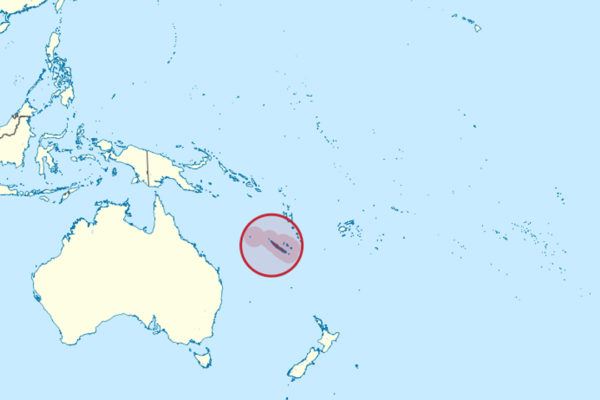
Capital: Nouméa

Population: 270,000+

Language: French (28 Kanak languages are also spoken)

Wikimedia CommonsCC-BY-SA-3.0 / GFDL

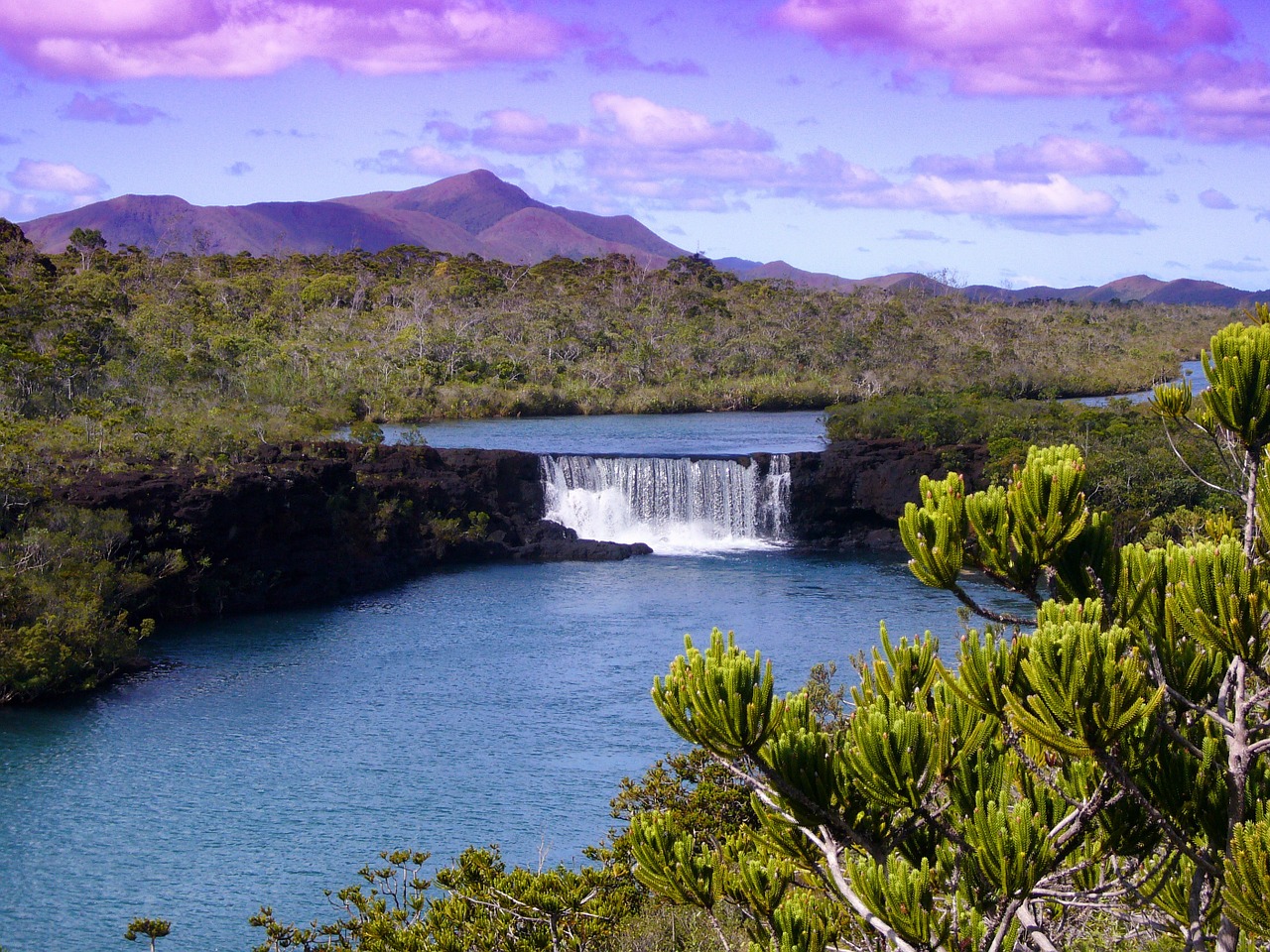
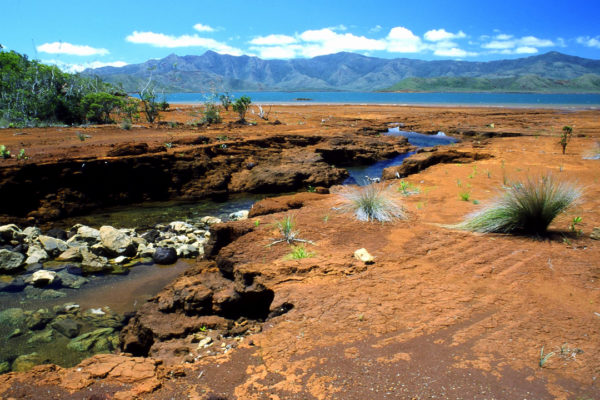
1 – Balade

A small village on the northeast coast of Grande Terre where two foundational moments happened eighty years apart: Cook came ashore on 4 September 1774 and named the place New Caledonia because the hills inland reminded him of his father’s Scotland, and on 24 September 1853 Admiral Febvrier Despointes landed in the same bay and claimed the territory for Napoleon III.

Mahamat beach just up the coast has an altar marking the first Catholic mass, said at Christmas 1843 under a banyan tree that is still standing, the little church at Balade tells the whole story in its stained glass, and the road along this side of the island runs between mountains and mangroves with almost nothing on it.

On the hill above stands a stone pyramid raised in 1913 to celebrate sixty years of French possession, now largely swallowed by grass — and directly below the church stands a second monument, a Kanak flag unveiled in September 2011, deliberately dated to the same day, 158 years after the annexation.

2 – Nouméa

Wikimedia CommonsCC-BY-SA-3.0 / GFDL

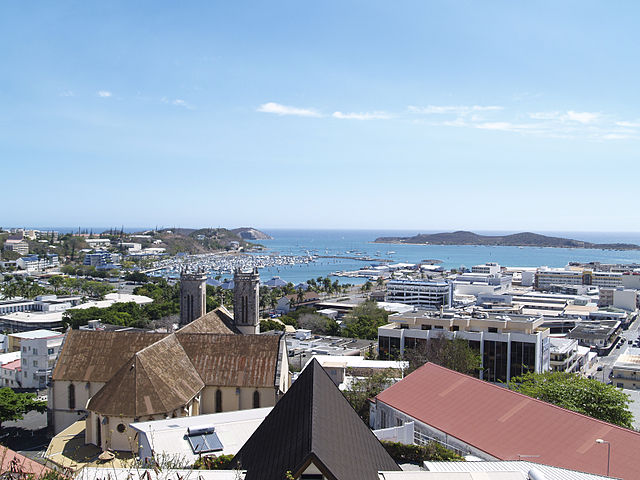
Founded in 1854 as Port-de-France on a deepwater harbour at the southern end of Grande Terre and renamed twelve years later, the capital was largely built by convicts — France shipped some 22,000 prisoners to the colony between 1864 and the 1920s — then boomed on nickel, and in the Second World War served as the headquarters of the entire American military effort in the South Pacific.

Place des Cocotiers is the colonial heart of town, the Port Moselle market is the best hour you’ll spend here, and the beaches of Anse Vata and Baie des Citrons are ten minutes out, with the tiny islet of Île aux Canards a short taxi-boat ride offshore.

The Jean-Marie Tjibaou Cultural Centre — ten curved timber shells rising along a peninsula east of the city, designed by Renzo Piano and opened in 1998 — exists because France committed to building it as part of the settlement that ended the conflict of the 1980s, and named it for the Kanak independence leader who signed that settlement and was assassinated the following year.

3 – Île des Pins

Wikimedia CommonsCC-BY-SA-3.0 / GFDL

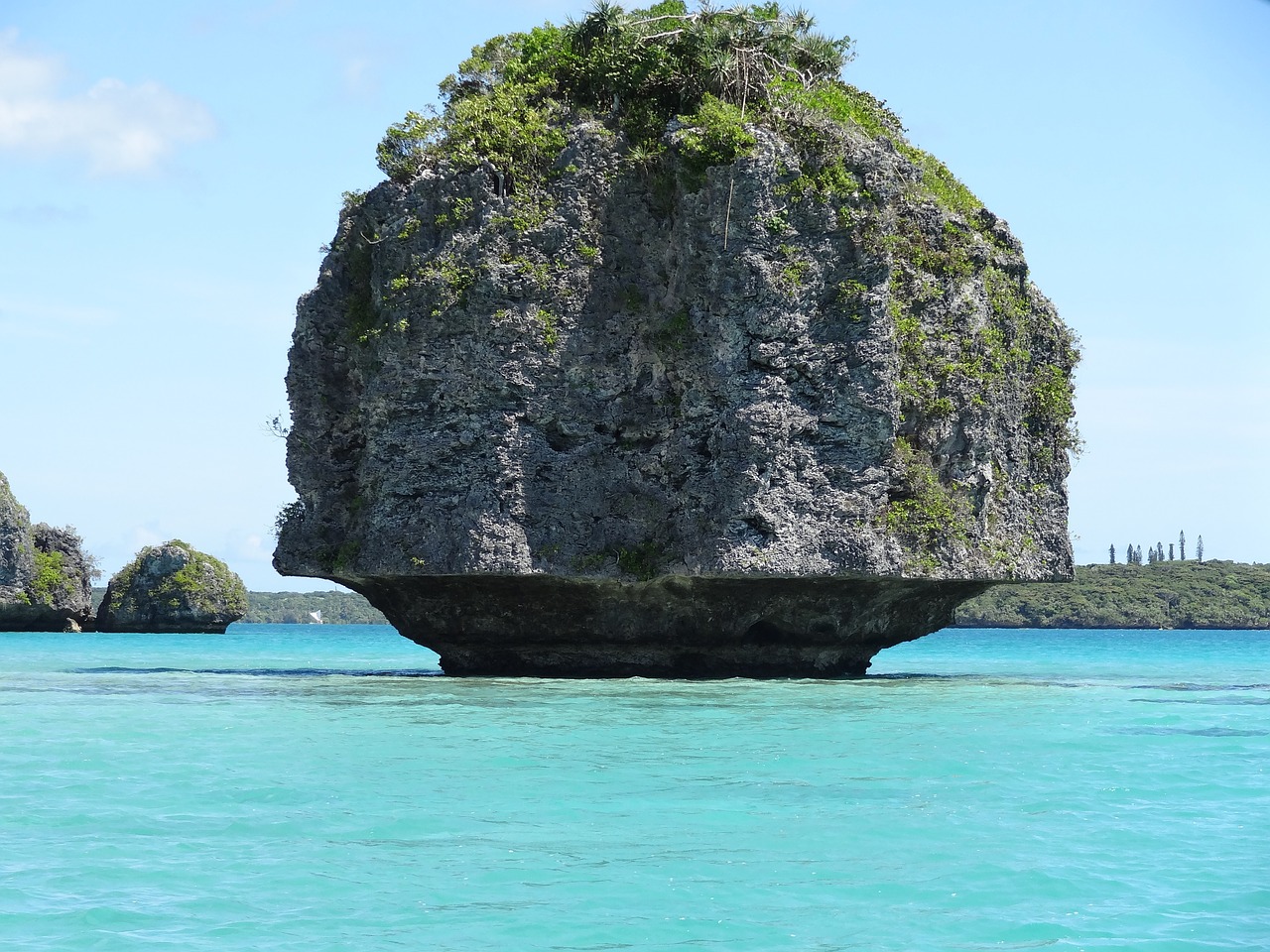
Cook sighted the island in 1774 and named it for the columnar pines standing along its shore; to its Kanak people it is Kunié, and from 1872 France used the southwest of it as a place of exile, shipping in around 3,000 deportees from the Paris Commune along with Algerians banished after the revolt in Kabylia.

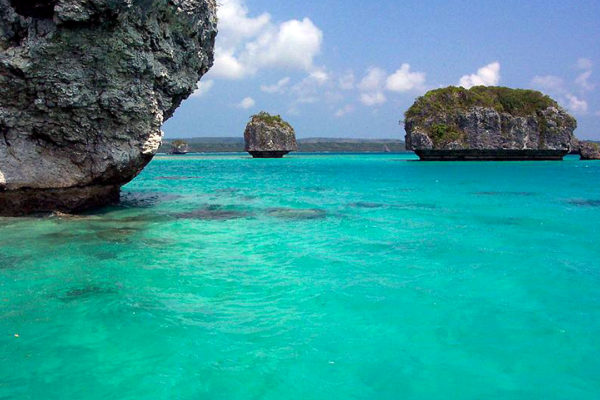
It is also, by fairly general agreement, the most beautiful place in the territory: the natural seawater pool at Oro Bay, the white curves of Kuto and Kanuméra bays, a sail across Upi Bay by traditional pirogue between coral outcrops, and the short climb up Pic N’ga for the whole island at once.

The penal settlement was wound up in 1880 when the Communards were amnestied and sailed home, and what they left is still there in the trees — the ruins at Ouro, a cemetery of around 230 graves that are almost all nameless, and a water tower the prisoners built in the mid-1870s that has never stopped working.

4 – Ouvéa

Marietrip 27 / CC-BY-SA-3.0 / GFDL

The northernmost of the Loyalty Islands is a long thin atoll, 40 km end to end and in places under 40 metres wide, and in April and May 1988 it became the flashpoint of the long confrontation between Kanak independence militants and the French state — the crisis that forced both sides into the Matignon Accords a month later.

What draws people now is a single 25 km arc of white sand along Fayaoué beach facing a World Heritage lagoon, with the Mouli bridge at the southern end where turtles and rays drift underneath and the Lékiny cliffs behind; a Japanese novelist stayed here in the 1960s and called her book The Island Closest to Paradise, and the name has stuck ever since.

Militants killed four gendarmes and took others hostage in a cave near Gossanah; French forces stormed it on 5 May, nineteen Kanaks and two soldiers were killed, and questions about how some of the dead came to die have never been resolved — the memorial at Wadrilla names all nineteen, and the cave itself is now treated as a sacred place.

LEAVE A REPLY

Please enter your comment!
Please enter your name here

This site uses Akismet to reduce spam. Learn how your comment data is processed.