
Wikimedia Commons / CC-BY-SA-3.0 / GFDL
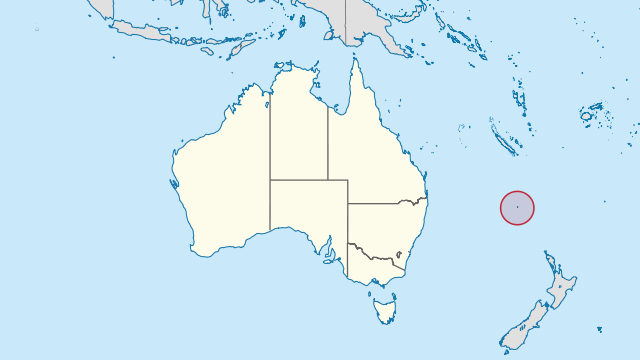
Capital: Kingston
Population: 2,200+
Language: English/Norfuk
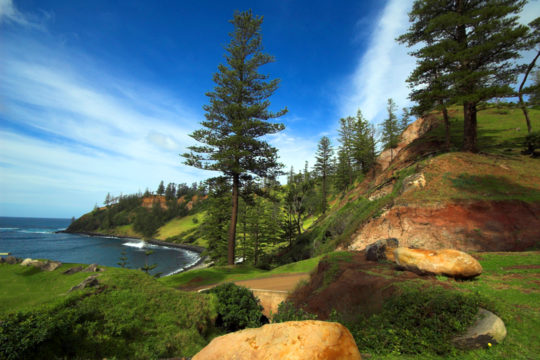
1 – Norfolk Island Pines (above)
The park covers roughly a tenth of the island around Mount Bates and Mount Pitt, and protects the last real remnant of the subtropical rainforest that once covered the whole place — about five square kilometres of it, everything else having gone to pasture and settlement.
Some nine kilometres of tracks run through pine forest and tree ferns, including a smooth treefern recorded as the tallest of its kind anywhere, and the summit walk between the two peaks ends with the whole island laid out below; over fifty of the island’s native plants grow nowhere else.
The Norfolk boobook, a small owl found only here, was down to a single surviving female by the 1980s, so two males of a closely related New Zealand species were brought in to breed with her — every boobook on the island today descends from that one bird.
2 – Captain Cook Lookout
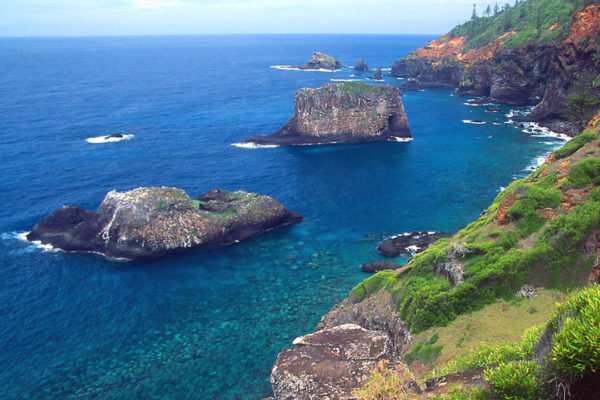
On the wild north coast above Duncombe Bay, this is where Cook came ashore in October 1774 on his second voyage, the first European known to have set foot on the island, naming it for the Duchess of Norfolk and walking inland to the high ground before sailing on.
A monument marks the spot, the lookout gives the northern cliffs and the offshore rocks in one sweep, and the surrounding reserve is thick with the pines that first caught Cook’s eye.
Britain settled the island in March 1788, six weeks after the First Fleet reached Sydney, purely because of Cook’s report: the tall straight pines were to be masts and the native flax was to be sailcloth, ending the Royal Navy’s dependence on Baltic supplies — and both turned out to be useless, the timber too brittle and the flax beyond anyone’s ability to prepare.
3 – Kingston
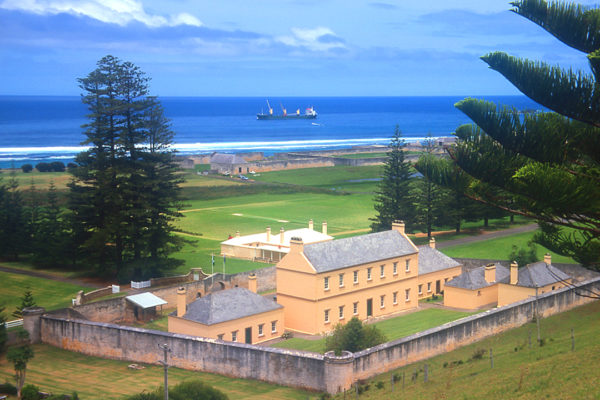
The old settlement on the south coast is the most complete convict site in the Pacific and one of eleven places making up Australia’s World Heritage convict listing, holding four layers of occupation in one small plain: Polynesian, the first British settlement from 1788, the second penal settlement of 1825 to 1855 — reputed the harshest in the empire — and the Pitcairn Islanders, who landed at the pier in June 1856 and never left.
Quality Row is a street of Georgian houses still lived in, with the gaol ruins, the crank mill, the salt house and the cemetery within a short walk, and one house open to the public as a museum.
Between the floggings, Kingston was also where a Scottish naval officer called Alexander Maconochie ran an experiment in the 1840s, giving convicts marks they could earn towards early release instead of simply punishing them — it worked, London decided he was far too soft and recalled him, and the system he invented is the ancestor of modern parole.
4 – Phillip Island
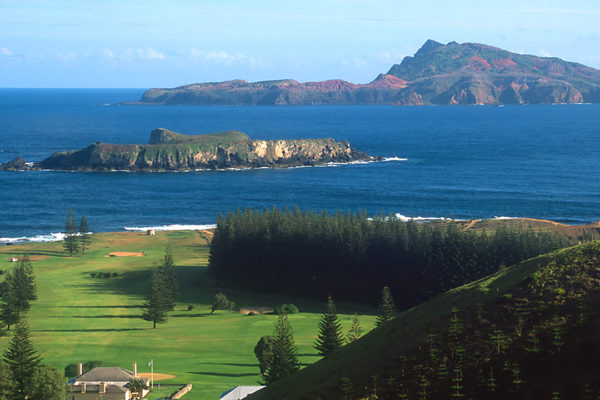
The red hulk of rock six kilometres off the south coast is part of the same national park and utterly uninhabited, and it looks the way it does because of the convict era: pigs, goats and rabbits put ashore in the 1790s stripped it of vegetation, and in places more than two metres of topsoil has washed into the sea.
Boats run across for day walks, seabirds nest in enormous numbers on the bare slopes, two reptiles found nowhere else in the world survive there, and the eroded ochre and rust of the cliffs is the thing you will photograph from Norfolk itself, especially at sunset.
The last rabbits were finally removed in 1988, and among the plants that came back was the Phillip Island hibiscus, a shrub that exists nowhere else on earth and had been reduced to a couple of clumps — every new plant on the island has been propagated from cuttings of those survivors.
5 – Emily Bay
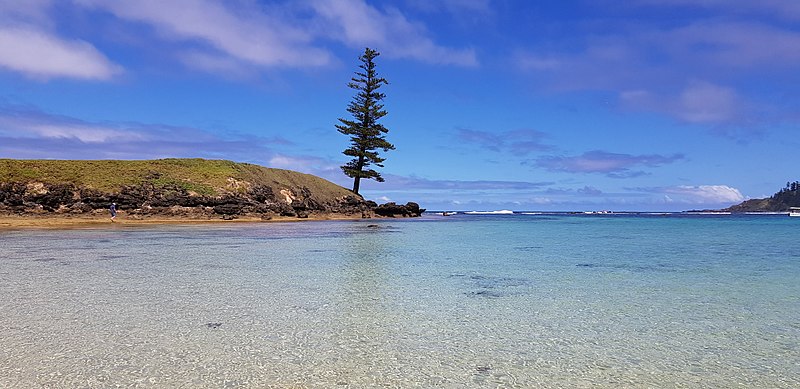
A shallow lagoon at the eastern end of the Kingston plain, protected by a reef and edged with pines, and beneath the sand dunes behind it lies the only known site of pre-European Polynesian settlement anywhere in Australian territory.
The bay is the island’s safe swimming and snorkelling spot, with coral and reef fish inside the lagoon, the ruined convict-era pier along the shore, and a single old pine standing sentinel at the eastern approach.
East Polynesian voyagers settled here somewhere between the 13th and 15th centuries, built houses and a small marae, brought bananas, rats and obsidian tools from islands hundreds of kilometres away — and then vanished, leaving no graves and no explanation, so that when the British arrived in 1788 they found only wild bananas and a rotting canoe to tell them somebody had been there first.