
Wikimedia Commons / CC-BY-SA-3.0 / GFDL
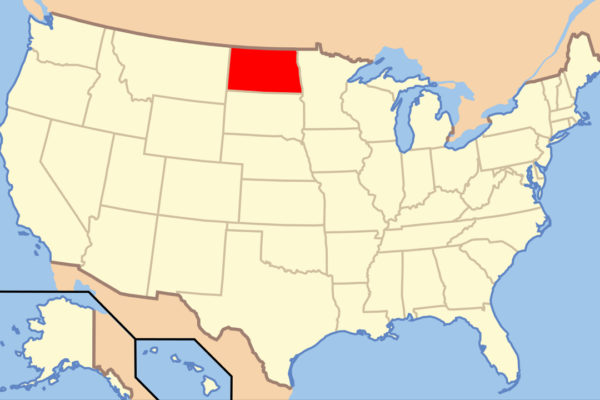
Capital: Bismarck
Population: 790,000+
Language: English
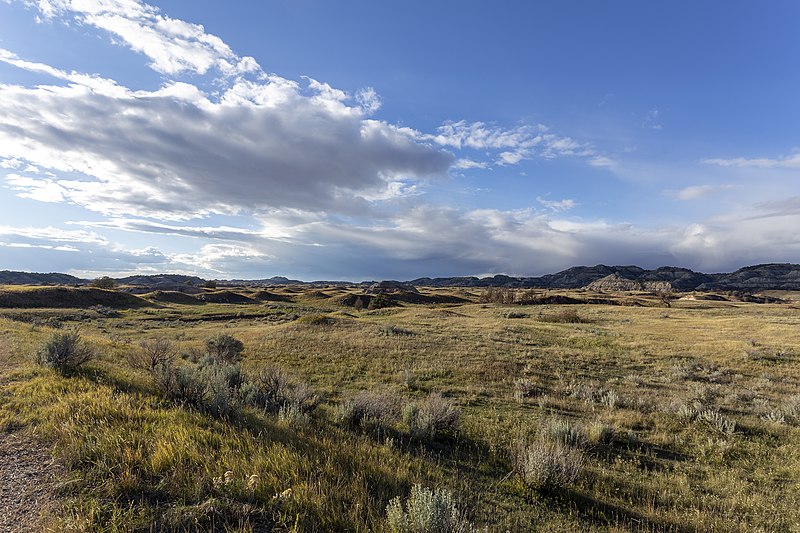
1 – Theodore Roosevelt National Park (also above)
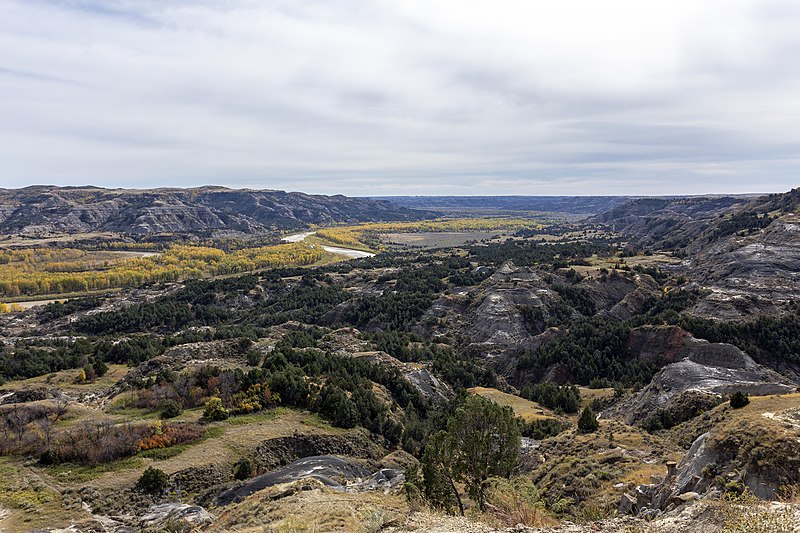
Theodore Roosevelt National Park protects the badlands of the Little Missouri River in western North Dakota, where a young Roosevelt arrived in 1883 to hunt bison, bought into the Maltese Cross Ranch, and came back in 1884 to set up the Elkhorn Ranch after his mother and his wife died on the same day.
Theodore Roosevelt National Park’s three units hold bison, reintroduced in 1956, wild horses, prairie dog towns and petrified wood, along with a coal seam that smouldered underground for 26 years, and the park became a national memorial park in 1947 and a full national park in 1978.
Theodore Roosevelt wrote in 1918 that he “never would have been President if it had not been for my experiences in North Dakota”, and in 1886 he tracked down three thieves who had stolen his boat and marched them overland to the sheriff, reading Anna Karenina along the way.
2 – Bismarck
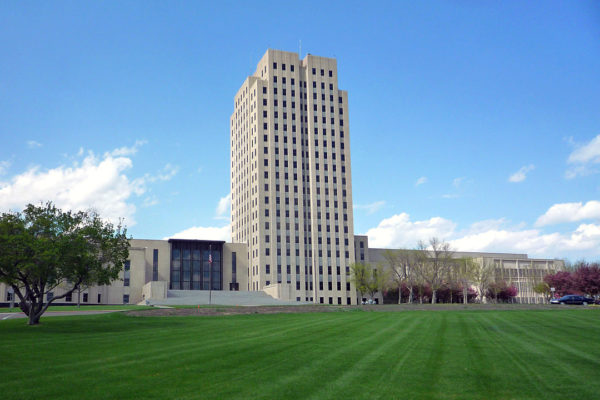
Bismarck, on the Missouri River, was laid out in 1872 as Edwinton and renamed in 1873 after German chancellor Otto von Bismarck, in the hope of luring German investors to the cash-strapped Northern Pacific Railroad, and it became capital of Dakota Territory in 1883 and of the new state in 1889.
Bismarck’s skyline is dominated by the State Capitol, a domeless 241-foot tower nicknamed the “Skyscraper on the Prairie”, built after the old capitol burned in 1930 and finished in 1934 under budget, with Leonard Crunelle’s 1910 statue of Sakakawea in its grounds, a replica of which stands in the US Capitol.
Bismarck’s flattering name didn’t work, since Otto von Bismarck sent a thank-you note but no German money followed.
3 – Fargo
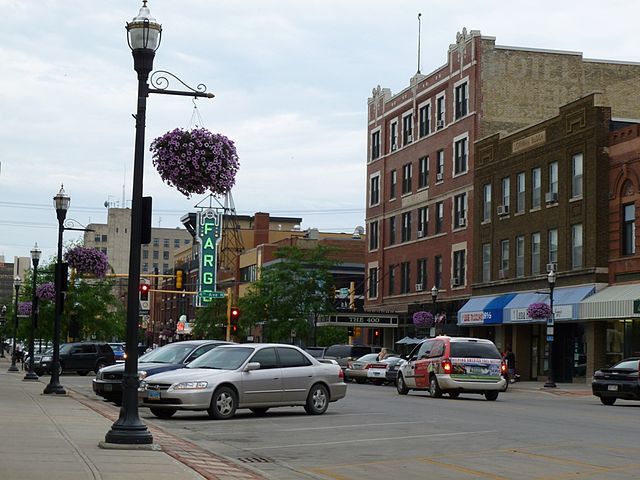
Fargo grew up from 1871 where the Northern Pacific Railroad crossed the Red River of the North, named after railroad director William G. Fargo, co-founder of Wells Fargo, and in the 1890s it drew wealthy out-of-staters seeking a quick divorce under Dakota’s 90-day residency rule, until a one-year rule ended the trade in 1899.
Fargo’s sights include the 1926 Fargo Theatre, given an Art Deco makeover in 1937, and the Roger Maris Museum, honouring the baseball star who grew up in Fargo and is buried there.
Fargo the film (1996) was barely shot in Fargo, being filmed mostly around Minneapolis–St Paul with snow scenes in northern North Dakota, and its “this is a true story” opening is a prank, since the Coen brothers later admitted the plot was made up, while the Red River set a flood record at Fargo in 2009.
4 – Fort Abraham Lincoln State Park
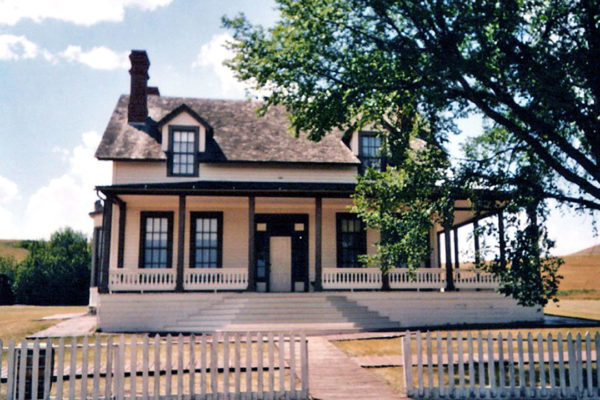
Fort Abraham Lincoln State Park lies just south of Mandan, across the Missouri from Bismarck, where On-A-Slant Village was home to around 1,500 Mandan people from the late 1500s until smallpox struck in 1781, and where the army built a fort in 1872 that became the base of George Armstrong Custer’s 7th Cavalry.
Fort Abraham Lincoln State Park’s sights include six reconstructed Mandan earthlodges and the Custer House, rebuilt in 1989, and it was from here that the 7th Cavalry rode out on 17 May 1876 for the Little Bighorn.
Fort Abraham Lincoln’s 7th Cavalry took more than 100 Irish-born men to the Little Bighorn, including Captain Myles Keogh of County Carlow, who was killed there, and the regiment’s march was “Garryowen”, a Limerick drinking song he’s said to have introduced, while his horse Comanche, often called the battle’s “sole survivor”, was one of several horses to survive.
5 – Minot
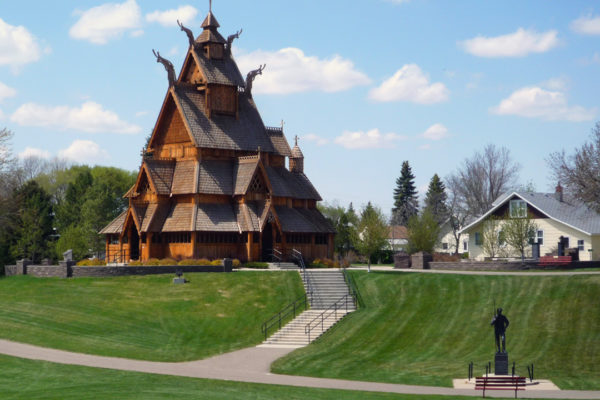
Minot, in north-central North Dakota, earned the nickname “Magic City” when the Great Northern Railway halted here for the winter of 1886 and a tent town of more than 5,000 people sprang up within five months, and it was named after railroad investor Henry D. Minot.
Minot’s sights include Scandinavian Heritage Park, with a replica of Norway’s medieval Gol stave church and a 30-foot Dala horse, while nearby Minot Air Force Base is home to B-52 bombers and Minuteman III nuclear missiles.
Minot’s namesake Henry Minot was a Harvard friend of Theodore Roosevelt and co-wrote one of Roosevelt’s first published works, on the summer birds of the Adirondacks, and in 2007 a B-52 flew from Minot to Louisiana carrying six nuclear-armed cruise missiles that nobody had realised were loaded.
6 – Knife River Indian Villages
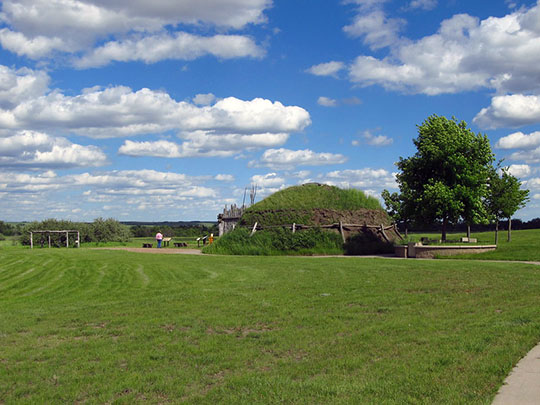
Knife River Indian Villages National Historic Site, near Stanton where the Knife River meets the Missouri, protects the remains of Hidatsa earthlodge villages lived in from about 1525 until 1845, including Awatixa Village, where Sakakawea and her husband Toussaint Charbonneau were living when they joined Lewis and Clark.
Knife River Indian Villages’ sights include the round hollows left by collapsed earthlodges, which could be about 40 feet across and house 10 to 20 people, and a full-size reconstructed earthlodge.
Knife River’s glassy brown flint was quarried for more than 10,000 years and traded so widely that it turns up at sites about 1,000 miles away, but smallpox in 1837 killed about half the Hidatsa and around 90% of the neighbouring Mandan.
7 – Fort Mandan

Fort Mandan, near Washburn on the Missouri River, is a replica of the log fort where Lewis and Clark’s Corps of Discovery spent the winter of 1804–05, the original believed to lie beneath the river after it shifted course.
Fort Mandan is where the expedition hired fur trader Toussaint Charbonneau, whose teenage Shoshone wife Sakakawea gave birth there to their son Jean Baptiste on 11 February 1805, and where Clark recorded temperatures of around 40 below zero.
Fort Mandan’s building was supervised by carpenter Patrick Gass, a sergeant of Irish descent whose 1807 journal became the first published account of the expedition, and in April 1805 the Corps sent Thomas Jefferson a live prairie dog and four magpies, of which the prairie dog and one magpie reached him alive.
8 – Medora
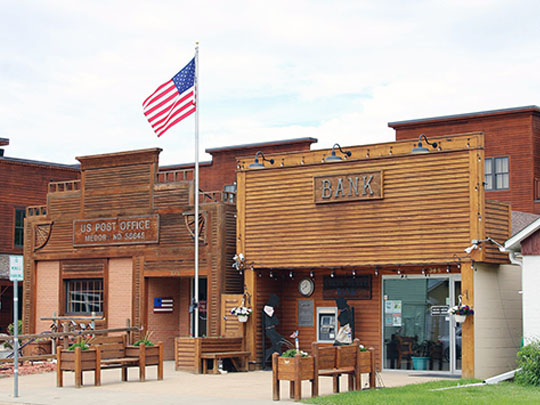
Medora, in the badlands of western North Dakota, was founded in 1883 by French aristocrat the Marquis de Morès, who named it after his American wife, Medora von Hoffman, and built a meatpacking plant to ship chilled beef east by rail.
Medora’s sights include the 26-room Chateau de Morès, the couple’s summer home, the tall chimney of the meatpacking plant, which closed in 1886 and burned in 1907, and the Medora Musical, staged outdoors since 1965.
Medora’s founder was a hothead who in 1885 hinted at a duel with his neighbour Theodore Roosevelt, who replied that he was no enemy, and he was later killed by Tuareg raiders in the Sahara in 1896, while the town owes its revival to Harold Schafer, whose Gold Seal company made Mr. Bubble.
9 – Lake Sakakawea

Lake Sakakawea stretches about 178 miles along the Missouri River behind Garrison Dam, built by the US Army Corps of Engineers between 1947 and 1953 as the fifth-largest earthen dam in the world, and it’s one of the three largest man-made lakes in the US.
Lake Sakakawea covers the bottomlands of the Fort Berthold Reservation, home of the Mandan, Hidatsa and Arikara Nation, where more than 150,000 acres were taken and about 1,700 people moved, as the town of Elbowoods and the tribes’ hospital and headquarters went under the water.
Lake Sakakawea’s most famous image is a 1948 photo of tribal chairman George Gillette weeping as the Interior Secretary signs the land sale, after saying “We will sign this contract with a heavy heart”, and the lake’s spelling follows the Hidatsa words for “bird woman”, not the “Sacagawea” used by the federal government.
10 – Fort Union Trading Post
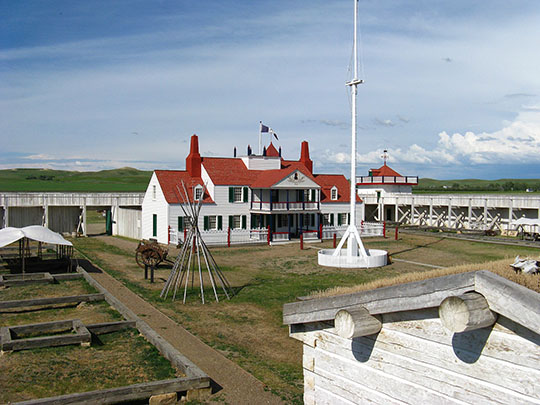
Fort Union Trading Post stands near where the Yellowstone River joins the Missouri, on the North Dakota–Montana border, founded in 1828 for John Jacob Astor’s American Fur Company by Scottish-born Kenneth McKenzie, nicknamed the “King of the Missouri”, and it traded with the Assiniboine and other tribes until the army bought and dismantled it in 1867.
Fort Union Trading Post was rebuilt between 1985 and 1993 on its excavated foundations to look as it did in 1851, and its visitors included the Swiss painter Karl Bodmer and Prince Maximilian of Wied in 1833 and naturalist John James Audubon in 1843.
Fort Union’s McKenzie ran an illegal whiskey still inside the fort until it was shut down, and in 1837 the steamboat St. Peter’s carried smallpox upriver to the fort, setting off an epidemic that devastated the tribes of the upper Missouri.