
Wikimedia Commons / CC-BY-SA-3.0 / GFDL
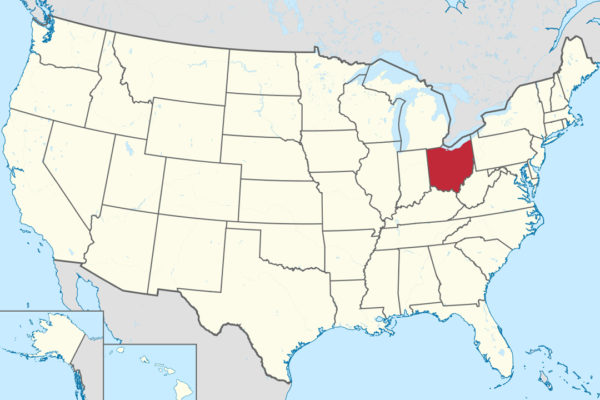
Capital: Columbus
Population: 11.9 million+
Language: English (no official language).
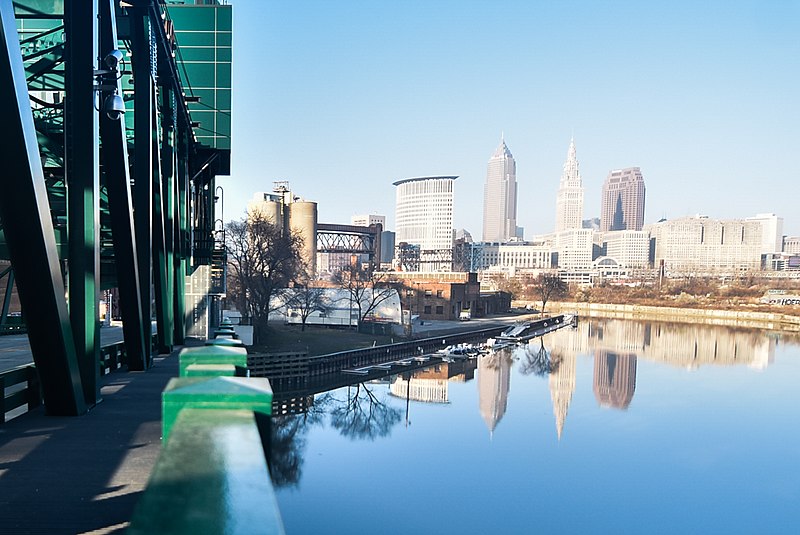
1 – Cleveland (above)
Cleveland grew up where the Cuyahoga River meets Lake Erie, after surveyor Moses Cleaveland of the Connecticut Land Company landed on 22 July 1796, leaving that October and never coming back, and Irish labourers, many from County Mayo, arrived from the 1820s to dig its canal, while John D. Rockefeller organised Standard Oil here in 1870.
Cleveland’s sights include the 708-foot Terminal Tower, the tallest building in the US outside New York until 1964, the West Side Market, whose hall opened in 1912, Playhouse Square, often called the largest performing-arts centre in the US outside New York, and the Irish Cultural Garden, dedicated in 1933 with roses from Killarney.
Cleveland’s notorious 1969 river fire was out in about 30 minutes and never photographed, so the dramatic picture Time ran was of a much bigger 1952 blaze, and the city dropped the first “a” in its name not to fit a newspaper masthead, as legend has it, but because an 1831 paper called it superfluous, while two Glenville High students created Superman here.
2 – Hocking Hills
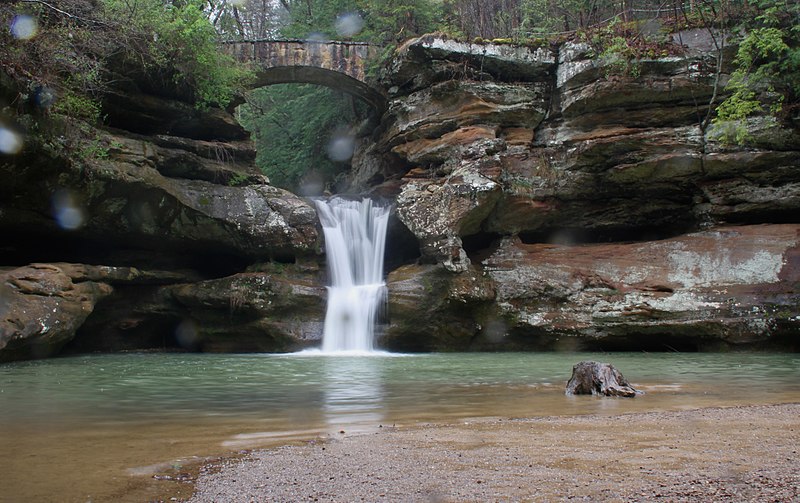
Hocking Hills State Park lies in the hills of south-eastern Ohio, its name coming from the Delaware word “Hockhocking”, meaning bottle, for the narrow gorge on the river, where streams have carved gorges, waterfalls and recess caves into Black Hand sandstone laid down more than 350 million years ago.
Hocking Hills’ sights include Old Man’s Cave with its upper and lower falls, Cedar Falls, Rock House, and Ash Cave, named for the heaps of ash early settlers found on its floor, while its recess caves formed where a softer middle layer of sandstone wore away.
Hocking Hills’ Old Man’s Cave is named after a hermit who lived there, traditionally said to be Richard Rowe, who arrived in the 1790s with his two dogs and is buried beneath the ledge, though the state parks agency says the old man’s identity is unknown.
3 – Cincinnati

Cincinnati was founded on the Ohio River in 1788 as Losantiville, a made-up name meaning “town opposite the mouth of the Licking”, until Governor Arthur St Clair renamed it in 1790 after the Society of the Cincinnati, and it grew so rich packing pork that it was nicknamed “Porkopolis”.
Cincinnati’s sights include John Roebling’s suspension bridge, open to walkers from 1866 and boasting the world’s longest span at the time, the German-built Over-the-Rhine district, named after a canal locals called “the Rhine”, and the 1933 Art Deco Union Terminal, reportedly the model for the Hall of Justice in the Super Friends cartoons.
Cincinnati dug about two miles of subway tunnels in the 1920s but never laid track or ran a train, its first Catholic archbishop was John Baptist Purcell of Mallow, County Cork, and its 1869 Red Stockings were the first known openly professional baseball team.
4 – Columbus
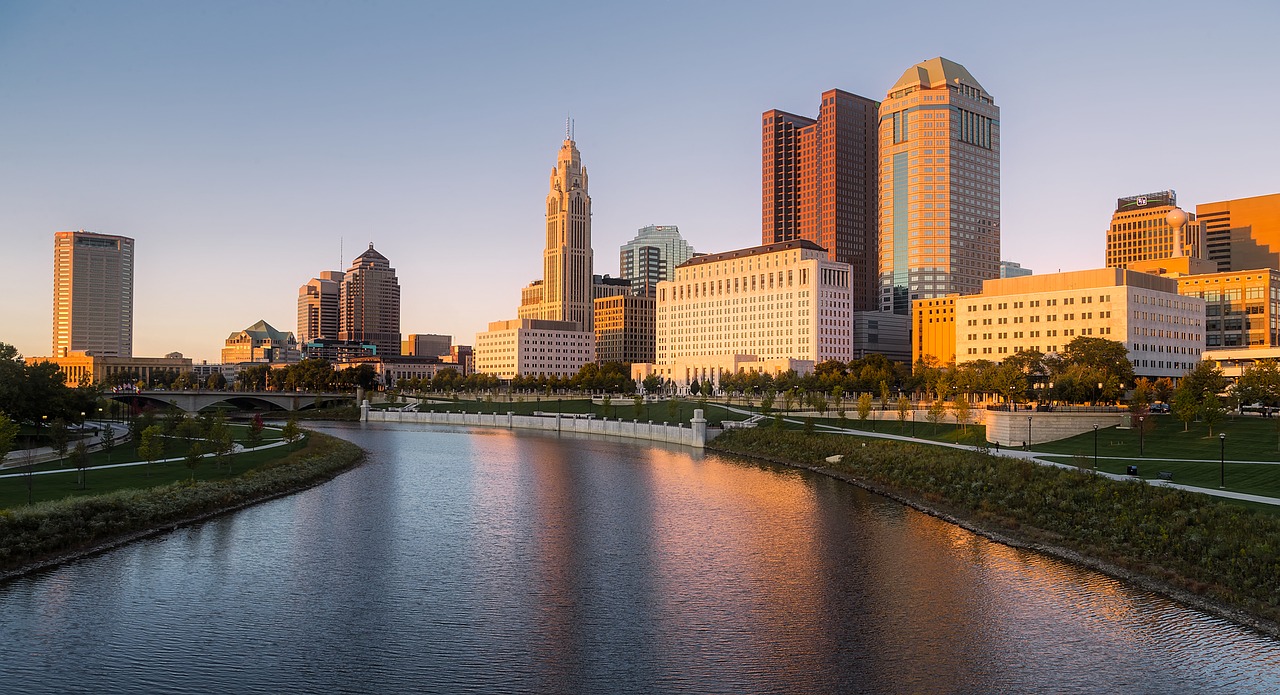
Columbus was planned from scratch as Ohio’s capital on the Scioto River, its site chosen by the legislature in 1812 and named after Christopher Columbus, and it has been the seat of state government since 1816.
Columbus’s sights include the Greek Revival Ohio Statehouse, built between 1839 and 1861 with a cone-shaped cupola instead of a dome, where more than 50,000 people filed past Abraham Lincoln’s coffin in a single day in 1865, the brick streets of German Village and the campus of Ohio State University.
Columbus is where the first Wendy’s opened in 1969, and its Irish once crowded Naghten Street, nicknamed “Irish Broadway”, while the suburb of Dublin was named, by local tradition, by Irish-born surveyor John Shields after his home city, though Dublin’s own historians treat the story as legend.
5 – Serpent Mound
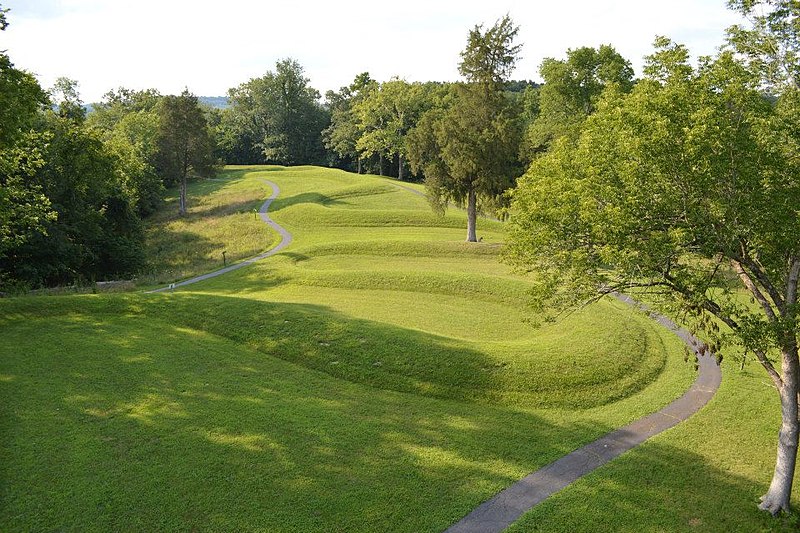
Serpent Mound in Adams County, southern Ohio, is a 1,348-foot earthwork shaped like a snake with a coiled tail and an oval at its head, described as the largest known prehistoric effigy mound in the world, though archaeologists still disagree whether it was built around 300 BC or around AD 1100.
Serpent Mound lies inside the Serpent Mound crater, a geological scar several miles across formed roughly 300 million years ago, and visitors can walk all the way around the snake’s coils.
Serpent Mound was saved in 1886 when Harvard archaeologist Frederic Ward Putnam bought it with money raised by Boston women, probably the first archaeological preservation project in the US, while the popular claim that its head lines up with the summer solstice sunset remains unproven.
6 – Rock and Roll Hall of Fame
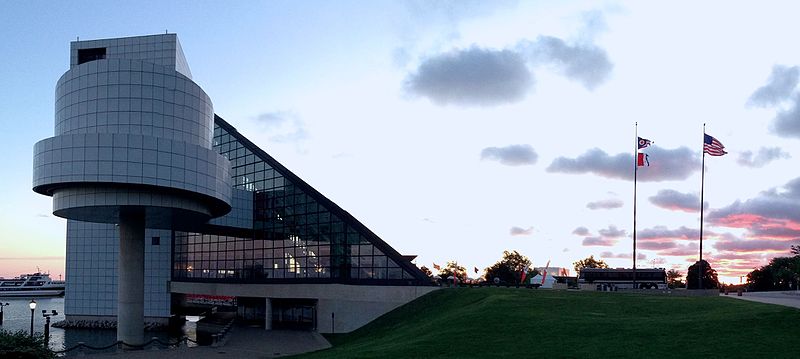
The Rock and Roll Hall of Fame stands on Cleveland’s Lake Erie waterfront, after the city won the museum in 1986 backed by more than 100,000 votes in a USA Today phone poll and over 600,000 petition signatures, and its glass pyramid by I.M. Pei opened on 1 September 1995.
The Rock and Roll Hall of Fame’s galleries tell the story of rock through the artists inducted since 1986, among them U2, inducted by Bruce Springsteen in 2005.
The Rock and Roll Hall of Fame is in Cleveland because local DJ Alan Freed popularised the term “rock and roll” on WJW and staged the Moondog Coronation Ball on 21 March 1952, generally considered the first rock concert and shut down soon after it started because of overcrowding, though Freed didn’t invent the phrase, which turns up in songs going back to 1922.
7 – Stan Hywet Hall and Gardens
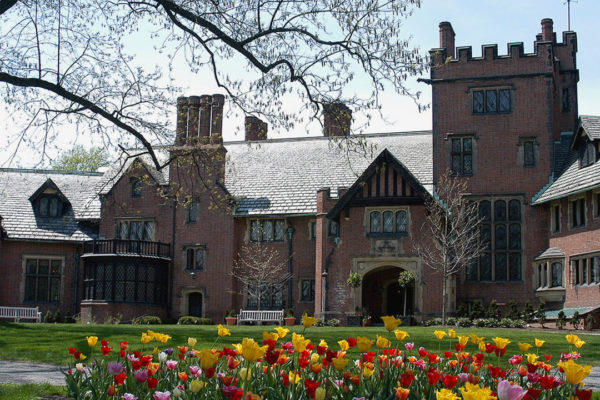
Stan Hywet Hall and Gardens, in Akron, is the Tudor Revival manor built in 1912–15 for Goodyear co-founder Frank A. Seiberling and his wife Gertrude, its name loosely Old English for “stone quarry”, after an old sandstone quarry on the site.
Stan Hywet Hall’s 65 rooms cover about 64,500 square feet, set in grounds designed by landscape architect Warren Manning, with an English Garden redesigned by Ellen Biddle Shipman in 1929.
Stan Hywet’s Gate Lodge is where Henrietta Seiberling, Frank’s daughter-in-law, brought together Bill Wilson and Dr Bob Smith on Mother’s Day 1935, a meeting regarded as the birth of Alcoholics Anonymous.
8 – Ohio State Reformatory
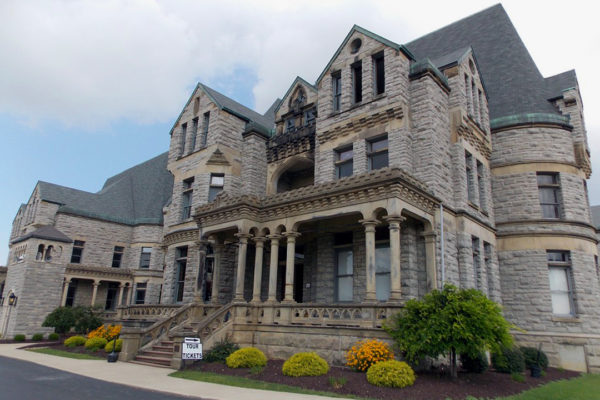
The Ohio State Reformatory in Mansfield was built between 1886 and 1910 and opened in 1896, designed by Levi T. Scofield in a mix of Victorian Gothic, Romanesque and Queen Anne styles, and it closed in 1990 after an inmates’ lawsuit over overcrowding.
The Ohio State Reformatory’s castle-like front hides the East Cell Block, six tiers of steel cells billed as the world’s largest free-standing steel cell block.
The Ohio State Reformatory played Maine’s fictional Shawshank prison in The Shawshank Redemption (1994), and it also appeared in Air Force One and in Tango & Cash, which was filmed while it still held prisoners.
9 – Hopewell Earthworks
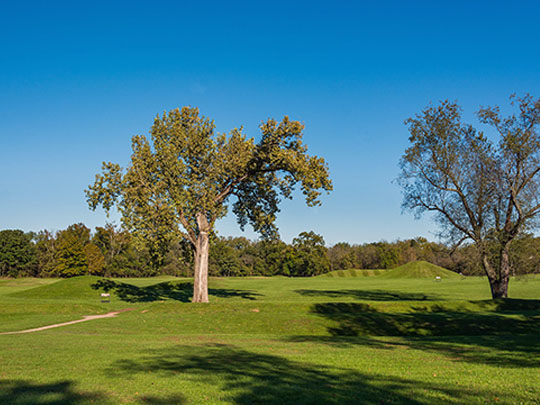
The Hopewell Ceremonial Earthworks are eight sites in southern and central Ohio, among them the Newark Earthworks, Fort Ancient and the mound groups around Chillicothe, raised by Native Americans about 2,000 years ago and inscribed in 2023 as Ohio’s first UNESCO World Heritage Site.
The Hopewell Earthworks’ highlights include Newark’s Great Circle, about 1,200 feet across, and its Octagon, aligned with the moon’s 18.6-year cycle, and Fort Ancient’s 3.5 miles of walls, while their mounds held obsidian from Yellowstone, copper from Lake Superior and mica cut into the shape of a hand.
The Hopewell people’s own name is unknown, since “Hopewell” comes from Mordecai Hopewell, owner of a farm dug for artefacts in 1891–92, and from 1910 a country club ran a golf course over Newark’s Octagon, until a 2024 settlement opened it to everyone from 2025.
10 – Dayton
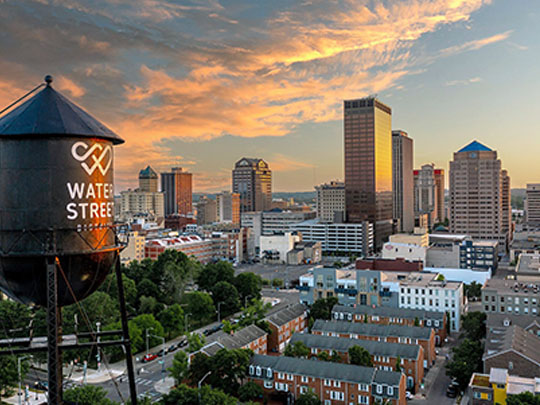
Dayton was the home town of Wilbur and Orville Wright, who perfected their flying machine at Huffman Prairie, a cow pasture outside the city, where on 5 October 1905 Wilbur flew 24 miles in about 39 minutes, longer than all their earlier flights put together.
Dayton’s sights include the 1905 Wright Flyer III at Carillon Historical Park, the only airplane designated a National Historic Landmark, the Wrights’ Williams Street cycle shop, and the National Museum of the US Air Force, which bills itself as the world’s largest and oldest military aviation museum and holds Bockscar and John F. Kennedy’s Air Force One.
Dayton gave the world the cash register, patented by saloon-keeper James Ritty in 1879, and the pull-tab can, the 1995 Bosnian peace deal was hammered out at its Wright-Patterson Air Force Base, and Dayton-born actor Martin Sheen is the son of a mother from Borrisokane, County Tipperary.
11 – Put-in-Bay
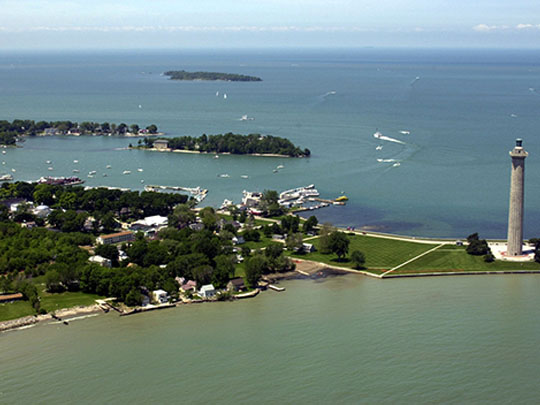
Put-in-Bay, a village on South Bass Island in Lake Erie, was the base from which Oliver Hazard Perry sailed to win the Battle of Lake Erie on 10 September 1813, capturing the entire British squadron after his flagship Lawrence was wrecked and he was rowed to the Niagara to fight on.
Put-in-Bay is dominated by Perry’s Victory and International Peace Memorial, a 352-foot Doric column built in 1912–15 to celebrate lasting peace between the US, Britain and Canada, with three American and three British officers buried beneath it, while Heineman’s Winery has Crystal Cave, billed as the world’s largest geode.
Put-in-Bay’s battle flag read “Don’t Give Up the Ship”, the dying words of a captain whose ship was then captured, and Perry, who had abandoned his own wrecked flagship, reported his win with “We have met the enemy and they are ours”, while nobody is sure if the island’s name refers to ships putting in or a “pudding bag”.
12 – Canton
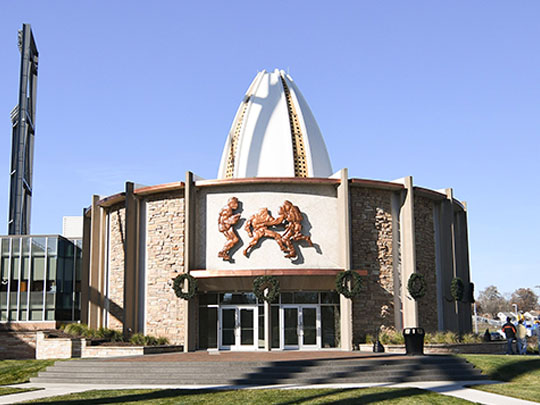
Canton is where the NFL was born, founded as the American Professional Football Association on 17 September 1920 in Ralph Hay’s car showroom, where some team owners sat on car running boards for want of chairs, and Jim Thorpe was elected its first president.
Canton’s sights include the Pro Football Hall of Fame, opened in 1963 after local people pledged hundreds of thousands of dollars to win it, and the domed McKinley National Memorial of 1907, where President William McKinley lies beside his wife Ida, with their two young daughters in the wall behind them.
Canton’s William McKinley, whose immigrant ancestor left Dervock, County Antrim, in the 1740s, ran his 1896 “front porch” campaign from his Canton home, greeting some 750,000 visitors, though the house was later torn down and its timber turned into park benches and gavels.
13 – Cuyahoga Valley National Park
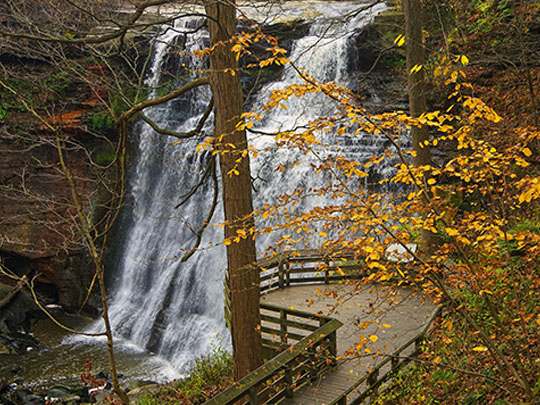
Cuyahoga Valley National Park follows the Cuyahoga River between Cleveland and Akron, protected as a national recreation area in 1974 and made Ohio’s only national park in 2000, along the route of the Ohio & Erie Canal, whose commercial days ended with the Great Flood of 1913.
Cuyahoga Valley National Park’s sights include 20 miles of the canal Towpath Trail, where mules once hauled canal boats, Brandywine Falls, about 60 feet high, the Everett Covered Bridge, and a scenic railroad that carries bikes so riders can cycle back.
Cuyahoga Valley National Park’s Beaver Marsh was a scrapyard for old cars until beavers, trapped out of Ohio for over a century, returned and volunteers cleared the wrecks in 1984, and the story that the Everett bridge was built after a farmer drowned at the ford is legend, since nobody knows when it was built.