
Wikimedia Commons / CC-BY-SA-3.0 / GFDL
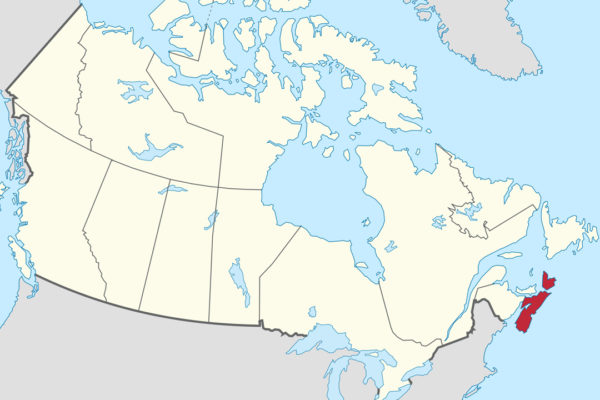
Capital: Halifax
Population: 1.1 million+
Language: English (Nova Scotia is the only region outside Europe with a Gaelic-speaking community).
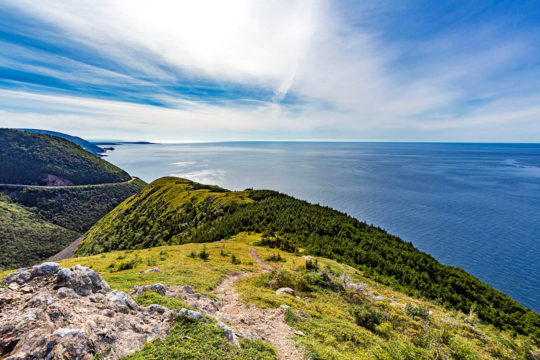
1 – Cape Breton (above)
Joined to mainland Nova Scotia since 1955 by the Canso Causeway, Cape Breton Island was settled by Highland Scots in such numbers that Gaelic was once spoken here by tens of thousands, and it’s where Alexander Graham Bell spent his summers from 1885 until his death at Baddeck in 1922.
Cape Breton’s Alexander Graham Bell National Historic Site at Baddeck covers his flying machines and hydrofoils, the Miners’ Museum at Glace Bay takes you underground with retired miners as guides, the Gaelic College at St Ann’s has taught the language since 1938, and in October the Celtic Colours festival fills halls across the island.
When Bell was buried on his Cape Breton estate on 4 August 1922, telephone service across the US and Canada stopped for a minute, and at Glace Bay in December 1902 Marconi sent the first west-to-east transatlantic wireless message, his Cape Breton station opening a public service to Clifden in County Galway in 1907.
2 – Yarmouth
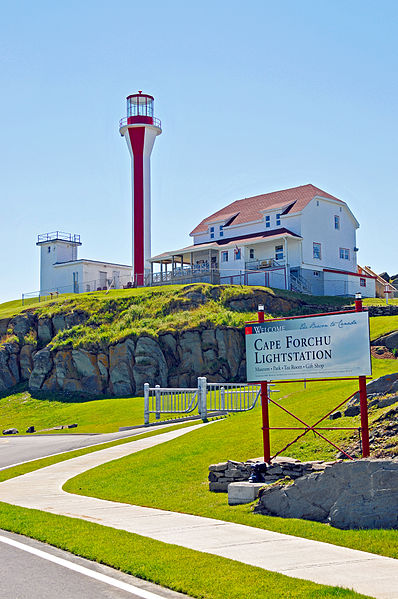
At the south-western tip of Nova Scotia, on the cape Champlain named “Cap Fourchu” — the forked cape — in 1604, Yarmouth grew into a shipowning town whose fleet made it Canada’s second-largest port of registry by 1879, behind only Saint John.
Cape Forchu Lighthouse, first lit in 1840 and rebuilt as a concrete “apple core” tower in 1962, guards the approach to Yarmouth, the Yarmouth County Museum holds one of Canada’s largest collections of ship portraits, and the Firefighters’ Museum of Nova Scotia keeps an 1863 steam pumper.
The museum also has the Yarmouth Stone, found in 1812 and long claimed to carry a Norse runic inscription — runologists say the marks aren’t runes at all — and just down the coast, Pubnico, founded in 1653, is considered the oldest Acadian village still home to its founder’s descendants.
3 – Lunenburg
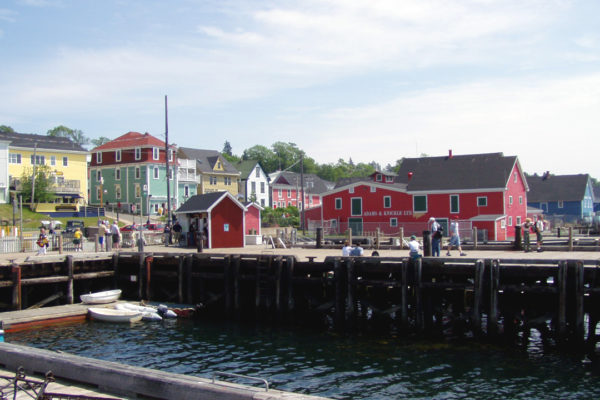
On a harbour on Nova Scotia’s South Shore, Lunenburg was laid out in 1753 on a grid drawn up in London for more than 1,400 German, Swiss and French Protestant settlers, and UNESCO calls it the best surviving example of a planned British colonial settlement in North America.
Walk Lunenburg’s steep grid of wooden houses looking for the “Lunenburg bump”, a dormer pushed out over the eaves above the front door, then head down to the Fisheries Museum of the Atlantic on the waterfront and the berth of Bluenose II.
The schooner Bluenose was launched at Lunenburg in 1921 and never lost the International Fishermen’s Trophy, though she was beaten in another race in 1930 — and the schooner on Canada’s dime since 1937 was only officially identified as Bluenose by the Royal Canadian Mint in 2002.
4 – Peggys Cove Harbour
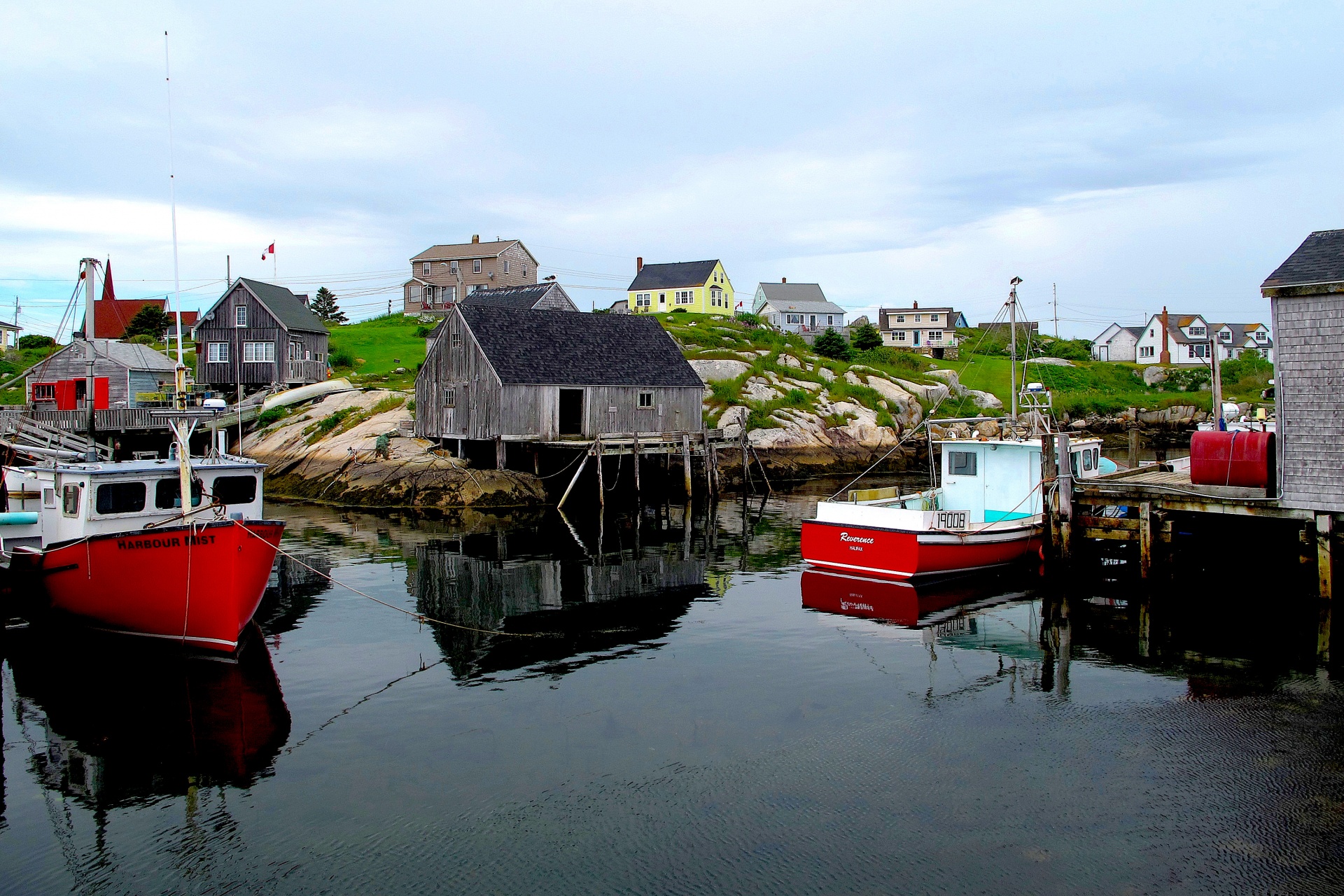
On the rocky mouth of St Margarets Bay, 43 km from Halifax, Peggys Cove is a fishing village of a few dozen people on bare granite scraped clean by the glaciers, and since 1962 a preservation area has limited what can be built around it.
Peggys Cove’s lighthouse of 1915, which housed a summer post office from 1975 to 2009, rises behind an accessible viewing deck opened in 2021 — stay off the dark, wet rocks below it — and nearby the artist William deGarthe carved 32 fishermen and their families into a granite outcrop, a monument about 80% finished when he died in 1983.
The story of a shipwrecked “Peggy” is folklore — the name is generally taken as a nickname for Margaret, from St Margarets Bay — and on 2 September 1998 Swissair Flight 111 crashed about 8 km off Peggys Cove, killing all 229 aboard, with local fishermen the first to reach the site.
5 – Wilkie Sugarloaf Trail
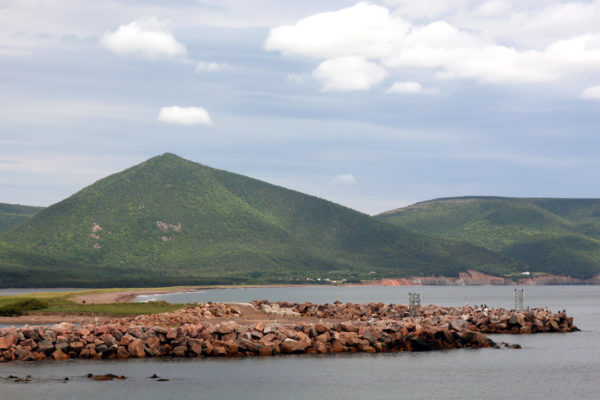
Rising 412 metres straight up from the shore of Aspy Bay near the northern tip of Cape Breton Island (entry 1), Wilkie Sugar Loaf is a lone peak beside the Aspy Fault, named, local history records, for the Wilkie family who settled below it in 1820 and for its sugarloaf shape.
The Wilkie Sugar Loaf trail starts about a kilometre north of Cabot’s Landing Provincial Park and climbs some 350 metres in roughly 3 km there and back — steep, steady, and marked by volunteers across private land — to views over Aspy Bay, Dingwall and Bay St Lawrence.
Wilkie Sugar Loaf sits outside Cape Breton Highlands National Park, so there’s no fee and no park infrastructure, and the beach below at Cabot’s Landing is one of several places that claim John Cabot’s 1497 landfall, which nobody can prove.
6 – Halifax
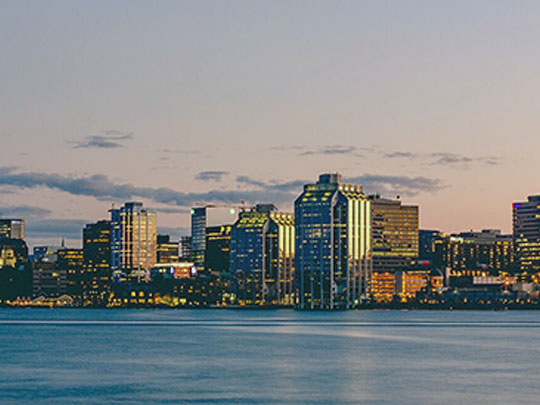
On one of the world’s largest and deepest ice-free natural harbours, Halifax was founded by the British in 1749 as a counterweight to French Louisbourg, and on 6 December 1917 a collision in the harbour Narrows between the French munitions ship Mont-Blanc and the Norwegian Imo set off the largest man-made explosion before the atomic bomb, killing about 2,000 people.
Climb to the Halifax Citadel, where the noon gun has fired since 1857, walk the Victorian Public Gardens, and visit Pier 21, where nearly a million immigrants and refugees landed between 1928 and 1971, and the Maritime Museum of the Atlantic on the waterfront.
Halifax buried 150 victims of the Titanic, more than anywhere else, and the grave at Fairview Lawn that film fans seek out, marked “J. Dawson”, belongs to Joseph Dawson, a coal trimmer from Dublin — while every Christmas since 1971 Nova Scotia has sent Boston a tree in thanks for its help after the explosion.
7 – Grand-Pré
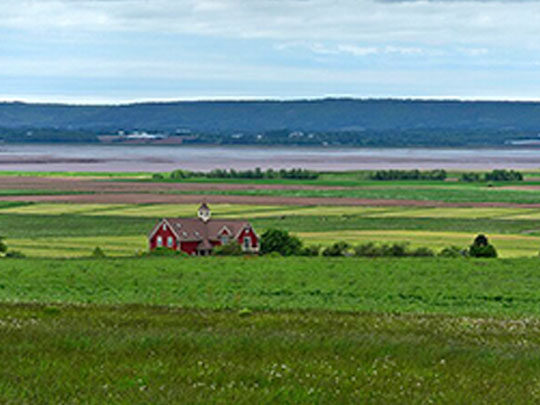
On the Minas Basin at the edge of the Annapolis Valley, Grand-Pré was the heart of Acadian farming country, and on 5 September 1755 Lieutenant-Colonel John Winslow read the deportation order to 418 men and boys held in its parish church, the start of an expulsion that took more than 2,000 people from the Minas area that autumn and about 6,000 Acadians in 1755 alone.
Grand-Pré’s Memorial Church, begun in 1922 on the presumed site of the old parish church, stands beside a bronze Evangeline unveiled in 1920, above dykelands the Acadians won from the Fundy tides with sluice gates called aboiteaux, still farmed today and the reason UNESCO listed it in 2012.
Evangeline herself is fiction, invented for Longfellow’s 1847 poem, yet the poem turned Grand-Pré into a place of pilgrimage for Acadians, and a Royal Proclamation in 2003 acknowledged the suffering of the deportation and created a day of commemoration every 28 July, though it stops short of an apology.
8 – Joggins Fossil Cliffs
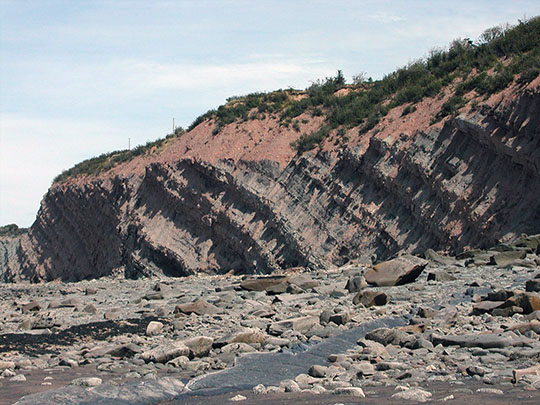
Along some 15 km of cliffs on Chignecto Bay at the head of the Bay of Fundy, the Joggins Fossil Cliffs preserve a whole Coal Age world from around 318 to 303 million years ago, with 148 species identified, and UNESCO listed them in 2008.
Walk the beach below the Joggins Fossil Cliffs at low tide from the Fossil Centre, opened in 2008, past fossil trees still standing upright in the rock face, with every Fundy tide cutting back the cliffs and exposing fresh fossils.
In 1852 the geologists Charles Lyell and William Dawson found the bones of small animals inside a hollow fossil stump at Joggins, later named Hylonomus lyelli — long hailed as the earliest known reptile, a title a 2025 study now disputes — and Darwin drew on the cliffs in On the Origin of Species.
9 – Kejimkujik
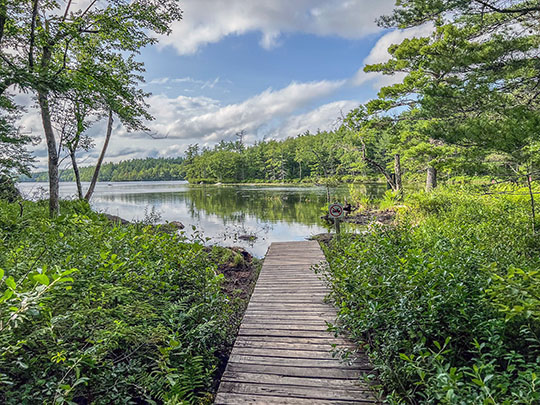
In the forested interior of south-western Nova Scotia, Kejimkujik became a national park in 1969 and, in 1994, the first national park also designated a National Historic Site, for the Mi’kmaw cultural landscape of lakes, rivers and travel routes it protects.
Paddle Kejimkujik’s lakes and rivers, camp at its backcountry sites, and join a guided walk to the lakeshore rock carvings — the only way to see them — then stay up after dark in what has been a Dark-Sky Preserve since 2010.
Kejimkujik’s more than 500 petroglyphs, carved mostly in the 1700s and 1800s, show Mi’kmaw life alongside European ships, soldiers and crosses, with the year 1877 cut sixteen times, and the park’s name is usually translated as “little fairies”, though other readings exist.
10 – Africville and Birchtown
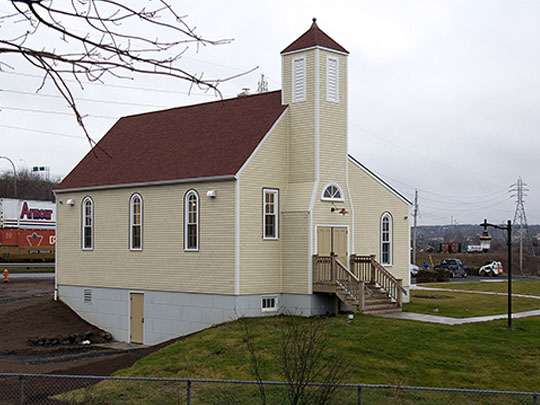

Two places tell the story of Black Nova Scotia: Birchtown, near Shelburne, settled in 1783 by Black Loyalists who had been promised freedom for joining the British side and by 1784 the largest free Black settlement in British North America, and Africville, on Halifax’s Bedford Basin (entry 6), founded in the 1840s mostly by Black refugees from the War of 1812.
At Birchtown the Black Loyalist Heritage Centre, opened in 2015, has a glass floor over an excavated pit house of the kind settlers lived in for years, and in Halifax the Africville Museum fills a rebuilt Seaview church in Africville Park, a National Historic Site since 1997.
In January 1792, 1,196 Black Nova Scotians, many from Birchtown, sailed from Halifax in 15 ships to found Freetown in Sierra Leone, and Africville, never given piped water or sewers while the city put a prison, an infectious-disease hospital and a dump beside it, was demolished between 1964 and 1970 — Halifax apologised in 2010.