
Wikimedia Commons / CC-BY-SA-3.0 / GFDL
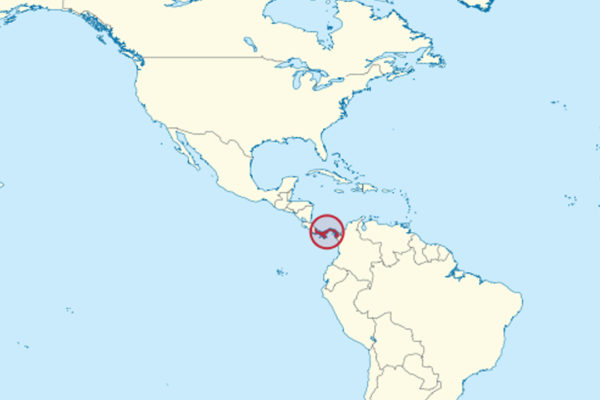
Capital: Panama City
Population: 4.5 million+
Language: Spanish (& seven indigenous languages — Ngäbere, Buglere, Emberá, Wounaan, Guna, Naso and Bribri)
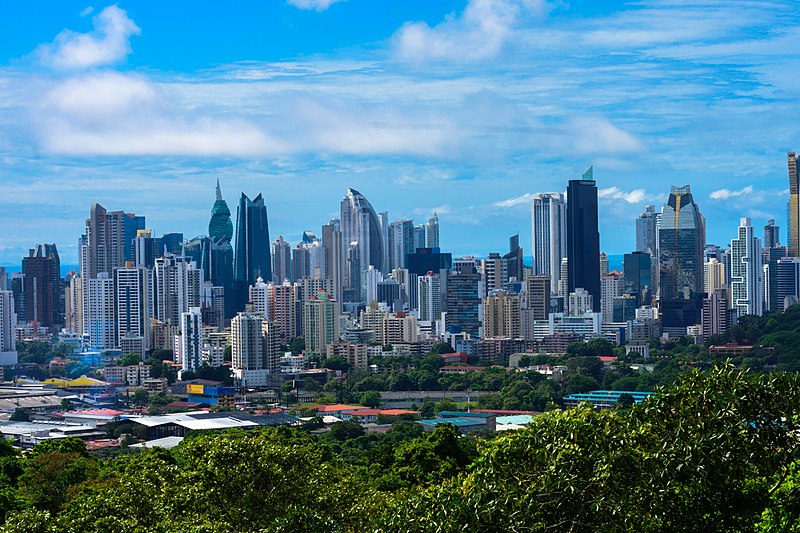
1 – Panama City (also above)
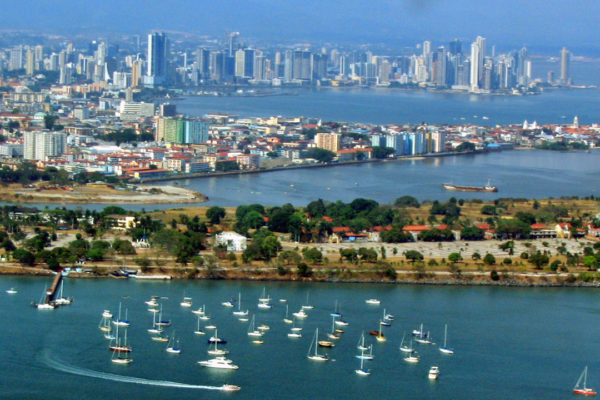
Founded on 15 August 1519 as the first permanent European settlement on the Pacific coast of the Americas, and the Pacific end of the mule road that carried Peruvian silver over the isthmus; the original city was burned by Henry Morgan in 1671 and, rather than rebuild, the survivors moved a few kilometres west in 1673 onto a walled peninsula that is now Casco Viejo.
Both halves are UNESCO-listed and both repay a visit — the ruins of Panamá Viejo, cathedral tower still standing, now marooned among the eastern suburbs, and Casco Viejo’s restored plazas and balconies sitting under the glass towers of the modern skyline, with Frank Gehry’s Biomuseo out on the causeway.
It is usually described as the only capital city in the world with a genuine tropical rainforest inside its boundaries — the Parque Natural Metropolitano, where you can be looking at sloths and toucans about twenty minutes from the banking district.
2 – Panama Canal
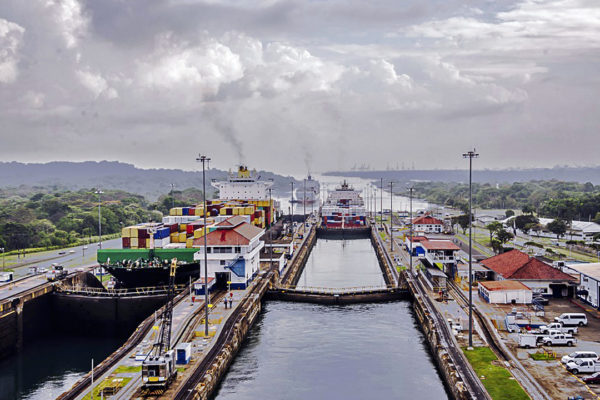
Eighty kilometres of locks, cuts and artificial lake joining the Atlantic to the Pacific — and because of the way the isthmus bends, a ship crossing from the Atlantic side actually sails south-east to reach the Pacific. The French began it in 1881 and gave up, the Americans finished it between 1904 and 1914. The combined death toll is usually put near 28,000, mostly yellow fever and malaria.
Ships are lifted about 26 m into Gatún Lake, the largest artificial lake in the world when it was made, carried through the Culebra Cut and let down the other side, all of which you can watch from the Miraflores visitor centre; the canal passed to Panama on the last day of 1999, and a second, larger set of locks opened in 2016.
The lowest toll ever paid was 36 cents, charged by body weight in 1928 to the travel writer Richard Halliburton, who swam the length of it over ten days, was entered in the records as the SS Halliburton, and had a rowing boat follow him with a rifleman aboard in case of crocodiles.
3 – Colon
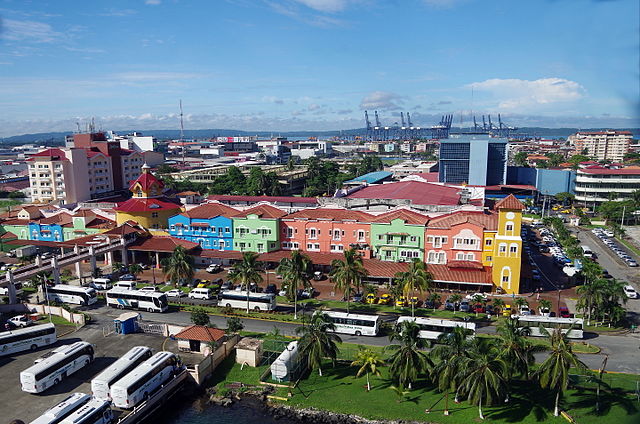
At the Caribbean mouth of the canal, Colón was founded in 1850 on a swampy island under the name Aspinwall, as the Atlantic terminus of the Panama Railroad — a 47-mile line built to carry California gold-rush traffic across the isthmus, and when it opened in 1855, the first railway anywhere to join the Atlantic to the Pacific.
The old French-era quarter is grand and largely derelict, under slow restoration; most visitors come for the cruise terminal, the Agua Clara locks a short way out of town, or the Panama Canal Railway, which still runs the original route alongside the waterway in about an hour.
The city holds the Colón Free Zone, the largest duty-free port in the western hemisphere and the second largest on earth after Hong Kong, moving billions of dollars of goods a year — and it sits directly against one of the poorest urban populations in the country, which is probably the fact that tells you most about Colón.
4 – Portobelo


Columbus named the bay Puerto Bello in 1502, and in 1597 the Spanish built a town on it that became one of only two ports through which the silver of Peru left for Spain — hauled over the isthmus by mule train and sold at trade fairs that turned this village into one of the richest places on earth for a few weeks a year.
The ruins of the forts still line the harbour and are UNESCO-listed together with San Lorenzo up the coast; the Iglesia de San Felipe holds the Black Christ, a dark wooden figure that draws an enormous pilgrimage each October; and Francis Drake, who died of dysentery offshore in 1596, is somewhere out in the bay in a lead coffin that divers have never managed to find.
Admiral Edward Vernon took the town with six ships in 1739 and the news went off like a firework at home — which is why London has a Portobello Road, Edinburgh has Portobello and Dublin has Portobello, all named after a Panamanian village that most people using those names have never heard of.
5 – Guna Yala
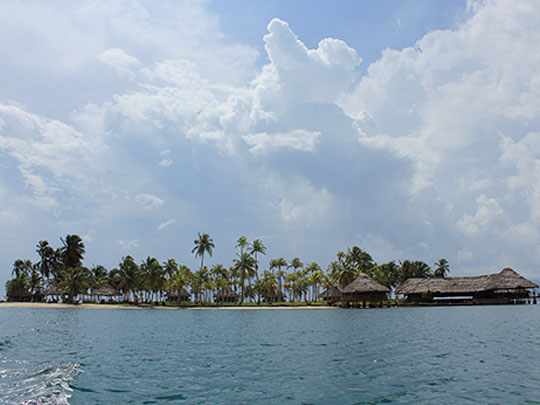
A comarca running along the Caribbean coast and out across some 365 islands, self-governed by the Guna ever since they rose against the Panamanian state in 1925 and won a settlement that still holds — one of the earliest indigenous autonomies anywhere in the Americas, formalised as a territory in 1938.
Only about fifty of the islands are inhabited, most of them sand, palms and thatch; visitors come on Guna terms, with community rules about where you can go and what you may photograph, and what everybody takes home is a mola, the layered appliqué panel that Guna women have been sewing for generations.
In June 2024 around a thousand people left the island of Gardi Sugdub for a purpose-built settlement on the mainland, pushed off by overcrowding and a rising sea — Panama’s first planned climate relocation, and the first of some sixty coastal communities the government expects will eventually have to move.