
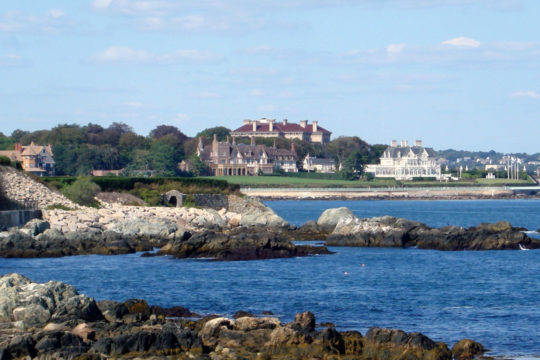
Wikimedia Commons / CC-BY-SA-3.0 / GFDL
Capital: Providence
Population: 1.1 million+
Language: English (no official state language).
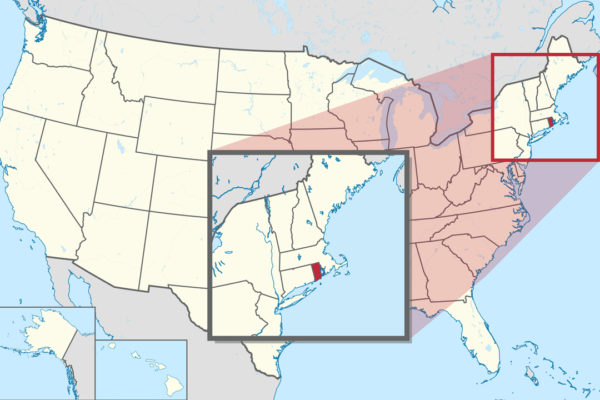
1 – Newport (also above)
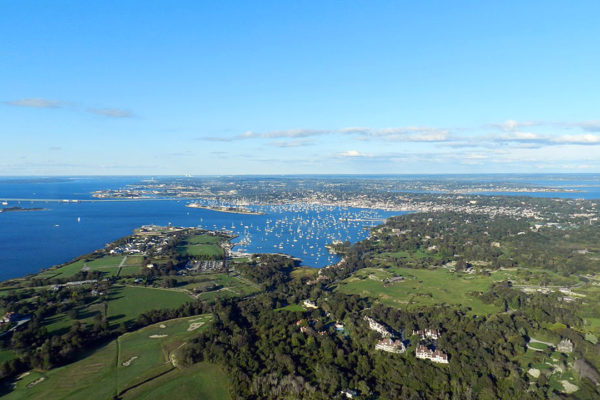
Newport, on Aquidneck Island at the mouth of Narragansett Bay, was founded in 1639 by settlers seeking religious freedom and grew into colonial North America’s leading slave-trading port, sending more than 900 voyages to Africa between 1725 and 1808.
Newport’s must-sees include Touro Synagogue of 1763, the oldest synagogue building still standing in the US, the harbour that hosted the America’s Cup from 1930 to 1983, and St Mary’s Church, where JFK, great-grandson of a cooper from Dunganstown, Co. Wexford, married Jacqueline Bouvier in 1953.
George Washington’s famous promise to Newport’s Jewish congregation that the US “gives to bigotry no sanction” was borrowed almost word for word from a letter by its warden, Moses Seixas, and Bob Dylan’s electric set at the 1965 Newport Folk Festival drew a mix of boos and cheers, for moving away from political songwriting and for performing with a rock band.
2 – Providence
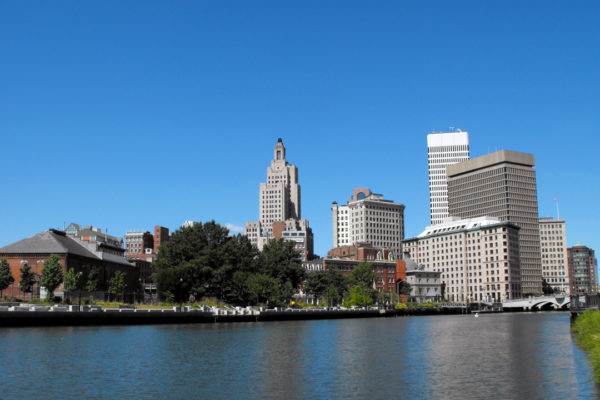
Providence was founded in 1636 by Roger Williams after Massachusetts Bay banished him, named for “God’s merciful Providence” and run as a refuge for religious dissenters.
On Providence’s College Hill, walk Benefit Street’s “Mile of History” past Brown University, founded in 1764 as the seventh college in colonial America, the First Baptist Church in America, and the Providence Athenaeum, where Sarah Helen Whitman broke off her engagement to Edgar Allan Poe in 1848.
Providence’s Fox Point gave Broadway George M. Cohan, son of an Irish-American family, who built his act on being born on the Fourth of July, though his baptismal record says the 3rd.
3 – Rosecliff

Rosecliff was built from 1898 to 1902 on Newport’s Bellevue Avenue for Theresa Fair Oelrichs, heiress to the Comstock silver fortune of her father, James Graham Fair, who was born in Clogher, Co. Tyrone, and was one of the Irish “Bonanza Kings”.
Rosecliff was modelled by Stanford White on the Grand Trianon at Versailles, with a heart-shaped staircase and a ballroom reputed to be the largest in Newport.
Rosecliff is a film star in its own right, playing Gatsby’s mansion in The Great Gatsby (1974) and appearing in True Lies and 27 Dresses.
4 – Block Island

Block Island lies about 9 miles off Rhode Island’s south coast and takes its name from Dutch explorer Adriaen Block, who charted it in 1614, though Verrazzano had already compared it to the island of Rhodes in 1524.
Block Island’s Southeast Light, first lit in 1875, was moved about 300 ft back from the eroding Mohegan Bluffs in 1993, the bluffs are named for a legend of islanders driving a Mohegan war party over the edge, and in 1991 The Nature Conservancy named the island one of 12 “Last Great Places” in the Western Hemisphere.
Block Island’s ghostly “Palatine Light” comes from a 1738 shipwreck that John Greenleaf Whittier’s poem blamed on islanders luring and burning the ship, but crew depositions show the captain and crew abandoned their passengers, and the islanders took them in.
5 – Fort Adams

Fort Adams guards the mouth of Newport Harbor, where the first fort of 1799 was named for President John Adams, and the stone fort built from 1824 to 1857 to a design by former Napoleonic engineer Simon Bernard is one of the largest coastal forts in the US.
Fort Adams State Park has hosted the Newport Jazz Festival since 1981 and the Folk Festival since 1985, and its commandant’s house served as President Eisenhower’s summer White House in 1958 and 1960.
Fort Adams was built largely by Irish labourers, and so many settled nearby that a priest was sent in 1828 to found St Mary’s, the oldest Catholic parish in Rhode Island.
6 – Waterplace Park

Waterplace Park in downtown Providence was dedicated in 1994 as the centrepiece of a project that moved the Woonasquatucket and Moshassuck rivers into new channels, and its round basin echoes the Great Salt Cove that railroads filled in during the 1890s.
Waterplace Park has an amphitheatre, gondolas and Venice-style footbridges, and its riverwalk leads to the Rhode Island Irish Famine Memorial, a three-figure bronze dedicated in 2007.
Before Waterplace Park, the river downtown ran beneath the Crawford Street Bridge, really a deck of asphalt and rail over the water, which Guinness listed as the world’s widest bridge, and the riverside’s best-known show, Barnaby Evans’s WaterFire, began on New Year’s Eve 1994 with 11 braziers and grew to more than 80.
7 – The Breakers
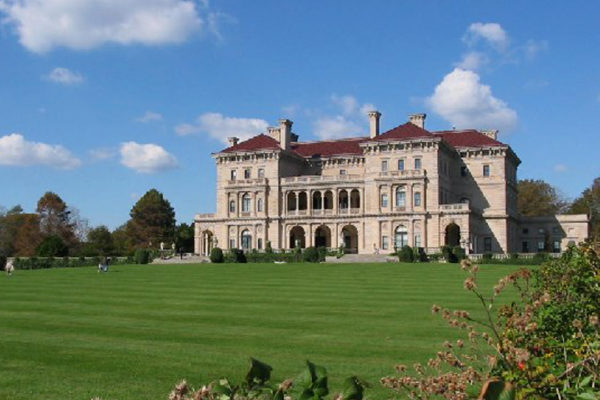
The Breakers was built from 1893 to 1895 on Newport’s Ochre Point for Cornelius Vanderbilt II, designed by Richard Morris Hunt to replace an earlier wooden Breakers that burned in 1892, and it became a National Historic Landmark in 1994.
The Breakers is a 70-room Italian Renaissance palazzo inspired by the palaces of Genoa and Turin, and its real Music Room and Billiard Room played the Russells’ ballroom in HBO’s The Gilded Age.
After the first house burned, Vanderbilt took no chances with The Breakers: it has steel trusses and no wooden structural parts, and the boiler sits under the front lawn, linked to the house by a 360-ft tunnel.
8 – Rhode Island State House
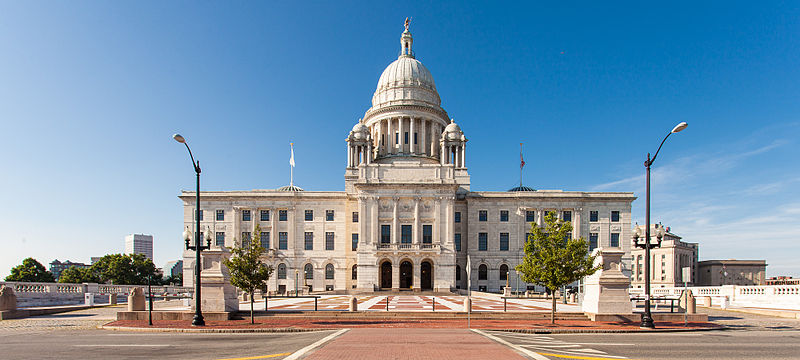
The Rhode Island State House, designed by McKim, Mead & White and built of white Georgia marble from 1895 to 1904, keeps the original 1663 Royal Charter from Charles II on permanent display.
The Rhode Island State House’s dome is said to be the fourth-largest self-supported marble dome in the world, the State Room holds Gilbert Stuart’s full-length George Washington of 1802, and on top stands the gilded Independent Man, originally titled “Hope”.
The Independent Man was long said to weigh about 500 lb until state police weighed him at 1,400 lb in 2024, and the Rhode Island State House played the US Capitol in Steven Spielberg’s Amistad.
9 – Slater Mill, Pawtucket
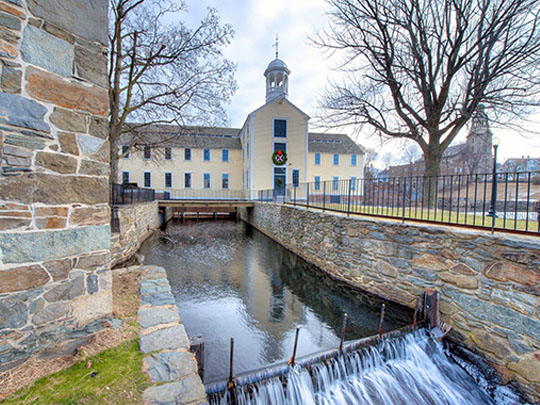
Slater Mill stands at Pawtucket Falls on the Blackstone River, where Samuel Slater, an English mill hand who had memorised Richard Arkwright’s machinery despite Britain’s export ban, built what’s often credited as America’s first successful water-powered cotton-spinning mill in 1793, backed by Moses Brown’s family.
Slater Mill is part of Blackstone River Valley National Historical Park, alongside the Wilkinson Mill of 1810, built to make machine tools, and the 1758 Sylvanus Brown House.
Slater, who reputedly slipped out of England disguised as a farm labourer, was “Slater the Traitor” back home but hailed by Andrew Jackson as the father of American manufactures, and his first workers were children aged 7 to 12, while Pawtucket’s women weavers staged what’s billed as America’s first factory strike in 1824.
10 – Cliff Walk
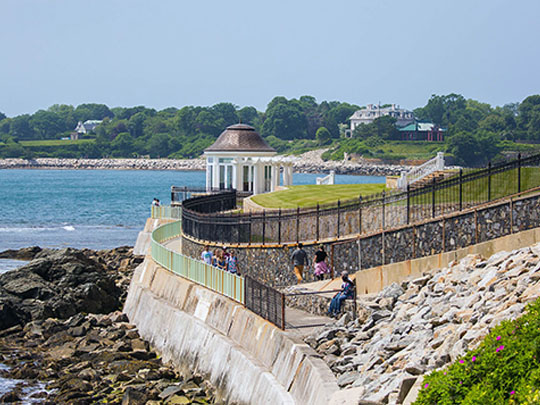

Cliff Walk runs about 3.5 miles along Newport’s eastern shore from Easton’s Beach to Bailey’s Beach, a public path protected by the shore rights in Rhode Island’s 1663 royal charter, and in 1975 it became New England’s first National Recreation Trail.
Cliff Walk passes beneath the lawns of the Gilded Age mansions, Alva Belmont’s Chinese Tea House at Marble House, where she hosted women’s suffrage rallies, and Doris Duke’s Rough Point, where her pet camels were brought indoors during Hurricane Bob in 1991.
Cliff Walk’s Forty Steps, repeatedly rebuilt after storms, became the place where the mansions’ Irish servants gathered on their nights off to dance jigs and sing, and the public right of way outlasted every fence and hedge the owners put up.
11 – Watch Hill
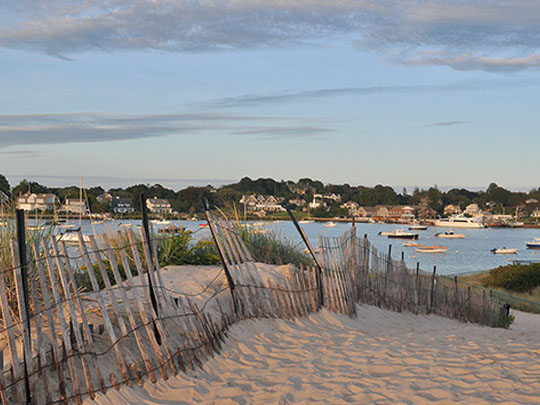
Watch Hill, a village in Westerly at Rhode Island’s southwestern tip, takes its name, by local tradition, from a colonial watchtower, and its lighthouse dates from 1808, with the present granite tower built in 1856.
Watch Hill’s sights include the Flying Horse Carousel of about 1876, whose horses hang from chains and swing outward as it turns, and Napatree Point, where the 1938 hurricane swept away all 39 cottages and killed 15 people, leaving the ruins of Fort Mansfield at its tip.
Watch Hill’s Flying Horse Carousel is reputedly the oldest of its kind, but adults can only watch, as it’s for children, and High Watch, the mansion Taylor Swift bought in 2013, once belonged to Rebekah Harkness, subject of Swift’s song “The Last Great American Dynasty”.
12 – Bristol
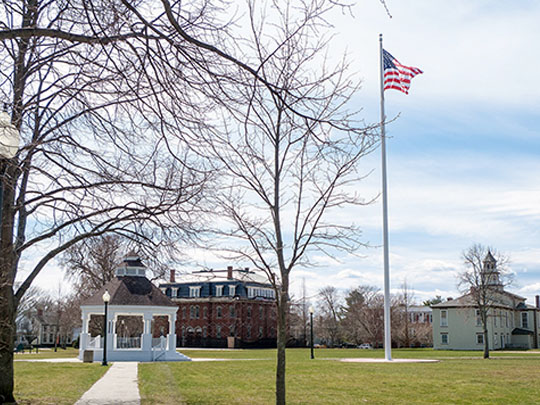
Bristol, on the Mount Hope peninsula, was the homeland of the Wampanoag leader Metacom, known as King Philip, who was killed near Mount Hope in 1676, and the town was settled by Plymouth Colony in 1680, then shelled by the British in 1775 and burned in 1778.
Bristol’s Hope Street has a red, white and blue centre line, Linden Place was built in 1810 by George DeWolf of the family often called the largest slave-trading dynasty in US history, and the Herreshoff Marine Museum remembers the yard that built every America’s Cup defender from 1893 to 1934.
Bristol’s Fourth of July celebration, begun by Rev. Henry Wight in 1785, is billed as the oldest continuous one in the US, and Herreshoff boats saw off all five challenges by Sir Thomas Lipton, whose parents came from the Fermanagh–Monaghan border and who challenged through the Royal Ulster Yacht Club.