
Wikimedia Commons / CC-BY-SA-3.0 / GFDL
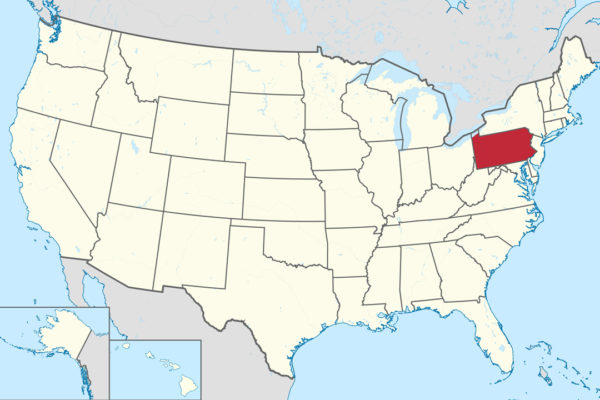
Capital: Harrisburg
Population: 13 million+
Language: English (no official language).
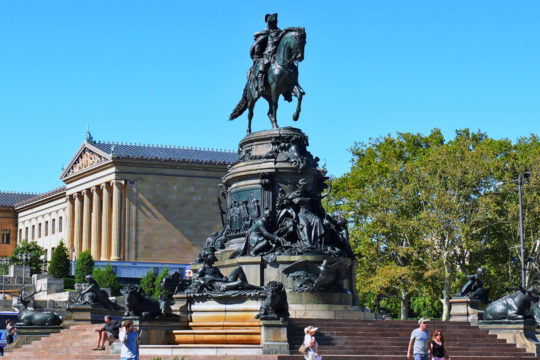
1 – Philadelphia (above)
Philadelphia was founded by William Penn in 1682 with a Greek name meaning “brotherly love”, grew into the largest city in Britain’s American colonies and served as the US capital from 1790 to 1800, though the old boast that it was the British Empire’s second city ignores Dublin, several times its size.
Philadelphia’s other must-sees include Eastern State Penitentiary, opened in 1829 and built around solitary confinement, Elfreth’s Alley, one of the oldest continuously inhabited residential streets in the US, Reading Terminal Market of 1893, and the Irish Memorial at Penn’s Landing, whose 35 bronze figures mark the Great Hunger.
Philadelphia kept its skyline below the hat of William Penn’s statue on City Hall until One Liberty Place broke the gentlemen’s agreement in 1987, local legend blamed the long title drought that followed on the snub, and the Phillies won the World Series the year after ironworkers fixed a Penn figurine to the top of the Comcast Center in 2007.
2 – Gettysburg
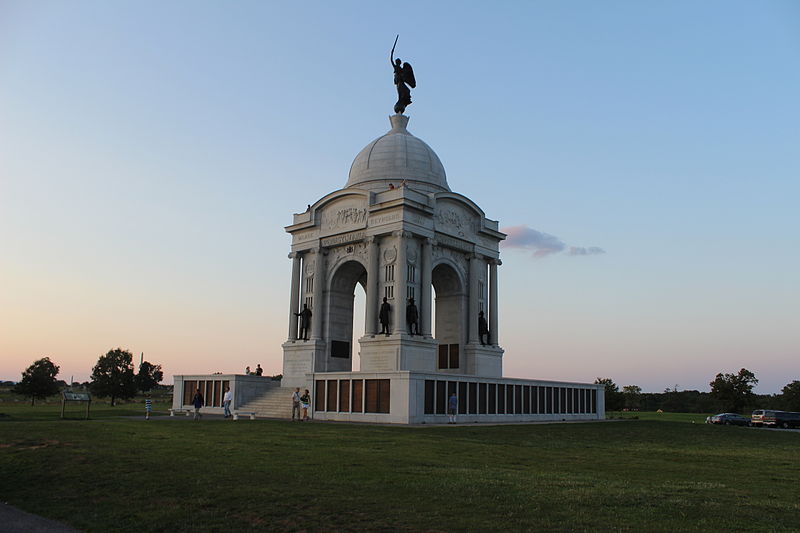
Gettysburg, a crossroads town in Adams County, saw the bloodiest battle of the Civil War on 1–3 July 1863, with an estimated 51,000 casualties, and it’s often called the war’s turning point.
Gettysburg’s battlefield holds the Pennsylvania State Memorial, the largest state monument on the field, Paul Philippoteaux’s 377-ft Cyclorama painting of Pickett’s Charge, and the Irish Brigade’s Celtic cross near the boulder where Father William Corby gave the brigade general absolution before it charged into the Wheatfield.
Two Gettysburg legends don’t hold up: the armies didn’t collide over a stash of shoes, as the town had no shoe factories and the roads drew them there, and Lincoln didn’t scribble his Address on an envelope on the train, but drafted it in Washington and finished it at David Wills’s house in town.
3 – Fairmount Water Works
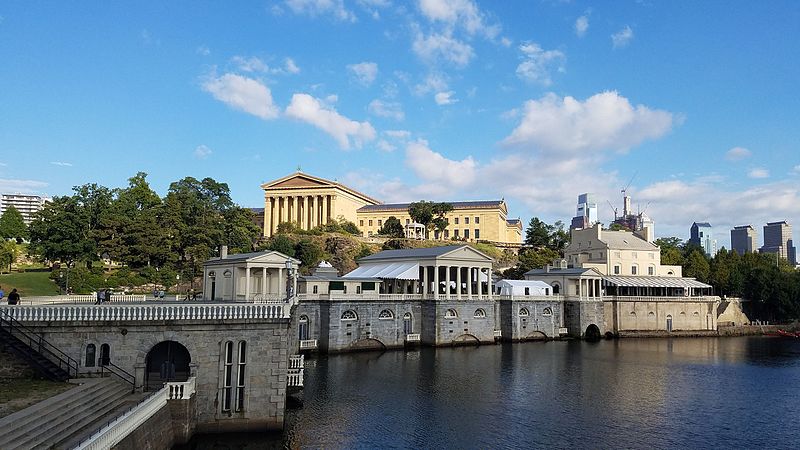
Fairmount Water Works, on the Schuylkill below the Philadelphia Museum of Art, was built from 1812 to 1815 by engineer Frederick Graff after yellow fever epidemics in the 1790s pushed Philadelphia into what’s often called America’s first extensive public water system.
Fairmount Water Works hid its pumps inside elegant Classical Revival temples on the riverbank, later housed the Philadelphia Aquarium from 1911 to 1962, and sits beside the rowing clubs of Boathouse Row.
Fairmount Water Works was a must-see for 19th-century tourists, and Charles Dickens praised it in American Notes as no less ornamental than useful, and it became a National Historic Landmark in 1976.
4 – Pittsburgh
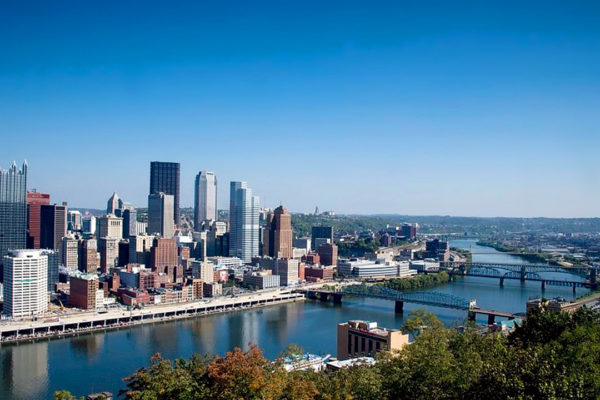
Pittsburgh grew from the point where the Allegheny and Monongahela meet to form the Ohio, where the French burned Fort Duquesne in 1758 and the British built Fort Pitt, named after William Pitt, whose 1764 blockhouse is Pittsburgh’s oldest building.
Ride the Monongahela Incline, open since 1870 and the oldest continuously operating funicular in the US, to Mount Washington, then visit the Andy Warhol Museum, the largest museum in North America dedicated to a single artist, and try a Primanti Bros. sandwich with the fries and slaw inside.
Pittsburgh lost its “h” when the federal Board on Geographic Names standardised “-burg” in 1891 and won it back in 1911, and the city’s banking dynasty began in Tyrone, as Thomas Mellon left his family’s farm near Omagh in 1818, a homestead that became the heart of the Ulster American Folk Park.
5 – The Rocky Steps, Philadelphia
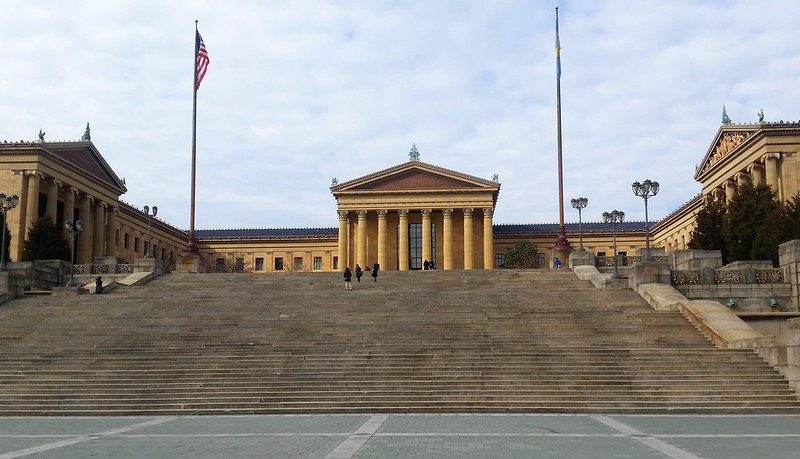
The Rocky Steps are the 72 steps up to the east entrance of the Philadelphia Museum of Art, made famous when Sylvester Stallone’s boxer sprinted up them to the top in Rocky in 1976.
The Rocky Steps come with a bronze Rocky Balboa by A. Thomas Schomberg, made for Rocky III and given to the city, which officials dismissed as a “movie prop” and exiled to a sports arena before it returned to the steps in 2006.
Rocky is often called the first film shot with a Steadicam, but it wasn’t: Bound for Glory and Marathon Man got there first, though all three were operated by the device’s Philadelphia inventor, Garrett Brown.
6 – Valley Forge
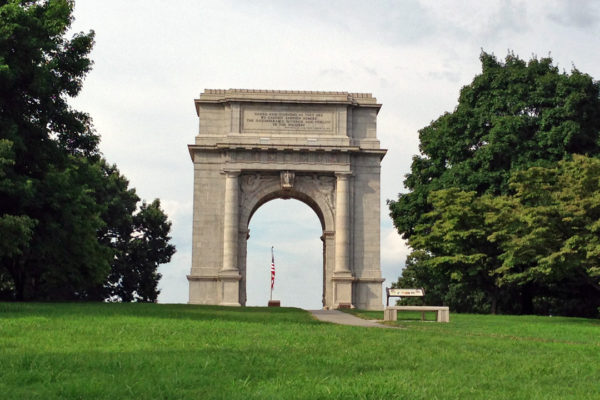
Valley Forge, northwest of Philadelphia, was the Continental Army’s winter camp from December 1777 to June 1778, where about 12,000 people sheltered and around 2,000 died, mostly from typhus, dysentery and other diseases rather than cold.
Valley Forge’s sights include Washington’s Headquarters in the Isaac Potts House, the 1917 National Memorial Arch modelled on Rome’s Arch of Titus, and the fields where Baron von Steuben drilled a model company of 100 men who then trained the rest of the army.
Valley Forge wasn’t the war’s worst winter, as the one at Morristown in 1779–80 was far harsher, and the famous image of Washington kneeling to pray in the snow was popularised by his early biographer Parson Weems with no contemporary evidence behind it.
7 – Hershey

Hershey, in Dauphin County, is the factory town Milton Hershey began building in 1903 after selling his caramel company for $1 million, convinced caramels were “just a fad” and chocolate was the future.
Hershey’s Chocolate Avenue has streetlights shaped like Kisses, wrapped and unwrapped, Hersheypark began in 1906 as a park for the factory’s workers, and Chocolate World replaced factory tours in 1973, while the Milton Hershey School was, in Milton’s words, the idea of his wife Kitty, daughter of a Cork man.
Milton Hershey nearly sailed on the Titanic: the Hershey Community Archives holds his $300 deposit cheque to the White Star Line, but business changed his plans and he crossed on the German liner Amerika instead.
8 – Bushkill Falls
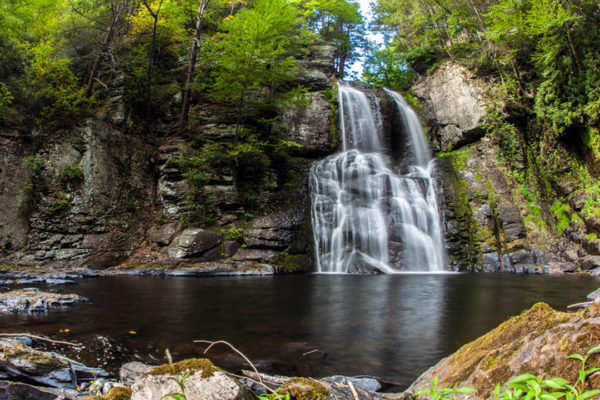
Bushkill Falls, in Pike County in the Pocono Mountains, has drawn visitors since Charles E. Peters opened it to the public in 1904, long before the surrounding Delaware Water Gap National Recreation Area existed.
Trails and footbridges at Bushkill Falls link eight waterfalls through a wooded gorge, with the Main Falls dropping about 100 ft and smaller cascades like Bridal Veil Falls along the way.
Bushkill Falls is billed as the “Niagara of Pennsylvania”, a marketing nickname, and the name itself is Dutch, not Native American, as “kill” means creek, so calling it Bushkill Creek says creek twice.
9 – Liberty Bell Philadelphia
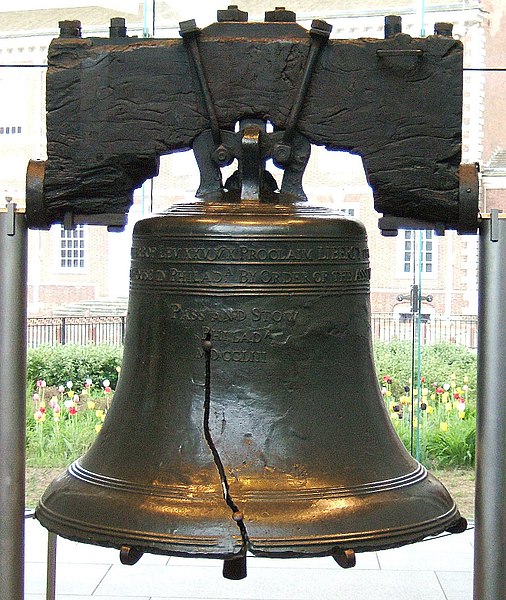
The Liberty Bell was ordered in 1751 for the Pennsylvania State House from London’s Whitechapel foundry, cracked on its first test ring, and was recast twice by Philadelphians John Pass and John Stow, whose names are on the bell.
The Liberty Bell’s inscription from Leviticus, “Proclaim LIBERTY throughout all the Land unto all the Inhabitants thereof”, in the old spelling “Pensylvania”, led abolitionists to name it the Liberty Bell in 1835, and it was silenced for good after ringing for Washington’s Birthday in 1846.
Two Liberty Bell stories are myths: there’s no evidence it rang on 4 July 1776, a scene invented by novelist George Lippard in 1847, and it didn’t crack at Chief Justice John Marshall’s funeral in 1835, a tale that first appeared in 1876.
10 – Independence Hall Philadelphia
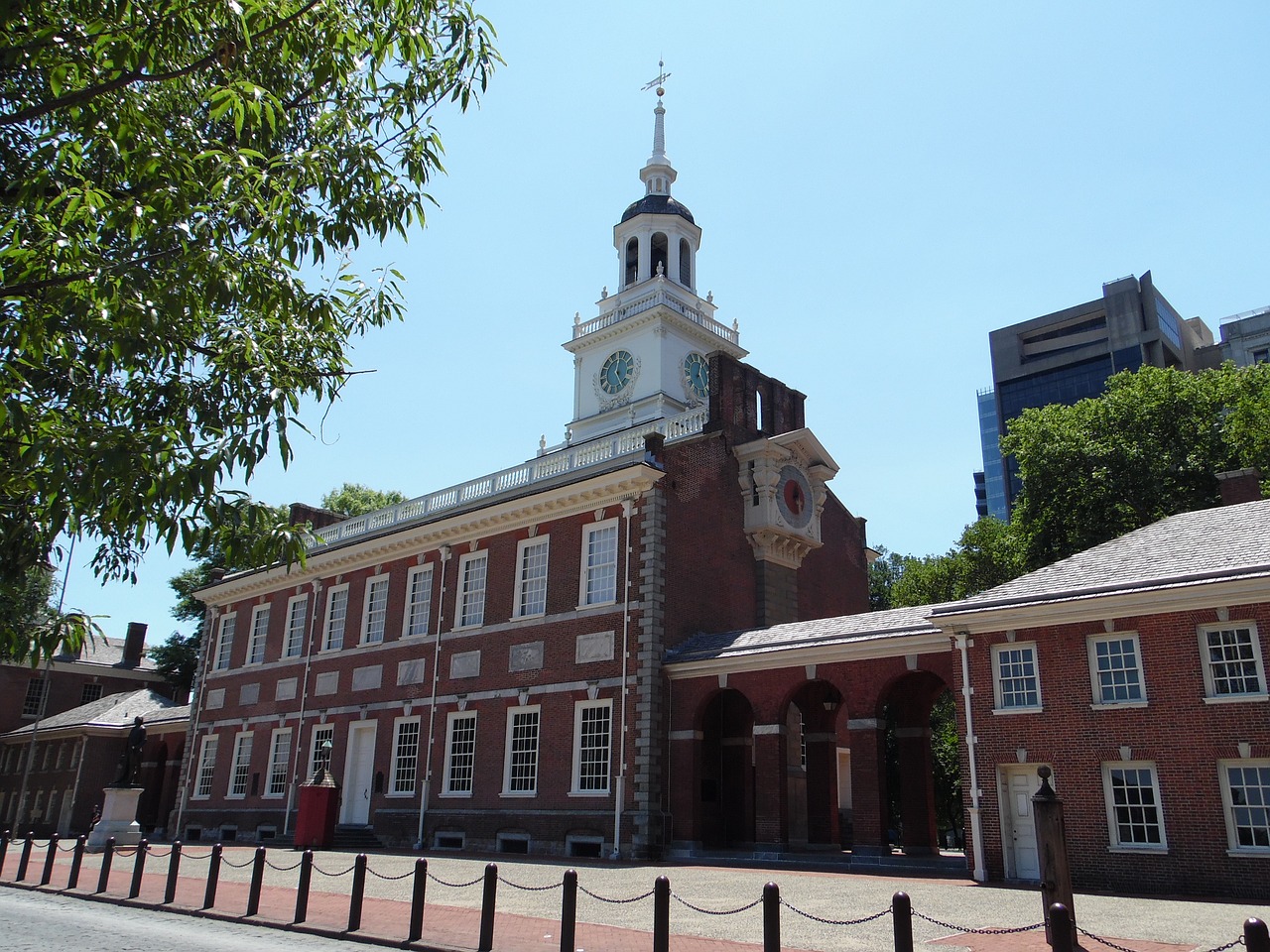
Independence Hall was built from 1732 to 1753 as the Pennsylvania State House, and it’s where the Declaration of Independence was adopted in 1776 and the US Constitution was hammered out in 1787, making it a UNESCO World Heritage Site.
Independence Hall’s Assembly Room holds the “rising sun” chair, which Benjamin Franklin hoped was rising and not setting as the Constitution was signed, and outside in Independence Square stands a statue of Commodore John Barry from Co. Wexford, a father of the American navy.
Most delegates signed the Declaration at Independence Hall on 2 August 1776, not 4 July, and the first printed copies carried only two names, John Hancock’s and that of Secretary Charles Thomson of Maghera, Co. Derry, printed overnight by John Dunlap of Strabane, Co. Tyrone.
11 – Lancaster County

Lancaster County, in the farmland of south-central Pennsylvania, holds the world’s largest Amish settlement by population, formed around 1760 by Anabaptists drawn by Penn’s promise of religious freedom, and its county seat, Lancaster, was the US capital for a day on 27 September 1777, as Congress fled the British.
Lancaster County has more covered bridges than any other in Pennsylvania, the Strasburg Rail Road, chartered in 1832 and billed as North America’s oldest short line, Wheatland, home of President James Buchanan, whose father came from Ramelton, Co. Donegal, and villages called Intercourse, Bird-in-Hand and Blue Ball.
The “Pennsylvania Dutch” of Lancaster County aren’t Dutch at all, as older English used “Dutch” to mean German, and the Amish farmland played itself in the 1985 thriller Witness, filmed in Lancaster County and Philadelphia.
12 – Fallingwater

Fallingwater, in the woods of the Laurel Highlands about 70 miles from Pittsburgh, was designed by Frank Lloyd Wright in 1935 as a weekend house for Pittsburgh department-store owner Edgar J. Kaufmann and completed in 1937.
Fallingwater’s concrete terraces cantilever over the waterfall on Bear Run, as Wright wanted the Kaufmanns to live with the waterfall rather than look at it, and the house was voted the best all-time work of American architecture in a 1991 AIA poll and joined UNESCO’s list of Wright’s work in 2019.
The legend that Wright sketched Fallingwater in the two hours before Kaufmann arrived is half-true at best, as he’d been working it out in his head for months, and the masterpiece had flaws: Kaufmann nicknamed it “Rising Mildew”, and its terraces sagged until steel cables propped them up in 2002.
13 – Flight 93 National Memorial
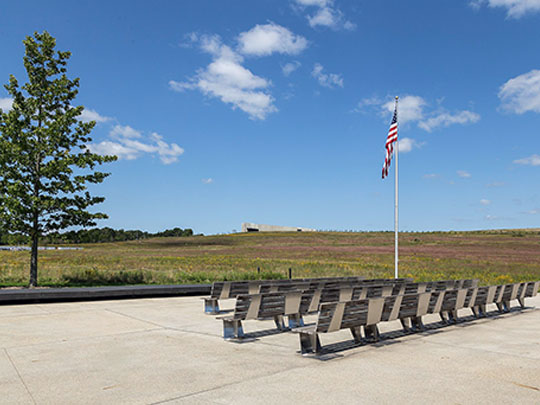
Flight 93 National Memorial, in the fields near Shanksville in Somerset County, marks where United Airlines Flight 93 crashed at 10:03 a.m. on 11 September 2001, killing all 40 passengers and crew, after the passengers fought back against the four hijackers.
At Flight 93 National Memorial, the Wall of Names lines the flight path with 40 white marble panels, a 17-ton sandstone boulder marks the impact site, and the 93-ft Tower of Voices holds 40 wind chimes, one for each person on board.
The 9/11 Commission concluded the hijackers were aiming for the Capitol or the White House, and it laid to rest the claim that Flight 93 was shot down, as no military fighters were near the plane and the “white jet” witnesses saw was a business jet asked to help find the crash site.
14 – Harrisburg

Harrisburg, on the Susquehanna River, grew from John Harris’s trading post and ferry, was laid out by his son in 1785 and has been Pennsylvania’s capital since 1812.
Harrisburg’s State Capitol, dedicated in 1906 with a dome modelled on St Peter’s in Rome and floors set with Henry Chapman Mercer’s mosaics of Pennsylvania history, so impressed Theodore Roosevelt that he called it the handsomest building he had ever seen, and the National Civil War Museum stands in Reservoir Park.
Harrisburg’s Capitol came with a scandal, costing about $13 million against a $4 million budget and landing its architect, Joseph Huston, a fraud conviction, and in 1979 the Three Mile Island nuclear plant downriver had a partial meltdown just 12 days after The China Syndrome reached cinemas.
15 – Johnstown
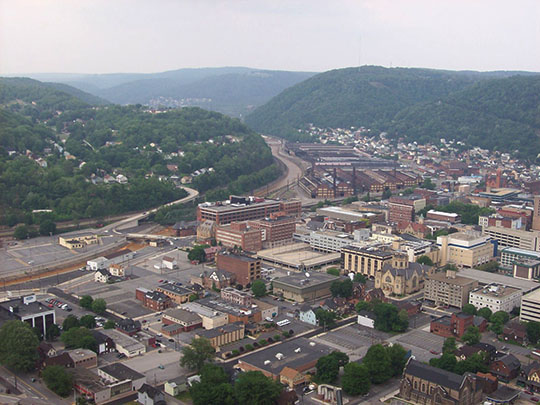
Johnstown, in the Conemaugh Valley of western Pennsylvania, was swept away on 31 May 1889 when the South Fork Dam failed upstream, killing 2,209 people by the official count and becoming the first major civilian disaster relief effort of Clara Barton’s American Red Cross.
Johnstown Flood National Memorial preserves the remains of the dam at South Fork, the Johnstown Flood Museum fills a Carnegie-funded library, and the Johnstown Inclined Plane, built after the flood and billed by Guinness as the world’s steepest vehicular inclined plane, carried residents to safety in the floods of 1936 and 1977.
The dam belonged to the South Fork Fishing and Hunting Club, whose members included Andrew Carnegie and Henry Clay Frick, yet the club was never held liable for the Johnstown Flood, and public anger helped push American courts toward the idea of strict liability.
16 – Jim Thorpe
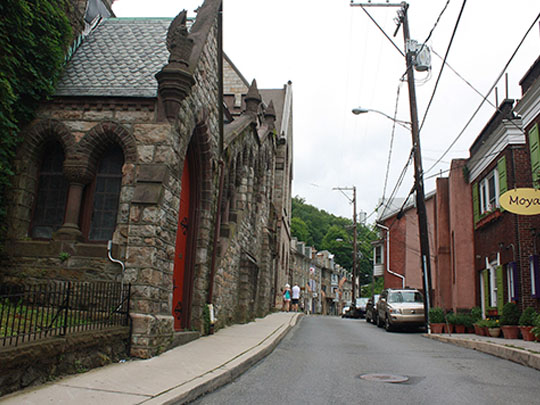
Jim Thorpe, in the Lehigh River gorge in Carbon County, was founded in 1818 as Mauch Chunk, a Lenape name meaning bear place, to ship anthracite coal, some of it down the Switchback Gravity Railroad, a coal line later turned thrill ride and often called America’s first roller coaster.
Jim Thorpe’s sights include railroad baron Asa Packer’s mansion and the Old Jail Museum, where four accused Molly Maguires, members of a secret society of Irish miners, including Alexander Campbell of Dungloe, Co. Donegal, were hanged together in 1877, though the museum credits Cell 17’s famous handprint not to Campbell but to Thomas Fisher.
The town took the name Jim Thorpe in 1954 in a deal with the Olympic champion’s widow to bury him there, though Thorpe, a Sac and Fox athlete whose paternal grandfather was of Irish descent, never once visited the town.
17 – Punxsutawney
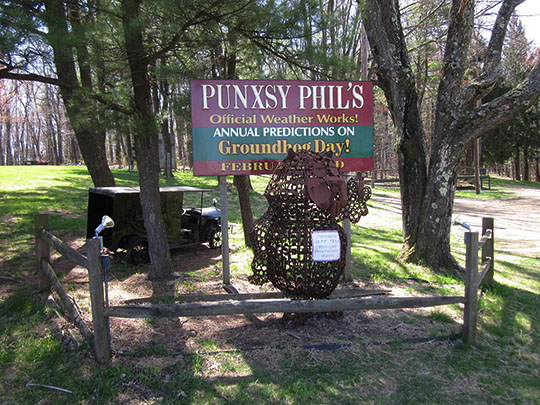
Punxsutawney, a borough in Jefferson County in western Pennsylvania whose name probably comes from a Lenape phrase for “town of the sandflies”, has staged Groundhog Day at Gobbler’s Knob since the first official trek in 1887.
Every 2 February, the top-hatted Inner Circle of the Punxsutawney Groundhog Club announces whether Punxsutawney Phil has seen his shadow, a custom adapted from German Candlemas lore that echoes Ireland’s St Brigid’s Day belief that a hedgehog emerging foretold the weather.
NOAA’s records put Punxsutawney Phil’s forecasts at right less than half the time, and the 1993 film Groundhog Day wasn’t even shot in Punxsutawney, but in Woodstock, Illinois.