
Wikimedia Commons / CC-BY-SA-3.0 / GFDL
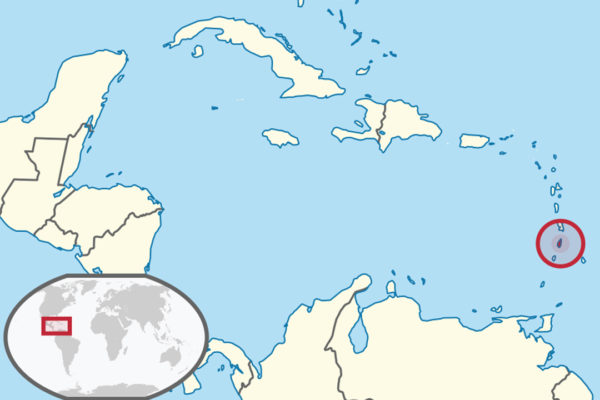
Capital: Castries
Population: 180,000+
Language: English/French Creole
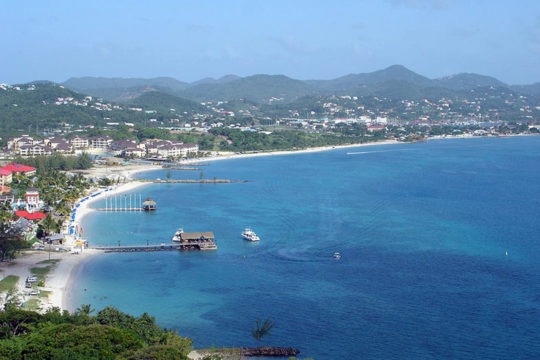
1 – Pigeon Island (above)
A 44-acre hump of land off the north-west tip, Pigeon Island was a Kalinago site, then a French pirate’s base, then the British navy’s forward position for watching the French fleet across the water in Martinique.
Two peaks, two small beaches, the ruins of Fort Rodney and an 1808 officers’ mess now used as a museum — climb Signal Peak and you can see Martinique on a clear day.
Admiral Rodney ran his blockade from here, and it was from this anchorage that he sailed to break the French line at the Battle of the Saintes in 1782 — the island stopped being an island in 1972, when spoil from dredging Rodney Bay Marina was used to build a causeway across to the mainland.
2 – Castries
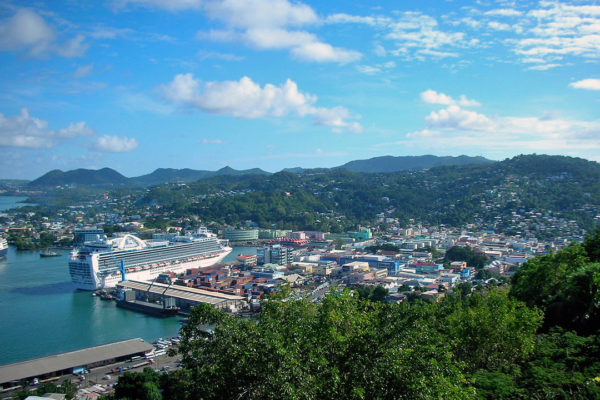
Saint Lucia’s capital sits on a deep natural harbour on the north-west coast, founded by the French in 1650 as Le Carénage, “the safe anchorage”, and renamed in 1756 after a French naval minister.
Four fires have burned the city down, the last in 1948, so the centre is mostly modern — but Derek Walcott Square survives, with its huge saman tree, the Carnegie library, and the cathedral next door, painted inside with murals of a Black Holy Family by the St Lucian artist Dunstan St Omer.
Two men born in this small city won Nobel prizes — Arthur Lewis for economics in 1979 and Derek Walcott for literature in 1992 — which gives Saint Lucia the highest number of Nobel laureates per head of population in the world; Walcott was 18 and living here when the 1948 fire took about 80% of the town, and wrote his first significant poem about it.
3 – Soufrière
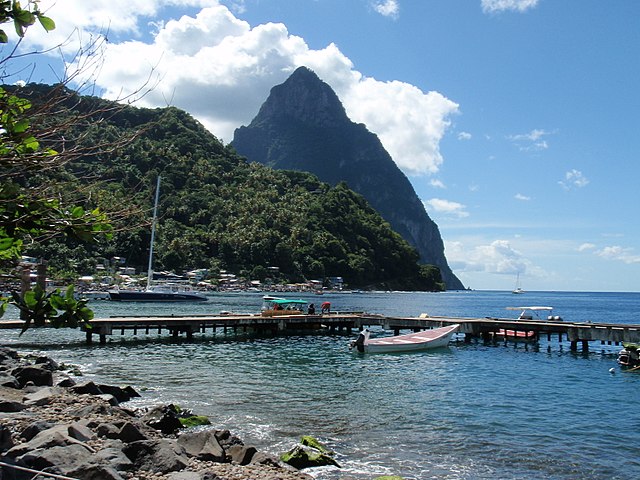
Saint Lucia’s oldest town, founded by the French in 1746, sits on the south-west coast inside a collapsed volcanic caldera, with the Pitons — two sheer lava plugs rising straight out of the sea — on either side of the bay.
The Pitons have been a UNESCO World Heritage Site since 2004 and you can climb the larger one in about three hours; just outside town, a road runs into the crater at Sulphur Springs, past two dozen boiling pools of grey mud and steam, and there are hot mineral baths to sit in afterwards.
They market it as the Caribbean’s only drive-in volcano, which is fair enough — it’s the most active geothermal area in the Lesser Antilles, though the last real eruption, in the 1760s, was only steam and ash.
4 – Marigot Bay
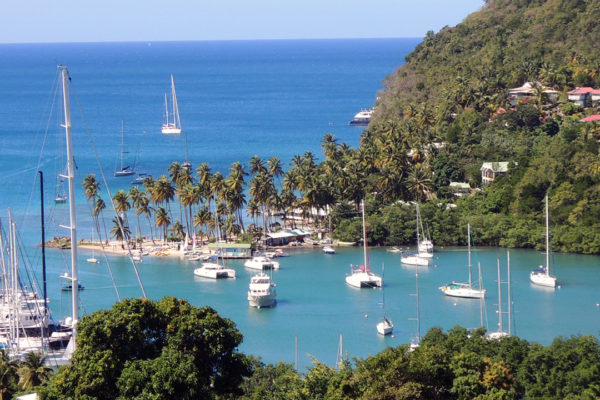
A narrow inlet halfway down the west coast, almost hidden behind a palm-covered spit, Marigot is one of the best natural hurricane holes in the eastern Caribbean — deep, sheltered and invisible from the sea.
It’s a small yacht harbour now, with a marina, bars and hotels around the water and a ferry across to the beach on the far side.
The story everyone tells is that a British fleet once hid in here from the French by covering their masts with palm fronds — and the 1967 Doctor Dolittle, with Rex Harrison, was filmed in this bay, which is also where James Michener called it the most beautiful in the Caribbean.