
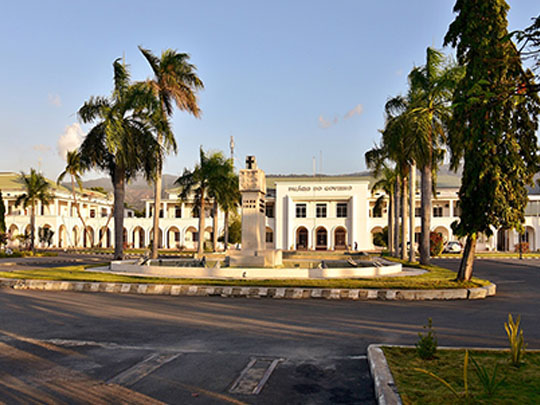
By Bahnfrend / Wikimedia Commons / CC BY-SA 4.0

Capital: Dili
Population: 1.3 million+
Language: Tetum and Portuguese
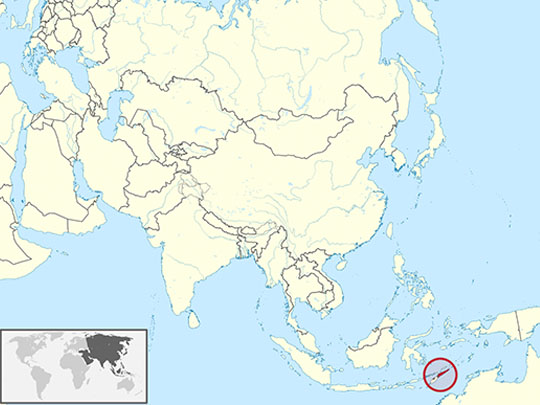

1 – Dili (also above)
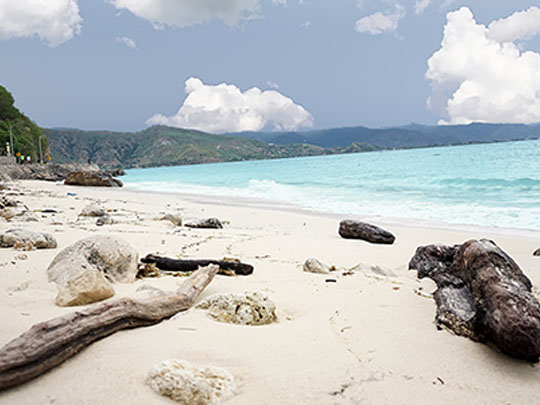

Dili, on Timor’s north coast, became the capital of Portuguese Timor in 1769, was badly damaged by Allied bombing during the Japanese occupation of 1942–45, fell to Indonesian forces on 7 December 1975 and became the capital of independent Timor-Leste on 20 May 2002.
Dili’s sights include the Cristo Rei statue on Cape Fatucama, the Timorese Resistance Archive and Museum, and the former Balide prison, built by the Portuguese in 1963, which held detainees under Indonesian rule before housing the truth commission and its Chega! exhibition.
Dili’s Cristo Rei was unveiled in 1996 as a gift from the Indonesian government, its 27 m height said to mark East Timor as Indonesia’s 27th province.
2 – Santa Cruz Cemetery
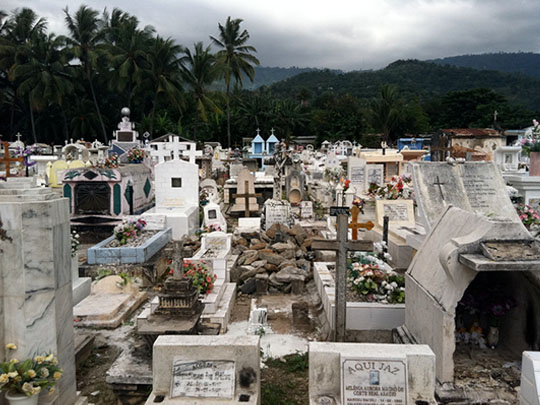

Santa Cruz Cemetery in Dili was where Indonesian troops opened fire on a memorial procession for the independence supporter Sebastião Gomes on 12 November 1991, killing at least 50 people by Indonesia’s own inquiry and up to 271 by the estimate of Timor-Leste’s truth commission.
Santa Cruz Cemetery holds the grave of Sebastião Gomes, shot by troops at Motael Church on 28 October 1991, at the end of the route that several thousand mourners walked from that church, and the anniversary of the shooting is marked each year as National Youth Day.
Santa Cruz Cemetery’s shooting was filmed by the British cameraman Max Stahl, who hid his tapes in a fresh grave before they were smuggled out, and the documentary built on his footage moved the Dublin bus driver Tom Hyland to found the East Timor Ireland Solidarity Campaign in 1992.
3 – Balibo
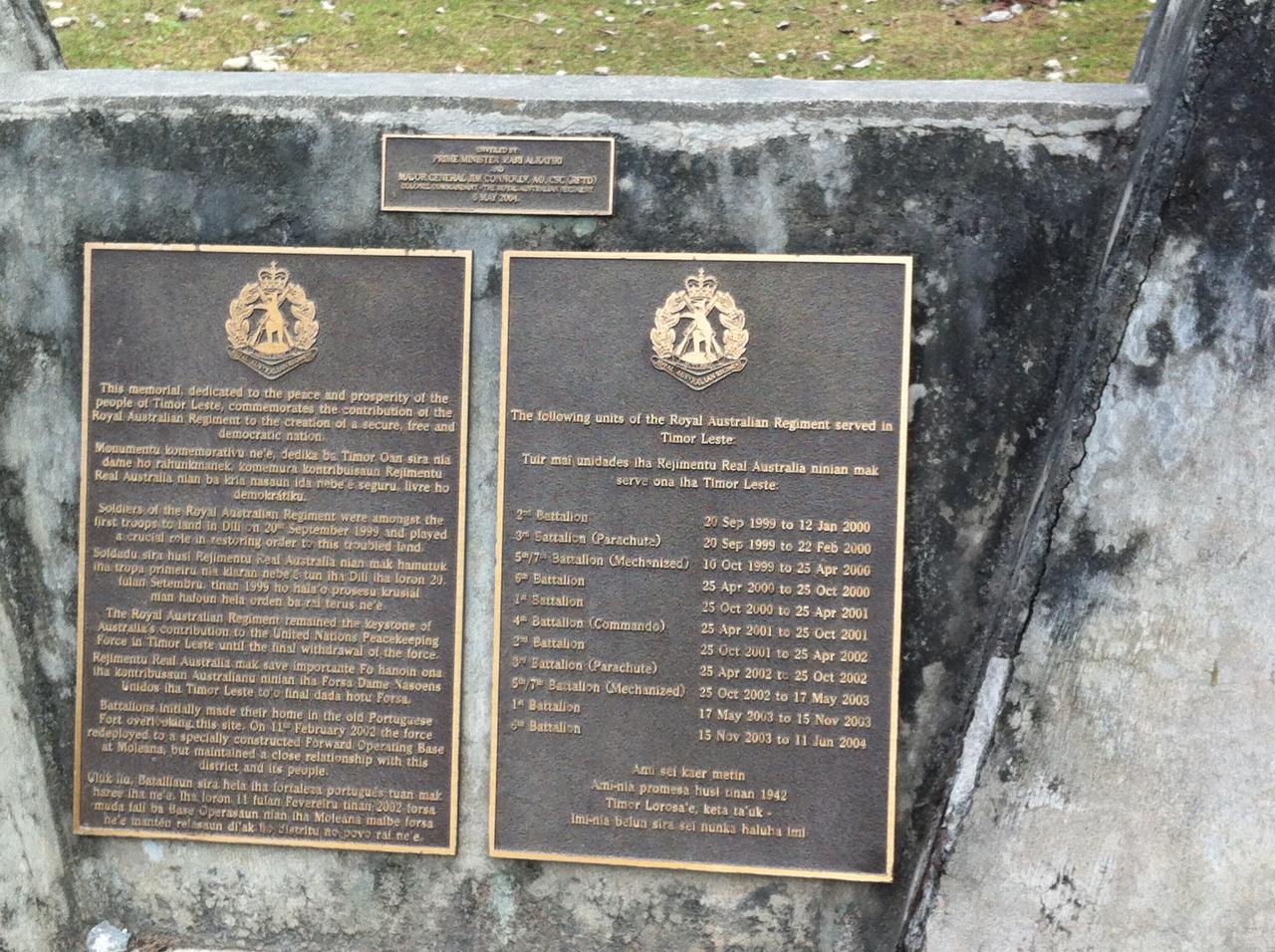

Balibo, in the hills near the border with Indonesian West Timor, was where five television newsmen were killed on 16 October 1975 during Indonesian incursions, and a New South Wales coroner found in 2007 that they were killed deliberately by Indonesian special forces.
Balibo’s sights include its centuries-old Portuguese hilltop fort, built to protect the coastal post of Batugade, and the house where the newsmen painted an Australian flag, which became a community learning centre in 2003.
Balibo gave its name to the Balibo Five, who were two Australians, two Britons and a New Zealander, and to the 2009 film Balibo, in which Anthony LaPaglia played Roger East, the Australian journalist executed in Dili on 8 December 1975 after going to investigate their deaths.
4 – Lifau, Oecusse
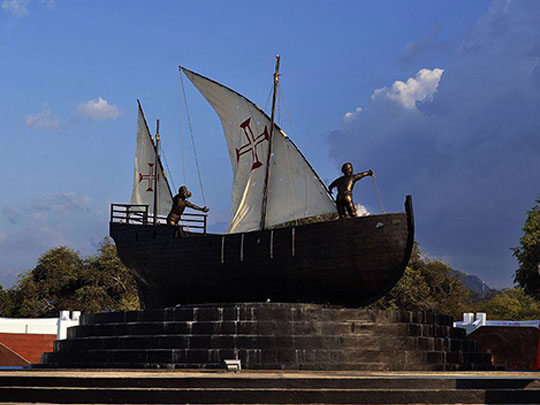

Lifau, on the coast of the Oecusse exclave, became the seat of Portugal’s first governor of Timor in 1702 and was the colony’s capital until 1769, when pressure from the Topasses, a Eurasian community that controlled the sandalwood trade, drove the Portuguese to move to Dili.
Lifau’s sights include the monument inaugurated in 2015, a 13 m bronze caravel with eight figures, marking 500 years since the Portuguese arrived, close to the enclave’s capital, Pante Macassar.
Lifau lies in an exclave of about 815 km², surrounded by Indonesian West Timor except on its sea coast, which treaties of 1859 and 1904 left to Portugal and whose border was finally settled by an international arbitration court in 1914.
5 – Nino Konis Santana National Park
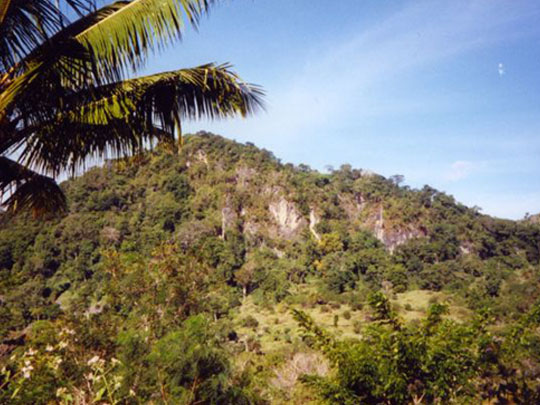

Nino Konis Santana National Park, declared in 2007 as Timor-Leste’s first national park, covers about 1,236 km² of land and sea at the eastern tip of Timor and is named after a former schoolteacher who led the Falintil guerrillas from 1993 until he died in hiding in 1998.
Nino Konis Santana National Park’s sights include sacred, uninhabited Jaco Island, Lene Hara cave with its ancient carved faces, the painted rock shelter of Ile Kére Kére near Tutuala, and Lake Ira Lalaro.
Nino Konis Santana National Park’s Jerimalai shelter held the bones of tuna and other open-ocean fish caught about 42,000 years ago, the earliest known evidence of deep-sea fishing, along with a shell fish hook among the oldest ever found.
6 – Dare
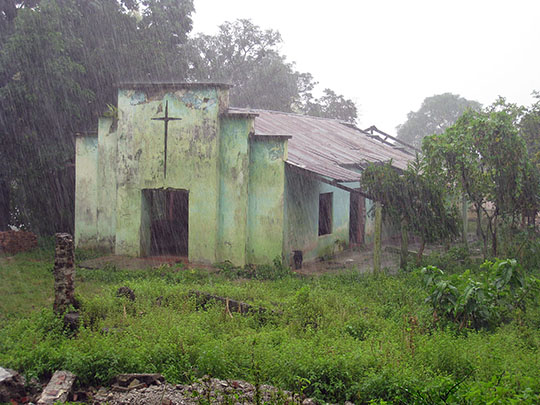

Dare, in the hills above Dili, holds the memorial to the 1942–43 campaign in which Australian commandos of the 2/2nd and 2/4th Independent Companies fought Japanese forces with the help of Timorese criados, while between 40,000 and 70,000 Timorese are thought to have died during the occupation.
Dare’s sights include the memorial built by the commandos’ veterans in 1969, the Dare Memorial Museum of 2009, which honours the Timorese who helped them, and the Fátima seminary where Xanana Gusmão studied.
Dare’s commandos included Paddy Kenneally, born in Youghal, County Cork, in 1916, who campaigned for the Timorese until his death in 2009, while Allied leaflets dropped over Timor promised the islanders “Your friends do not forget you.”