
Wikimedia Commons / CC-BY-SA-3.0 / GFDL
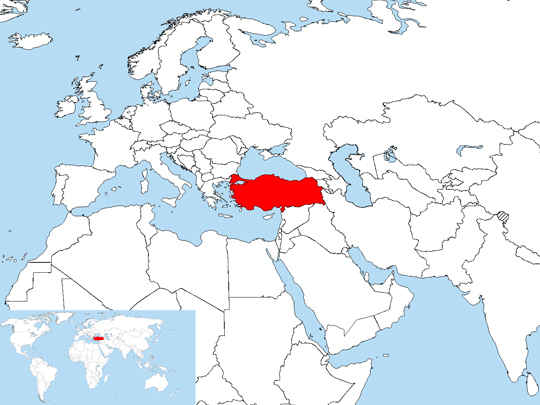
Capital: Ankara
Population: 86.1 million+
Language: Turkish/Kurdish
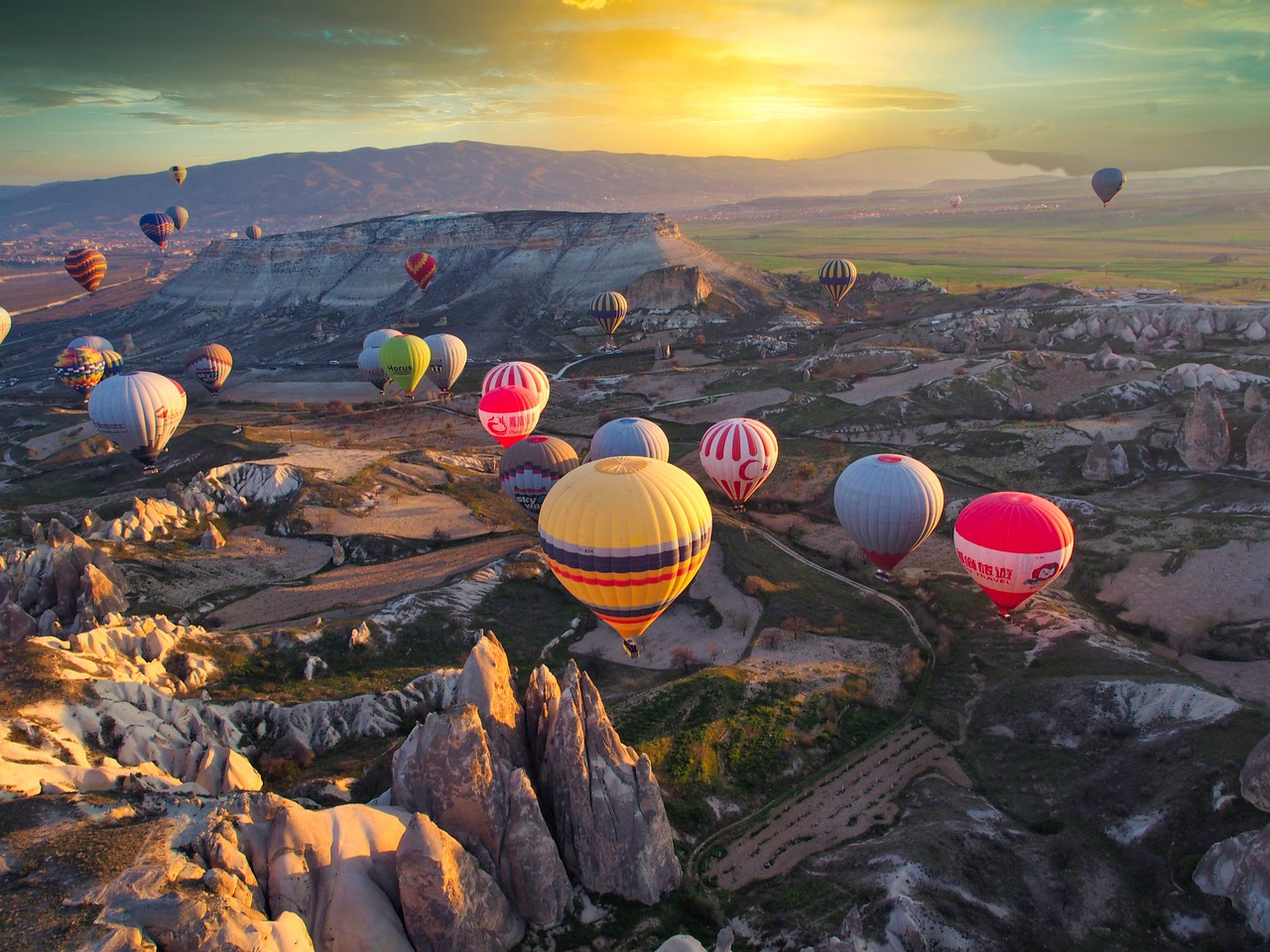
1 – Cappadocia (also above)

Cappadocia, on Turkey’s central plateau, is a landscape of soft volcanic tuff laid down by eruptions millions of years ago and carved by wind and water into cones and fairy chimneys, where from the 4th century people dug homes, monasteries and churches, listed by UNESCO in 1985.
See the painted rock-cut churches of the Göreme Open-Air Museum, among them the Dark Church, whose frescoes survived thanks to little light and decades as a pigeon roost, go down into the underground city of Derinkuyu, about 85 m deep, and watch the balloons rise over the valleys at dawn.
The underground cities of Cappadocia are often called hiding places from Roman persecution, but they grew mainly as refuges from Arab raids in the Byzantine centuries, and Cappadocian Greeks used them until the population exchange of 1923.
2 – Pamukkale
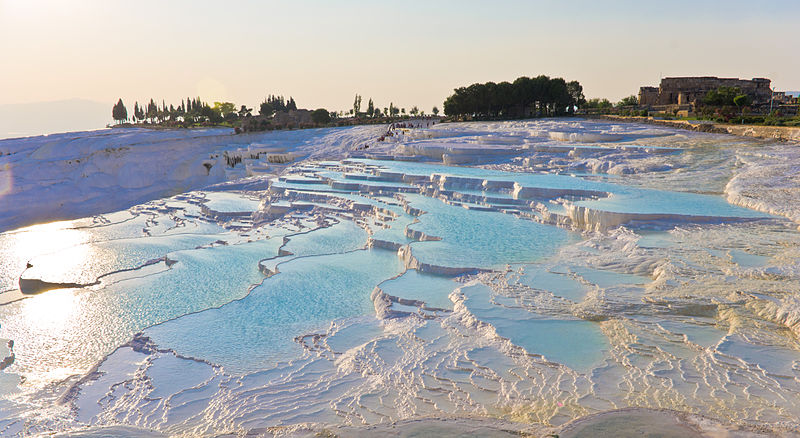
Pamukkale, the “cotton castle” near Denizli in south-west Turkey, is a hillside of white travertine terraces built up by calcium-rich hot springs and crowned by the Greco-Roman spa city of Hierapolis, and UNESCO listed both in 1988.
Walk the terraces barefoot, then explore Hierapolis, with its theatre, its vast necropolis and the Ploutonion, a cave whose carbon dioxide killed the sparrows the geographer Strabo threw in.
Hotels built on the terraces of Pamukkale drained the springs until they were cleared around 2000, and there is no evidence that Cleopatra ever bathed in the Antique Pool that bears her name.
3 – Göbekli Tepe
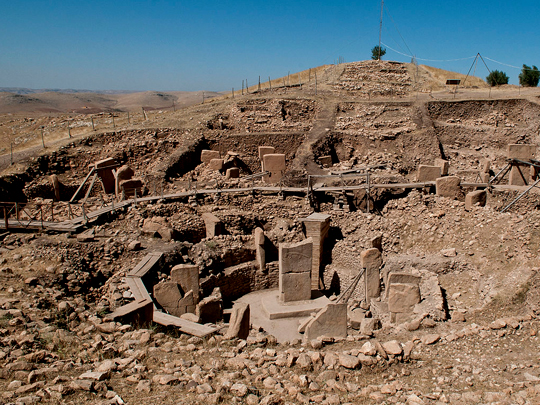
Göbekli Tepe, on a hilltop near Şanlıurfa in south-east Turkey, has stone enclosures built about 11,500 years ago by people who had not yet taken up farming or pottery, more than 6,000 years before the first earthworks at Stonehenge, and UNESCO listed it in 2018.
Walk the covered walkways above the round enclosures, ringed by T-shaped limestone pillars up to 5.5 m high and carved with wild animals.
Göbekli Tepe was once hailed as the world’s oldest temple, but its excavators describe it as a settlement with a strong ritual side, where people lived as well as gathered.
4 – Amasra
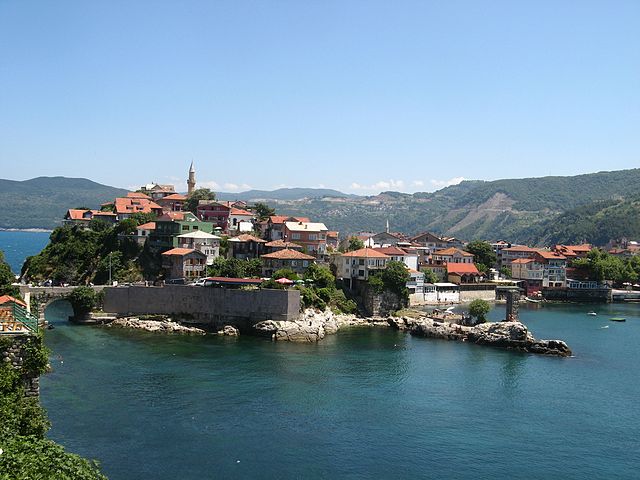
Amasra, a small port on the Black Sea in Bartın province, was ancient Amastris, founded shortly after 300 BC when the Persian princess Amastris merged four towns, and it passed from the Byzantines to the Genoese before Mehmed II took it in 1460.
Walk between the two harbours of Amasra, explore the walls of its castle on the headland, and cross the bridge to the island of Boztepe.
Amastris herself was drowned by her sons around 284 BC, and legend says Mehmed II called Amasra “Çeşm-i Cihan”, the “eye of the world”, a phrase the Byzantine writer Niketas David Paphlagon had already used for the town centuries earlier.
5 – Bodrum Castle
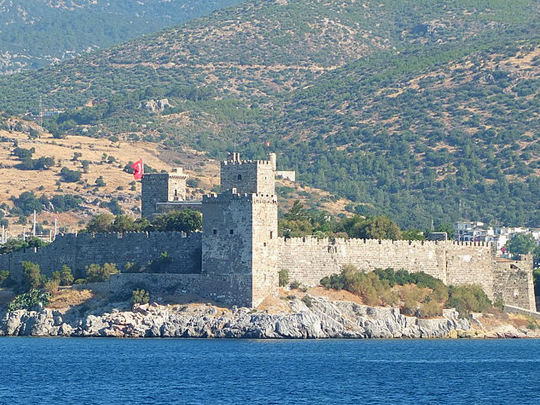
Bodrum Castle, the Castle of St Peter, was begun by the Knights Hospitaller in the early 15th century on the harbour of ancient Halicarnassus in south-west Turkey, partly with stones from the Mausoleum, one of the Seven Wonders of the ancient world.
Explore its towers and the Museum of Underwater Archaeology, whose centrepiece is the Uluburun wreck, a merchant ship that sank off the coast in the late 14th century BC.
The tomb of King Mausolus that the builders of Bodrum Castle quarried gave the world the word “mausoleum”, and the finest of its sculpture ended up in the British Museum.
6 – Galata Tower – Istanbul
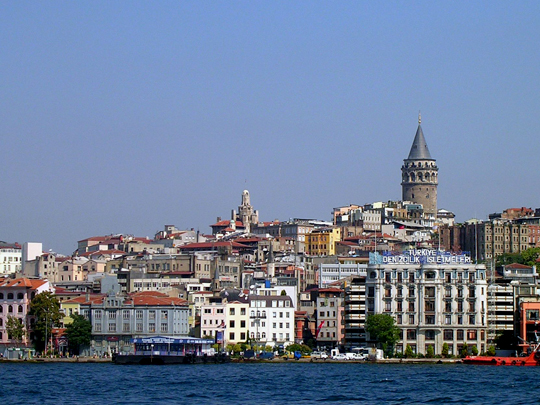
Galata Tower, about 63 m tall, was built by the Genoese in 1348 for their trading colony across the Golden Horn from Constantinople, and from 1717 the Ottomans used it as a fire lookout.
Climb to the gallery of Galata Tower for views across the Golden Horn, the Bosphorus, the old city and the Asian shore.
The legend that Hezarfen Ahmed Çelebi glided from Galata Tower across the Bosphorus in the 1630s comes from a single writer, Evliya Çelebi, and in February 1942 the refugee ship Struma, after weeks at anchor off Istanbul, was towed into the Black Sea and sunk by a Soviet submarine, killing 791 people, with one survivor.
7 – Mount Nemrut
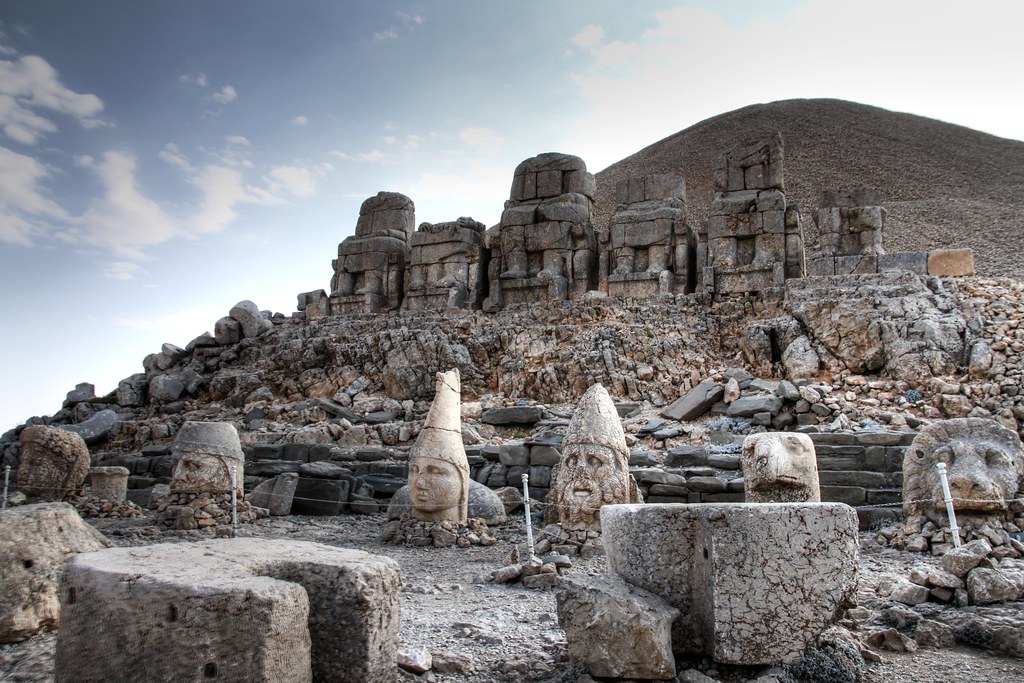
Mount Nemrut rises to about 2,100 m in south-east Turkey, where King Antiochus I of Commagene built a tomb sanctuary in the 1st century BC beneath a cone of loose stones about 50 m high, listed by UNESCO in 1987.
Climb at sunrise to the terraces where seated statues 8–9 m tall blend Greek and Persian gods, such as Zeus-Oromasdes and Apollo-Mithras, their great heads toppled at their feet.
No one has ever found the tomb of Antiochus inside Mount Nemrut, though the American archaeologist Theresa Goell spent years searching for it from the 1950s.
8 – Tortum Lake & Waterfall
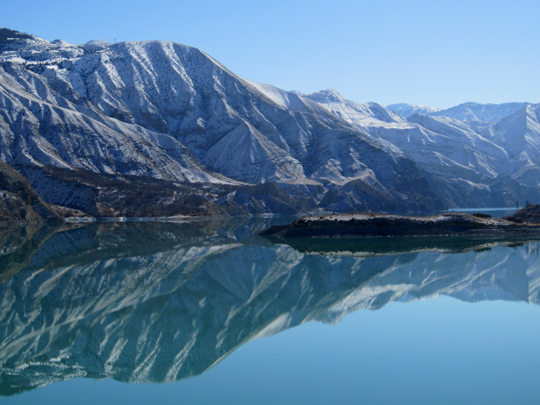
Tortum Lake lies in the mountains north of Erzurum in north-eastern Turkey, about 8 km long and nearly 100 m deep, formed when a landslide dammed the Tortum river at a date geologists dispute.
See the lake, the Tortum Waterfall where it spills over its natural dam, one of the tallest waterfalls in Turkey, and the great 10th-century Georgian church of Öşk Vank nearby.
The valley around Tortum Lake was part of the medieval Georgian lands of Tao, where Öşk Vank was built in 963–973, and a hydroelectric plant completed around 1960 diverts much of the lake’s water, so the local claim of the world’s third-highest waterfall has no basis.
9 – Manavgat Falls
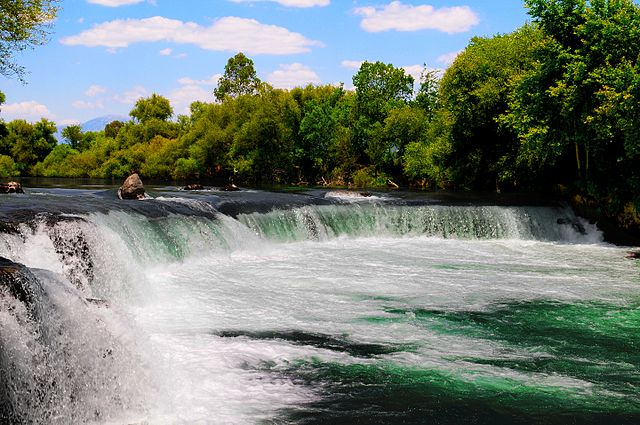
Manavgat Falls lie on the Manavgat river, about 3 km north of Manavgat town on the Mediterranean coast east of Antalya, a low but broad waterfall on the river the ancients called the Melas.
Sit in the tea gardens by Manavgat Falls, then take a boat down the river to the sea and the ancient city of Side, with its Temple of Apollo on the shore.
In 2004 Turkey agreed to sell 50 million m³ of Manavgat river water a year to Israel, shipped by tanker, but the plan stalled and was abandoned.
10 – The Ishak Paşa Palace
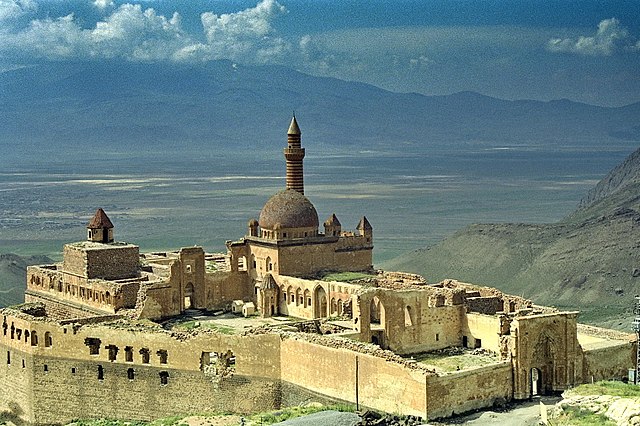
The Ishak Paşa Palace stands on a ledge above Doğubayazıt in far-eastern Turkey, near the Iranian border and in sight of Mount Ararat, begun in 1685 and finished in 1784 by the Çıldıroğulları, a family of local Ottoman governors.
Explore its harem, mosque, courtyards and hammam, carved in a blend of Ottoman, Persian, Seljuk and Armenian styles, in a palace said to have 366 rooms.
Flues carried heat from the hammam furnace through the walls of the Ishak Paşa Palace, often hailed as the world’s first central heating, which it was not, and a glass-and-wood roof added during restoration in the late 2000s drew criticism.
11 – Hadrian’s Gate – Antalya
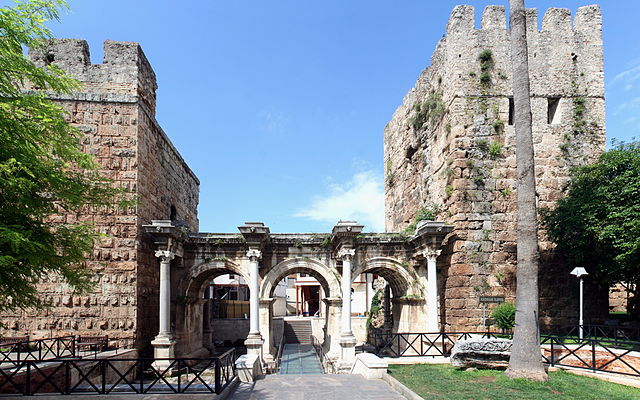
Hadrian’s Gate, a triple arch of white marble, was built to mark the emperor Hadrian’s visit around AD 130 to Attaleia, the city founded by Attalos II of Pergamon in the 2nd century BC, and leads into Kaleiçi, the old town of Antalya.
Walk through the arches over the worn Roman road surface, between the Roman south tower and a north tower rebuilt by the Seljuk sultan Alaeddin Keykubat I in the early 13th century.
The Irish hydrographer Francis Beaufort of Navan, Co. Meath, who gave his name to the Beaufort wind scale, recorded Hadrian’s Gate while charting the coast in 1811–12 and described it in Karamania (1817), and the gate was uncovered and restored in the late 1950s.
12 – Ölüdeniz Beach – Fethiye
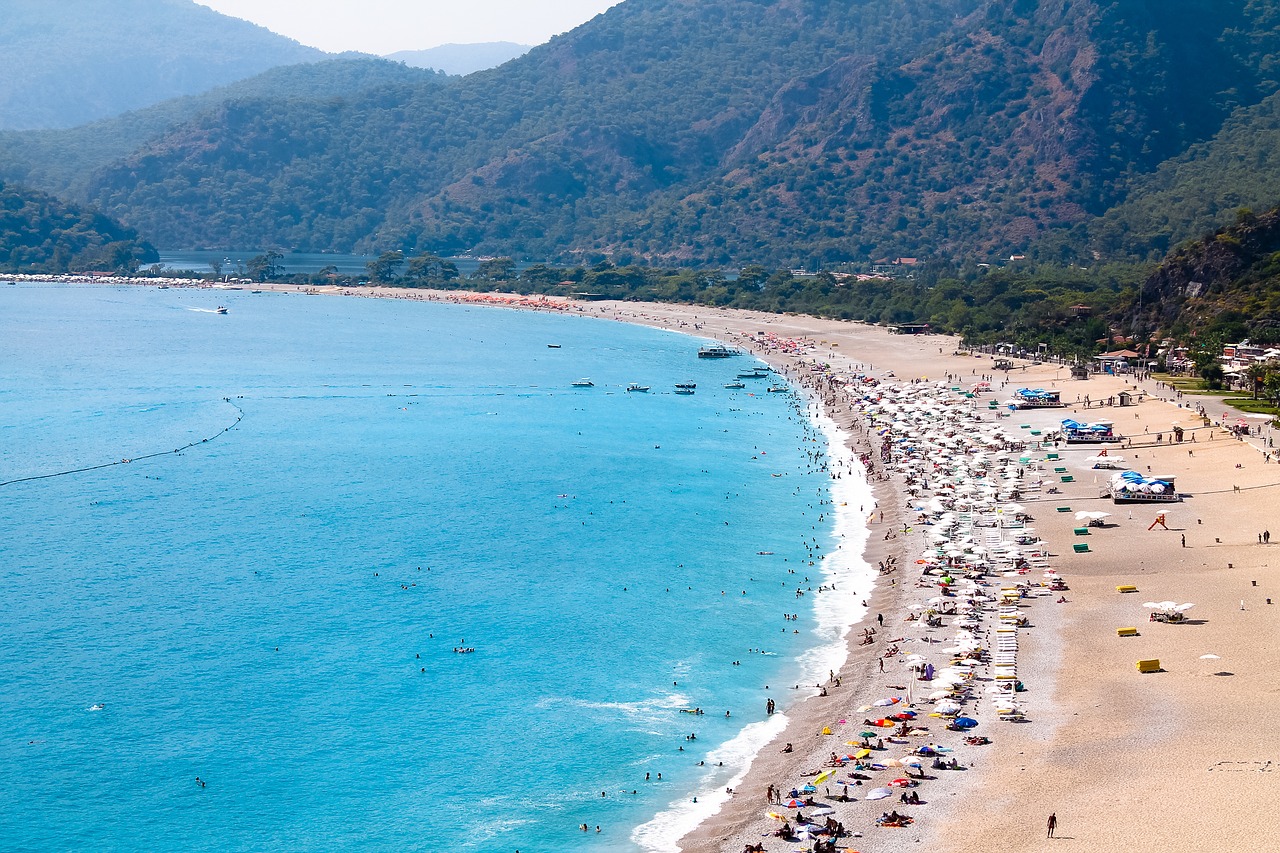
Ölüdeniz, near Fethiye on Turkey’s south-west coast, is a sheltered lagoon whose name means “dead sea” for its calm water, protected as a nature park since 1983 beneath Babadağ, nearly 2,000 m high.
Paraglide from Babadağ down to the beach at Ölüdeniz, swim in the lagoon, and set off on the Lycian Way, the long-distance coastal path that starts in the hills above at Ovacık.
Over the hill from Ölüdeniz lies Kayaköy, once the Greek town of Livissi, emptied in the population exchange of 1923 and the model for the village in Louis de Bernières’ Birds Without Wings.
13 – Temple of Apollo – Didyma
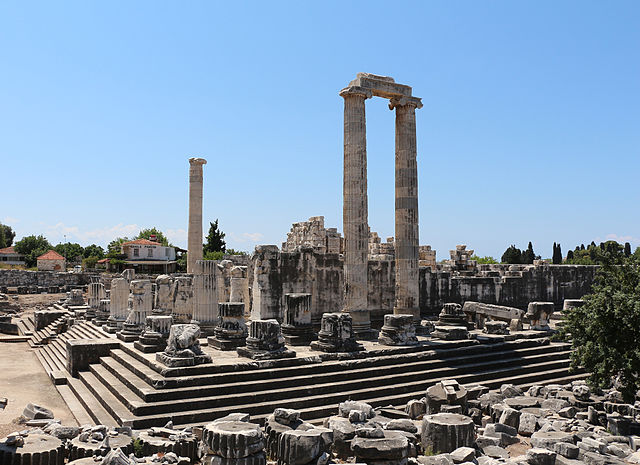
The Temple of Apollo at Didyma, on Turkey’s Aegean coast south of Miletus, was one of the great oracles of the Greek world, and after the Persians burned the first temple in 494 BC work on a vast replacement began around 300 BC.
Walk among columns almost 20 m tall on a platform more than 100 m long, and look for the carved Medusa heads from the temple frieze.
The temple at Didyma was never finished, and in 1979 archaeologists found full-size construction drawings scratched into its walls, preserved because the walls were never polished, including the subtle swelling of the columns.
14 – Sultan Ahmed Mosque

The Sultan Ahmed Mosque, the Blue Mosque, was built between 1609 and 1617 on the site of the old Hippodrome of Istanbul by the architect Sedefkâr Mehmed Ağa for Sultan Ahmed I, who died that same year aged 27.
Step inside to see more than 20,000 Iznik tiles and the blue-painted domes, then count the mosque’s six minarets from the square outside.
Folklore says the architect of the Sultan Ahmed Mosque misheard the sultan’s order for golden (“altın”) minarets as six (“altı”), and that the sultan settled the outrage over rivalling Mecca by paying for a seventh minaret there, a story with no documentary support.
15 – Aspendos Theatre
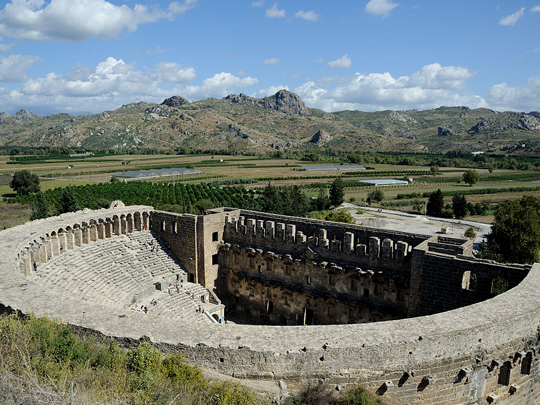
Aspendos Theatre, near the Köprüçay river east of Antalya, was built by the architect Zenon under Marcus Aurelius in the 2nd century AD and seats about 7,000, and Turkey’s UNESCO submission calls it the best-preserved ancient theatre in the world.
Sit in the tiers and look across at the stage building, standing to its full height, which hosts an opera and ballet festival.
Aspendos Theatre survived because it stopped being a theatre: in the 13th century the Seljuks turned its stage building into a palace and caravanserai.
16 – Fortress of Corycus
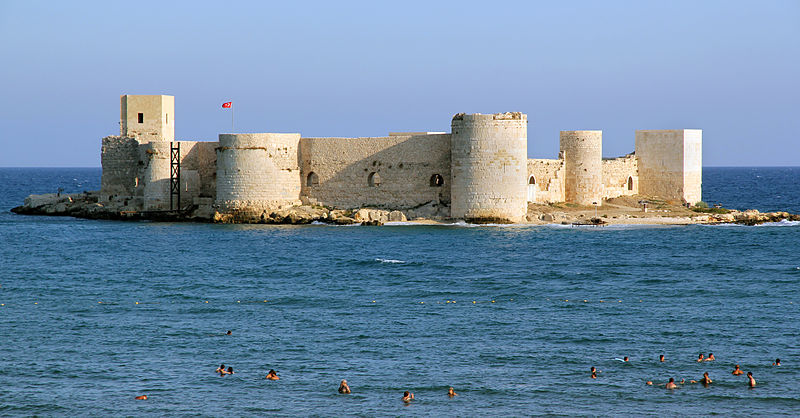
The Fortress of Corycus, at Kızkalesi on Turkey’s south coast in Mersin province, pairs a land castle with the Maiden’s Castle on an islet a few hundred metres offshore, re-fortified by the Byzantines in the early 12th century and later held by Armenian Cilicia and the Lusignan kings of Cyprus.
Swim or take a boat out to the sea castle, then visit the nearby sinkholes of Heaven (Cennet), about 70 m deep with a Byzantine chapel at the bottom, and Hell (Cehennem), where the monster Typhon was said to be imprisoned.
Legend says a king walled his daughter up in the Maiden’s Castle of Corycus after a prophecy that she would die of a snakebite, but a snake reached her hidden in a basket of grapes.
17 – Hagia Sophia – Istanbul
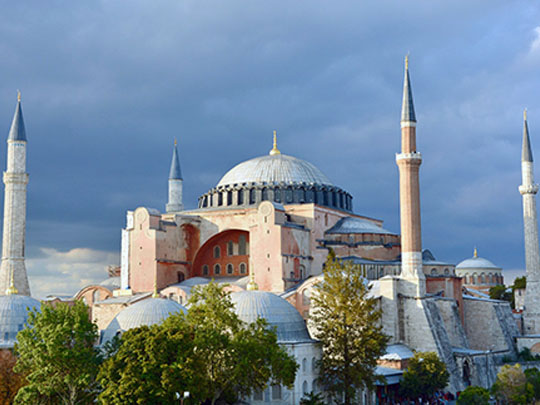
Hagia Sophia, at the heart of old Istanbul, was built in under six years, between 532 and 537, for Emperor Justinian, and was the largest church in the world for centuries.
Look up at the dome, about 32 m across and 55 m high, rebuilt higher after it collapsed in 558, and see the gold Byzantine mosaics in the upper galleries of a building that became a mosque in 1453, a museum in 1935 and a mosque again in 2020.
On a marble parapet in the south gallery of Hagia Sophia, Norse runes most likely spelling “Halfdan” were carved by a Viking, probably of the Varangian Guard, between the 9th and 11th centuries, and found only in 1964.
18 – Gallipoli
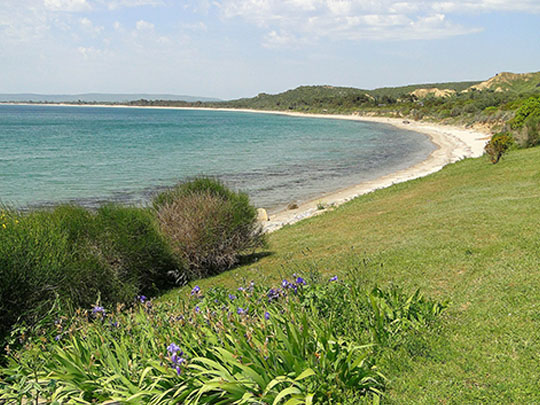
Gallipoli, a peninsula on the European shore of the Dardanelles, was invaded in 1915 by British, French, Australian, New Zealand and Indian troops trying to force the straits, and the eight-month campaign cost more than 44,000 Allied and at least 87,000 Ottoman lives.
Walk the battlefields of the historical park, from the landing beaches at Helles and Anzac Cove to Lone Pine and Chunuk Bair, where Mustafa Kemal, later Atatürk, made his name, past dozens of war cemeteries.
On 25 April 1915 the 1st Royal Dublin Fusiliers landed at V Beach with 25 officers and 987 men, of whom one officer and 374 men got ashore, and some 3,500 to 4,000 Irishmen died in the Gallipoli campaign.
19 – Ephesus
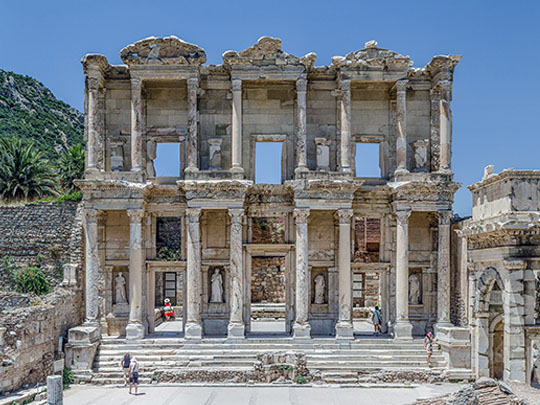
Ephesus, near Selçuk on Turkey’s Aegean coast, was capital of the Roman province of Asia and home to the Temple of Artemis, one of the Seven Wonders, and UNESCO listed it in 2015.
Walk the marble streets to the two-storey façade of the Library of Celsus, built in the 2nd century AD over the tomb of Celsus, and the great theatre, which held about 25,000.
Ephesus was a port, but silt from the Küçük Menderes river pushed the coast away and the city moved more than once to follow it, and St Paul lived here, where silversmiths rioted against him in the theatre.
20 – Troy
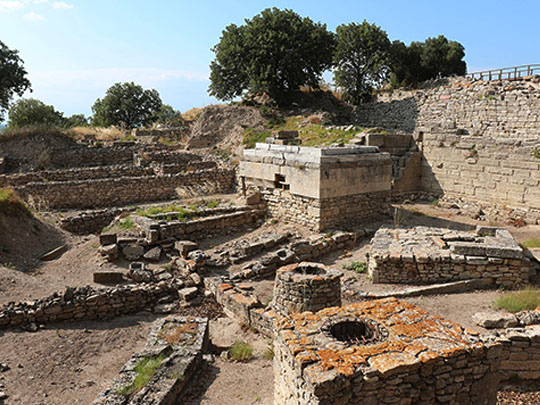

Troy lies on the mound of Hisarlık near the Dardanelles in north-west Turkey, with nine cities stacked from the early Bronze Age to Roman times and Troy VI or VIIa of the late Bronze Age the strongest candidate for Homer’s Troy, and UNESCO listed it in 1998.
Follow the trail through the walls, ramps and houses of the different cities, past the great trench Heinrich Schliemann cut in the 1870s, then visit the Troy Museum, opened in 2018.
Schliemann found “Priam’s Treasure” at Troy in 1873, but it is more than 1,000 years too old for Homer’s Priam, and the gold, taken to Berlin, vanished in 1945 and resurfaced in Moscow’s Pushkin Museum in 1993–94.