
Wikimedia Commons / CC-BY-SA-3.0 / GFDL
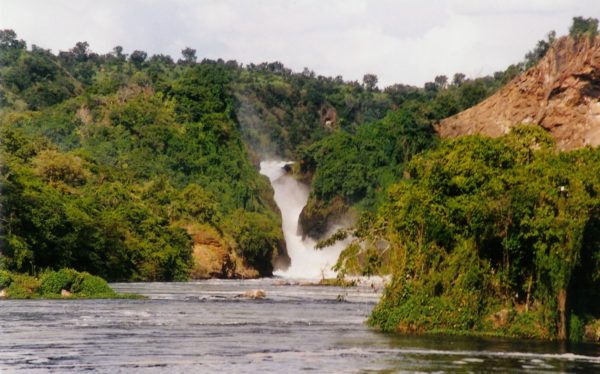
Capital: Kampala
Population: 50 million+
Language: English/Swahili
1 – Murchison Falls (also above)
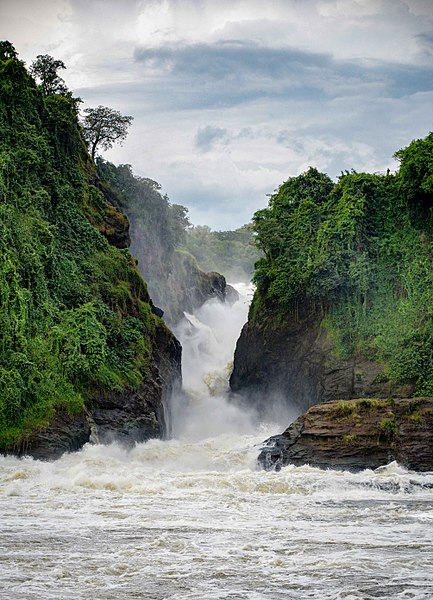
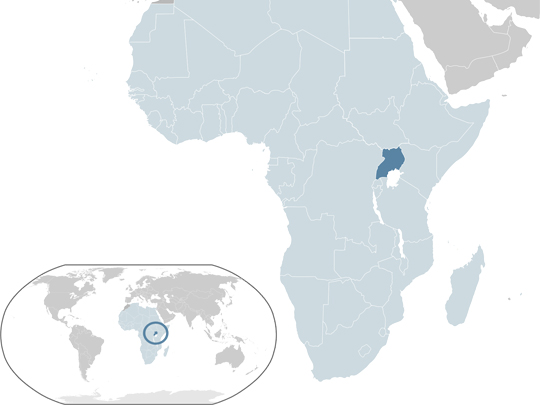
The star of Uganda’s oldest and largest national park, Murchison Falls is often called the most powerful waterfall on Earth — for here the entire Victoria Nile, one of the mightiest rivers in the world, is crushed through a rocky cleft barely 7m wide before exploding 43m down into a cauldron of spray and rainbows.
The classic way to see it is by boat, cruising up the broad Nile past basking crocodiles, pods of hippo and elephants coming down to drink, right up to the foot of the thundering falls; the surrounding savanna teems with lions, giraffes and some 450 kinds of bird, including the prehistoric-looking shoebill.
In 1954 the writer Ernest Hemingway cheated death here twice — his plane crashed near the falls, and then the rescue plane sent to save him crashed and burst into flames on take-off; he survived both, only to have the world’s newspapers print his obituaries, which he later read with grim amusement from his hotel.
2 – Bwindi Impenetrable National Park
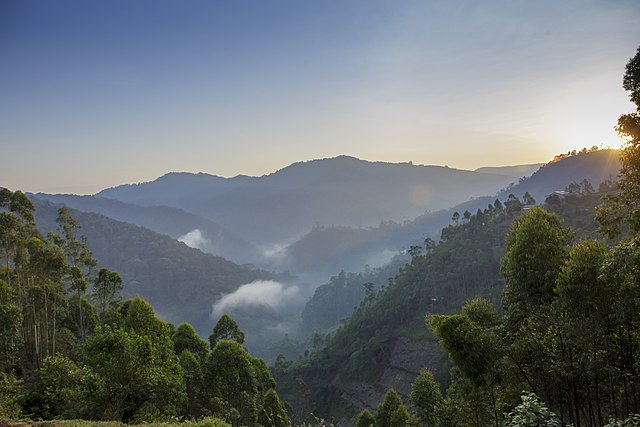
Draped over the steep, mist-wrapped ridges of southwestern Uganda, Bwindi is one of Africa’s oldest rainforests — a tangle of vines and giant trees so dense that its name literally means “impenetrable” — and the greatest sanctuary on Earth for the mountain gorilla, home to nearly half of all that survive.
The experience of a lifetime here is gorilla trekking: guided by rangers who hack a path through the undergrowth, you climb through the dripping forest until you come face to face with a family of these gentle giants and spend a spellbinding hour in their company; the forest also brims with rare birds and monkeys and is the ancestral home of the Batwa people.
There is no other way to meet a mountain gorilla — for, unlike their lowland cousins, mountain gorillas have never survived in captivity, so not a single one exists in any zoo on Earth; every last one lives wild, in just two small pockets of African mountain forest, of which Bwindi is the greatest.
3 – Queen Elizabeth National Park
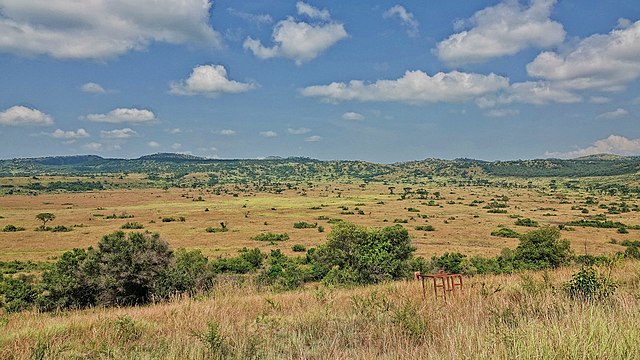
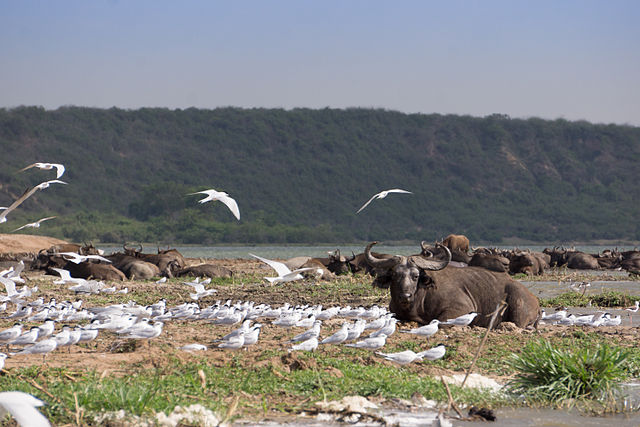
Sprawling across the equator in western Uganda, between snow-capped mountains and two great lakes, Queen Elizabeth National Park is the country’s most popular and one of its most beautiful — a mosaic of savanna, forest, wetland and volcanic crater lakes, renamed in honour of the young Queen Elizabeth II after her visit in 1954.
It’s a paradise of wildlife, with one of the richest bird lists of any park on Earth (over 600 species) and four of the Big Five; the highlight is a boat cruise down the Kazinga Channel, whose banks throng with one of the greatest concentrations of hippos in all of Africa, alongside elephants, buffalo and basking crocodiles.
The park’s real celebrities lurk in the fig trees of its southern Ishasha sector — lions that, most unusually, spend their days draped along the branches high above the plains; tree-climbing lions like these are found in only a couple of places in the whole world.
4 – Rwenzori Mountains National Park
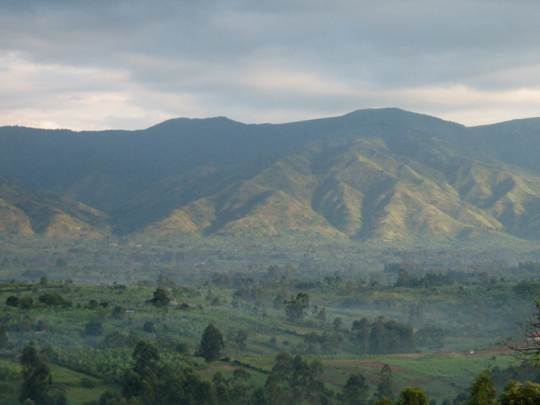
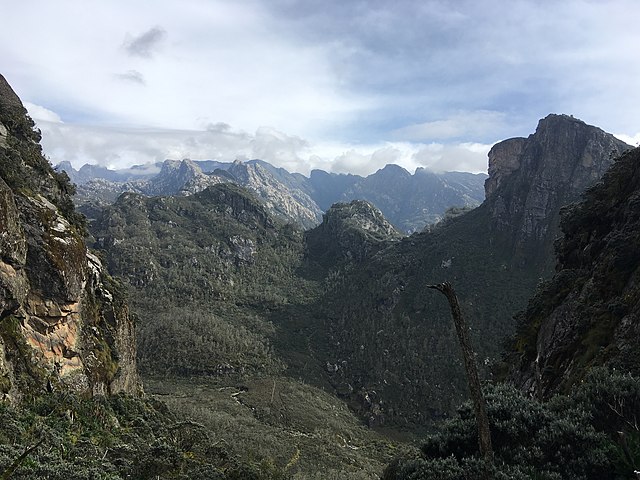
Straddling the Uganda-Congo border, the Rwenzori range soars to Margherita Peak (5,109m), the third-highest summit in Africa — a jagged, mist-shrouded world of glaciers, waterfalls and lakes whose permanent snows sit almost on the equator, and help feed the mighty River Nile.
A tough multi-day trek climbs through a fairytale landscape of dripping cloud forest, bamboo and eerie moorland studded with giant lobelias and groundsels — “Africa’s botanical big game” — up to the last of the continent’s equatorial glaciers, which are, sadly, melting fast and may soon be gone.
The Rwenzoris are the fabled “Mountains of the Moon” — for nearly 2,000 years the ancient Greek geographer Ptolemy’s tale of snow-capped peaks at the heart of equatorial Africa feeding the Nile was dismissed as myth, until European explorers stumbled upon these glacier-hung mountains and realised the old geographer had been right all along.
5 – Kibale National Park
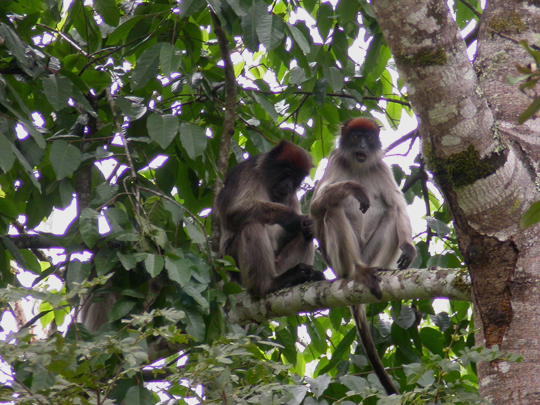
A rich, humid rainforest in the west of Uganda, Kibale is known as the “primate capital of the world” — nowhere on Earth has a greater variety of monkeys and apes, with 13 different primate species swinging through its towering trees.
Its undoubted stars are the chimpanzees — some 1,500 of them — and the great draw is to trek into the forest and spend time among a wild, habituated family of our closest cousins, who share almost all of our DNA; red colobus, mangabeys and black-and-white colobus fill the canopy alongside them, while forest elephants roam below.
Deep in the forest lives Ngogo, the largest community of chimpanzees known to science — around 200 strong — famously studied for decades and the subject of the Netflix series Chimp Empire, whose members have even been documented waging a patient, years-long “war” to seize territory from their neighbours.
6 – Lake Mburo National Park
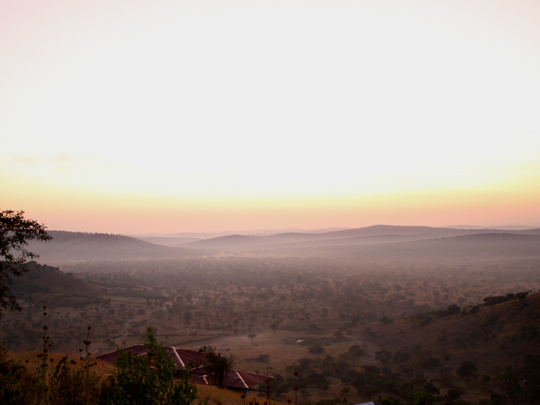
The smallest and most accessible of Uganda’s savanna parks, Lake Mburo is a gentle patchwork of acacia woodland, grassy valleys and shimmering lakes in the rolling Ankole country of the southwest — a peaceful, big-cat-light corner where wildlife grazes among the herds of the local Bahima people’s magnificent long-horned Ankole cattle.
Because there are no elephants and virtually no lions, this is the one park in Uganda where you can leave the safari vehicle behind — exploring on foot, on horseback or by mountain bike among grazing zebra, impala, eland and buffalo, or drifting out on the lake past hippos, crocodiles and fish eagles.
The park has a special link to Uganda’s capital: it is the only place left in the whole country where you’ll find the impala — the very antelope that gave Kampala its name, for the city grew on a hill the locals called “Kasozi ka Empala,” the “hill of the impala.”
7 – White Nile
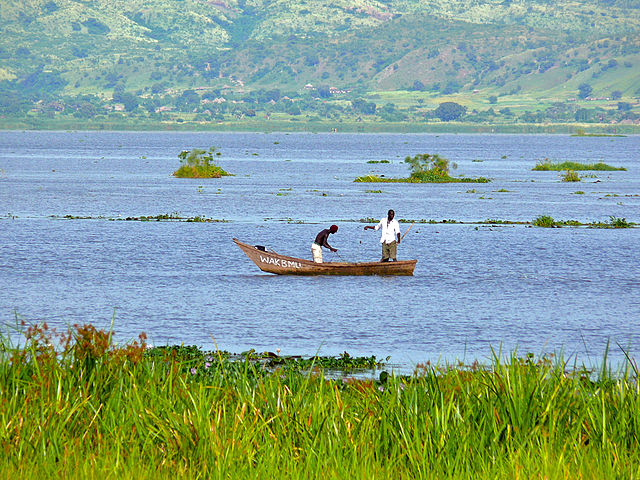
At Jinja in eastern Uganda, the waters of Lake Victoria — the largest lake in Africa — spill northward to begin their epic journey as the White Nile: the source of the longest river on Earth, which winds some 6,650km through the heart of the continent to the Mediterranean.
For centuries the source of the Nile was one of geography’s greatest mysteries, and finding it here was hailed as a triumph of Victorian exploration; today Jinja is the adventure capital of East Africa, where thrill-seekers raft the churning white-water rapids of the young Nile and fling themselves off a bungee platform high above the river.
The man who “found” the source, the explorer John Hanning Speke, met a strange end: bitterly challenged over his claim by his rival Richard Burton, he was due to defend it in a great public debate in England in 1864 — but the day before, out shooting, he died from his own gun, in what many suspected was suicide.
8 – Kasubi Tombs
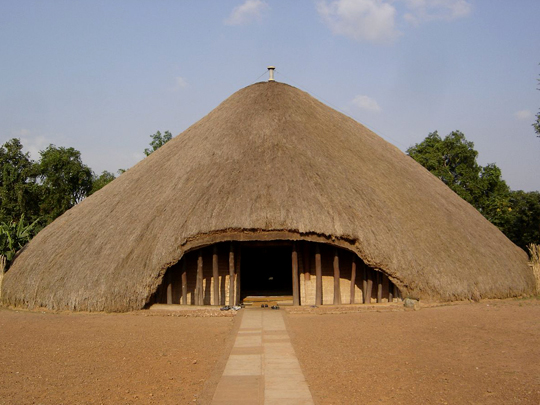
On a green hill on the edge of Kampala stand the Kasubi Tombs, the royal burial ground of the kings of Buganda — one of Africa’s oldest and proudest kingdoms — and the spiritual heart of the Baganda people; a UNESCO World Heritage Site, and the resting place of four kabakas (kings).
At its centre rises the Muzibu Azaala Mpanga, one of the largest thatched buildings in Africa — a vast, beautiful dome woven entirely from wood, reeds, grass and bark cloth, where the tombs of the kings lie hidden behind a curtain, tended by spirit-mediums; destroyed by a mysterious fire in 2010, it was painstakingly rebuilt using the same ancient skills and reopened in 2023.
Buganda royal custom once held that a dead king’s spirit lived on in his jawbone — so, traditionally, the kabaka’s jawbone was removed after death and enshrined separately from his body; Kasubi’s founder, Mutesa I, was the first king to break with this and be buried whole.
9 – Kampala


Uganda’s capital spreads across a ring of green hills a few miles north of Lake Victoria, grown out of the Buganda court into the colonial headquarters and then the seat of an independent country in 1962 — after which it endured two decades that few cities have matched for brutality, under Milton Obote and then Idi Amin.
The Uganda Museum, founded in 1908 and the oldest in East Africa, keeps a gallery of traditional instruments that visitors are invited to play; the Gaddafi National Mosque crowns Old Kampala hill with a minaret you can climb for the best view in the city; and Nakasero market and the roaring taxi parks supply everything else.
Beneath the royal compound at Lubiri lies a bunker built as an armoury and used under Amin as a torture and execution chamber — guides take visitors down into the cells, where messages scratched into the walls by people who never came out are still legible; his rule is reckoned to have killed somewhere between 100,000 and 300,000 Ugandans.
10 – Namugongo Martyrs’ Shrine
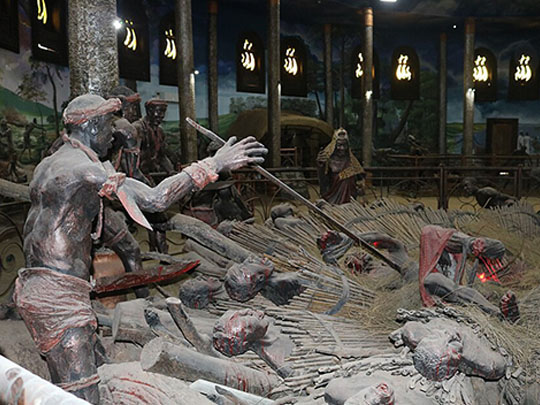
Fifteen kilometres outside Kampala stands the site where, on 3 June 1886, thirty-two young Christian converts of the Buganda court — pages of Kabaka Mwanga, son of the king buried at Kasubi — were wrapped in reed mats and burned alive for refusing to renounce their faith; twenty-two of them were canonised by the Catholic Church in 1964.
A great basilica now covers the execution ground, built in the shape of a traditional Ugandan hut and carried on twenty-two copper pillars, one for each of the canonised; an Anglican shrine and museum stand nearby, beside the lake where the pilgrims gather.
Every 3 June is a national holiday, and the pilgrimage has become one of the largest religious gatherings in Africa: millions converge on this field, many of them having walked for weeks from Kenya, Tanzania, Rwanda, South Sudan and beyond, sleeping at churches along the way.