
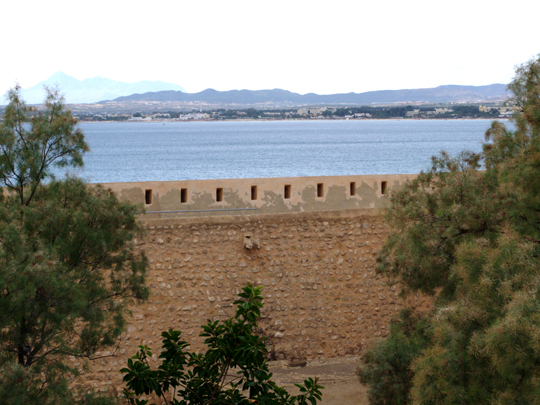
Wikimedia Commons / CC-BY-SA-3.0 / GFDL
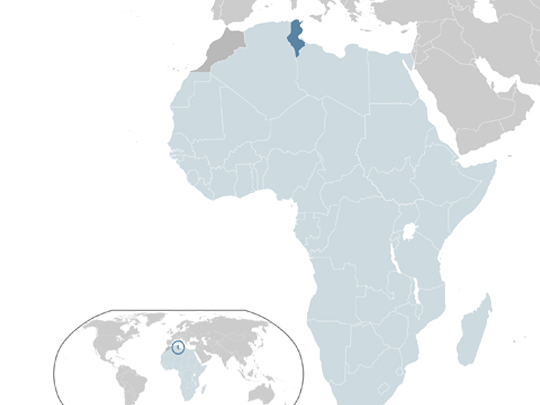
Capital: Tunis
Population: 12 million+
Language: Arabic/Tunisian Derja/French
1 – Kasbah of Hammamet (also above)
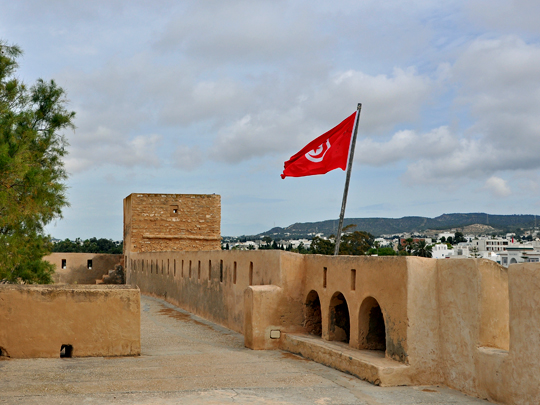
Perched on a rocky headland where the whitewashed medina meets the Mediterranean, the Kasbah of Hammamet is a sturdy medieval fortress whose thick walls have guarded this old Tunisian town against pirates and invaders for centuries; today it presides over one of the country’s most popular beach resorts.
Climb its ramparts for sweeping views over the sea and the tangle of lime-washed lanes below, where fishing boats still set out from the little harbour and jasmine-sellers wander the streets; a café built into the very walls lets you sip mint tea as the waves crash against the stone.
In the 20th century, sleepy Hammamet became a glamorous bolt-hole for artists and the famous — its jewel the George Sebastian Villa, a 1920s mansion so beautiful it hosted the likes of Winston Churchill, and was even commandeered as a military headquarters during the Second World War.
2 – Byrsa (Carthage)
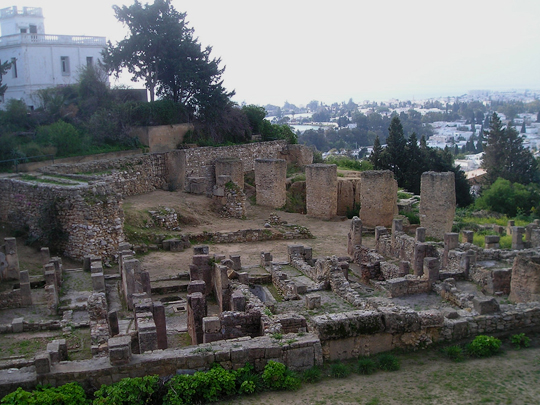
Byrsa is the ancient heart of Carthage — the citadel hill of a mighty Phoenician empire that once ruled the western Mediterranean and was Rome’s greatest rival, until the Romans razed it to the ground in 146 BC, only to rebuild it as one of their own grandest cities; the whole site is a UNESCO World Heritage Site.
From the summit, with its sweeping views over the Gulf of Tunis, you can wander the excavated ruins of “Hannibal’s neighbourhood” — a Punic quarter of streets and houses that survived beneath the later Roman city — crowned today by a grand 19th-century former cathedral.
The hill owes its name to a clever legend: when Carthage’s founder, Queen Dido, was offered only as much land as a single oxhide could cover, she sliced the hide into the thinnest of strips and laid them end to end to encircle the whole hilltop — and “Byrsa” has meant “oxhide” ever since.
3 – Medina of Sousse
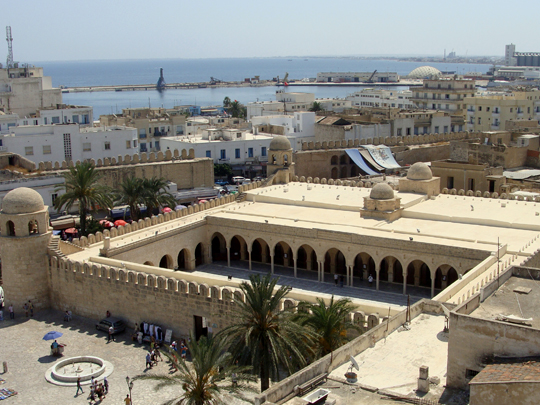
Ringed by mighty golden ramparts rising straight from the streets of a modern beach resort, the Medina of Sousse is one of the finest surviving examples of an early Islamic fortified town — built in the 9th century, in the first centuries of Islam in North Africa, as a stronghold against raiders from the sea, and today a UNESCO World Heritage Site.
Behind its walls lies a labyrinth of whitewashed lanes, covered souks and ancient mosques — including a Great Mosque so austere and fortress-like it has no minaret at all — while the hilltop kasbah now guards a museum of dazzling Roman mosaics.
The medina’s oldest building is its ribat, a fortress-monastery that once housed a most unusual garrison: warrior-monks, devout fighters who defended this coast against seaborne raiders while spending their days studying the Quran in tiny cells — and whose watchtower could flash signals down the shore to the next fort.
4 – Port El Kantaoui
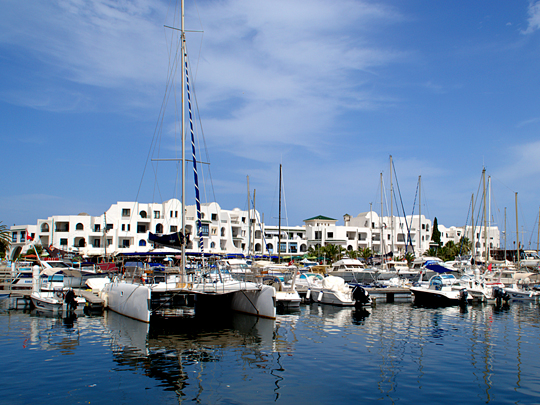
Just up the coast from Sousse lies Port El Kantaoui, a dazzling white-and-blue marina village of arches, cobbled lanes and flower-filled squares wrapped around a yacht-filled harbour — one of the first purpose-built tourist resorts in the Mediterranean, and the polished heart of Tunisia’s beach-holiday coast.
Designed as a “garden of the Mediterranean,” it’s all easy pleasure — hundreds of boats bobbing in the marina, waterfront cafés and seafood restaurants, long sandy beaches, championship golf courses and boat trips out to spot dolphins along the Sahel shore.
For all its timeless, traditional Tunisian looks, Port El Kantaoui is entirely make-believe — the whole village, medina-style lanes and all, was conjured from nothing in 1979 purely for holidaymakers, one of the earliest places anywhere designed from the ground up as a custom-built seaside paradise.
5 – The Bardo National Museum
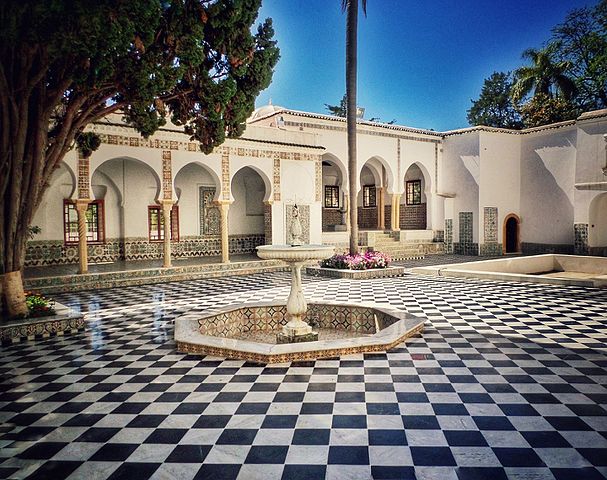
Set inside a sumptuous former palace of the Beys of Tunis — all gilded ceilings, carved stucco and tiled halls — the Bardo is Tunisia’s greatest museum, home to the largest and finest collection of Roman mosaics anywhere on Earth.
Gathered from the ruins of Rome’s fabulously wealthy North African cities, its floors and walls blaze with mosaics of gods, gladiators, hunts and harvests, alongside Carthaginian treasures, Greek bronzes hauled from an ancient shipwreck, and the exquisite gold-on-blue pages of the medieval Blue Qur’an.
Its single most precious piece is the “Virgil Mosaic” — a 3rd-century portrait of the great Roman poet seated between two muses, the scroll of his epic on his knee; it is the only surviving image of Virgil made in the ancient world — the very poet who, in that same epic, told the tale of Carthage’s founding queen, Dido.
6 – El Jem
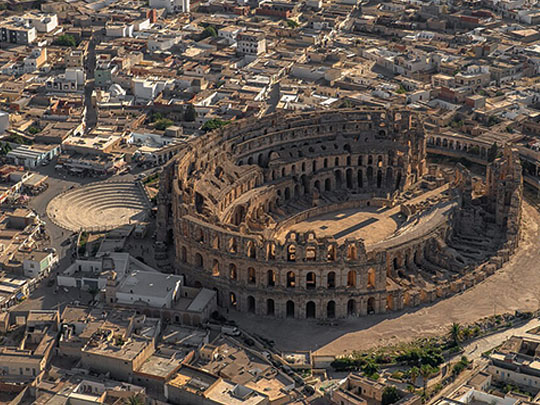
An hour south of Sousse, in flat country covered with olive trees, stands one of the most astonishing survivals of the Roman world: an amphitheatre begun around AD 238 to hold some 35,000 people — the third largest the Romans ever raised, after the Colosseum and Capua, and in far better condition than either. UNESCO listed it in 1979.
You can walk out onto the arena floor, go down into the underground passages where animals and fighters waited their turn, and climb right to the topmost tiers — none of which Rome allows; a museum in the town holds the mosaics lifted from the villas that once surrounded it.
The town it stands in has barely twenty thousand people, and the stadium was never finished: Roman Thysdrus had grown enormously rich on olive oil, its landowners proclaimed one of their own emperor in 238, the revolt collapsed within weeks — and the money stopped, leaving a colossus half-built in a country town.
7 – Kairouan
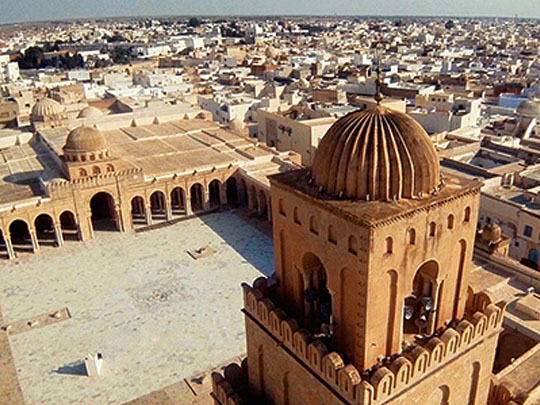
Founded in 670 by the Arab general Uqba ibn Nafi, Kairouan was the first Arab city in North Africa and the garrison from which the whole Maghreb was conquered and converted — for four centuries the political and intellectual capital of this part of the world, and UNESCO-listed in 1988.
Its Great Mosque is the oldest place of worship in the Muslim West: a huge bare courtyard, a squat square minaret that became the model for every minaret in the Maghreb, and a prayer hall held up by hundreds of columns quarried out of Roman ruins. Outside the walls lie the Aghlabid basins, vast open-air reservoirs dug in the ninth century, and the medina is full of carpet workshops.
The story told here is that when Uqba chose this waterless spot, a spring rose from the ground — and in it was found a golden cup lost years earlier at Mecca, proof that the water came from the well of Zamzam itself; the saying goes that seven pilgrimages to Kairouan count as one to Mecca.
8 – Matmata
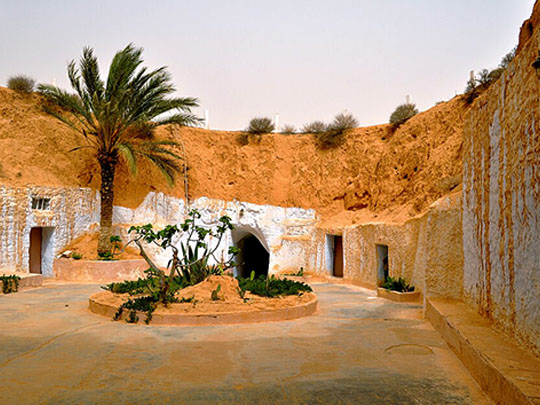
In the parched hills of the south, the Berber villagers of Matmata built their homes downwards rather than up — sinking wide circular pits several metres into the soft rock and tunnelling rooms into the walls around them, so that a whole village can be invisible until you are standing on the roof of it; cool in the furnace of summer, and safe from wind and raiders alike.
A number of these pit houses are still lived in and open to visitors, with rooms and storerooms opening off the sunken courtyard; nearby stand the ksour — fortified Berber granaries at Ksar Ouled Soltane and the ridge village of Chenini — their vaulted storage cells stacked four deep like a honeycomb.
One of the pit houses was dressed as Luke Skywalker’s boyhood home for Star Wars in 1976 and now operates as a hotel where you can sleep in the courtyard — and the desert planet itself took its name from Tataouine, a real town an hour down the road.