
Wikimedia Commons / CC-BY-SA-3.0 / GFDL
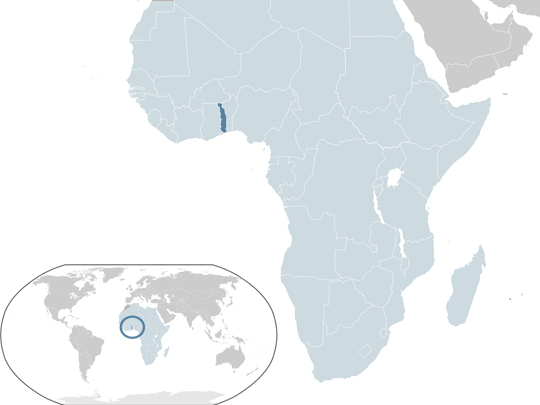
Capital: Lomé
Population: 9.5 million+
Language: French/Ewe/Kabiyè
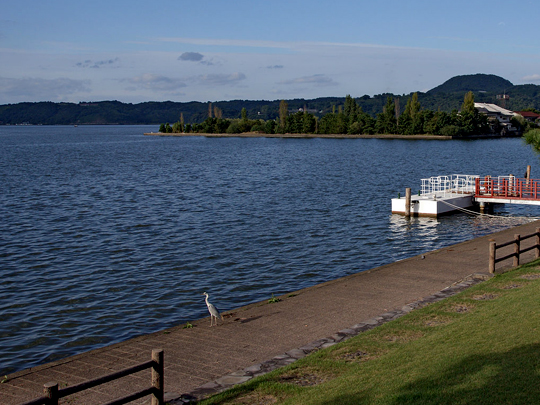
1 – Lake Togo (above)
A calm, shallow lagoon just north of the capital, separated from the Atlantic by a thin ribbon of sand, Lake Togo is the country’s watery heart — and on its northern shore sits the little town of Togoville, which gave its name to the whole nation, and where, in 1884, a local king signed the treaty that handed Togo to Germany.
Brightly painted pirogues pole lazily across the water, carrying visitors to Togoville and its lakeside fishing villages, where men carve canoes and women sell smoked fish; the shallow, breezy lake is also a favourite for windsurfing and other water sports.
This lakeshore is one of the great homelands of Vodun — the religion the wider world knows as Voodoo — and it was from this coast that, carried in the hearts of enslaved Africans across the Atlantic, Vodun took root in Haiti and New Orleans; Togoville’s shrines and sacred groves still stand beside its churches today.
2 – Koutammakou
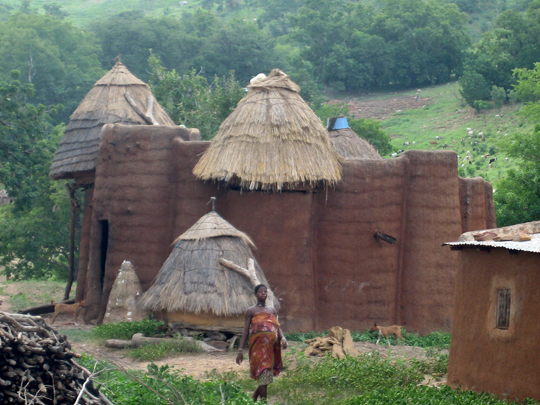
In the hills of Togo’s remote northeast, straddling the border with Benin, lies Koutammakou — the “Land of the Batammariba,” the country’s only UNESCO World Heritage Site, and home to one of Africa’s most extraordinary architectural traditions.
Scattered across this rugged landscape of farmland, sacred forests and rocky outcrops stand the takienta — sculptural, castle-like tower-houses of mud and wood, two storeys high with conical thatched granaries and clay shrines at their doors, built entirely by hand by a people whose name means “those who shape the earth.”
Each of these graceful little towers is in fact a fortress: with a single doorway, livestock stabled on the ground floor and the family living up on the roof, reached by a notched wooden ladder, they were built to be defended — against human raiders in the age of the slave trade, and against the leopards that still prowl these hills.
3 – Keran National Park
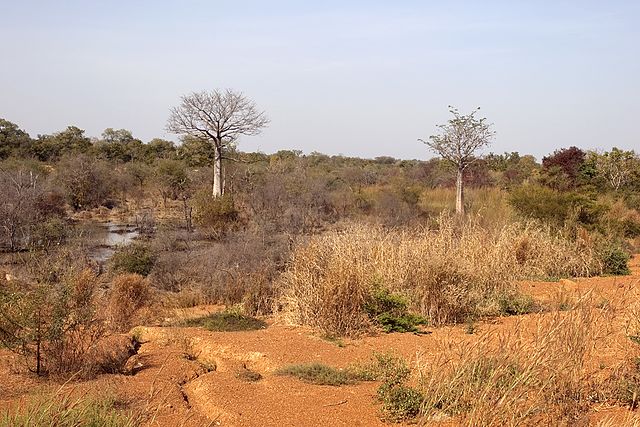
In the far north of Togo, along the banks of the Oti River and its tributaries, Kéran National Park is one of the country’s last great tracts of wild savanna — a remote expanse of grassland, marsh and gallery forest that shelters much of the wildlife Togo has left.
Far off the tourist trail, it’s a place for the adventurous, its riverside woodlands and wetlands home to hippos, crocodiles, warthogs, baboons, herds of antelope such as roan and waterbuck, and more than 240 kinds of bird gathering at the water.
Kéran is also one of the last refuges of Togo’s elephants — for the country’s once-plentiful herds have been reduced to a critical few, and it’s in wild corners like this, along the northern rivers, that the survivors still roam.
4 – Fazao Malfakassa National Park

Sprawling across the wooded hills of central Togo near the Ghanaian border, Fazao-Malfakassa is the country’s largest national park — a wild, gloriously varied wilderness named for the Fazao Hills and the Malfakassa Mountains that rise across it.
Far off the beaten track and blissfully empty of crowds, it’s a paradise for hikers — a patchwork of savanna, dense forest and grassy uplands cut by streams, rocky cliffs and hidden waterfalls, where elephants, antelope, monkeys and more than 200 kinds of bird move through the trees.
Few parks in West Africa pack in such variety — in a single day’s walk you can pass from open golden savanna into deep, humid jungle, climb into cool green mountains and stumble upon tumbling waterfalls; for 25 years, this scenic wilderness was even cared for by a Swiss conservation foundation.
5 – Lomé
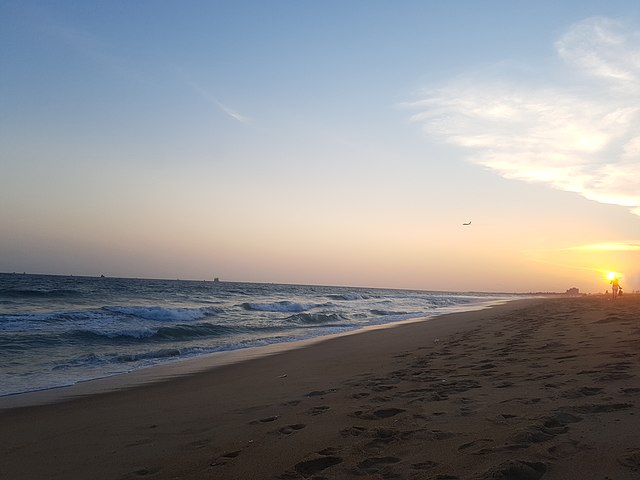
Togo’s easygoing capital, Lomé, sprawls along the Atlantic in the far southwestern corner of the country — right up against the border with Ghana, which runs along the very edge of the city, making it one of the few capitals on Earth you can stroll out of straight into another country.
Its long, palm-fringed beach and seafront boulevard are where the city comes alive in the cool of the evening — fishermen haul in their nets, families gather and bars spill onto the sand, though the fierce Atlantic currents mean it’s a place for strolling rather than swimming; inland lie the huge Grand Marché and the world’s largest voodoo “fetish” market.
The Grand Marché was long ruled by the legendary “Nana Benz” — a formidable sisterhood of Togolese businesswomen who cornered the trade in colourful wax-print fabric and grew so wealthy that they became famous for cruising the city in Mercedes-Benz cars, from which they took their nickname.
6 – Aného
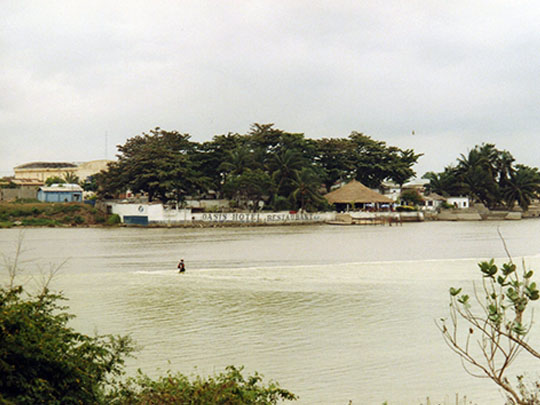

Down on the coast near the Beninese border, Aného was founded in the 17th century by Ané and Ga people who had fled the wars around Elmina, far along the coast in what is now Ghana — which is why they, and the language still spoken in Togo’s southern markets, are called Mina; the town grew into a Danish, then Portuguese and Brazilian trading station, and one of the busiest slave-shipping points on this shore.
What survives is a town quietly falling apart between the lagoon and the sea: tall shuttered houses built by Afro-Brazilian returnee families, a German-era church, a cemetery full of old trading names, and fishermen hauling their nets up the beach at either end of the day.
Aného was the capital twice over — seat of German Togoland from 1885, and then of French Togoland until 1920, when the administration packed up and moved along the coast to Lomé; the town simply stopped that year, which is precisely why it still looks the way it does.
7 – Atakpamé
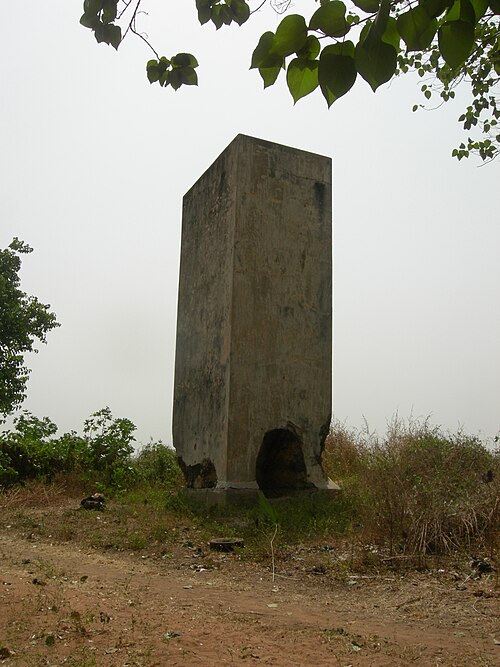

A hill town in the central Plateaux region, some 160km north of the capital, Atakpamé sits high enough to be cool and green, and grew as a market for the cotton country around it — the Germans made it their base for the interior, and the town has been a crossroads of the Ana-Ife people and traders from all over the region ever since.
The market is the draw, along with weavers working the narrow-strip looms, colonial buildings going gently to seed on the slopes, views out across the hills, and the reservoir at Nangbéto on the Mono River a short drive away.
Just outside town the Germans built Kamina, an enormous wireless station linking Berlin to its colonies and its warships at sea — and when war came in 1914, British and French troops closed in, the Germans blew up their own transmitters, and Togoland surrendered on 26 August: the first German territory to fall in the First World War, and the Allies’ first victory of the whole conflict.