

Rod Waddington / Wikimedia Commons / CC-BY-SA-3.0 / GFDL
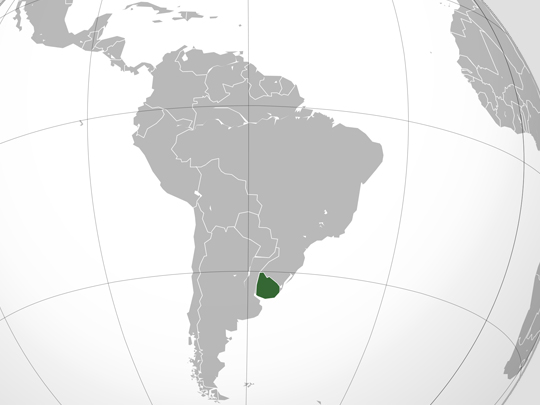
Capital: Montevideo
Population: 3.4 million+
Language: Spanish (Portuñol spoken along the Brazilian border)
1 – Colonia del Sacramento (also above)
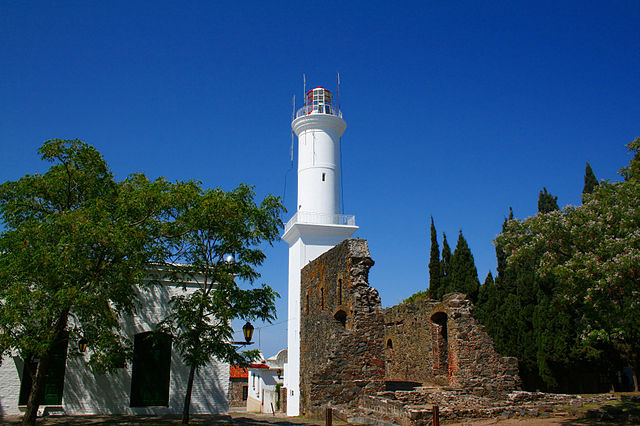
Colonia del Sacramento, on a peninsula in the Río de la Plata about 180 km west of Montevideo and opposite Buenos Aires, was founded by the Portuguese under Manuel Lobo in 1680, became a hub for smuggling into Spanish territory, and changed hands more than ten times by most counts.
The Barrio Histórico of Colonia del Sacramento, listed by UNESCO in 1995, is a compact quarter of cobbled lanes and low stone houses, with the Calle de los Suspiros, the old city gate and drawbridge, and a parish church dating back to the town’s beginnings.
Colonia del Sacramento’s long tug-of-war shows in its streets, laid out irregularly by the Portuguese and in a straight grid by the Spanish, and its lighthouse of 1857 rises from the ruins of the old Convent of San Francisco Xavier.
2 – Pocitos
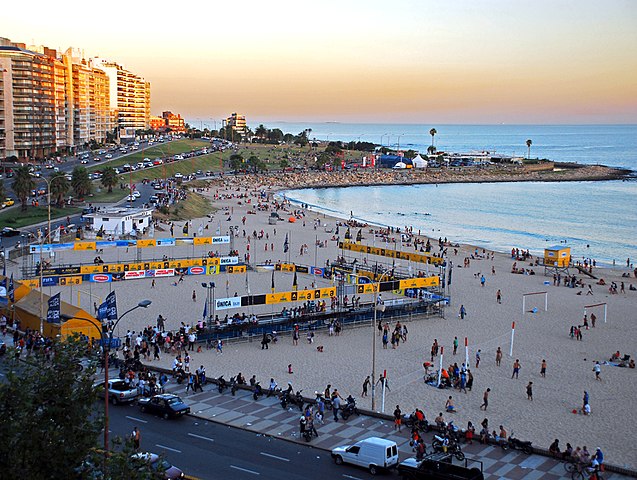
Pocitos, a seaside neighbourhood a few kilometres east of central Montevideo, was formally inaugurated in 1886, and its name, “little wells”, comes from the holes that washerwomen dug in the sand here to wash clothes.
The beach at Pocitos is backed by the Rambla, a waterfront promenade running about 22 km along the city’s coast, a place for joggers, flasks of mate, beach volleyball and cafés a street back.
Pocitos’s old ground, built in 1921, hosted one of the two opening matches of the first World Cup on 13 July 1930, where France’s Lucien Laurent volleyed in the first goal in World Cup history against Mexico.
3 – Plaza Independencia, Montevideo
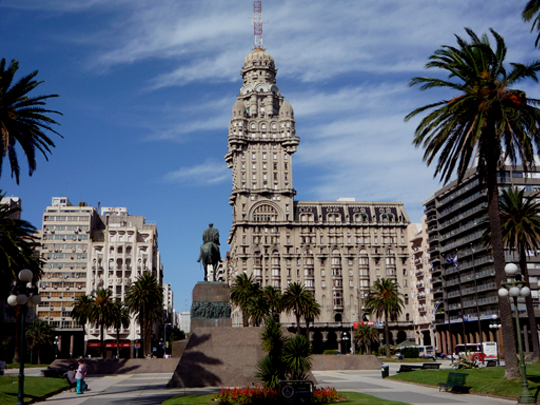
Plaza Independencia, between Montevideo’s old town and the modern city, stands where the Spanish citadel once rose, which fell to the patriots in June 1814 after the County Mayo-born admiral William Brown destroyed the Spanish squadron off the city.
At the centre of Plaza Independencia rises the statue of José Artigas, some 17 m tall with its base, above an underground mausoleum guarded day and night, while the Palacio Salvo of 1928, for a time the tallest building in Latin America, looms over the square.
The Palacio Salvo stands on the site of the Confitería La Giralda, where on 19 April 1917 Roberto Firpo’s orchestra gave the first performance of Gerardo Matos Rodríguez’s “La Cumparsita”, which became the most famous tango ever written.
4 – Port of Punta del Este
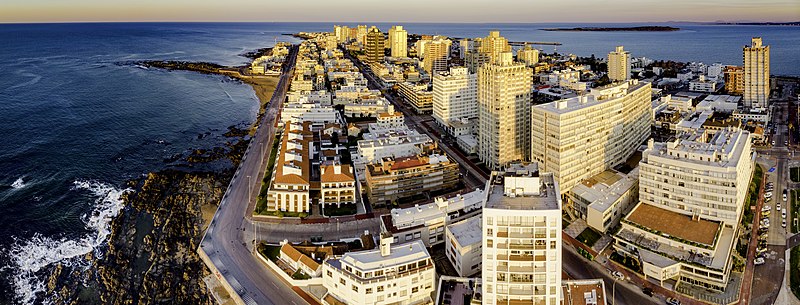
The Port of Punta del Este lies on the narrow peninsula of Uruguay’s best-known resort, where the Río de la Plata gives way to the Atlantic, so the town has two coasts, the calm Playa Mansa and the surf-battered Playa Brava.
The Port of Punta del Este is the most enjoyable corner of the town, with fishing boats unloading at the quay, seafood restaurants along the front, yachts in season and sea lions waiting for scraps beside the fish market.
On Playa Brava near the Port of Punta del Este, five giant concrete fingers rise from the sand, La Mano, made in 1982 by the Chilean artist Mario Irarrázabal and said to have been inspired by a drowning swimmer’s hand, as a warning about the rough surf.
5 – Cabo Polonio
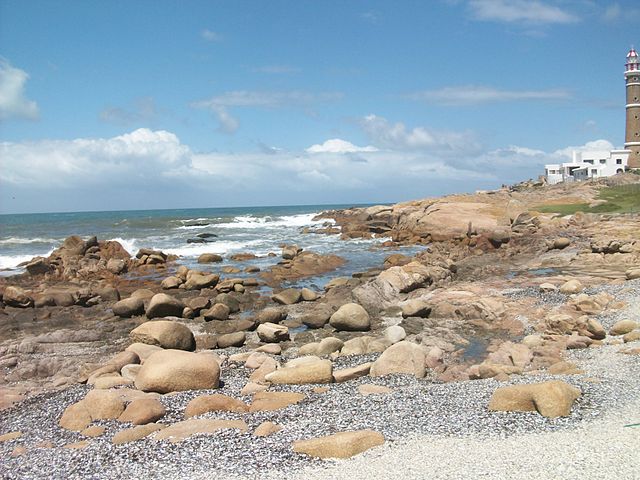
Cabo Polonio is a tiny settlement on a rocky cape on the Atlantic coast of Rocha, cut off behind shifting dunes, named after José Poloní, captain of a Spanish ship that ran aground here in 1753, and its lighthouse dates from 1881.
No road reaches Cabo Polonio, so visitors ride in from the highway by open 4×4 truck over the dunes, then walk between wooden cabins, wild beaches and the lighthouse, with sea lions sprawled on the rocks below.
Cabo Polonio has no mains electricity, for homes run on solar panels, wind and generators while only the lighthouse is on the grid, so its night skies are among the darkest in Uruguay, and the area has been protected since 2009.
6 – Estadio Centenario, Montevideo
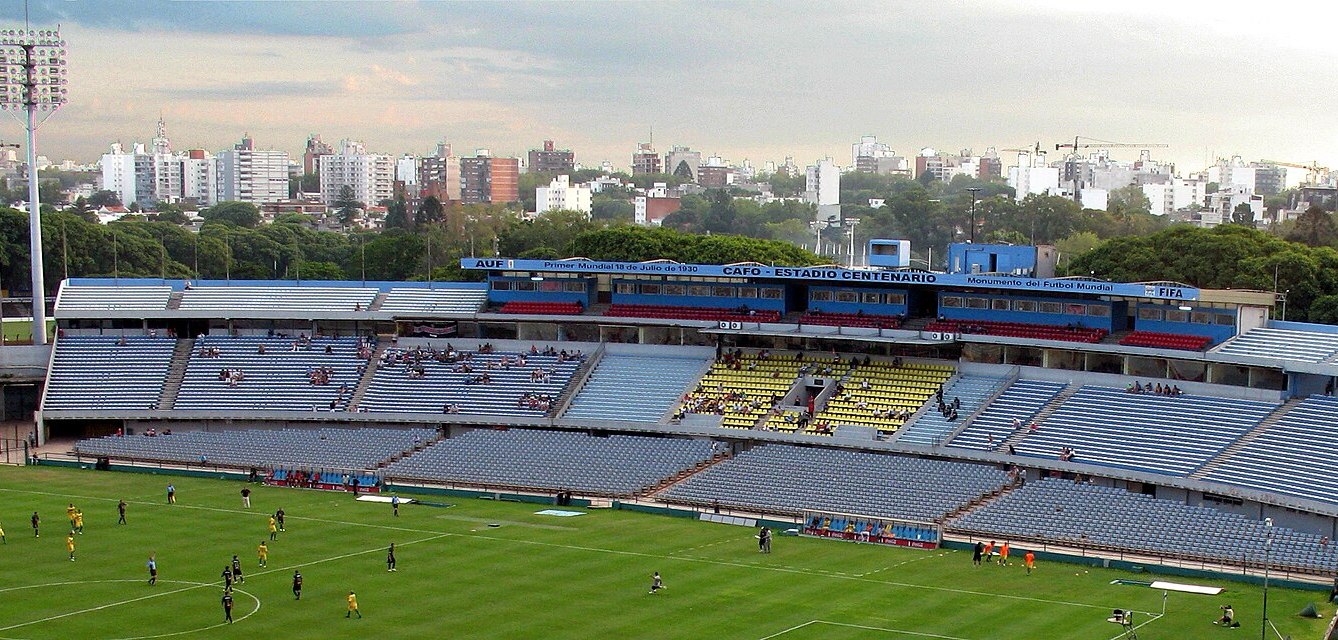
The Estadio Centenario, Uruguay’s national stadium, was built in 1929–30 for the first World Cup and opened on 18 July 1930, the centenary of the country’s first constitution, and hosted the first World Cup final, in which Uruguay beat Argentina 4–2.
The Estadio Centenario is home to the national team, and its Museo del Fútbol, beneath the Torre de los Homenajes, tells the story of Uruguay’s football triumphs.
In 1983, FIFA declared the Estadio Centenario the only Historical Monument of World Football, though rain delayed its building so much that about 1,100 workers on three shifts a day missed the start, and six of the tournament’s 18 matches were played elsewhere.
7 – Fray Bentos Industrial Landscape
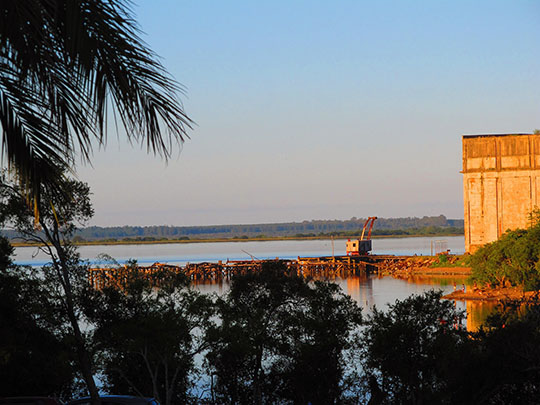
The Fray Bentos Industrial Landscape is a vast meat-processing complex on the Uruguay River, where Liebig’s Extract of Meat Company, formed in 1865, and from 1924 the British-owned Anglo turned the cattle of the grasslands into food for Europe, and it was listed by UNESCO in 2015.
Visitors to the Fray Bentos Industrial Landscape tour the giant cold store, the chimney and the docks, a museum in the old factory buildings and the Barrio Anglo, the company town built for workers from more than 50 countries.
The works at Fray Bentos were once called “the great kitchen of the world”, for their corned beef fed armies in both world wars, and the Fray Bentos brand of pies, made in England from 1958, is named after this Uruguayan town.
8 – Maldonado
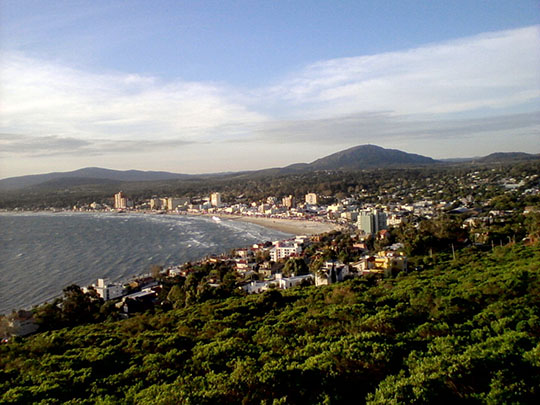
Maldonado, a few kilometres inland from Punta del Este, was founded in the 1750s under the governor of Montevideo to fortify the bay against Portuguese expansion, and was captured by British troops in October 1806 during their invasions of the Río de la Plata.
Maldonado’s colonial core includes a cathedral begun in 1801 and finished in 1895, the Cuartel de Dragones, built between 1771 and 1797, and the Torre del Vigía, a lookout tower for spotting ships.
Charles Darwin spent ten weeks at Maldonado in 1833 while the Beagle was on the coast, gathering what he called “a nearly perfect collection” of the district’s animals, birds and reptiles.
9 – Barrio Sur and Palermo, Montevideo
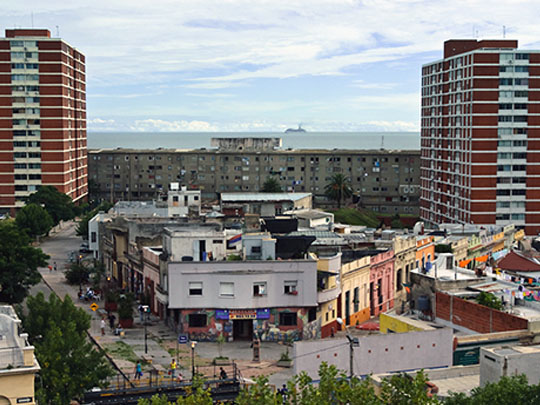
Barrio Sur and Palermo, just south of Montevideo’s centre, are historic Afro-Uruguayan neighbourhoods, the birthplace of candombe, the drumming tradition created by the descendants of enslaved Africans.
In Barrio Sur and Palermo, candombe drummers tune their drumskins over street fires and then parade through the streets behind the deep piano drum, a tradition listed by UNESCO in 2009.
The February Llamadas parade is the big spectacle in Barrio Sur and Palermo, but candombe drums sound through these streets every Sunday and on many holidays, and local associations run guided visits.
10 – Fortaleza de Santa Teresa
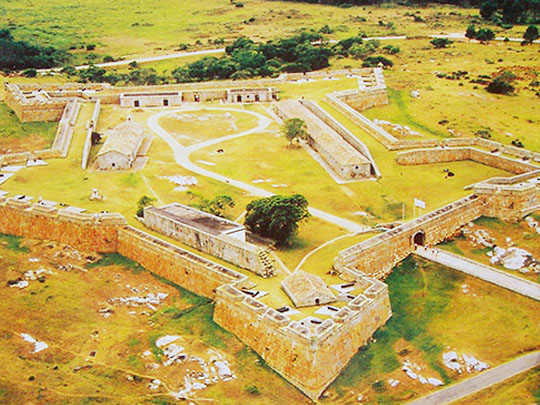

The Fortaleza de Santa Teresa, an irregular pentagonal fortress near the Atlantic in Rocha, about 300 km from Montevideo, was begun by the Portuguese in 1762 and taken in 1763 by a Spanish force under Pedro de Cevallos, who completed it.
Behind the 642 m of double stone walls of the Fortaleza de Santa Teresa, filled with earth and rubble to absorb cannon fire, visitors walk the parade ground, barracks and a military museum, set within Santa Teresa National Park.
The Fortaleza de Santa Teresa stands on the frontier where Portugal and Spain fought for a century over the land that became Uruguay, an independent buffer state between Argentina and Brazil from 1828.
11 – Tacuarembó
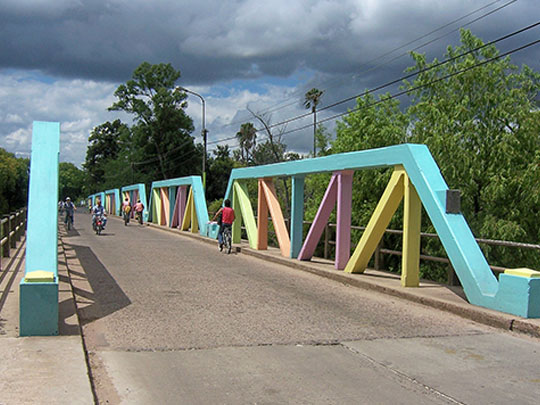
Tacuarembó, a cattle town in the rolling grassland of northern Uruguay, is the heart of gaucho country, home of the horsemen who worked these plains and became the national symbol of a land of pasture.
Each March since the late 1980s, Tacuarembó hosts the week-long Fiesta de la Patria Gaucha, with thousands of riders, rodeo and criollo societies recreating rural life from colonial times to 1920.
Records place Carlos Gardel, the voice of tango, as born in Toulouse in 1890, but Tacuarembó has long claimed him as a native son, for his Uruguayan papers of 1920 gave Tacuarembó as his birthplace.
12 – Montevideo
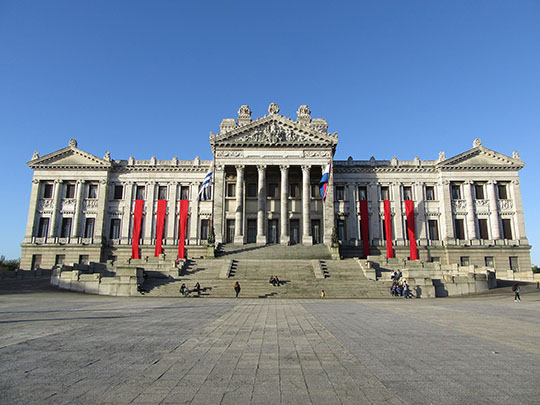
Montevideo’s grandest building is the Palacio Legislativo, inaugurated on 25 August 1925, the centenary of Uruguay’s declaration of independence, clad in Uruguayan marbles to a design by the Italian architect Vittorio Meano, who was shot dead in 1904 before he could learn he had won the competition.
On Montevideo’s southern shore, Punta Carretas grew around a lighthouse of the 1870s and a prison of 1915, from which on 6 September 1971, 111 prisoners, 106 of them Tupamaro guerrillas, escaped through a 40m tunnel, and in 1994 the prison reopened as a shopping centre.
Among the escapers from Punta Carretas was José Mujica, later President of Uruguay, while across Montevideo, Peñarol opened its Estadio Campeón del Siglo, with room for about 40,000, on 28 March 2016, named for the club’s selection as South America’s best club of the 20th century.
13 – Salto
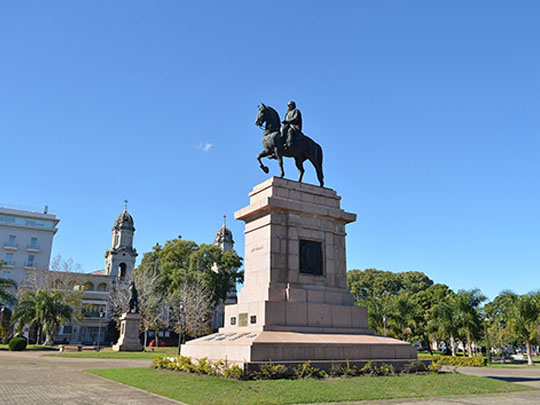
Salto, on the Uruguay River in the north-west, grew from a fort founded in 1756 by the governor of Montevideo beside the river’s falls, the saltos that gave it its name, and near the city in February 1846 Giuseppe Garibaldi fought the Battle of San Antonio.
Salto’s historic centre of old façades and a cathedral holds the birthplace of the writer Horacio Quiroga, born here in 1878, while the nearby hot springs were found by geologists drilling for oil, at Arapey in 1941 and at Daymán in 1957.
Just upstream from Salto rises the Salto Grande Dam, shared by Uruguay with Argentina, begun in 1974 and first generating power in June 1979, whose reservoir forced the relocation of the Argentine town of Federación and the Uruguayan villages of Belén and Constitución.
Hello! My name is Claudio, I am from Uruguay. I have to say that the pics you mentioned in this publication are very clear.
You took some of the best places in my country and the descriptions are perfect! I would like to ad some other places (please I hope this don’t bother you), por example: Punta Caretas neighborhood, Campeón del Siglo Stadium, Legislative Palace.
Please keep going with other places !
Bye!!