
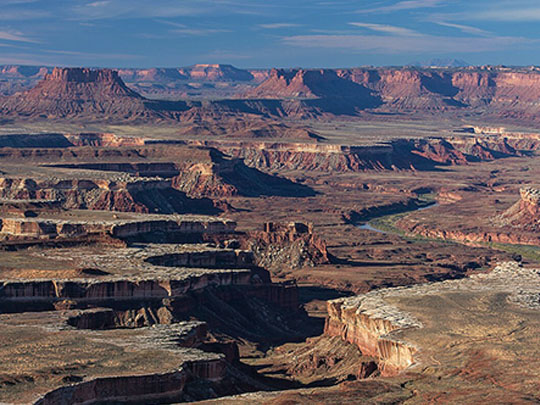
“Green River Overlook II” by mtnscll, CC BY-SA 2.0
Capital: Salt Lake City
Population: 3.5 million+
Language: English

1 – Canyonlands National Park (also above)
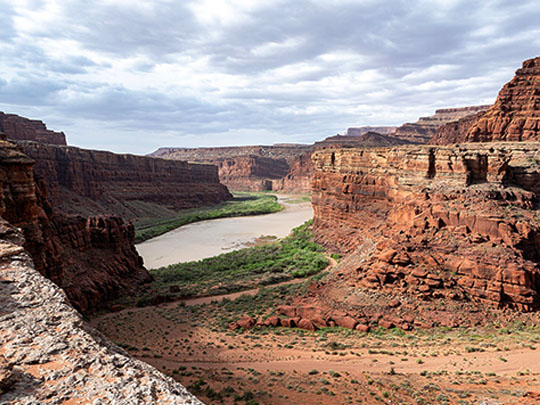
Canyonlands National Park, Utah’s biggest national park, was carved by the Green and Colorado rivers, which meet at its heart, and it was signed into law by Lyndon B Johnson in 1964 after Interior Secretary Stewart Udall flew over the area and pushed for a park.
Canyonlands splits into the Island in the Sky mesa, with Mesa Arch on its rim, the Needles, and the Maze, one of the most remote corners of the US, while the White Rim Road below the mesa was cut in the 1950s for uranium prospectors who found little.
Canyonlands’ Great Gallery paintings in Horseshoe Canyon were long thought to be several thousand years old, but a 2014 study dated them to roughly 1,000–2,000 years ago, Upheaval Dome is widely thought to be a meteorite crater rather than a salt dome, and Aron Ralston’s 127 Hours ordeal happened in Blue John Canyon, just outside the park.
2 – Arches National Park

Arches National Park, just north of Moab, holds more than 2,000 natural sandstone arches, thought to be the densest concentration in the world, formed as salt beds deep underground buckled the rock and weather carved it into fins, and it became a national park in 1971.
Arches’ sights include Delicate Arch, which appears on one of Utah’s licence plates, Landscape Arch, 93 m across and the longest in North America by the park’s reckoning, and Wolfe Ranch, homesteaded by Civil War veteran John Wesley Wolfe, with Ute rock art nearby.
Arches’ best-known ranger, Edward Abbey, worked there in 1956–57 and turned it into his classic Desert Solitaire, Double Arch backs the opening of Indiana Jones and the Last Crusade, though the cave in the film doesn’t exist, and Wall Arch collapsed overnight in 2008.
3 – Angels Landing

Angels Landing is a narrow sandstone fin in Zion Canyon rising nearly 460 m above the Virgin River, reportedly named in 1916 by Methodist minister Frederick Vining Fisher, who joked that only an angel could land on it.
Angels Landing’s trail, cut into the rock in 1926, climbs the 21 tight switchbacks of Walter’s Wiggles, named after Zion’s first custodian Walter Ruesch, to Scout Lookout and a final 800 m scramble along the fin with chains to hold.
Angels Landing is often called the most dangerous hike in America, a media label rather than any official ranking, though more than a dozen hikers have died there since 2000.
4 – Zion National Park

Zion National Park, carved by the Virgin River in southwest Utah, became Utah’s first national park in 1919, ten years after it was protected as Mukuntuweap National Monument, the name John Wesley Powell had given the canyon.
Zion’s sights include the Narrows, where hikers wade the Virgin River between towering walls, Emerald Pools, the Court of the Patriarchs, the 1930 Zion–Mount Carmel Tunnel, and Kolob Arch, one of the longest arches in the world, while a shuttle has carried visitors up the canyon since 2000.
Zion National Park’s name is credited to Mormon settler Isaac Behunin, who built a cabin here in 1863, though an earlier pioneer’s enthusiasm got the canyon mockingly nicknamed “Joseph’s Glory” after Joseph Black, whose Mormon family came from Lisburn, County Antrim, and the bicycle scene in Butch Cassidy and the Sundance Kid was filmed at Grafton ghost town just outside the park.
5 – Bryce Canyon National Park

Bryce Canyon National Park, on the edge of the Paunsaugunt Plateau at 2,440–2,740 m, takes its name from Scottish-born Mormon pioneer Ebenezer Bryce, who settled nearby in the 1870s, and it became a national park in 1928.
Bryce Canyon holds what the park calls the largest concentration of hoodoos on Earth, with trails such as the Navajo Loop past Thor’s Hammer and the Queen’s Garden, named for a hoodoo said to resemble Queen Victoria, and it’s an International Dark Sky Park.
Bryce Canyon isn’t a canyon but a series of natural amphitheatres, the Paiute tell of the Legend People turned to stone by Coyote, and Ebenezer Bryce’s famous verdict, “a hell of a place to lose a cow”, is doubted by the park, which suggests he may have said “a poor place to loose a cow”.
6 – Bonneville Salt Flats

The Bonneville Salt Flats, some 120 km² of salt crust near Wendover on Utah’s Nevada border, are a remnant of prehistoric Lake Bonneville, and in 1846 the Donner Party’s wagons sank into the mud beneath the crust, costing them days that left them trapped by Sierra snow.
Bonneville Speedway has hosted land-speed runs since 1914, where Malcolm Campbell’s Bluebird became the first car over 300 mph in 1935 and Craig Breedlove’s Spirit of America passed 400, 500 and 600 mph in the 1960s, while Burt Munro set his famous 1967 record on a 1920 Indian Scout.
The Bonneville Salt Flats played Davy Jones’ Locker in Pirates of the Caribbean: At World’s End and appear in Independence Day and The World’s Fastest Indian, while among the Donner Party who crossed them was Patrick Breen from County Carlow, whose diary is a key record of the ordeal and whose whole family survived.
7 – Capitol Reef National Park

Capitol Reef National Park follows the Waterpocket Fold, a wrinkle in the Earth’s crust nearly 160 km long, and its name comes from white sandstone domes like the US Capitol’s and “reef”, a settlers’ term for a rocky barrier, and it became a national park in 1971.
Capitol Reef’s sights include Fremont petroglyphs, the 40 m Hickman Bridge, the Behunin Cabin, and Fruita, a Latter-day Saint settlement from the 1880s whose historic orchards are open for picking in season.
Capitol Reef’s Waterpocket Fold lifted the rocks on its west side more than 2,100 m above those on the east, and Cassidy Arch is named after Butch Cassidy, who local lore says hid out in its canyons, though it’s never been proven.
8 – Dead Horse Point State Park

Dead Horse Point State Park, opened in 1959, sits on a narrow mesa 610 m above a gooseneck bend of the Colorado River near Moab, and the best-known legend says cowboys penned wild mustangs on its narrow neck and left them to die within sight of the water, though local accounts differ.
Dead Horse Point’s overlook takes in the river’s gooseneck, the canyons of Canyonlands and the bright blue potash evaporation ponds, dyed to speed evaporation, and the park has been an International Dark Sky Park since 2016.
Dead Horse Point gave Thelma & Louise its famous final plunge, filmed just below the point rather than at the Grand Canyon, and Tom Cruise’s free-climbing opening to Mission: Impossible 2 was shot here too.
9 – Salt Lake City

Salt Lake City was founded on 24 July 1847 by Brigham Young’s company of Mormon pioneers, celebrated every year as Pioneer Day, and its 132-ft-wide streets follow Joseph Smith’s 1833 “Plat of the City of Zion”.
Salt Lake City’s Temple Square holds the Salt Lake Temple, built over exactly 40 years from 1853 to 1893 of quartz monzonite that looks like granite, and the Tabernacle, whose acoustics are shown off with a dropped pin, while the Cathedral of the Madeleine was built by Bishop Lawrence Scanlan from County Tipperary.
Salt Lake City’s founding words, Brigham Young’s “This is the right place”, were first recorded by Wilford Woodruff in 1880, three years after Young died, and the 1848 “miracle of the gulls” that saved the settlers’ crops is honoured with a monument on Temple Square, though historians think the gulls made only a small difference.
10 – Monument Valley

Monument Valley straddles the Utah–Arizona border on Navajo Nation land, run since 1958 as Monument Valley Navajo Tribal Park, though its most famous buttes, the Mittens and Merrick Butte, stand just over the line in Arizona.
Monument Valley’s scenic drive loops among the sandstone buttes, the visitor centre has an exhibit on the Navajo Code Talkers, and on the Utah side, US-163 near mile marker 13 is Forrest Gump Point, where Forrest finally stopped running.
Monument Valley’s film fame began in 1938, when traders Harry and Leone Goulding took photographs to Hollywood, hoping to help Navajo neighbours hit hard by the Depression, and John Ford, born John Feeney to a father from Spiddal, County Galway, chose it for Stagecoach, hiring Navajo as extras and wranglers.
11 – Golden Spike National Historical Park
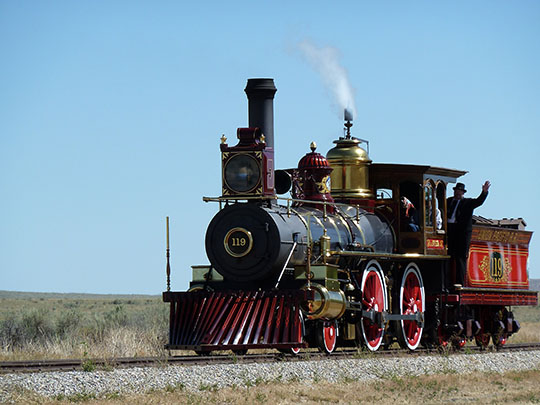
Golden Spike National Historical Park marks Promontory Summit, north of the Great Salt Lake, where on 10 May 1869 the Central Pacific’s Jupiter and the Union Pacific’s No. 119 met to complete the first transcontinental railroad, and the telegraph flashed a single word: “DONE”.
Golden Spike’s working replica locomotives re-enact the meeting, and the park remembers the railroad’s builders, the Central Pacific’s workforce, about nine in ten of them Chinese, and the Union Pacific’s largely Irish crews, many of them Civil War veterans.
Golden Spike’s ceremony saw Leland Stanford and Thomas Durant reportedly both miss with their swings, and the gold spike, only tapped in, was swapped for an ordinary iron one, while nearby on 28 April 1869 eight Irish rail handlers and hundreds of Chinese workers laid 16 km of track in a single day, a feat the Park Service says has never been equalled.
12 – Rainbow Bridge and Lake Powell
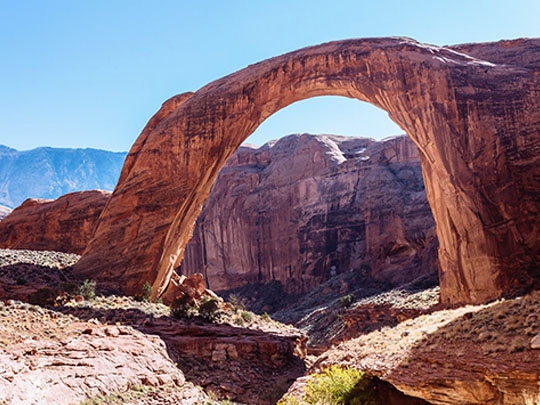
Rainbow Bridge, a sandstone span about 88 m high near the Arizona line, was proclaimed a national monument in 1910, the year after Native guides Nasja Begay, a Paiute, and Jim Mike led an expedition there, and it’s sacred to the Navajo and neighbouring nations.
Lake Powell, the reservoir behind Glen Canyon Dam that began filling in 1963, is named after explorer John Wesley Powell and is the second-largest reservoir in the US by capacity, a houseboat playground and the boat route to Rainbow Bridge.
Rainbow Bridge was long billed as the world’s largest natural bridge, but it’s one of the largest, not the largest, visitors are asked out of respect not to walk beneath it, and the Sierra Club’s David Brower, who accepted the dam to stop another, later wrote that Glen Canyon died “and I was partly responsible for its needless death”.
13 – Great Salt Lake, Antelope Island
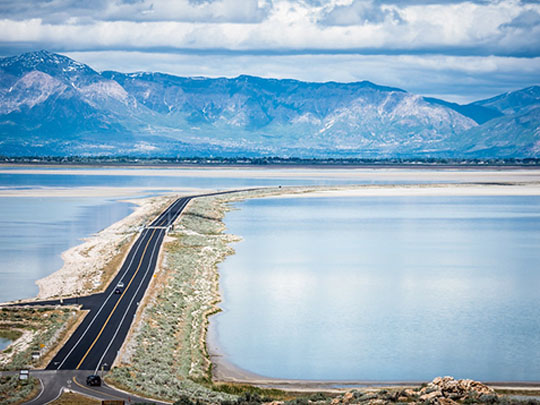
The Great Salt Lake, the largest saltwater lake in the Western Hemisphere, has no outlet to the sea, and trapper Jim Bridger, one of the first outsiders to reach it in 1824–25, took it for an arm of the Pacific, while its largest island, Antelope Island, was named by John C Frémont and Kit Carson in 1845.
The Great Salt Lake is split by a railroad causeway that leaves its saltier north arm stained pink by salt-loving microbes, its brine shrimp eggs make up a large share of the world’s supply for fish and prawn farms, and Robert Smithson’s 1970 Spiral Jetty at Rozel Point spent about 30 years underwater before drought exposed it in 2002.
The Great Salt Lake’s Antelope Island bison herd, one of the largest publicly owned herds in the US, began with a few animals shipped over by boat in 1893, and in 1868, Patrick Edward Connor from County Kerry, who had led the 1863 Bear River Massacre of Shoshone people, launched the Kate Connor, one of the first commercial vessels on the lake.
14 – Dinosaur National Monument
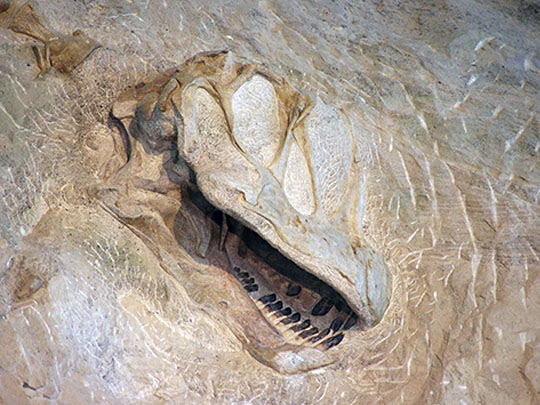
Dinosaur National Monument straddles the Utah–Colorado line, and its Utah side holds the quarry where Carnegie Museum fossil hunter Earl Douglass found eight Apatosaurus tail bones in 1909, proclaimed a national monument by Woodrow Wilson in 1915.
Dinosaur National Monument’s Quarry Exhibit Hall near Jensen displays a wall of about 1,500 bones set in 150-million-year-old rock, and at Cub Creek stands the cabin of homesteader Josie Bassett Morris, who ran with Butch Cassidy’s circle.
Dinosaur National Monument’s quarry wall isn’t a graveyard where dinosaurs died together, as a river washed the carcasses in and buried them, the monument exists only because the government ruled that bones aren’t minerals and couldn’t be mined under a claim, and in the 1950s conservationists defeated a dam planned at Echo Park inside it.
15 – Goblin Valley
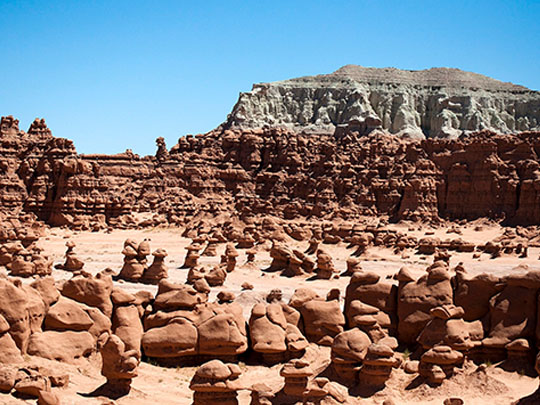
Goblin Valley State Park, on the edge of the San Rafael Swell north of Hanksville, was found by cowboys hunting stray cattle and nicknamed “Mushroom Valley” by Arthur Chaffin, who returned to explore it in 1949, and it became a state park in 1964.
Goblin Valley is packed with thousands of hoodoos, or “goblins”, of 170-million-year-old Entrada sandstone, where harder caps protect the softer rock beneath, and it’s been an International Dark Sky Park since 2016.
Goblin Valley stood in for an alien planet in Galaxy Quest, and in 2013, a Scout leader was filmed by another pushing over a hoodoo, and both later pleaded guilty to reduced misdemeanour charges.