

Wikimedia Commons / CC-BY-SA-3.0 / GFDL
Capital: Cardiff
Population: 3.1 million+
Language: Welsh and English

1 – Anglesey (also above)

Anglesey (Ynys Môn), the island across the Menai Strait from north-west Wales, was a Druid stronghold until Roman troops under Suetonius Paulinus crossed in AD 61, and Tacitus describes black-robed women with torches and Druids calling down curses on the shore.
See Bryn Celli Ddu, a passage tomb from about 3000 BC lit by the midsummer sunrise, Beaumaris Castle, begun by Edward I in 1295 and never finished, and South Stack Lighthouse on its sea stack, first lit in 1809.
Thomas Telford’s Menai Suspension Bridge, opened in 1826, carried the London to Holyhead road, busy with Dublin traffic after the Act of Union, and on 10 October 1918 more than 500 people died when the mail boat RMS Leinster, sailing from Kingstown to Anglesey’s port of Holyhead, was torpedoed by a German U-boat.
2 – Swansea

Swansea, at the mouth of the River Tawe, grew from a Norman castle town into “Copperopolis”, the world’s leading copper-smelting centre in the 19th century, and much of its ore was shipped in from the mines of Allihies in West Cork.
See Swansea Castle with its 14th-century arcaded parapet, Swansea Museum, opened in 1841 and the oldest museum in Wales, and Mumbles at the end of the bay, reached from 1807 by the Swansea and Mumbles Railway, usually cited as the world’s first regular passenger railway service.
The poet Dylan Thomas was born in Swansea in 1914, and the Three Nights’ Blitz of 19–21 February 1941 killed 230 people and destroyed the old town centre.
3 – Cardiff

Cardiff, on the River Taff, grew from a Roman fort and Norman castle into one of the world’s greatest coal ports after the 2nd Marquess of Bute opened the West Bute Dock in 1839, shipping 10.7 million tons at its 1913 peak, and became the capital of Wales in 1955.
See Cardiff Castle, rebuilt as a Gothic Revival fantasy by William Burges for the 3rd Marquess of Bute from 1868, the Coal Exchange, reputedly where the first £1 million cheque was signed in 1904, and the Senedd, opened in 2006.
Bute built Cardiff’s Newtown district in 1846 for Irish workers, many of them fleeing the Famine, who laboured on the docks, and on 2 January 1941 a German parachute mine wrecked the roof of Llandaff Cathedral in a raid that killed 165 people.
4 – Three Cliffs Bay

Three Cliffs Bay, on the south coast of the Gower peninsula west of Swansea, takes its name from a limestone headland with three points, and Gower became the UK’s first Area of Outstanding Natural Beauty in 1956.
Follow the Pennard Pill stream through the saltmarsh to the beach, cross to Pobbles Bay at low tide, and climb to the Neolithic chambered tomb on Penmaen Burrows and the ruins of Pennard Castle above the bay.
Pennard Castle above Three Cliffs Bay was abandoned as sand dunes swallowed the area in the 14th century, though legend blames fairies angered at being refused a dance at the lord’s wedding, and farther west on Gower, Paviland Cave held the “Red Lady”, in fact a young man buried with red ochre about 33,000 years ago.
5 – Conwy

Conwy, on the estuary of the River Conwy in north Wales, was built as a walled English town by Edward I in 1283–87, with Master James of St George ringing it with 1.3 km of walls and 21 towers, and the castle and walls became part of a UNESCO World Heritage Site in 1986.
See Conwy Castle, with the most intact medieval royal apartments in Wales, walk the town walls, and cross the river past Thomas Telford’s suspension bridge of 1826, its towers built to match the castle, and Robert Stephenson’s tubular rail bridge of 1848.
In the winter of 1294–95 Edward I was trapped in Conwy by Madog ap Llywelyn’s revolt and supplied only by sea, and in August 1399 Richard II, just back from campaigning in Ireland, took refuge at Conwy Castle before surrendering to Henry Bolingbroke’s side.
6 – Aberystwyth

Aberystwyth, on Cardigan Bay in west Wales, grew around a castle begun by Edward I in 1277 and held by Owain Glyndŵr from 1404, and in 1872 it opened the first University College in Wales, paid for partly by small donations from ordinary people.
Ride the Constitution Hill Cliff Railway, opened in 1896, take the Vale of Rheidol steam railway to Devil’s Bridge, and visit the National Library of Wales, founded by royal charter in 1907.
In WWII the National Library of Wales in Aberystwyth sheltered treasures from London in a tunnel dug into the rock, including Magna Carta, Shakespeare First Folios and Michelangelo drawings, and in 1963 the Welsh Language Society held its first protest on Aberystwyth’s Trefechan Bridge.
7 – Bangor

Bangor, on the Menai Strait in north-west Wales, grew around a monastery founded by St Deiniol around 525, the oldest cathedral foundation in Britain, older than Canterbury’s of 597.
See Bangor Cathedral, restored by George Gilbert Scott in 1868–80 and home to the late-15th-century wooden “Mostyn Christ”, stroll the Victorian Garth Pier, and visit the neo-Norman Penrhyn Castle, built from the 1820s on a slate fortune.
The Penrhyn quarry dispute near Bangor in 1900–03, often described as the longest in British industrial history, saw strikers’ homes display cards reading “There is no traitor in this house”, and in WWII the BBC moved its Variety department to Bangor, bringing Tommy Handley of ITMA.
8 – Llandudno

Llandudno, on the north Wales coast between the Great Orme and Little Orme headlands, was a small fishing and copper-mining village until building plots for a planned Victorian resort went on sale in 1849.
Walk the pier of 1877, at 2,295 ft the longest in Wales, ride the cable-hauled Great Orme Tramway, opened in 1902, and go underground in the Great Orme copper mines, first worked about 4,000 years ago.
Alice Liddell’s family built a holiday house, Penmorfa, in Llandudno by 1862, but the town’s White Rabbit memorial, which says Lewis Carroll was inspired “on this very shore”, is unproven, since the story began on a boat trip at Oxford.
9 – Tenby

Tenby (Dinbych-y-pysgod, “little fort of the fish”), on Carmarthen Bay in Pembrokeshire, is a walled Norman port whose late-13th-century walls Jasper Tudor helped strengthen in 1457, and its medieval merchants imported herrings, wool and cloth from Ireland.
Walk the walls to the Five Arches gate, see the 15th-century Tudor Merchant’s House, take the boat to Caldey Island, where monks make perfume and chocolate, and stroll the Georgian resort laid out by Sir William Paxton.
Robert Recorde, born in Tenby around 1512, introduced the equals sign in 1557 and ran the Dublin mint as surveyor of Ireland’s mines in 1551–53, and in July 1943 troops loaded at Tenby for Exercise Jantzen, a D-Day rehearsal landing at nearby Saundersfoot.
10 – Snowdonia
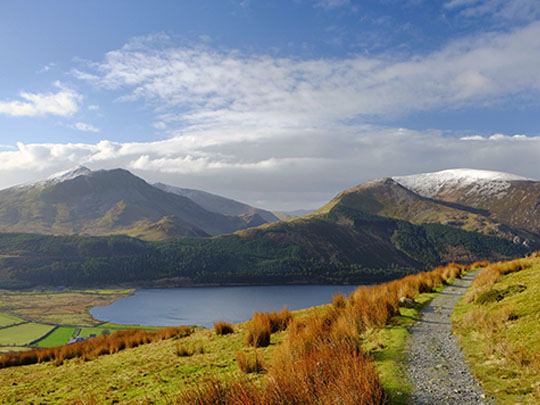
Snowdonia (Eryri), designated in 1951 as the first national park in Wales, covers about 2,130 km² of north-west Wales around Yr Wyddfa (Snowdon), at 1,085 m the highest peak in Wales and England, in a heartland where most people speak Welsh.
Ride the Snowdon Mountain Railway, a rack line opened in 1896, to the Hafod Eryri summit building of 2009, explore the slate quarries around Llanberis, part of a UNESCO World Heritage Site since 2021, and tour Dinorwig’s “Electric Mountain” power station, built inside Elidir mountain.
The 1953 Everest team trained in Snowdonia from the Pen-y-Gwryd Hotel, and after Churchill told the National Gallery’s director to “hide them in caves and cellars, but not one picture shall leave this island”, its paintings spent the war in the Manod slate mine near Blaenau Ffestiniog.
11 – Caernarfon Castle
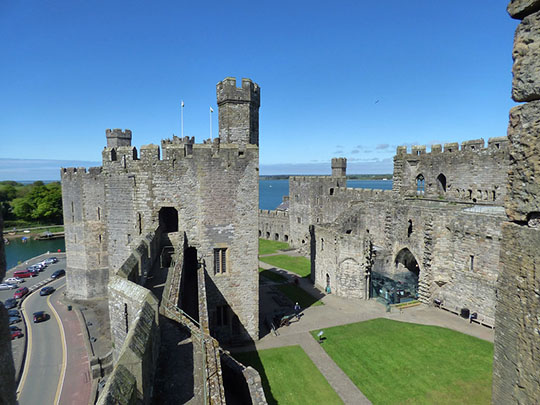
Caernarfon Castle, on the Menai Strait in north-west Wales, was begun by Edward I in 1283 near the Roman fort of Segontium, founded around AD 77 and later used to guard the coast against Irish raiders, and building went on until about 1330 without ever being finished.
See the many-sided towers and banded stonework, said to echo the walls of Constantinople, climb the Eagle Tower, completed in 1316–17, and visit the Royal Welch Fusiliers Museum in two of the towers.
Edward I’s son, the future Edward II, was born at Caernarfon Castle on 25 April 1284 and became Prince of Wales in 1301, though the tale that he was shown off as a baby prince who could speak “never a word of English” is a later legend, and princes of Wales were invested here in 1911 and 1969.
12 – St Davids
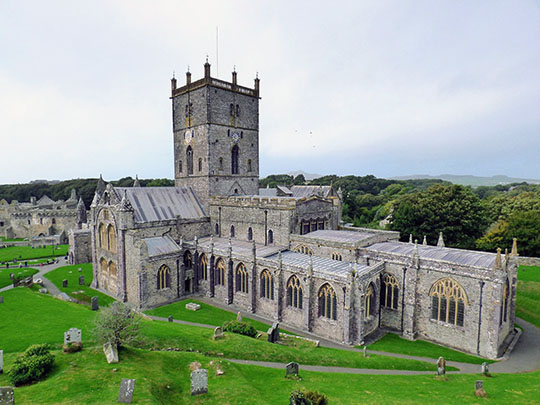
St Davids (Tyddewi), on the far western tip of Pembrokeshire, is the UK’s smallest city, built around the 6th-century monastery of St David, patron saint of Wales, who traditionally died on 1 March 589, and its city status was confirmed by Letters Patent in 1994.
See the cathedral, begun in 1181, with a nave floor that rises about 4 m and a 16th-century ceiling long said to be Irish bog oak but shown by tree-ring dating to be Welsh oak, the ruined Bishop’s Palace of Henry de Gower with its arcaded parapet, and St Non’s Chapel at David’s traditional birthplace.
In 1123 Pope Callixtus II ruled that two pilgrimages to St Davids equalled one to Rome, Henry II prayed there on 29 September 1171 on his way to Ireland, and Máedóc, founder of Ferns in Co. Wexford, was among David’s disciples.
13 – Pembroke Castle
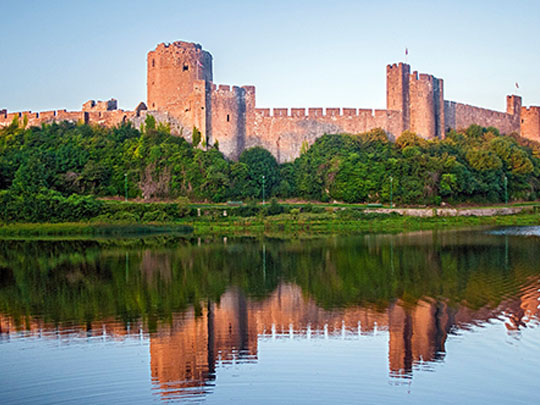
Pembroke Castle, on a rocky ridge above the Pembroke River in south-west Wales, was founded in the 1090s by Arnulf de Montgomery, held against a long Welsh siege in 1096 by Gerald of Windsor, and blown up on Cromwell’s orders after its surrender in 1648.
See the great round keep, nearly 80 ft high with a stone dome, built by William Marshal around 1200, the Wogan Cavern, a natural cave beneath the castle, and the tower where Henry Tudor, the future Henry VII, is said to have been born on 28 January 1457 to the 13-year-old Margaret Beaufort.
Gerald of Windsor’s wife, Nest, was an ancestor of the FitzGeralds, the Geraldines of Ireland, and William Marshal, who married Strongbow’s daughter Isabel de Clare in 1189 and became Earl of Pembroke in 1199, founded New Ross and rebuilt Kilkenny Castle.
14 – Fishguard
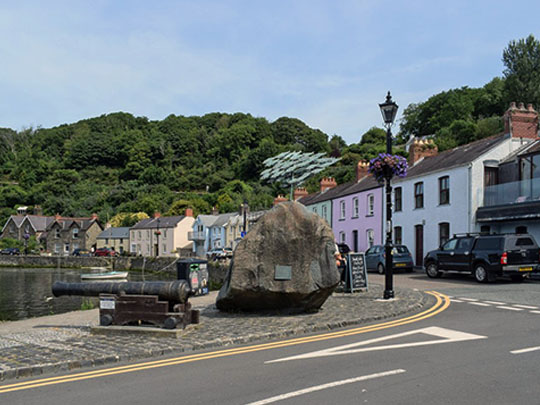
Fishguard (Abergwaun), on the north Pembrokeshire coast, is where about 1,200–1,400 French troops under the Irish-American William Tate landed on 22 February 1797 in the last invasion of Britain, a diversion in General Hoche’s plan, made with Wolfe Tone, for a French landing in Ireland.
See the Last Invasion Tapestry, 100 ft long in the Bayeux style, the Royal Oak inn where the surrender was negotiated, the Lower Town quay used in Moby Dick (1956) and Under Milk Wood (1972), and the harbour at Goodwick, opened in 1906 for the Rosslare ferries.
Tate surrendered on Goodwick Sands on 24 February 1797, though the tale of cobbler Jemima Nicholas capturing 12 Frenchmen with a pitchfork lacks contemporary evidence, and on 22 April 1912 Denys Corbett Wilson took off from Goodwick to make the first flight from Britain to Ireland, landing near Enniscorthy.
15 – Harlech Castle

Harlech Castle, on a crag above Tremadog Bay in north-west Wales, was begun by Edward I in 1283 under Master James of St George when the sea reached the foot of the rock, and it survived Madog ap Llywelyn’s siege of 1294–95 thanks to supplies brought in by ship.
Walk through the great gatehouse and along the walls for views to the mountains of Eryri, then look down the “Way from the Sea”, 108 steps to the old water gate, long left high and dry as the coast receded.
Owain Glyndŵr took Harlech Castle in 1404 and held court there until 1409, the Lancastrians held it for seven years in 1461–68, traditionally inspiring “Men of Harlech”, and in the Mabinogion, Branwen marries Matholwch, King of Ireland, at Harlech, a match that ends in war between Britain and Ireland.