
Wikimedia Commons / CC-BY-SA-3.0 / GFDL
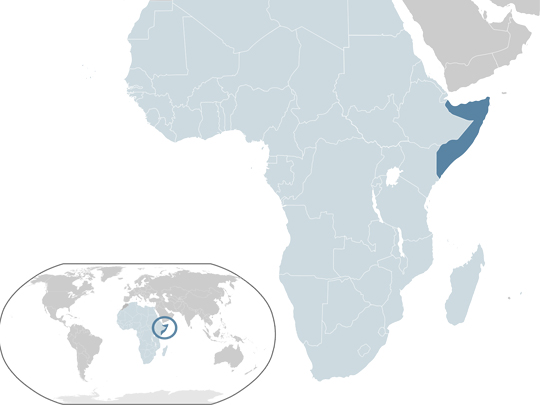
Capital: Mogadishu
Population: 19.5 million+
Language: Somali, Arabic
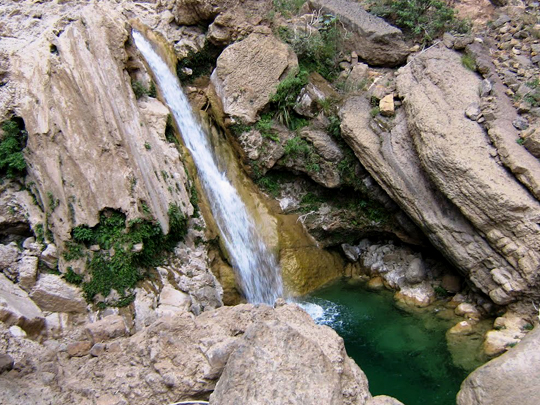
1 – Lamadaya Waterfalls (above)
Lamadaya Waterfalls lie tucked into a gorge in the Cal Madow mountains of Sanaag, in Somalia’s far north, where streams off the cool highlands fall through a land whose riverbeds lie dry for much of the year.
At Lamadaya, the water drops in a chain of cascades down sheer rock walls, a rare splash of green in the mountains above the hot Gulf of Aden coast.
The name Lamadaya is often translated from Somali as “not to be looked at”, said to be a warning about the giddy drop at the lip of the falls.
2 – Laas Gaal Paintings
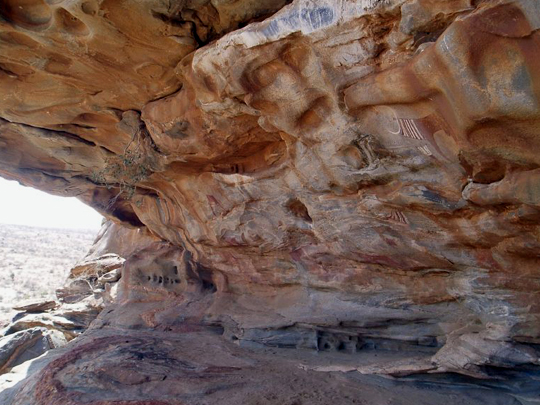

Laas Gaal, on a granite hill about 50 km from Hargeisa in Somaliland, in northern Somalia, holds some twenty rock shelters painted by Neolithic cattle herders, in work thought to be around 5,000 years old.
The paintings of Laas Gaal, among the oldest and best-preserved rock art in Africa, show cattle with decorated necks and chests alongside human figures, giraffes, and antelope, from a time when this dry land was far greener.
Local herders long avoided the shelters of Laas Gaal, believing them home to spirits, and the paintings only came to the world’s attention on 2 December 2002, when a French team led by Xavier Gutherz recorded what has been called the “African Lascaux”.
3 – The Cal Madow Mountain Range
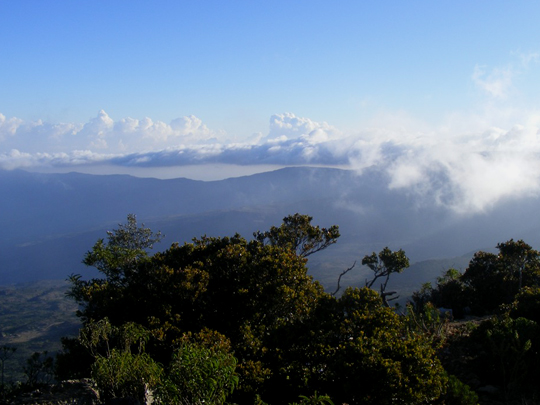
The Cal Madow range rises steeply above the Gulf of Aden coast of northern Somalia, crowned by Mount Shimbiris, the country’s highest point at over 2,400 m, a ribbon of cool, misty highland in a land of desert.
Catching sea fogs and rain, the slopes of Cal Madow hold remnant juniper forests and plants found nowhere else on Earth, with wildlife including the rare beira antelope and the Warsangli linnet, a bird found only in the mountains of northern Somalia.
Frankincense trees cling to the rocks of Cal Madow, whose nearby town of Erigavo has long been a hub for the fragrant resin, traded for some 5,000 years and famed as a gift of the Three Wise Men.
4 – Kismayo Beach
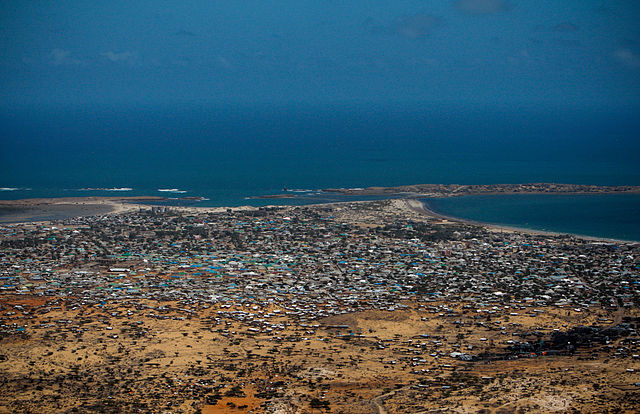
Kismayo, on Somalia’s southern coast near the mouth of the Jubba River, was established under the Sultan of Zanzibar in 1872, came under British control in 1887 and was handed to Italy with Jubaland in 1925.
Long white beaches and warm turquoise water line the shore at Kismayo, while to the south, a chain of small islands, the Bajuni Islands, stretches along the coast towards the Kenyan border.
Kismayo is one jewel on the longest coastline of any country on mainland Africa, more than 3,000 km, and in February 1941 King’s African Rifles and South African armoured cars entered the town unopposed after the Italians had abandoned it.
5 – The Citadel of Gondershe

Gondershe, on a coastal promontory about 30 km south-west of Mogadishu, is a medieval coral-stone town from the time of the Ajuran Sultanate, later part of the Geledi Sultanate.
Built of coral rag and lime, the ruins of Gondershe include houses, mosques, tombs and a citadel, recalling an age when ships came to this shore from Arabia, Persia, India and the Far East.
Gondershe was one of a string of coral-built trading towns along the Benadir coast, and its weathered walls look straight out over the Indian Ocean from the headland.
6 – Mogadishu
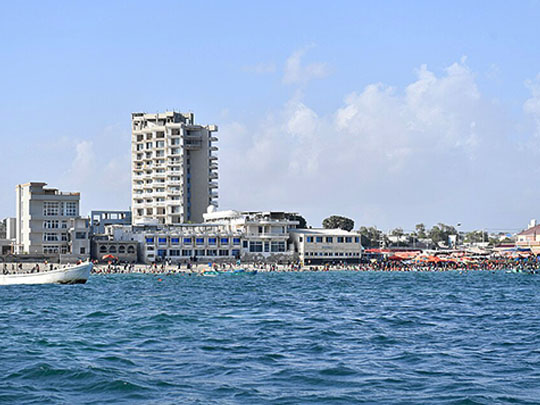
Mogadishu, Somalia’s capital on the Indian Ocean, was by the 13th century a wealthy, independent trading city and one of the leading ports of the East African coast, its Fakr ad-Din Mosque dated by inscription to 1269.
The old quarters of Hamarweyne and Shangani hold what remains of the coral-stone city of Mogadishu, along with the shell of the Italian cathedral, modelled on Cefalù Cathedral in Sicily, completed in 1928 and wrecked during the civil war.
When Ibn Battuta visited Mogadishu in 1331, he found a very large town where each visiting merchant was met by a young man declaring “This is my guest”, and he noted the cloth woven here, named after the city and exported as far as Egypt.
7 – Berbera
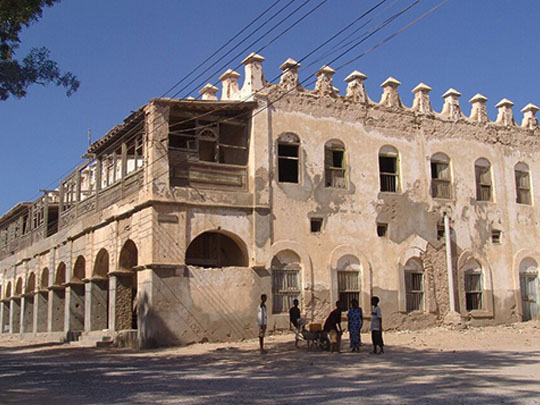

Berbera, a port on the Gulf of Aden, has shipped sheep, hides, ghee, frankincense, myrrh and gum across to Arabia for centuries, passing to Egypt in 1875 and to Britain in 1884, and it was the capital of British Somaliland until 1941.
In August 1940, after the Battle of Tug Argan, British forces were evacuated by sea from Berbera as Italy overran British Somaliland, and on 16 March 1941, troops landed from Aden retook the port in Operation Appearance.
Berbera’s airport has a runway of about 4 km, among the longest in Africa, built by the Soviet Union in the 1970s, used by the Americans after Moscow switched to backing Ethiopia in 1977, and listed by NASA as an emergency landing site for the Space Shuttle.