
Wikimedia Commons / CC-BY-SA-3.0 / GFDL
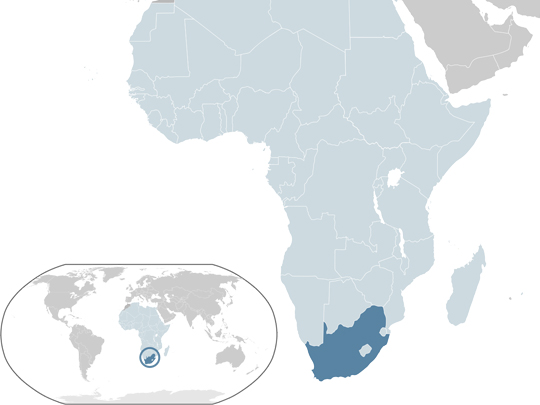
Capital: Bloemfontein (judicial), Cape Town (legislative), Pretoria (executive)
Population: 63 million+
Language: (12) Afrikaans, English, isiNdebele, isiXhosa, isiZulu, Sepedi, Sesotho, Setswana, siSwati, Tshivenda, Xitsonga, South African Sign Language
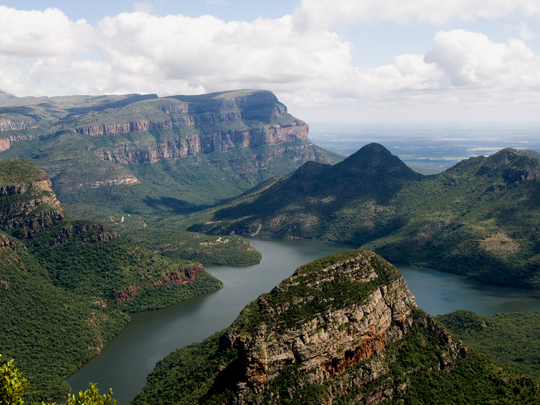
1 – Blyde River Canyon (also above)
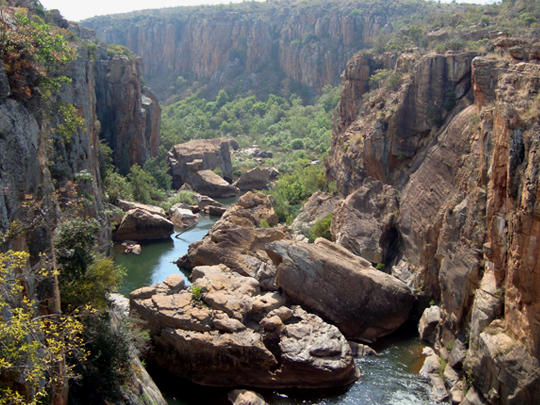
The Blyde River Canyon, carved through the Drakensberg escarpment in Mpumalanga, in eastern South Africa, is often described as one of the largest canyons on Earth, and possibly the largest “green canyon”, cloaked in lush subtropical forest rather than bare rock.
Viewpoints on the Panorama Route look out on the Blyde River Canyon’s Three Rondavels, rounded peaks shaped like traditional huts, while God’s Window gazes across the Lowveld towards the Mozambique border, and at Bourke’s Luck Potholes, swirling water has drilled cylindrical holes into the rock.
In 1844, the story goes, trekkers waiting for Hendrik Potgieter’s party feared the men dead and named their river the Treur, “sorrow”, and when the party returned safely, the river where they were reunited became the Blyde, “joy”.
2 – Kruger National Park
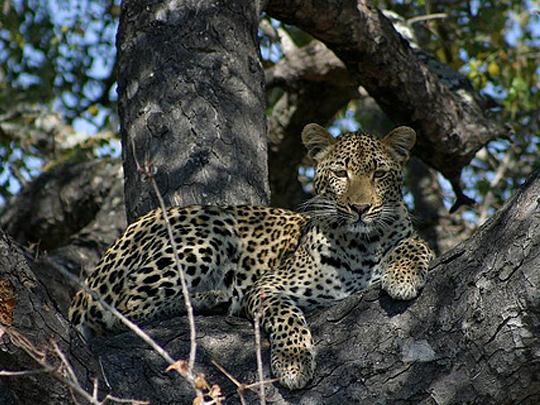
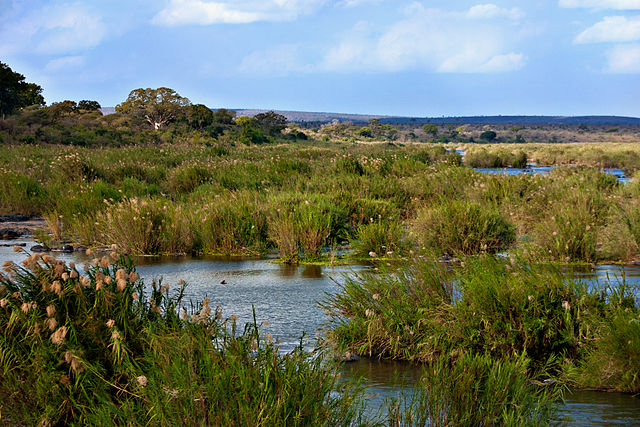
Kruger National Park, in north-east South Africa, covers some 19,500 km², almost the size of Wales, and began on 26 March 1898, when President Paul Kruger’s South African Republic proclaimed the Sabi Game Reserve, renamed Kruger National Park in 1926.
Kruger National Park is one of the finest places on Earth to see the “Big Five” of lion, leopard, elephant, rhino and buffalo, alongside giraffe, cheetah, wild dog, hippo, crocodile, and more than 500 kinds of bird.
Kruger National Park had humble beginnings as a holiday destination, because when it first opened to motorists in 1927, charging £1 a car, just three cars came all year.
3 – The Garden Route
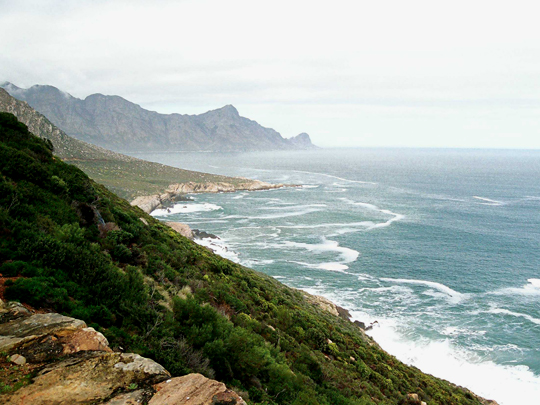
The Garden Route threads along South Africa’s southern coast between the Indian Ocean and the mountains, a ribbon of indigenous forest, tidal lagoons, golden beaches and sea cliffs that makes one of the country’s best-loved road trips.
On the Garden Route lies the lagoon town of Knysna, whose forests once sheltered hundreds of elephants, though camera-trap surveys in 2016–18 could confirm only one, a lone female.
The Garden Route runs on past Wilderness and Plettenberg Bay to the yellowwood forests and Storms River gorge of Tsitsikamma, while the Bloukrans Bridge hosts one of the highest commercial bridge bungee jumps in the world, at 216m.
4 – Table Mountain
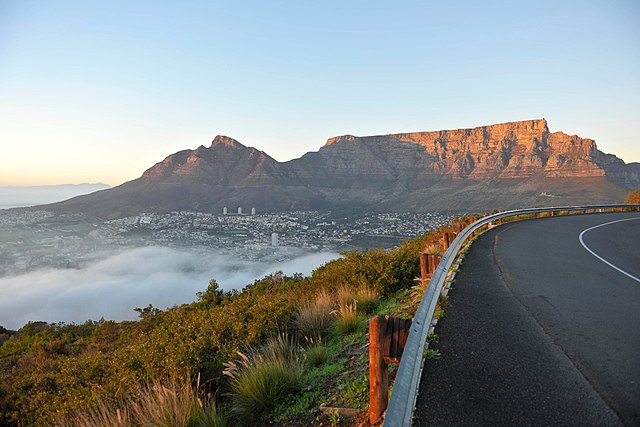
Table Mountain, the flat-topped mountain towering over Cape Town, was named one of the New7Wonders of Nature in 2011, and its base rocks are around 540 million years old, far older than the Himalayas, the Alps or the Andes.
A cable car whose floor turns a full 360 degrees carries visitors up Table Mountain, home to more plant species than the whole United Kingdom, and when the south-easter blows a “tablecloth” of cloud spills over the summit.
Among the rocks of Table Mountain lives the dassie, a plump, furry creature that looks like an oversized guinea pig, yet DNA shows that its closest living relatives include the elephant.
5 – Robben Island
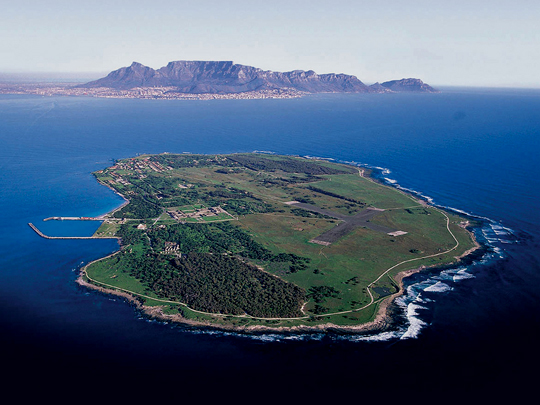
Robben Island, a low, windswept island in Table Bay off Cape Town, was a place of banishment and imprisonment from the 17th century until 1996, most infamously as the apartheid regime’s maximum-security prison for its political opponents.
Nelson Mandela spent 18 of his 27 years behind bars on Robben Island, in a tiny cell, labouring in a quarry whose glare damaged his eyes.
UNESCO says Robben Island symbolises “the triumph of the human spirit, of freedom and of democracy over oppression”, and tours of the prison have long been led by former political prisoners telling their own stories.
6 – Cradle of Humankind
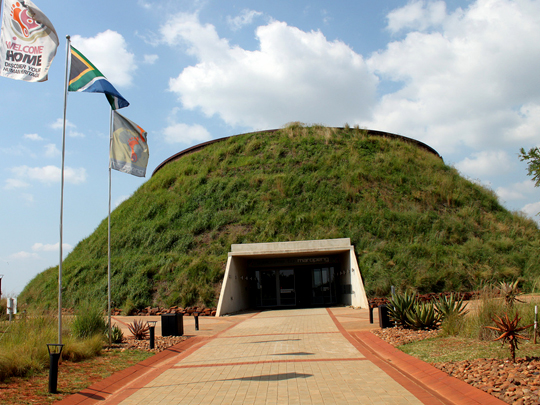
The Cradle of Humankind, a landscape of limestone caves about 50 km north-west of Johannesburg, became a UNESCO World Heritage Site in 1999, and around 40% of the world’s known hominin fossils have been found there.
At the heart of the Cradle of Humankind are the Sterkfontein Caves, where Robert Broom and John Robinson found the Australopithecus skull known as Mrs Ples in 1947, while the Maropeng visitor centre tells the story of human evolution.
One of the great treasures of the Cradle of Humankind is Little Foot, a near-complete Australopithecus skeleton about 3.67 million years old, which took scientists around 20 years to free from the rock and reconstruct before it was unveiled in 2017.
7 – Boulders Beach
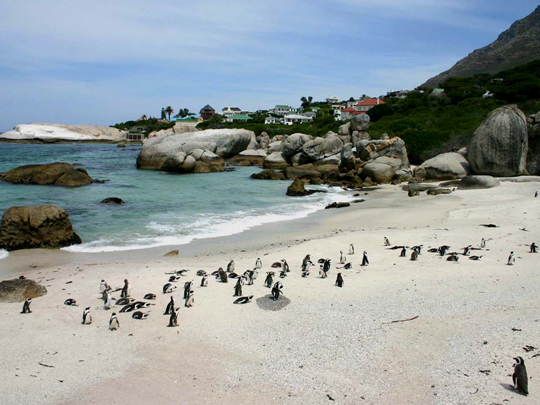
Boulders Beach, a cluster of sheltered coves among giant granite boulders near Simon’s Town on the Cape Peninsula, is famous for its colony of African penguins, Africa’s only resident penguin species.
From boardwalks at Boulders Beach, visitors watch the penguins waddle across the sand, in a colony that grew from just two breeding pairs in the early 1980s, though the species, once numbering in the millions, was listed as Critically Endangered in 2024.
In the Second World War, nearby Simon’s Town was a Royal Navy base, whose most famous sailor was Just Nuisance, a Great Dane enlisted in 1939 so he could keep riding the trains with sailors, buried with full naval honours in 1944 and remembered with a statue in Jubilee Square.
8 – Cango Caves
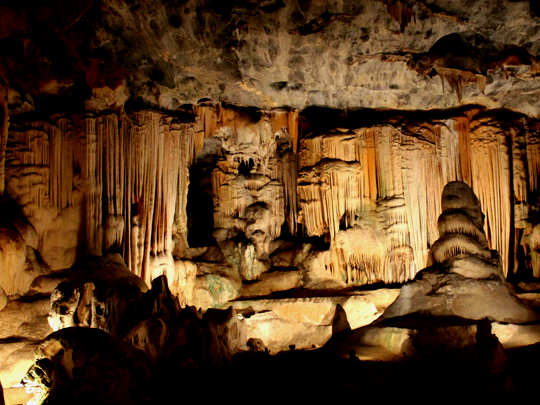
The Cango Caves, about 29 km from the ostrich-farming town of Oudtshoorn at the foot of the Swartberg mountains, are Africa’s largest show caves, a labyrinth of limestone chambers hung with stalactites and stalagmites.
Guided tours of the Cango Caves lead into vast halls, the biggest of which, Van Zyl’s Hall, is about 107 m long, while the Adventure Tour crawls through tight squeezes such as the Devil’s Chimney.
Often called South Africa’s oldest tourist attraction, the Cango Caves suffered so badly from early visitors who snapped off formations and carved their names on the walls that in 1820, Governor Lord Charles Somerset gave them legal protection.
9 – Soweto
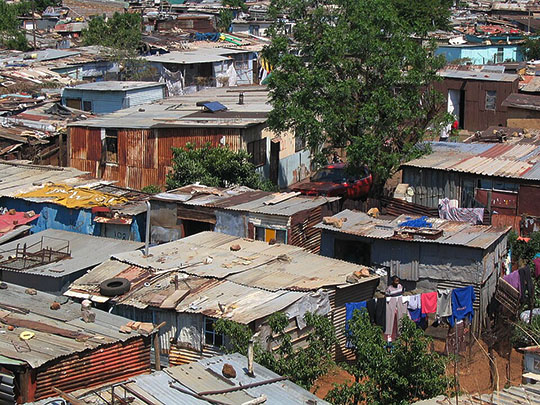

Soweto, south-west of Johannesburg, takes its name from the South Western Townships, set aside under segregation for Black South Africans moved out of the city, and it grew into a vast city within a city of well over a million people.
On 16 June 1976, Soweto’s schoolchildren marched against being taught in Afrikaans and police opened fire, and Sam Nzima’s photograph of the dying 12-year-old Hector Pieterson, remembered in the Hector Pieterson Museum, shocked the world.
Vilakazi Street in Soweto’s Orlando West is often described as the only street in the world to have been home to two Nobel Peace Prize winners, Nelson Mandela, whose house is a museum, and Archbishop Desmond Tutu.
10 – Mapungubwe
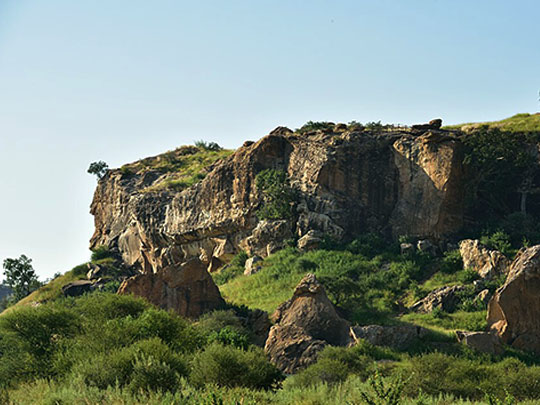
Mapungubwe, on a sandstone hill near the meeting of the Limpopo and Shashe rivers where South Africa borders Zimbabwe and Botswana, was the capital of what is often called southern Africa’s first kingdom, which grew rich around 1220–1300, trading gold and ivory through East African ports.
The rulers of Mapungubwe lived on top of the hill with commoners on the land below, in one of southern Africa’s earliest class-based societies, and royal graves on the summit held a small rhinoceros of gold foil hammered over a wooden core.
Excavations at Mapungubwe began in 1933, but the finds challenged colonial and apartheid ideas and were long marginalised, so the site won its due only after 1994, becoming a UNESCO World Heritage Site in 2003 and lending its name to the Order of Mapungubwe, South Africa’s highest honour.
11 – Isandlwana and Rorke’s Drift

On 22 January 1879 at Isandlwana, beneath a crag in KwaZulu-Natal, a Zulu army of more than 20,000 overran the camp of a British column that had invaded the Zulu kingdom, killing over 1,300 on the British side in one of the worst defeats of the Victorian British army.
Among the dead at Isandlwana were Colonel Anthony Durnford of County Leitrim, the senior officer in the camp, and Lieutenant Nevill Coghill of Dublin, killed trying to save the regiment’s Colour, while stone cairns across the grass mark where the British dead were buried.
That night, about 150 men, many sick or wounded, held the mission station at Rorke’s Drift, about 10 km away, against 3,000–4,000 Zulu warriors, winning 11 Victoria Crosses, among them one for Dublin-born Surgeon James Henry Reynolds.
12 – The uKhahlamba/Maloti-Drakensberg Park
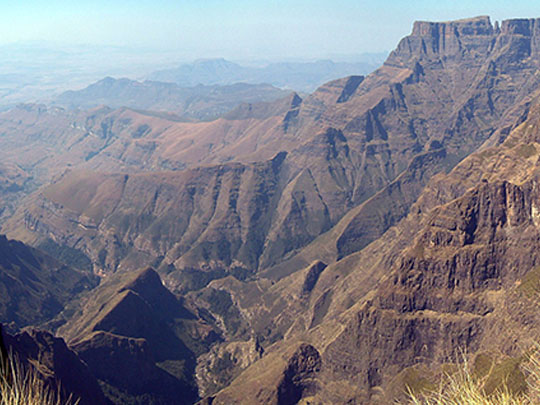
The uKhahlamba/Maloti-Drakensberg Park follows the high Drakensberg escarpment along South Africa’s border with Lesotho, a UNESCO World Heritage Site since 2000 whose Zulu name, uKhahlamba, is often translated as “barrier of spears”, rising to Mafadi, at 3,450m South Africa’s highest peak.
The uKhahlamba/Maloti-Drakensberg Park shelters more than 250 endemic plant species and rare birds, such as the bearded vulture, while in the north the Amphitheatre, a rock wall about 5 km long, sends the Tugela Falls plunging some 948 m in a series of drops, among the highest waterfalls on Earth.
The caves and rock shelters of the uKhahlamba/Maloti-Drakensberg Park hold the largest and most concentrated group of rock paintings in Africa south of the Sahara, more than 35,000 images at hundreds of sites, painted by the San over thousands of years, with eland, hunters and dancers among their subjects.
13 – Constitution Hill, Johannesburg
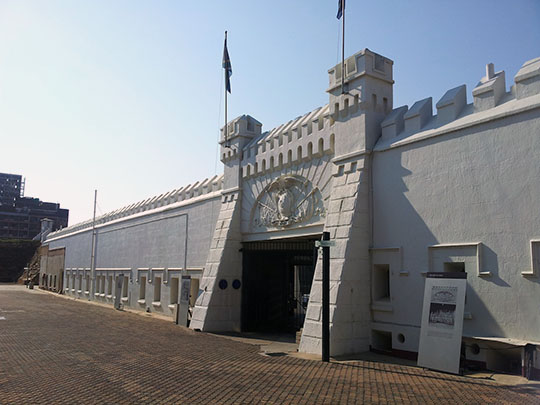

Constitution Hill, on a ridge above central Johannesburg, grew around the Old Fort, built by the Transvaal government in the 1890s and later turned into a prison complex, with Number Four for black men from 1902 and a Women’s Jail from 1909, which held prisoners until it closed in 1983.
The prisoners of Constitution Hill included Mohandas Gandhi, Chief Albert Luthuli and Nelson Mandela, and the old cells opened as a museum in 2004.
South Africa’s Constitutional Court opened on Constitution Hill on Human Rights Day, 21 March 2004, in a building inspired by the African tradition of settling disputes under a tree and built in part with bricks from the demolished prison.