

Wikimedia Commons / CC-BY-SA-3.0 / GFDL
Capital: Juba
Population: 12 million+
Language: English. More than 60 languages spoken, such as Dinka, Nuer, Bari, Zande and Shilluk.

1 – Boma–Badingilo Migratory Landscape (also above)

The Boma–Badingilo Migratory Landscape spreads across the vast, roadless grasslands of southern and eastern South Sudan, linking Badingilo and Boma national parks, and in 2026 it became the country’s first UNESCO World Heritage Site.
Each year herds of white-eared kob, tiang, Mongalla gazelle and Bohor reedbuck pour across the Boma–Badingilo plains following the rains, trailed by lions, cheetahs and African wild dogs, while the rare Nubian giraffe roams the grasslands.
Hidden from the world by decades of war, the Boma–Badingilo migration was revealed in full by an aerial survey announced in 2024, which counted about six million antelope in what African Parks calls the largest land mammal migration on Earth.
2 – Juba

Juba, on the banks of the White Nile in the far south, became a national capital when South Sudan won independence from Sudan on 9 July 2011, after decades of civil war.
Juba is a hot, fast-growing river town of dusty streets, markets and riverside bars, whose best-known landmark is the mausoleum of John Garang, beside which independence was declared in 2011.
John Garang, who led the long struggle that won South Sudan its independence, died in a helicopter crash on 30 July 2005, just three weeks after being sworn in as Sudan’s First Vice President and six years before the independence he had fought for.
3 – The Sudd
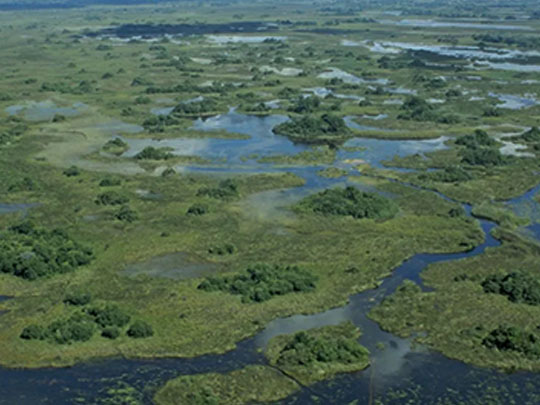
In the middle of South Sudan the White Nile spreads into the Sudd, one of the largest wetlands on Earth, a maze of papyrus, floating islands and shifting channels, listed as a Ramsar wetland of 57,000 km² in 2006, where more than half the water flowing in is lost, mostly to evaporation.
Boats thread the channels of the Sudd past fishermen poling through the reeds, in a wetland that holds by far the largest population of the shoebill, a huge, prehistoric-looking bird, as well as the rare Nile lechwe.
The name Sudd comes from an Arabic word for “barrier”, and explorers sent by the Emperor Nero around AD 61–63 are thought to have been halted by its marshes, while the Jonglei Canal, begun in 1978 to carry the Nile past it, was abandoned in the 1980s as civil war returned.
4 – Bor

Bor, on the east bank of the White Nile, is the capital of Jonglei and the heartland of the Bor Dinka, one of South Sudan’s great cattle-herding peoples.
On 16 May 1983 soldiers of the army’s 105th Battalion mutinied at Bor, and John Garang, sent to put down the revolt, joined it instead, founding the movement that fought the long war leading to independence.
Around Bor the Dinka cattle camps gather thousands of long-horned cattle, a measure of a family’s wealth and the price of a bride, while a young man is often given a favourite ox whose name he takes as his own and whose praises he sings.
5 – Fashoda
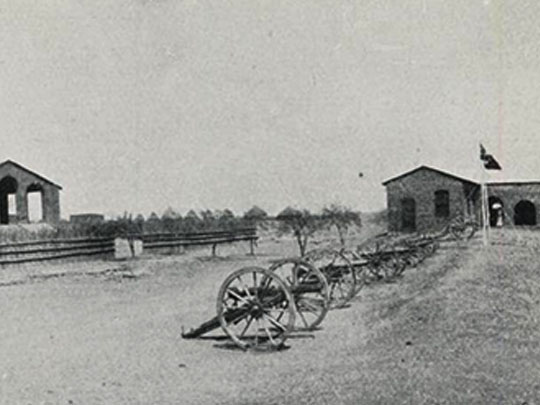
Fashoda, renamed Kodok, on the White Nile, was long the seat of the reth, king of the Shilluk people, whose kingdom has outlasted every empire that passed through.
On 10 July 1898 a French expedition of about 150 men under Jean-Baptiste Marchand, most of them Senegalese soldiers, reached Fashoda after crossing Africa from the Atlantic coast and raised the French flag.
Sir Herbert Kitchener, born in County Kerry, arrived at Fashoda on 18 September 1898 with a far larger force, and for weeks Britain and France stood on the edge of war, until France backed down, clearing the way for the Entente Cordiale of 1904.