
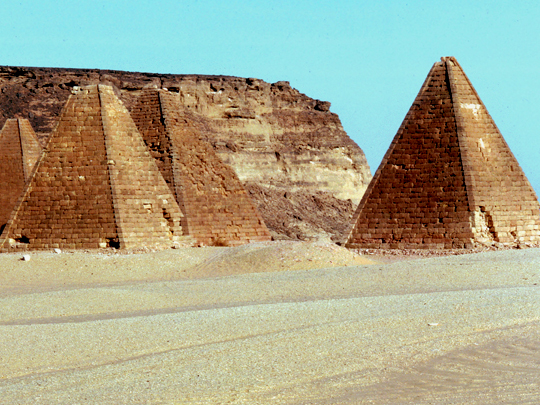
Wikimedia Commons / CC-BY-SA-3.0 / GFDL
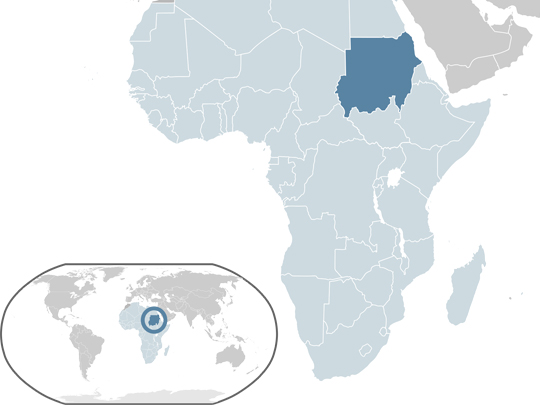
Capital: Khartoum
Population: 51 million+
Language: Arabic/English (More than 100 languages are spoken across some 500 ethnic groups).
1 – Jebel Barkal (also above)
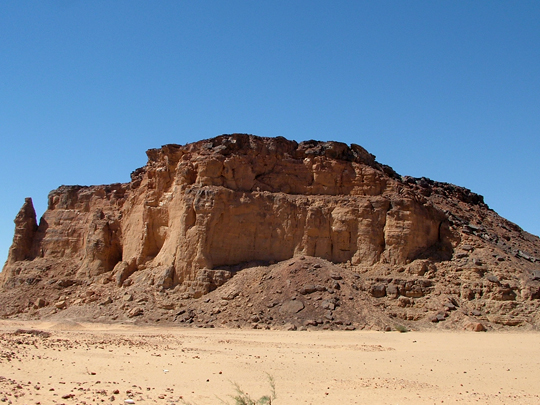
On a bend of the Nile in northern Sudan, the flat-topped mountain of Jebel Barkal was the holiest site in the ancient land of Nubia — believed by both the Egyptian pharaohs and the Black Pharaohs of Kush to be the home of the great god Amun, and the very source of their right to rule.
At its foot lie the ruins of Napata, once a royal capital, with the remains of temples, palaces and a scatter of steep-sided royal pyramids; a UNESCO World Heritage Site, it’s a place of quiet grandeur where you may well have the ancient stones — and the sunrise from the summit — entirely to yourself.
The mountain owes its sacred power to a natural quirk: a slender rock pinnacle, some 75m tall, juts from one corner — and the ancients saw in it the shape of a giant rearing cobra crowned with the White Crown of Egypt, the very emblem of kingship, taking it as a sign from the gods that kings must be crowned here.
2 – Pyramids of Meroe
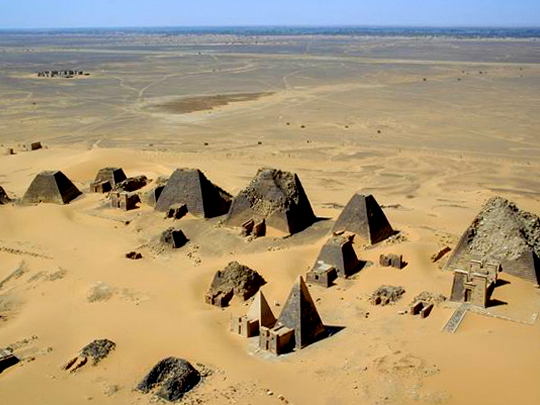
Rising from the golden desert on the banks of the Nile, the pyramids of Meroë are the crowning glory of the ancient Kingdom of Kush — and hold a secret that surprises almost everyone: Sudan has more than twice as many pyramids as Egypt, some 200 or more, making this the largest field of pyramids on Earth.
Steeper, narrower and more sharply pointed than their Egyptian cousins, these royal tombs of the Black Pharaohs and their formidable warrior queens — the “kandakes,” one of whom fought and humbled the armies of Rome — stand in clusters across the empty sand, often without a fence, a sign or another soul in sight.
Look closely and you’ll notice many of the pyramids are missing their tops — the work of a 19th-century Italian treasure-hunter, Giuseppe Ferlini, who dynamited the summits off around forty of them in a frenzied hunt for gold, and, in one, actually struck it lucky, finding a queen’s hoard of jewellery.
3 – Khatmiyya Hasan Tomb
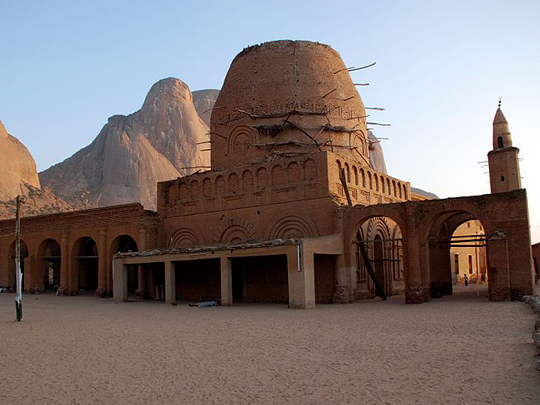
At the foot of the great granite domes of the Taka Mountains, on the edge of the pretty town of Kassala in eastern Sudan, stand the roofless brick arches and slender minaret of the Khatmiyya Mosque — the spiritual heart of Sudan’s largest Sufi order, and the resting place of its revered holy man, Hasan al-Mirghani.
Open to the sky and softly lit, the mosque draws pilgrims to the domed tomb of the saint, whose blessings they come to seek; its ruined air is part of its story, for an earlier building was destroyed in the 1880s by the followers of the Mahdi, whose great revolt the Khatmiyya had opposed — while behind it, boulder-strewn peaks glow at sunset.
Though the tomb lies beneath a dome open to the heavens, local tradition insists that the holy man is so blessed that no rain ever falls upon his grave — a small miracle only rarely tested, in a land where rain itself is such a rare visitor.
4 – National Museum of Sudan
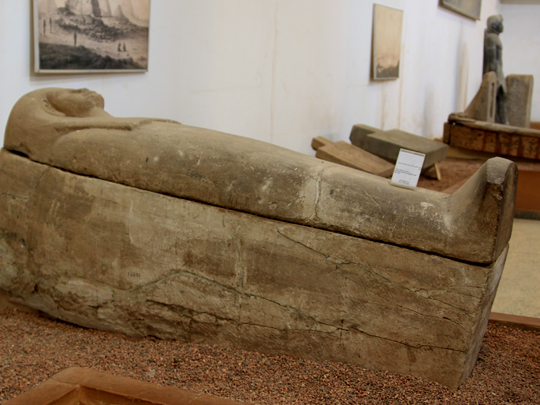
On the banks of the Nile in the heart of Khartoum stands the National Museum of Sudan — home to the greatest collection of Nubian and Kushite antiquities on Earth, telling the 7,000-year story of ancient Sudan and its mighty “Black Pharaohs.”
Its galleries held the treasures of Kush — chief among them a towering four-metre granite statue of the great pharaoh Taharqa — while its garden was an open-air marvel: several ancient Nile temples, rebuilt stone by stone in their original alignment along an artificial river.
Those garden temples were saved from a watery grave: when the Aswan High Dam flooded Nubia in the 1960s, drowning countless ancient sites beneath a vast new lake, a great international rescue dismantled these temples and carried them here to Khartoum, out of the rising water’s reach.
5 – Suakin
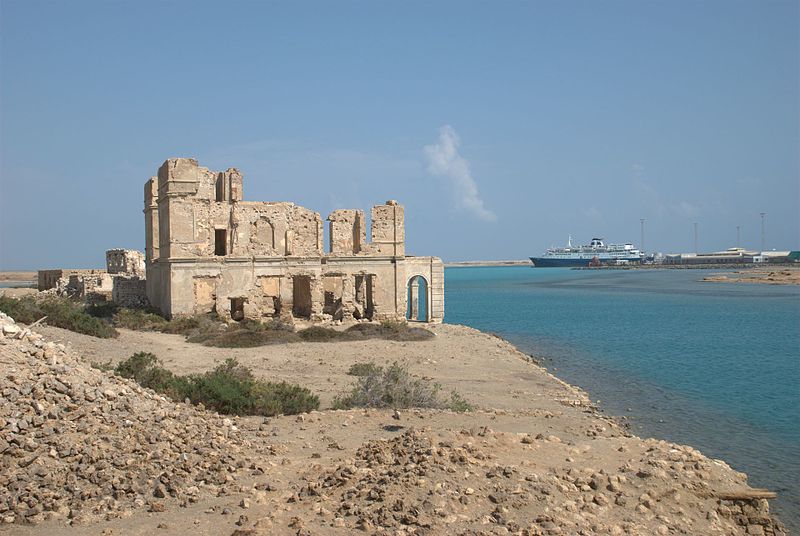
On the Red Sea coast of eastern Sudan lies Suakin, a hauntingly beautiful ghost town on a small island — for centuries one of the greatest ports on the Red Sea, a crossroads of Ottoman traders and of ivory, gold and slaves, and above all of African pilgrims setting sail across the water to Mecca.
Its silent, roofless mansions, mosques and merchants’ houses — many with delicately carved wooden balconies — crumble gently on the shore; the port thrived for thousands of years until, in 1905, the British built a deeper harbour at nearby Port Sudan, and within a generation Suakin was all but abandoned.
Suakin was known as the “White City” for the material its builders used: blocks of pale coral, cut straight from the reefs of the sea — but coral is fragile, and once the town was left to the elements, its coral palaces slowly began to crumble and dissolve, leaving the ghostly white ruins that stand today.
6 – Omdurman
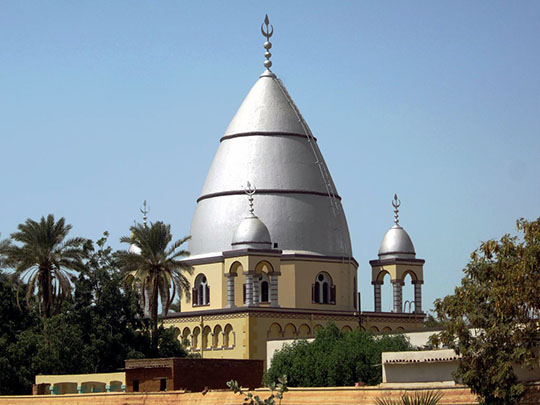
Across the confluence of the two Niles from Khartoum lies the city the Mahdi built: after his followers stormed Khartoum in 1885 and killed General Gordon, his movement made its capital here, and ruled Sudan from it until the morning of 2 September 1898, when Kitchener’s Maxim guns destroyed the Mahdist army on the plain outside — some 11,000 Sudanese dead in a few hours, among the British a 23-year-old cavalry subaltern named Winston Churchill.
The silver-domed Tomb of the Mahdi stands at the centre of it, rebuilt after British shells brought the first one down; opposite is the Khalifa’s House, now a museum, and beyond them spreads one of the largest souqs in Africa, with a camel market on the city’s edge.
Late every Friday afternoon, at the tomb of the holy man Hamed al-Nil, Sufi dervishes in patchwork robes of green and red gather to drum, chant and spin themselves into a trance as the sun goes down — a ceremony anyone may walk up and watch.
7 – Old Dongola
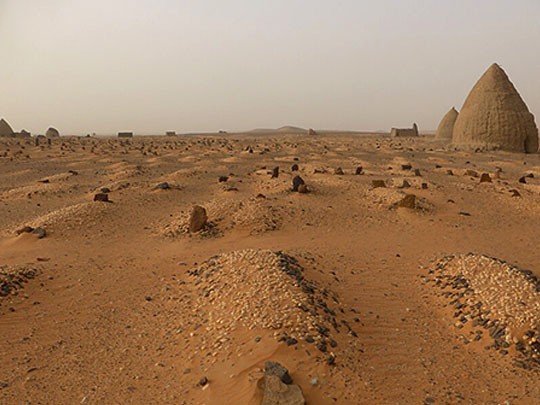
On the Nile in the northern desert stand the ruins of the capital of Makuria — one of three Nubian kingdoms that became Christian in the sixth century and stayed that way for the better part of a thousand years, a chapter of African history that sits between the pharaohs of Kush and the coming of Islam and is almost entirely forgotten.
The Church of the Granite Columns lies in pieces among the sand, and above it stands the great Throne Hall, a two-storey royal building of the ninth century that was turned into a mosque in 1317 and used as one until 1969; a monastery nearby keeps wall paintings of Nubian kings and bishops, and a field of white domed tombs crowns the ridge.
Arab armies came up the river in the seventh century and were fought to a standstill by Nubian archers so accurate that the Arabs called them the pupil-smiters — the two sides signed a treaty instead, an exchange of grain for slaves that held for six hundred years.