
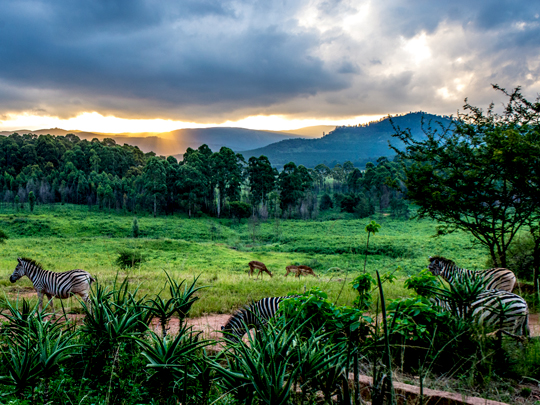
Wikimedia Commons / CC-BY-SA-3.0 / GFDL
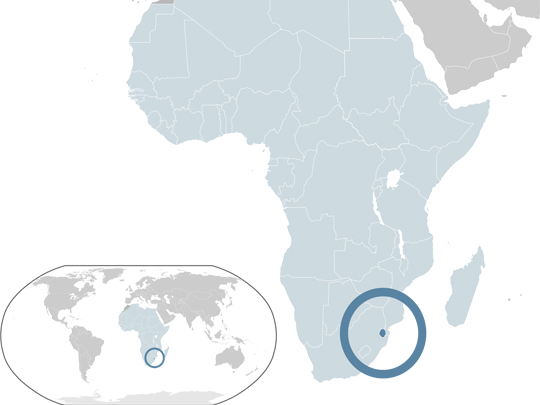
Formerly known as Swaziland.
Capital: Lobamba
Population: 1.25 million+
Language: siSwati and English
1 – Mlilwane Wildlife Sanctuary (also above)
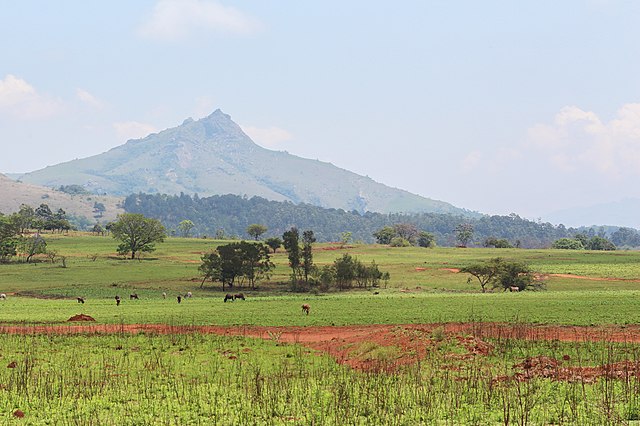
In the lush Ezulwini Valley — the “Valley of Heaven” — Mlilwane is eSwatini’s oldest and best-loved nature reserve, the “little fire” that sparked the whole kingdom’s conservation movement when a local farmer, Ted Reilly, turned his land into a wildlife sanctuary in 1961 to save animals being hunted to extinction.
Because it has no lions or other big predators, Mlilwane is that rare place where you can safely explore on foot, by mountain bike or on horseback, wandering among grazing zebra, wildebeest and impossibly tame warthogs — which famously trot right through the rest camp and doze by the campfire — with hippos in the pool and beehive huts to sleep in.
Looming over the plains is the granite peak of Nyonyane, better known as “Execution Rock” — for in times past, condemned criminals were said to be marched up to its bare summit and forced to leap, or be thrown, to their deaths on the rocks far below.
2 – Mlawula Nature Reserve
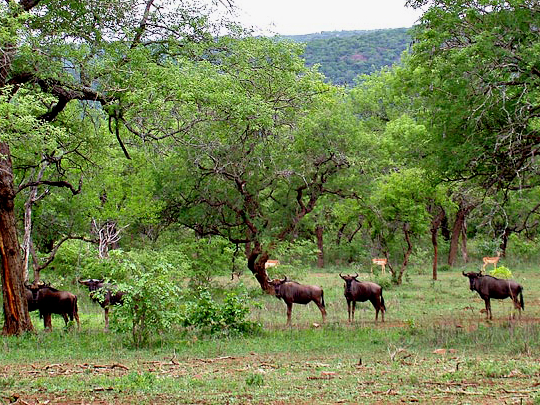
In the wild, little-visited northeast of eSwatini, Mlawula Nature Reserve climbs from thornveld savanna up onto the rugged Lubombo Mountains — a volcanic ridge marking the border with Mozambique — offering some of the finest hiking and birdwatching in the country, far from the crowds.
Rather than big-game drives, Mlawula is a place to walk: some 50km of trails wind through gorges and up onto the escarpment, with views stretching west across the kingdom and east towards the Mozambican coast, past caves that once sheltered Stone Age people, cliffs full of klipspringers and baboons, and more than 350 kinds of bird.
The reserve is also a botanical treasure-house, its shady ravines home to ancient forests of Lubombo ironwood — and, growing in their shade, a species of cycad, one of the oldest lineages of plant on Earth, that is found here and absolutely nowhere else in the world.
3 – Hlane Royal National Park
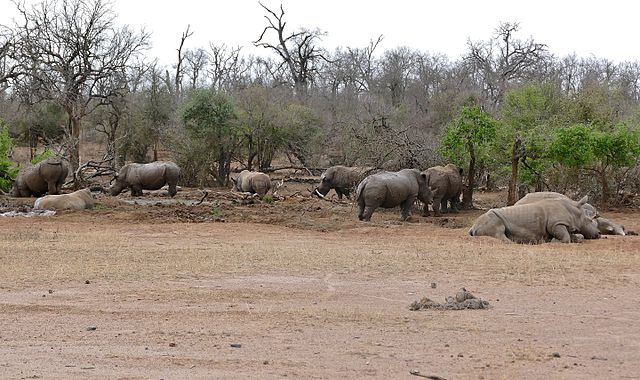
In the hot lowveld of northeastern eSwatini lies Hlane — meaning “wilderness” — the kingdom’s largest game reserve and its finest safari, a former royal hunting ground still held in trust for the nation by the Swazi king himself.
Here you can see four of the “Big Five” — elephant, white rhino, leopard and lion (kept in their own section, for the lion is the sacred emblem of Swazi royalty) — gathering at the Ndlovu Camp waterhole; the park also shelters giraffe, hippo and one of Africa’s densest colonies of nesting vultures, and you can even track rhino on foot.
The bond between the monarchy and this land runs right into the royal titles: the King of eSwatini is known as the Ngwenyama, “the Lion,” and the Queen Mother who rules alongside him as the Ndlovukati, “the She-Elephant” — the two great beasts of the very bushveld the crown protects here.
4 – Mantenga Falls
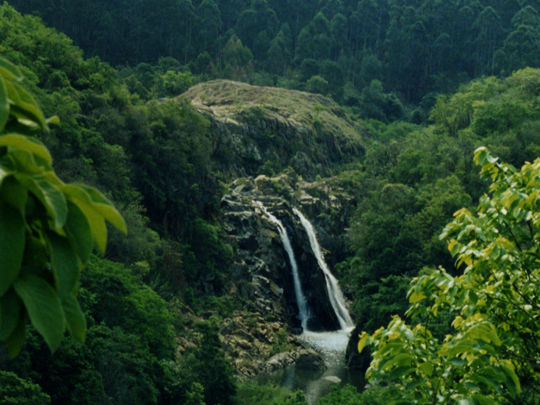
In the green folds of the Ezulwini Valley, the “Valley of Heaven,” the Lusushwana River spills over a broad granite shelf to form Mantenga Falls — not the tallest in eSwatini, but the most powerful, the kingdom’s largest waterfall by volume.
The falls are only half the draw: beside them stands the Mantenga Cultural Village, a “living museum” recreating a Swazi homestead of the 1850s — a cluster of domed grass “beehive” huts and a cattle byre where villagers demonstrate age-old crafts, and where, twice a day, dancers perform the sibhaca, an electrifying routine of stamping feet and sky-high kicks.
It’s a window into a culture still very much alive: eSwatini is one of the last absolute monarchies on Earth, a kingdom that has held tightly to its traditions — its beehive homesteads, its healers and its royal ceremonies — even as the modern world has swept in all around it.
5 – Lobamba
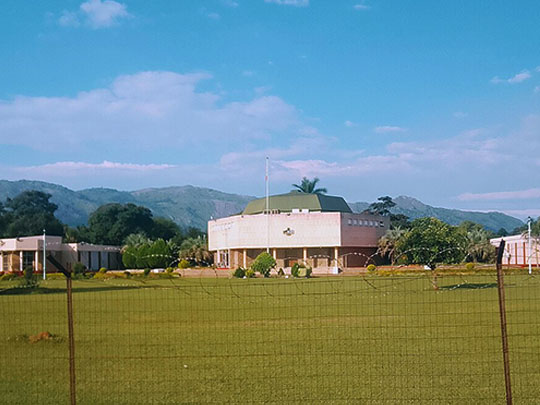
In the Ezulwini Valley sits the kingdom’s royal and legislative capital — a scattering of buildings rather than a city, but the place from which eSwatini is actually run: the Ludzidzini Royal Village, where the Queen Mother resides and the nation gathers, stands alongside the parliament in a valley the Swazi have held since the 18th century.
The National Museum sets out the kingdom’s history beside the memorial park to King Sobhuza II, who came to the throne as an infant in 1899 and died in 1982 — a reign of 82 years, the longest of any monarch in verified history — with the parliament building across the road and the royal village visible from the perimeter.
Twice a year the valley fills: in late August or September tens of thousands of young women cut reeds, carry them to the Queen Mother’s residence and dance before the royal family in the Umhlanga, one of the largest traditional gatherings in Africa — and at midsummer comes the Incwala, the sacred kingship ceremony, parts of which no outsider may watch.
6 – Ngwenya Mine
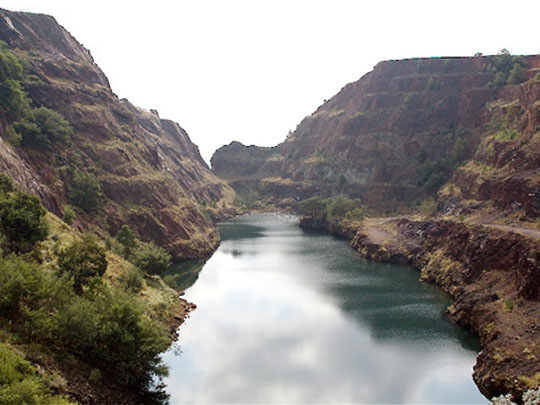
On Bomvu Ridge in the northwest, close to the South African border, people were cutting into the hillside between roughly 41,000 and 43,000 years ago — which makes Ngwenya, by some distance, the oldest known mine anywhere in the world.
At Lion Cavern you can see the original working: a shallow cave gouged out of red rock by hand, with the tools and the debris of the diggers found where they fell; below it lies the open-cast iron mine that took over in the twentieth century and shut in 2014, and around it the hills of the Malolotja highlands.
What those Stone Age miners were after was not metal but colour — haematite for red ochre, and specularite, a glittering silver-grey ore that was ground to powder and used on the body and in burials; people were mining cosmetics on this hillside tens of thousands of years before anyone anywhere thought to smelt anything.