
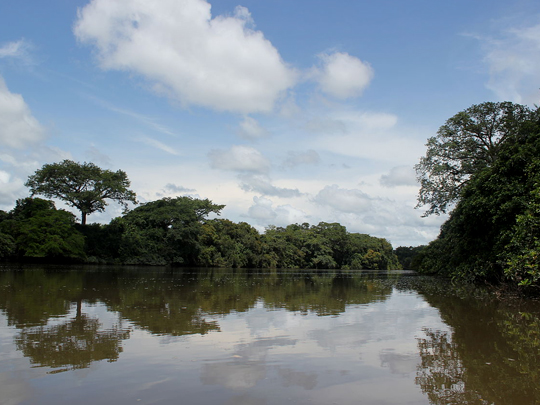
Wikimedia Commons / CC-BY-SA-3.0 / GFDL
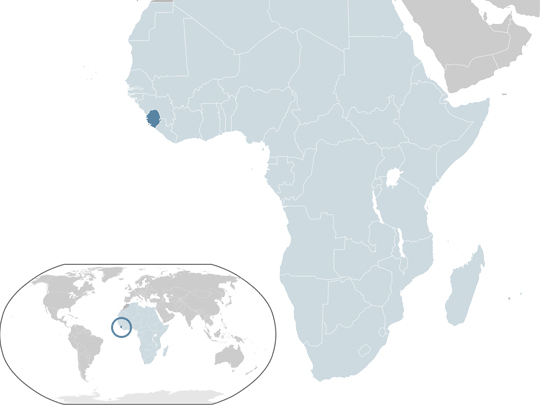
Capital: Freetown
Population: 8.8 million
Language: English, Krio
1 – Outamba-Kilimi National Park (also above)
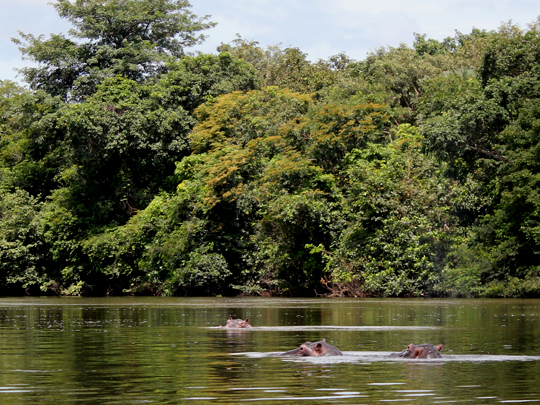
Outamba-Kilimi National Park, in the far north of Sierra Leone on the Guinea border, was the country’s first national park, gazetted in 1995 and covering about 1,100 km² of savanna, woodland and gallery forest in two blocks.
Canoe trips on the Kaba river in Outamba-Kilimi pass a pod of common hippos, while the forests shelter western chimpanzees among at least nine kinds of primate.
Outamba-Kilimi is also home to the rare pygmy hippo and to forest elephants, and it is the only extensive protected savanna in Sierra Leone.
2 – Tingi Hills Forest Reserve
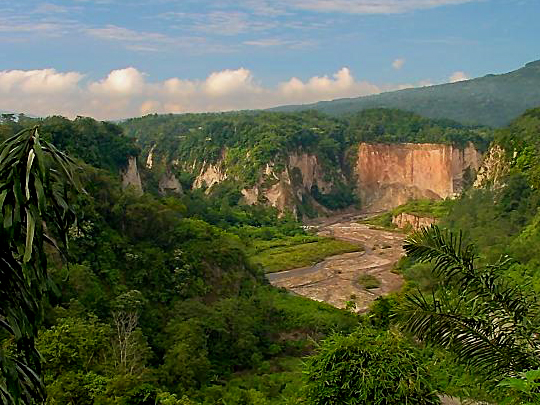
The Tingi Hills, in the far east of Sierra Leone near the Guinea border, rise to Sankan Biriwa, the country’s second-highest peak, whose two summits both top 1,700 m.
A tough hike climbs the Tingi Hills through forest to montane grassland above about 1,680 m, in the easternmost range in Sierra Leone, some 470 km from Freetown.
The forest remnants of the Tingi Hills are home to the white-necked picathartes, a strange, bald-headed bird that sticks its mud nests to rock faces and is much sought after by birdwatchers.
3 – Wara Wara Mountains
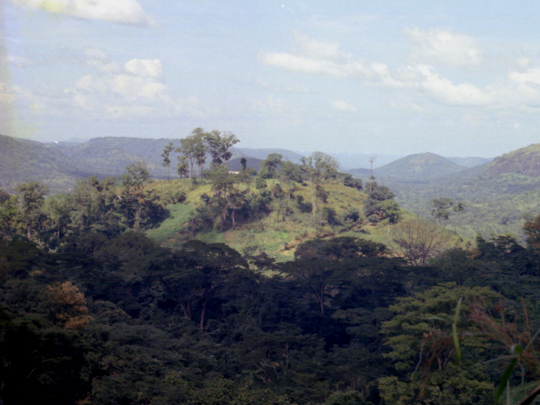
Kabala, capital of Koinadugu District in Sierra Leone’s far north, sits among the Wara Wara Mountains, a cool, quiet escape from the heat of the lowlands.
The Limba, whose tradition says they have always lived in the Wara Wara Mountains, are believed to be among Sierra Leone’s earliest inhabitants, and Kabala is the usual base for climbing Bintumani, at 1,945m, the country’s highest peak.
Each New Year’s Day people come from across the country to climb Gbawuria Hill above Kabala, looking out over the town and the Wara Wara Mountains as they see in the new year.
4 – Lake Sonfon
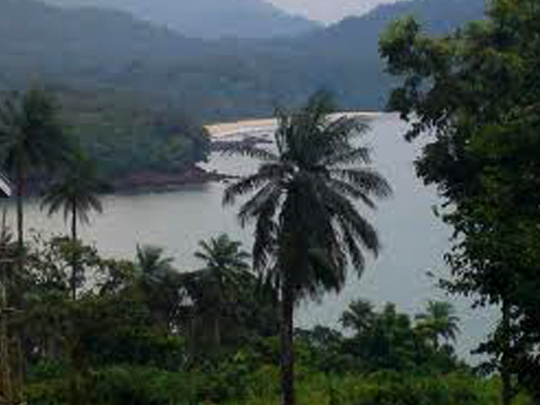
Lake Sonfon, in the Sula Mountains of northern Sierra Leone, is the country’s largest inland lake, swelling in the rains to flood the land around it.
Lake Sonfon is home to more than 100 bird species, including the little-known emerald starling, found only in Sierra Leone, Guinea and Côte d’Ivoire, while the rare pygmy hippo lives around the lake.
Lake Sonfon is sacred, and ceremonies are held on its shores, with offerings of rice and food floated out on calabashes to a powerful djinn said to live in the water.
5 – Freetown
Freetown was settled in 1787 by the “Black Poor” of London and in 1792 by some 1,196 Black Loyalists who had won their freedom fighting for Britain and been resettled in Nova Scotia, followed by Jamaican Maroons in 1800, and their descendants, with liberated Africans, became the Krio.
The King’s Yard Gate in Freetown, its 1817 inscription naming Governor Charles MacCarthy, son of a Cork mother and a veteran of France’s Irish Brigade, received at least 80,000 Africans freed from slave ships by the Royal Navy by 1864, while Fourah Bay College, founded in 1827, is West Africa’s oldest Western-style university.
In the Second World War, Freetown was a vital Royal Navy base and the assembly port for convoys to Britain, with up to 80 ships in its harbour at once, and its symbol, the Cotton Tree, under which the settlers are said to have prayed in 1792, fell in a storm in May 2023.
6 – Bunce Island


Bunce Island, about 20 miles up the Sierra Leone River from Freetown, was a British slave castle run by the Royal African Company and later by Grant, Oswald & Co., which supplied rice planters in South Carolina and Georgia who paid a premium for captives from this “Rice Coast”.
Reached by boat from Freetown, the ruins of Bunce Island, among them the house, slave yard, watchtowers and a fort with eight cannon positions, have been stabilised but not rebuilt.
The Gullah Geechee people of the American low country carry the legacy of Bunce Island, and in 1933, Amelia Dawley of Georgia was recorded singing a song that researchers later traced to a Mende funeral song from the village of Senehun Ngola in Sierra Leone.
7 – River No. 2


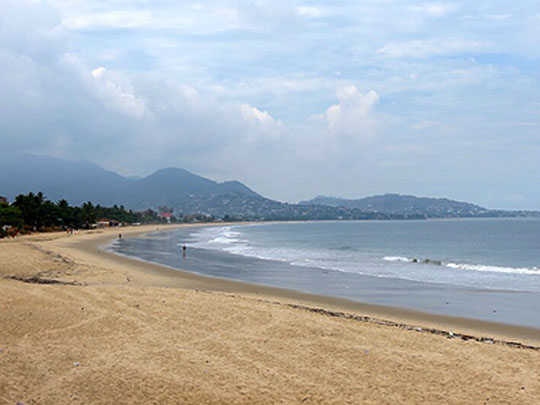
River No. 2 beach, on the Freetown peninsula, is a crescent of white sand where the river runs out of forested mountains into the Atlantic, run by an association of local villagers.
Visitors to River No. 2 cross the river mouth by boat, with green mountains rising behind the sand, while Tokeh Beach lies about 20 minutes’ walk away, and the Banana Islands lie off the peninsula.
River No. 2 is famous as the setting of a classic Bounty bar “taste of paradise” advert, and it has been called one of the world’s most famous beaches.