
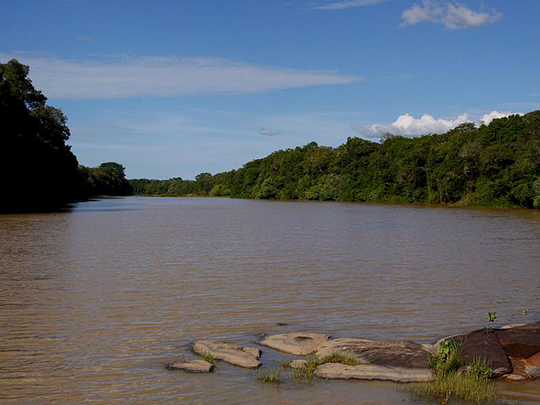
Wikimedia Commons / CC-BY-SA-3.0 / GFDL
Capital – Yamoussoukro
Population – 32 million+
Language – French (about 70 languages are spoken, including Baoulé, Bété, Senoufo, Agni, Dioula)
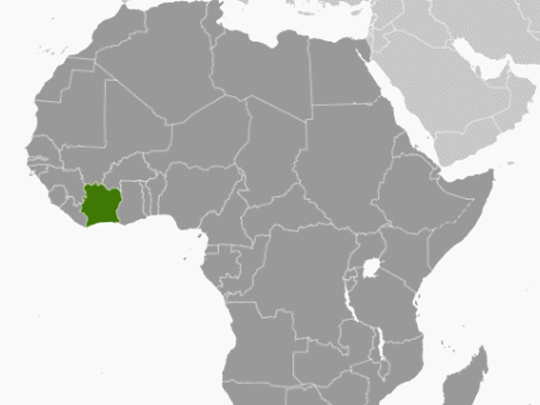
1 – Comoé National Park (also above)
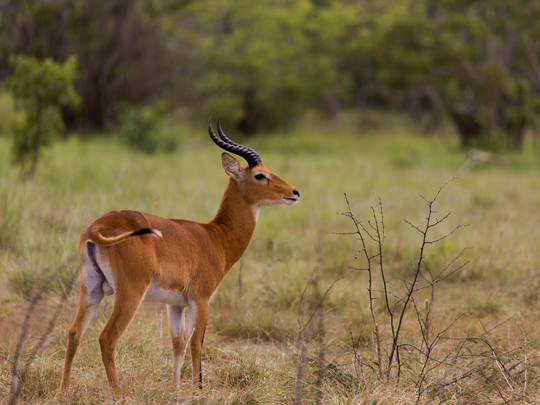
Comoé National Park, covering about 11,500 km² of Ivory Coast’s north-east around the river that gives it its name, is one of the largest protected areas in West Africa and has been a UNESCO World Heritage Site since 1983.
Along the Comoé River, gallery forest and patches of rainforest that usually grow far to the south reach deep into the savanna, a mosaic home to elephants, chimpanzees and around 500 species of bird.
The Comoé’s waters harbour all three of West Africa’s crocodiles, the Nile, slender-snouted and dwarf crocodile, and the park recovered well enough after Ivory Coast’s civil war to be taken off UNESCO’s danger list in 2017.
2 – Basilica of Our Lady of Peace
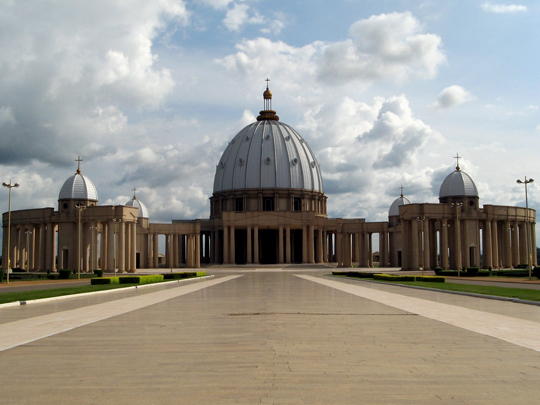
The Basilica of Our Lady of Peace rises from the plains of Yamoussoukro, Félix Houphouët-Boigny’s home town and the capital since 1983, and is widely described as the largest church in the world, modelled on St Peter’s in Rome but with a far wider dome.
Built in the late 1980s of imported Italian and Spanish marble and lit by more than 8,000 m² of stained glass, the basilica, consecrated by Pope John Paul II in 1990, holds 18,000 people inside and up to 300,000 on its esplanade.
Houphouët-Boigny said he paid for the “basilica in the bush” himself, though its true cost was never disclosed, and one stained-glass window shows the president kneeling before Christ as he enters Jerusalem.
3 – Tai National Park

Taï National Park, in the far south-west of Ivory Coast towards the Liberian border, protects one of the last areas of primary tropical forest in West Africa and has been a UNESCO World Heritage Site since 1982.
Beneath Taï’s towering canopy live forest elephants, bongo, three species of pangolin and the rare pygmy hippopotamus, a shy forest cousin of the river hippo, along with some 250 species of bird.
Taï’s chimpanzees, studied by Christophe and Hedwige Boesch since 1979, are famous for cracking hard nuts with stone hammers and anvils, one of the most striking examples of tool use in the wild.
4 – Abidjan
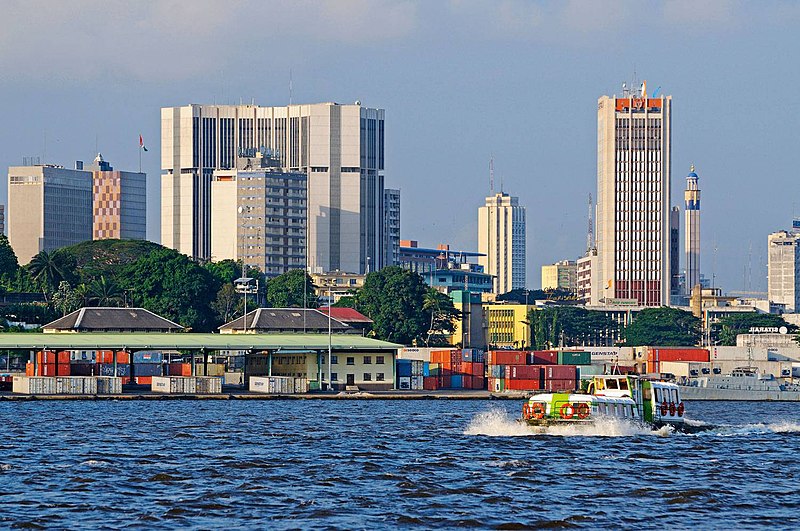
Abidjan, sprawling around the Ébrié Lagoon, is the economic capital of Ivory Coast and one of the largest French-speaking cities in the world, the towers of its Plateau district earning it the nickname “the Manhattan of West Africa”.
Ferries and pirogues criss-cross Abidjan’s lagoon beneath St Paul’s Cathedral, consecrated by Pope John Paul II in 1985, while Banco National Park keeps some 3,400 ha of primary forest within the city.
Much of the world’s chocolate begins its journey here, for Ivory Coast is the world’s largest producer of cocoa, and the beans are shipped out through Abidjan’s busy port.
5 – Treichville
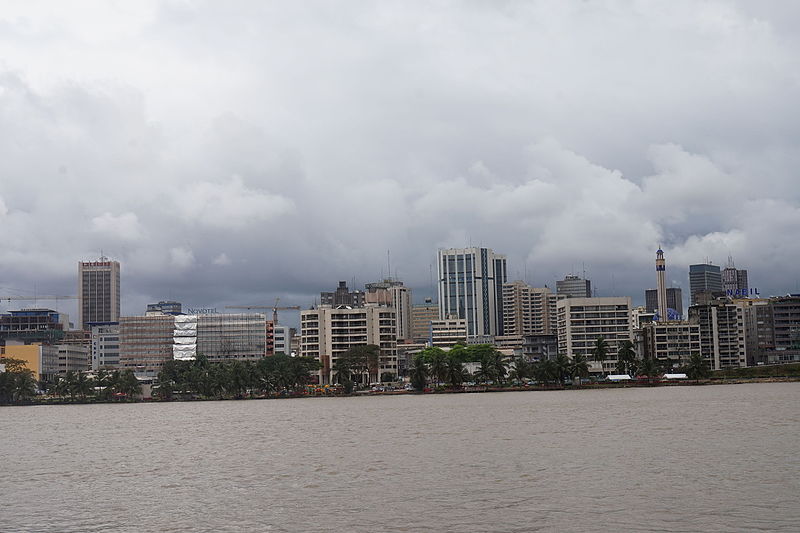
Treichville, a dense district of Abidjan, grew up beside the lagoon fishing village of Anoumabo and takes its name from Marcel Treich-Laplène, the French explorer counted among the founders of the colony.
Treichville is the heart of Abidjan’s street life, with its Grand Marché piled with textiles and crafts, open-air maquis grilling fish late into the night, and streets known by numbers rather than names.
Abidjan’s nightlife, from Treichville’s maquis to the clubs of Yopougon, is where coupé-décalé, born among Ivorian partygoers in Paris in the early 2000s, took off at home before spreading across Africa.
6 – Grand-Bassam
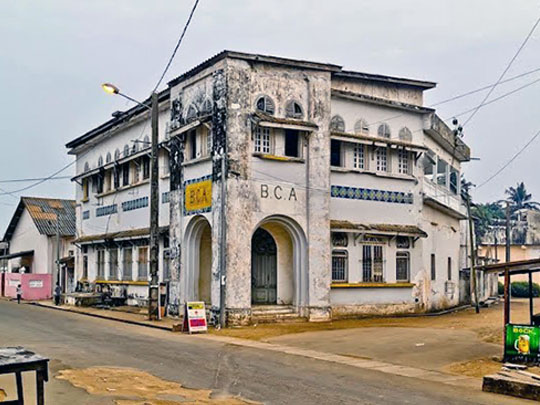
Grand-Bassam, on a sandbar between the Ébrié Lagoon and the Atlantic less than an hour east of Abidjan, was capital of the French colony from 1893 until a yellow fever epidemic in 1899 drove the government to Bingerville, and UNESCO listed its historic town in 2012.
Grand-Bassam’s colonial quarter is a grid of verandaed mansions, some restored and some in ruins, around the old Governor’s Palace, which houses the National Costume Museum, beside the N’zima fishing village that is older than the colonial town.
On 24 December 1949 women who had marched from Abidjan to demand the release of independence leaders held in Grand-Bassam prison were driven back by colonial forces at the lagoon bridge, later named the Pont de la Victoire in their honour.